Kirjojen hintavertailu – 12 903 725 kirjaa ja 27 kauppaa

Kirjailija

William C. Kashatus

Kirjat ja teokset yhdessä paikassa: 32 kirjaa, julkaisuja vuosilta 1990–2026, suosituimpiin kuuluu Lou Gehrig. Vertaile teosten hintoja ja tarkista saatavuus suomalaisista kirjakaupoista.

Nimi esiintyy myös muodoissa: William C Kashatus

32 kirjaa

Kirjojen julkaisuvuodet: 1990–2026.

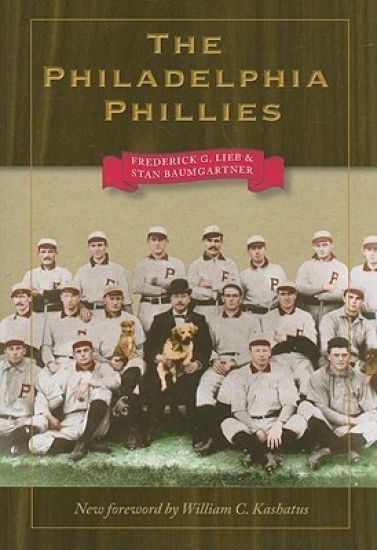
The Philadelphia Phillies

The Philadelphia Phillies

Stan Baumgartner; Frederick G. Lieb; William C. Kashatus

Kent State University Press
2008
nidottu
A facsimile edition of the 1953 history of the Philadelphia PhilliesFred Lieb and Stan Baumgartner's history of the Philadelphia Phillies was originally published in 1953 as part of the celebrated series of major league team histories published by G. P. Putnam. With their colorful prose and delightful narratives, the Putnam books have been described as the Cadillac of the genre and have become prized collectibles for baseball readers and historians. Together Lieb and Baumgartner chronicle the Phillies franchise's turbulent past—from its frustrating early decades, through its heartbreaking loss to the Boston Red Sox in the 1915 World Series, to its exciting "Whiz Kids" pennant of 1950. Phillies legends like Grover Cleveland Alexander, Chuck Klein, and Ed Delahanty fill these pages, and their colorful anecdotes are woven into the fabric of each season's story. In addition to its comprehensive and intimate examination of the team's history, The Philadelphia Phillies addresses the challenge of rooting for an often-struggling home team in a city known for its passionate baseball fans. Lieb's devotion to his hometown Phillies and overall love of the game and Baumgartner's unique insight as a Philadelphia sportswriter and former player often lead to thoughtful advice and comfort for long-suffering Phillies fans. A trip through a rocky but remarkable past, The Philadelphia Phillies is another enjoyable addition to the Writing Sports Series.
Money Pitcher

Money Pitcher

William C. Kashatus

Pennsylvania State University Press
2006
sidottu
Charles Albert Bender was one of baseball’s most talented pitchers. By the end of his major league career in 1925, he had accrued 212 wins and more than 1,700 strikeouts, and in 1953, he became the first American Indian elected to baseball’s Hall of Fame. But as a high-profile Chippewa Indian in a bigoted society, Bender knew firsthand the trauma of racism. In Money Pitcher: Chief Bender and the Tragedy of Indian Assimilation, William C. Kashatus offers the first biography of this compelling and complex figure. Bender’s career in baseball began on the sandlots of Pennsylvania’s Carlisle Indian Industrial School, where he distinguished himself as a hard-throwing pitcher. Soon, in 1903, Philadelphia Athletics manager Connie Mack signed Bender to his pitching staff, where he was a mainstay for more than a decade. Mack regarded Bender as his “money pitcher”—the hurler he relied on whenever he needed a critical victory. But with success came suffering. Spectators jeered Bender on the field and taunted him with war whoops. Newspapers ridiculed him in their sports pages. His own teammates derisively referred to him as “Chief,” and Mack paid him less than half the salary of other star pitchers. This constant disrespect became a major factor in one of the most controversial episodes in the history of baseball: the alleged corruption of the 1914 World Series. Despite being heavily favored going into the Series against the Boston Braves, the A’s lost four straight games. Kashatus offers compelling evidence that Bender intentionally compromised his performance in the Series as retribution for the poor treatment he suffered. Money Pitcher is not just another baseball book. It is a book about social justice and Native Americans’ tragic pursuit of the white American Dream at the expense of their own identity. Having arrived in the major leagues only thirteen years after the Wounded Knee Massacre of 1890, Bender experienced the disastrous effects of governmental assimilation policies designed to quash indigenous Indian culture. Yet his remarkable athleticism and dignified behavior disproved popular notions of Native American inferiority and opened the door to the majors for more than 120 Indians who played baseball during the first half of the twentieth century.
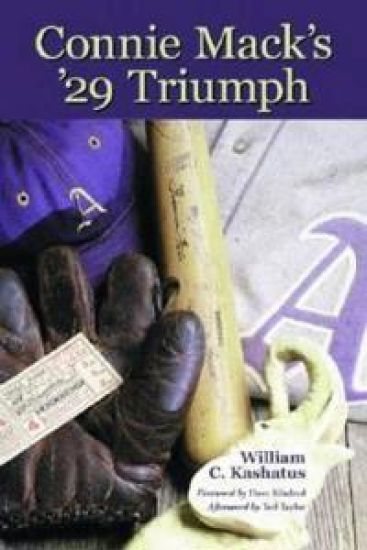
Connie Mack's '29 Triumph

Connie Mack's '29 Triumph

William C. Kashatus

McFarland Co Inc
2005
pokkari
It has been said that Connie Mack managed only two kinds of teams during his half-century in the City of Brother Love--unbeatable and lousy. His teams collected nine pennants and five World Series titles, balanced by 17 last place finishes. While Mack, an enterprising businessman, had a gift for discovering talented players and molding them into a team, by the time he was well into his sixties, Philadelphians suspected that the A's skipper had lost his ability. Mack went on to disprove all doubts, however, with a second championship dynasty in 1929 that vindicated the "Tall Tactician." This work chronicles the rise and fall of the 1929 Philadelphia Athletics and their six-year rivalry with the New York Yankees, 1927 to 1932. Based primarily on newspaper accounts, the book tells the story of the "Grand Old Man of Baseball"--and the 1929 A's team that is unfairly overlooked in favor of the 1927 Yankees as baseball's greatest all-around team. This history is packed with photographs, notes and statistical appendices, and includes a foreword by The Sporting News writer Dave Kindred.
September Swoon

September Swoon

William C. Kashatus

Pennsylvania State University Press
2004
pokkari
Everything seemed to be going the Phillies’ way. Up by 6 1/2 games with just 12 left to play in the 1964 season, they appeared to have clinched their first pennant in more than a decade. Outfielder Johnny Callison narrowly missed being the National League MVP. Third baseman Richie Allen was Rookie of the Year. But the "Fightin’ Phils" didn’t make it to the postseason—they lost 10 straight and finished a game behind the St. Louis Cardinals. Besides engineering the greatest collapse of any team in major league baseball history, the ’64 Phillies had another, more important distinction: they were Philadelphia’s first truly integrated baseball team. In September Swoon William Kashatus tells the dramatic story—both on the field and off the field—of the Phillies’ bittersweet season of 1964. More than any other team in Philadelphia’s sports history, the ’64 Phillies saddled the city with a reputation for being a "loser." Even when victory seemed assured, Philadelphia found a way to lose. Unfortunately, the collapse, dubbed the "September swoon," was the beginning of a self-destructive skid in both team play and racial integration, for the very things that made the players unique threatened to tear the team apart. An antagonistic press and contentious fans blamed Richie Allen, the Phillies’ first black superstar, for the team’s losing ways, accusing him of dividing the team along racial lines. Allen manipulated the resulting controversy in the hopes that he would be traded, but in the process he managed to further fray already tenuous race relations. Based on personal interviews, player biographies, and newspaper accounts, September Swoon brings to life a season and a team that got so many Philadelphians, both black and white, to care deeply and passionately about the game at a turbulent period in the city’s—and our nation’s—history. The hometown fans reveled in their triumphs and cried in their defeat, because they saw in them a reflection of themselves. The ’64 Phillies not only won over the loyalties of a racially divided city, but gave Philadelphians a reason to dream—of a pennant, of a contender, and of a City of Brotherly Love.
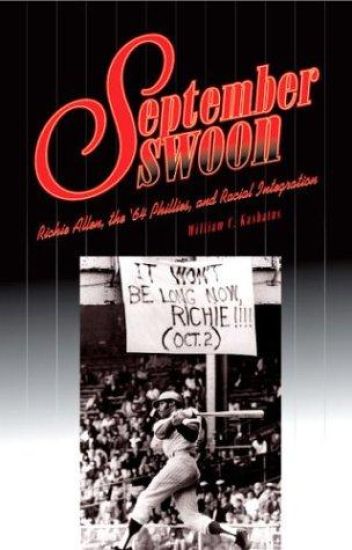
September Swoon

September Swoon

William C. Kashatus

Pennsylvania State University Press
2004
sidottu
Everything seemed to be going the Phillies’ way. Up by 6 1/2 games with just 12 left to play in the 1964 season, they appeared to have clinched their first pennant in more than a decade. Outfielder Johnny Callison narrowly missed being the National League MVP. Third baseman Richie Allen was Rookie of the Year. But the "Fightin’ Phils" didn’t make it to the postseason—they lost 10 straight and finished a game behind the St. Louis Cardinals. Besides engineering the greatest collapse of any team in major league baseball history, the ’64 Phillies had another, more important distinction: they were Philadelphia’s first truly integrated baseball team. In September Swoon William Kashatus tells the dramatic story—both on the field and off the field—of the Phillies’ bittersweet season of 1964. More than any other team in Philadelphia’s sports history, the ’64 Phillies saddled the city with a reputation for being a "loser." Even when victory seemed assured, Philadelphia found a way to lose. Unfortunately, the collapse, dubbed the "September swoon," was the beginning of a self-destructive skid in both team play and racial integration, for the very things that made the players unique threatened to tear the team apart. An antagonistic press and contentious fans blamed Richie Allen, the Phillies’ first black superstar, for the team’s losing ways, accusing him of dividing the team along racial lines. Allen manipulated the resulting controversy in the hopes that he would be traded, but in the process he managed to further fray already tenuous race relations. Based on personal interviews, player biographies, and newspaper accounts, September Swoon brings to life a season and a team that got so many Philadelphians, both black and white, to care deeply and passionately about the game at a turbulent period in the city’s—and our nation’s—history. The hometown fans reveled in their triumphs and cried in their defeat, because they saw in them a reflection of themselves. The ’64 Phillies not only won over the loyalties of a racially divided city, but gave Philadelphians a reason to dream—of a pennant, of a contender, and of a City of Brotherly Love.
Just Over the Line

Just Over the Line

William C. Kashatus

Chester County Historical Society,U.S.
2002
pokkari
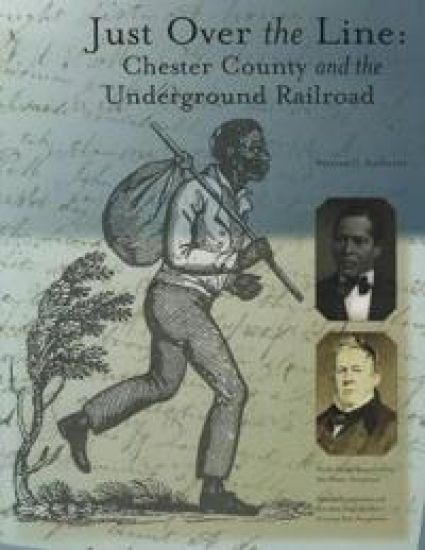
Located just over the Mason-Dixon line dividing free and slave states, Chester County was an important and dangerous junction on the Underground Railroad s Eastern Line. Predominantly populated by the Religious Society of Friends, or Quakers, the county saw much debate and conflict brought about by the terrible risk involved in this radical and subversive activity. While traditionally Quakers have been believed to be very cooperative in the enterprise of conducting runaways in their flight to freedom, the analysis offered here by William C. Kashatus shows that it was not that simple. For many Friends, the conflict between the law and their convictions was a difficult one, and the passing of the Fugitive Slave Law in 1850 only added to their dilemma. This made Chester County a highly dangerous and yet geographically necessary stop on the journey north. Previous histories of the Underground Railroad in the area have focused on this myth of unified opposition to slavery by the Quakers, but they have also committed another disservice. They ignored the actions and bravery of the African Americans who not only used the passages for their own escape but also facilitated the escape of others. This new history of Chester County s link in the Railroad attempts to correct that omission. Rather than propagate the history that the abolitionists themselves constructed, making themselves the heroes of the story, Kashatus digs deeper to find a more balanced view of this rich and fascinating history. This book is being published in conjunction with a new exhibit at the Chester County Historical Society that focuses on the Underground Railroad in Chester County."
Diamonds in the Coalfields

Diamonds in the Coalfields

William C. Kashatus

McFarland Co Inc
2002
pokkari
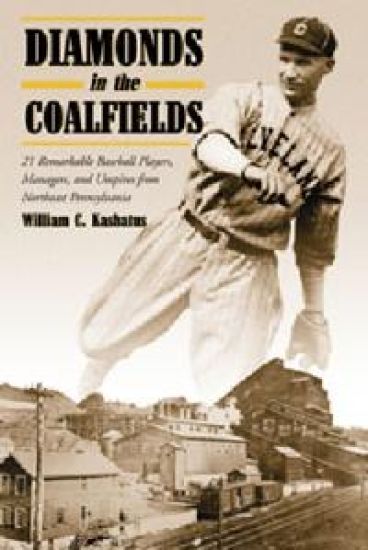
Between 1876 and 1960, nearly 100 northeastern Pennsylvanians played, managed, coached or umpired in the major leagues. Many were the sons of immigrant coal miners and living and working conditions in America were quite different from what they had been used to. Baseball became an important part of the assimilation process and it thrived as a church-sponsored form of recreation and entertainment for the coal miners and their families. This work explores the childhood, and minor and major league experiences of Christy Mathewson, Stan Coveleski, Stanley "Bucky" Harris, Hughie Jennings, Ed Walsh, Nestor Chylak, Joe Bolinsky, Jake Daubert, John "Buck" Freeman, Mike Gazella, Pete Wyshner, John Edward Murphy, Steve O'Neill, John Picus, Joe "Lefty" Shaute, Steve Bilko, Harry Dorish, Bob Duliba, Joe "Professor" Ostrowski, and Stan Pawloski--21 players, managers, and umpires who exemplify the great talent, dedication, humility, and hardship that many northeastern Pennsylvanians experienced.
Mike Schmidt

Mike Schmidt

William C. Kashatus

McFarland Co Inc
1999
pokkari
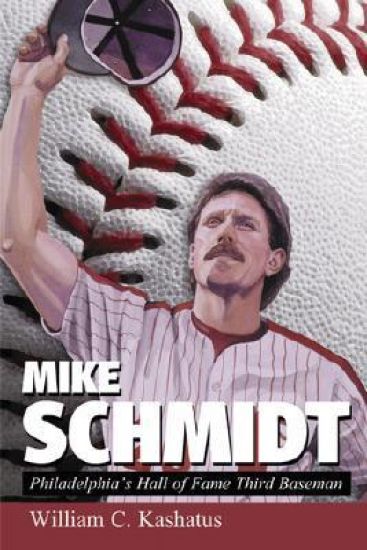
Michael Jack Schmidt, in the minds of many the greatest third baseman of all time, was a Philadelphia institution. From 1973 to 1989 he led the Phillies to five National League championship series and two World Series. Twelve times an All-Star, Schmidt was perhaps baseball's premier power hitter during the 1970s and 1980s. His 548 home runs are seventh best all-time. In the field he was just as exceptional, winning ten Gold Gloves, more than any other third baseman besides Brooks Robinson. A three-time N. L. Most Valuable Player (1980, 1981 and 1986), Schmidt was elected to the Baseball Hall of Fame in 1995, his first year of eligibility. This book is the first serious account of Schmidt's celebrated career with the Philadelphia Phillies. Concentrating on contemporary newspaper accounts, periodicals, baseball histories and biographies by Schmidt's teammates, this long-overdue work is the full story of one of the game's greatest sluggers, and one of its true heroes and role models.
One-Armed Wonder

One-Armed Wonder

William C. Kashatus

McFarland Co Inc
1995
pokkari
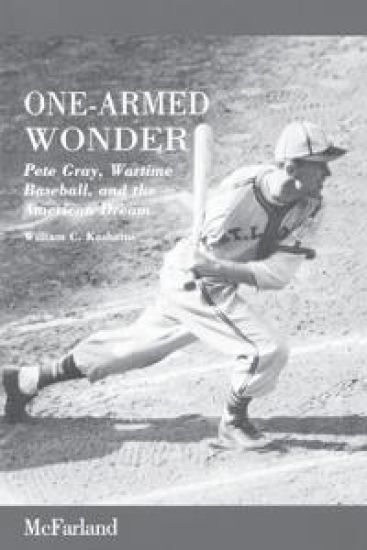
In the spring of 1945 Pete Gray, who had lost his right arm in a childhood accident, made his debut with the St. Louis Browns of the American League. Dubbed the "One-Amed Wonder" by sportswriters, Gray was a controversial figure from the moment he stepped on a major league diamond. Club owners saw him as a gate attraction for war-weary baseball fans; some of his teammates openly questioned his ability and felt that he cost them a chance to capture a second consecutive pennant. Gray was left to wonder just how good a ballplayer he really was. Though some may have doubted Gray's ability, no one questioned the cantankerous outfielder's desire to reach the major leagues. From the coalfields of northeastern Pennsylvania, Pete Gray fought his way through the minor leagues with single-minded determination. Despite his missing arm, he was the most valuable player of the minor league's Southern Association in 1944. His on-field exploits and relentless fire became an inspiration to the many servicemen who returned from the battlefields of World War II with missing limbs.
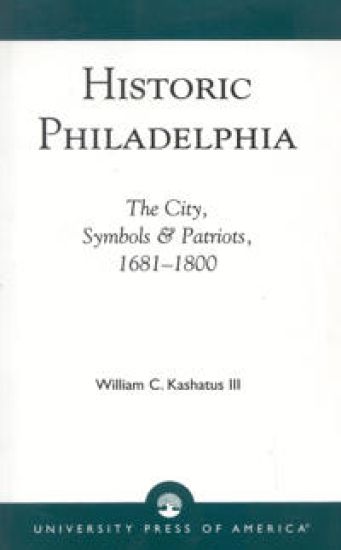
Historic Philadelphia

Historic Philadelphia

William C. Kashatus

University Press of America
1992
nidottu
In this book the author captures all the familiar figures and symbols of Philadelphia's rich eighteenth-century past as well as the drama of American history's greatest scenes, from the clandestine meetings of the Second Continental Congress to the drafting of the United States Constitution, to the final days of Philadelphia's prestigious role as the nation's capital. The author's experience as an historical interpreter of Philadelphia's Independence National Historical Park, enables him to take the reader into the Congress to hear the stirring debates over American independence, into the spirits of Philadelphia's most unforgettable citizens, and finally into the streets on a delightful walking tour of this historic city. Contents: The City: Philadelphia: The Cradle of American Liberty; The Symbols: The Liberty Bell: Proclaim Liberty Throughout All the Land; Independence Hall: Birthplace of a Nation; The Patriots: William Penn and the Spirit of Brotherly Love; Benjamin Lay, Quaker Abolitionist; Benjamin Franklin, the Image-maker; Betsy Ross, Seamstress of a Revolution; Samuel Wetherill and the Free Quaker Testimony to the American Revolution; Bishop William White, his Revolutionary Theology and the Founding of the Protestant Episcopal Church and Academy; The Stewards of Philadelphia's History and a Walking Tour of Independence National Historical Park; Endnotes; Selected Bibliography; Index.
Conflict and Conviction

Conflict and Conviction

William C. Kashatus

University Press of America
1990
sidottu
Addresses the popular misconception that all Quakers, historically, have been absolutely against war and participation in civil government during a time of war. By examining the personal, theological and moral dilemmas and sacrifices of individual Friends and Quaker groups who, complied with the Revolutionary War effort, this book provides a new understanding of the diversity as well as complexity of the Quaker involvement in the American Revolution.