Kirjailija
William Chester Jordan
Kirjat ja teokset yhdessä paikassa: 16 kirjaa, julkaisuja vuosilta 1990–2020, suosituimpiin kuuluu Men at the Center. Vertaile teosten hintoja ja tarkista saatavuus suomalaisista kirjakaupoista.
16 kirjaa
Kirjojen julkaisuvuodet: 1990–2020.
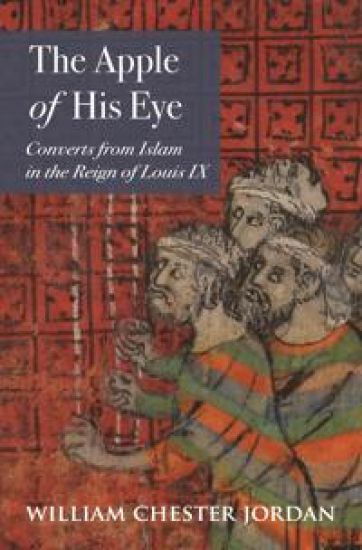
The thirteenth century brought new urgency to Catholic efforts to convert non-Christians, and no Catholic ruler was more dedicated to this undertaking than King Louis IX of France. His military expeditions against Islam are well documented, but there was also a peaceful side to his encounter with the Muslim world, one that has received little attention until now. This splendid book shines new light on the king’s program to induce Muslims—the “apple of his eye”—to voluntarily convert to Christianity and resettle in France. It recovers a forgotten but important episode in the history of the Crusades while providing a rare window into the fraught experiences of the converts themselves. William Chester Jordan transforms our understanding of medieval Christian-Muslim relations by telling the stories of the Muslims who came to France to live as Christians. Under what circumstances did they willingly convert? How successfully did they assimilate into French society? What forms of resistance did they employ? In examining questions like these, Jordan weaves a richly detailed portrait of a dazzling yet violent age whose lessons still resonate today. Until now, scholars have dismissed historical accounts of the king’s peaceful conversion of Muslims as hagiographical and therefore untrustworthy. Jordan takes these narratives seriously—and uncovers archival evidence to back them up. He brings his findings marvelously to life in this succinct and compelling book, setting them in the context of the Seventh Crusade and the universalizing Catholic impulse to convert the world.
Servant of the Crown and Steward of the Church
William Chester Jordan
University of Toronto Press
2019
pokkari
In the thirteenth century, radical reformers – churchmen, devout laywomen and laymen, and secular rulers – undertook Herculean efforts aimed at the moral reform of society. No principality was more affected by these impulses than France under its king, Louis IX or "Saint Louis." The monarch surrounded himself with gifted, energetic moralists to carry out his efforts. Servant of the Crown and Steward of the Church explores the career of one of the most influential of King Louis’s reformers, Philippe of Cahors. Born into a bourgeois family dwelling on the periphery of the medieval kingdom of France, Philippe rose through the ecclesiastical hierarchy to the office of judge. There he came to the attention of royal administrators, who recommended him for the king’s service. He ascended rapidly, and was eventually entrusted with the royal seal, effectively making constituting him the chancellor of the kingdom, the highest member of the royal administration. Louis IX secured his election as bishop of Évreux in 1269. Using the records of Philippe’s work in Reims, Paris, and Évreux, William Chester Jordan reconstructs Philippe’s career, providing a fascinating portrait of the successes and failures of reform in the thirteenth century.
The thirteenth century brought new urgency to Catholic efforts to convert non-Christians, and no Catholic ruler was more dedicated to this undertaking than King Louis IX of France. His military expeditions against Islam are well documented, but there was also a peaceful side to his encounter with the Muslim world, one that has received little attention until now. This splendid book shines new light on the king’s program to induce Muslims—the “apple of his eye”—to voluntarily convert to Christianity and resettle in France. It recovers a forgotten but important episode in the history of the Crusades while providing a rare window into the fraught experiences of the converts themselves. William Chester Jordan transforms our understanding of medieval Christian-Muslim relations by telling the stories of the Muslims who came to France to live as Christians. Under what circumstances did they willingly convert? How successfully did they assimilate into French society? What forms of resistance did they employ? In examining questions like these, Jordan weaves a richly detailed portrait of a dazzling yet violent age whose lessons still resonate today. Until now, scholars have dismissed historical accounts of the king’s peaceful conversion of Muslims as hagiographical and therefore untrustworthy. Jordan takes these narratives seriously—and uncovers archival evidence to back them up. He brings his findings marvelously to life in this succinct and compelling book, setting them in the context of the Seventh Crusade and the universalizing Catholic impulse to convert the world.
At the height of the Middle Ages, a peculiar system of perpetual exile--or abjuration--flourished in western Europe. It was a judicial form of exile, not political or religious, and it was meted out to felons for crimes deserving of severe corporal punishment or death. From England to France explores the lives of these men and women who were condemned to abjure the English realm, and draws on their unique experiences to shed light on a medieval legal tradition until now very poorly understood. William Chester Jordan weaves a breathtaking historical tapestry, examining the judicial and administrative processes that led to the abjuration of more than seventy-five thousand English subjects, and recounting the astonishing journeys of the exiles themselves. Some were innocents caught up in tragic circumstances, but many were hardened criminals. Almost every English exile departed from the port of Dover, many bound for the same French village, a place called Wissant. Jordan vividly describes what happened when the felons got there, and tells the stories of the few who managed to return to England, either illegally or through pardons. From England to France provides new insights into a fundamental pillar of medieval English law and shows how it collapsed amid the bloodshed of the Hundred Years' War.
This absorbing book explores the tensions within the Roman Catholic church and between the church and royal authority in France in the crucial period 1290-1321. During this time the crown tried to force churchmen to accept policies many considered inconsistent with ecclesiastical freedom and traditions--such as paying war taxes and expelling the Jews from the kingdom. William Jordan considers these issues through the eyes of one of the most important and courageous actors, the Cistercian monk, professor, abbot, and polemical writer Jacques de Therines. The result is a fresh perspective on what Jordan terms "the story of France in a politically terrifying period of its existence, one of unceasing strife and unending fear." Jacques de Therines was involved in nearly every controversy of the period: the expulsion of the Jews from France, the relocation of the papacy to Avignon, the affair of the Templars, the suppression of the "heresies" of Marguerite Porete and of the Spiritual Franciscans, and the defense of the "exempt" monastic orders' freedom from all but papal control. The stands he took were often remarkable in themselves: hostility to the expulsion of Jews and spirited defense of the Templars, for example. The book also traces the emergence of King Philip the Fair's (1285-1314) almost paranoid style of rule and its impact on church-state relations, which makes the expression of Jacques de Therines's views all the more courageous.
Louis IX and the Challenge of the Crusade
William Chester Jordan
Princeton University Press
2016
sidottu
Louis IX has long been known both as a saintly crusader and as the founder of effective royal administration in France. But, in spite of a vast amount of research, the details of what happened under his rule and why it happened have been little understood. Synthesizing this research from a thematic perspective, William Chester Jordan integrates the various facets of the king's reign from 1226 to 1270 to show how the monarch's reforms were inextricably connected with his crusades. Originally published in 1979. The Princeton Legacy Library uses the latest print-on-demand technology to again make available previously out-of-print books from the distinguished backlist of Princeton University Press. These editions preserve the original texts of these important books while presenting them in durable paperback and hardcover editions. The goal of the Princeton Legacy Library is to vastly increase access to the rich scholarly heritage found in the thousands of books published by Princeton University Press since its founding in 1905.
On the Medieval Origins of the Modern State
Joseph R. Strayer; Charles Tilly; William Chester Jordan
Princeton University Press
2016
pokkari
Halvin toimitettuna 22,90 €
The modern state, however we conceive of it today, is based on a pattern that emerged in Europe in the period from 1100 to 1600. Inspired by a lifetime of teaching and research, On the Medieval Origins of the Modern State is a classic work on what is known about the early history of the European state. This short, clear book book explores the European state in its infancy, especially in institutional developments in the administration of justice and finance. Forewords from Charles Tilly and William Chester Jordan demonstrate the perennial importance of Joseph Strayer's book, and situate it within a contemporary context. Tilly demonstrates how Strayer's work has set the agenda for a whole generation of historical analysts, not only in medieval history but also in the comparative study of state formation. William Chester Jordan's foreword examines the scholarly and pedagogical setting within which Strayer produced his book, and how this both enhanced its accessibility and informed its focus on peculiarly English and French accomplishments in early state formation.
Louis IX and the Challenge of the Crusade
William Chester Jordan
Princeton University Press
2015
pokkari
Louis IX has long been known both as a saintly crusader and as the founder of effective royal administration in France. But, in spite of a vast amount of research, the details of what happened under his rule and why it happened have been little understood. Synthesizing this research from a thematic perspective, William Chester Jordan integrates the various facets of the king's reign from 1226 to 1270 to show how the monarch's reforms were inextricably connected with his crusades. Originally published in 1979. The Princeton Legacy Library uses the latest print-on-demand technology to again make available previously out-of-print books from the distinguished backlist of Princeton University Press. These editions preserve the original texts of these important books while presenting them in durable paperback and hardcover editions. The goal of the Princeton Legacy Library is to vastly increase access to the rich scholarly heritage found in the thousands of books published by Princeton University Press since its founding in 1905.
At the height of the Middle Ages, a peculiar system of perpetual exile--or abjuration--flourished in western Europe. It was a judicial form of exile, not political or religious, and it was meted out to felons for crimes deserving of severe corporal punishment or death. From England to France explores the lives of these men and women who were condemned to abjure the English realm, and draws on their unique experiences to shed light on a medieval legal tradition until now very poorly understood. William Chester Jordan weaves a breathtaking historical tapestry, examining the judicial and administrative processes that led to the abjuration of more than seventy-five thousand English subjects, and recounting the astonishing journeys of the exiles themselves. Some were innocents caught up in tragic circumstances, but many were hardened criminals. Almost every English exile departed from the port of Dover, many bound for the same French village, a place called Wissant. Jordan vividly describes what happened when the felons got there, and tells the stories of the few who managed to return to England, either illegally or through pardons. From England to France provides new insights into a fundamental pillar of medieval English law and shows how it collapsed amid the bloodshed of the Hundred Years' War.
Taking Professor Natalie Zemon Davis’ fascinating biographical studies of three Women on the Margins in the seventeenth century as an inspiration, the author of this book offers three portraits of men who were at the very center of governance in thirteenth-century France, men who strove in the shadow of King Louis IX (Saint Louis) to impose a redemptive regime on the realm. Professor Jordan treats them as individuals, but in a sense they are also types: Robert of Sorbon, a churchman; Etienne Boileau, a bourgeois; and Simon de Nesle, an aristocrat. Robert was the founder of the Sorbonne; Boileau was the prévôt or royal administrator of Paris; and Simon was twice co-regent of the kingdom. Thinking about them and their relations with Louis IX opens up a new and altogether sobering vista for exploring the nature of the king’s rule and the impact of his rule on his subjects.
A Tale of Two Monasteries takes an unprecedented look at one of the great rivalries of the Middle Ages and offers it as a revealing lens through which to view the intertwined histories of medieval England and France. This is the first book to systematically compare Westminster Abbey and the abbey of Saint-Denis--two of the most important ecclesiastical institutions of the thirteenth century--and to do so through the lives and competing careers of the two men who ruled them, Richard de Ware of Westminster and Mathieu de Vendome of Saint-Denis. Esteemed historian William Jordan weaves a breathtaking narrative of the social, cultural, and political history of the period. It was an age of rebellion and crusades, of artistic and architectural innovation, of unprecedented political reform, and of frustrating international diplomacy--and Richard and Mathieu, in one way or another, played important roles in all these developments. Jordan traces their rise from obscure backgrounds to the highest ranks of political authority, Abbot Richard becoming royal treasurer of England, and Abbot Mathieu twice serving as a regent of France during the crusades. By enabling us to understand the complex relationships the abbots and their rival institutions shared with each other and with the kings and social networks that supported and exploited them, A Tale of Two Monasteries paints a vivid portrait of medieval society and politics, and of the ambitious men who influenced them so profoundly.
This absorbing book explores the tensions within the Roman Catholic church and between the church and royal authority in France in the crucial period 1290-1321. During this time the crown tried to force churchmen to accept policies many considered inconsistent with ecclesiastical freedom and traditions--such as paying war taxes and expelling the Jews from the kingdom. William Jordan considers these issues through the eyes of one of the most important and courageous actors, the Cistercian monk, professor, abbot, and polemical writer Jacques de Therines. The result is a fresh perspective on what Jordan terms "the story of France in a politically terrifying period of its existence, one of unceasing strife and unending fear." Jacques de Therines was involved in nearly every controversy of the period: the expulsion of the Jews from France, the relocation of the papacy to Avignon, the affair of the Templars, the suppression of the "heresies" of Marguerite Porete and of the Spiritual Franciscans, and the defense of the "exempt" monastic orders' freedom from all but papal control. The stands he took were often remarkable in themselves: hostility to the expulsion of Jews and spirited defense of the Templars, for example. The book also traces the emergence of King Philip the Fair's (1285-1314) almost paranoid style of rule and its impact on church-state relations, which makes the expression of Jacques de Therines's views all the more courageous.
Europe in the High Middle Ages
William Chester Jordan
Penguin Books Ltd
2002
pokkari
Halvin toimitettuna 20,30 €
'The most accessible, up-to-date introduction to its subject ... does full justice to the multifarious forces at work in high gothic Europe' Daily TelegraphThe years from AD 1000 to the beginning of the fourteenth century were the most formative period in European history: a time of intense social, political, cultural and religious change. In this definitive work one of the world's leading medievalists explores a confident, dynamic age, far removed from our own.'Jordan writes elegantly and ironically, giving the reader a broad but not dumbed-down view of medieval society and its complexities. A splendid start to Penguin's History of Europe series and a first-rate work in its own right' Kirkus Reviews'The Penguin History of Europe series is one of contemporary publishing's great projects' New Statesman
Ideology and Royal Power is a collection of essays describing and assessing the ways in which royal publicists in medieval France conceived the authority of the crown, especially with regard to protecting and defending its Christian subjects from their alleged enemies at home and abroad--corrupt officials, Jews (particularly moneylenders), heretics, and Muslims. A number of the essays also describe the execution of royal policies with respect to these groups and evaluate their impact, both in terms of the groups affected and their influence on further developments in royal ideology. A key figure is that of Louis IX, Saint Louis (r. 1226-1270).
The horrors of the Great Famine (1315-1322), one of the severest catastrophes ever to strike northern Europe, lived on for centuries in the minds of Europeans who recalled tales of widespread hunger, class warfare, epidemic disease, frighteningly high mortality, and unspeakable crimes. Until now, no one has offered a perspective of what daily life was actually like throughout the entire region devastated by this crisis, nor has anyone probed far into its causes. Here, the distinguished historian William Jordan provides the first comprehensive inquiry into the Famine from Ireland to western Poland, from Scandinavia to central France and western Germany. He produces a rich cultural history of medieval community life, drawing his evidence from such sources as meteorological and agricultural records, accounts kept by monasteries providing for the needy, and documentation of military campaigns. Whereas there has been a tendency to describe the food shortages as a result of simply bad weather or else poor economic planning, Jordan sets the stage so that we see the complex interplay of social and environmental factors that caused this particular disaster and allowed it to continue for so long. Jordan begins with a description of medieval northern Europe at its demographic peak around 1300, by which time the region had achieved a sophisticated level of economic integration. He then looks at problems that, when combined with years of inundating rains and brutal winters, gnawed away at economic stability. From animal diseases and harvest failures to volatile prices, class antagonism, and distribution breakdowns brought on by constant war, northern Europeans felt helplessly besieged by acts of an angry God--although a cessation of war and a more equitable distribution of resources might have lessened the severity of the food shortages. Throughout Jordan interweaves vivid historical detail with a sharp analysis of why certain responses to the famine failed. He ultimately shows that while the northern European economy did recover quickly, the Great Famine ushered in a period of social instability that had serious repercussions for generations to come.
British Hispanism and the Challenge of Literary Theory
Jordan Barry; William Chester Jordan
Aris Phillips Ltd
1990
nidottu
These five articles, collected from journals not widely known in the Hispanic field, deal with issues of literary and cultural theory in relation to British Hispanism. The first three items in this collection consider some basic questions of literary and cultural theory and critical practice: questions such as, what is literature? what is the nature of the criticism which supports and legitimises it? how far is the literary text a secure ontological object? where does meaning lie? does it lie in the text or the processes by which the text is consumed and reproduced? what is literary value? what sort of values and purposes does the academic institution exist to serve? what is the role of literary studies within it? The last two essays adopt a more applied, pedagogical approach and attempt to survey the practices around literary studies within the modern language arena, especially in relation to British Hispanism. Here the author concerns himself with the nature of the discipline as presently constituted, its assumptions and major practices and asks how it constructs its versions of the foreign culture.