Kirjojen hintavertailu – 12 903 724 kirjaa ja 27 kauppaa
Kirjailija
William Cronon
Kirjat ja teokset yhdessä paikassa: 92 kirjaa, julkaisuja vuosilta 1992–2017, suosituimpiin kuuluu Car Country. Vertaile teosten hintoja ja tarkista saatavuus suomalaisista kirjakaupoista.
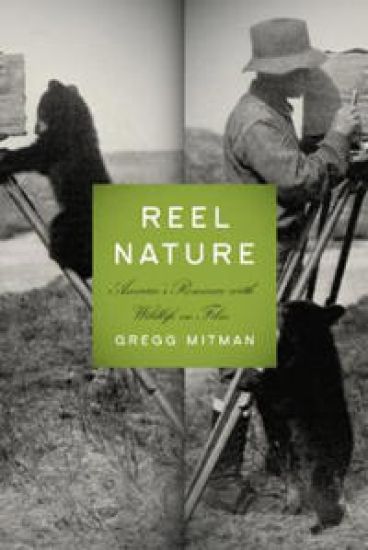
Winner of the History of Science Society's Watson Davis and Helen Miles Davis Prize in the History of Science. From the early exploits of Teddy Roosevelt in Africa to blockbuster films such as March of the Penguins, Gregg Mitman's Reel Nature reveals how changing values, scientific developments, and new technologies have come to shape American encounters with wildlife on and off the big screen. Whether crafted to elicit thrills or to educate audiences about the real-life drama of threatened wildlife, nature films then and now have had an enormous impact on how Americans see, think about, consume, and struggle to protect animals across the globe. For more information about the author go to: http://gmitman.com/
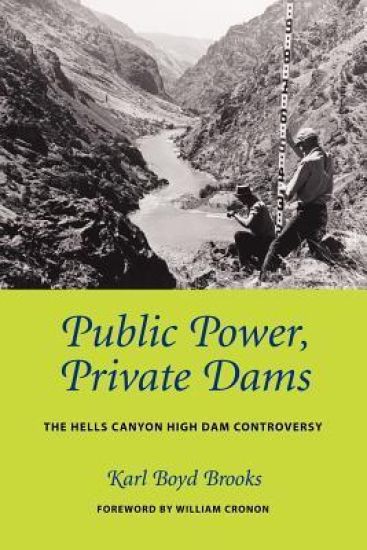
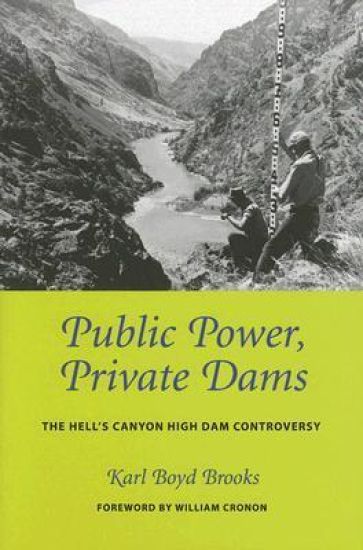
In the years following World War II, the world's biggest dam was almost built in Hells Canyon on the Snake River in Idaho. Karl Boyd Brooks tells the story of the dam controversy, which became a referendum not only on public-power expansion but also on the environmental implications of the New Deal's natural resources and economic policy. Private-power critics of the Hells Canyon High Dam posed difficult questions about the implications of damming rivers to create power and to grow crops. Activists, attorneys, and scientists pioneered legal tactics and political rhetoric that would help to define the environmental movement in the 1960s. The debate, however, was less about endangered salmon or threatened wild country and more about who would control land and water and whether state enterprise or private capital would oversee the supply of electricity. By thwarting the dam's construction, Snake Basin irrigators retained control over water as well as economic and political power in Idaho, putting the state on a postwar path that diverged markedly from that of bordering states. In the end, the opponents of the dam were responsible for preserving high deserts and mountain rivers from radical change. With Public Power, Private Dams, Karl Brooks makes an important contribution not only to the history of the Pacific Northwest and the region's anadromous fisheries but also to the environmental history of the United States in the period after World War II.
No single event played a greater role in the birth of modern environmentalism than the publication of Rachel Carson's Silent Spring and its assault on insecticides. The documents collected by Thomas Dunlap trace shifting attitudes toward DDT and pesticides in general through a variety of sources: excerpts from scientific studies and government reports, advertisements from industry journals, articles from popular magazines, and the famous "Fable for Tomorrow" from Silent Spring. Beginning with attitudes toward nature at the turn of the twentieth century, the book moves through the use and early regulation of pesticides; the introduction and early success of DDT; the discovery of its environmental effects; and the uproar over Silent Spring. It ends with recent debates about DDT as a potential solution to malaria in Africa.
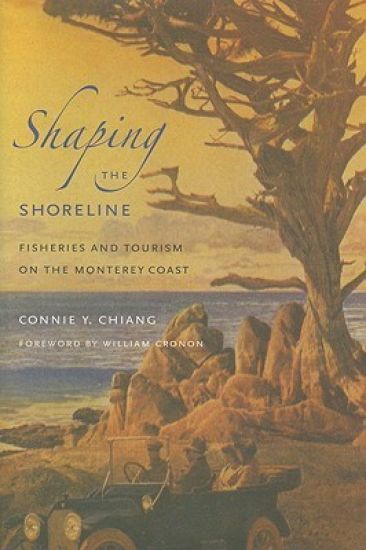
The Monterey coast, home to an acclaimed aquarium and the setting for John Steinbeck's classic novel Cannery Row, was also the stage for a historical junction of industry and tourism. Shaping the Shoreline looks at the ways in which Monterey has formed, and been formed by, the tension between labor and leisure. Connie Y. Chiang examines Monterey's development from a seaside resort into a working-class fishing town and, finally, into a tourist attraction again. Through the subjects of work, recreation, and environment -- the intersections of which are applicable to communities across the United States and abroad -- she documents the struggles and contests over this magnificent coastal region. By tracing Monterey's shift from what was once the literal Cannery Row to an iconic hub that now houses an aquarium in which nature is replicated to attract tourists, the interactions of people with nature continues to change. Drawing on histories of immigration, unionization, and the impact of national and international events, Chiang explores the reciprocal relationship between social and environmental change. By integrating topics such as race, ethnicity, and class into environmental history, Chiang illustrates the idea that work and play are not mutually exclusive endeavors.
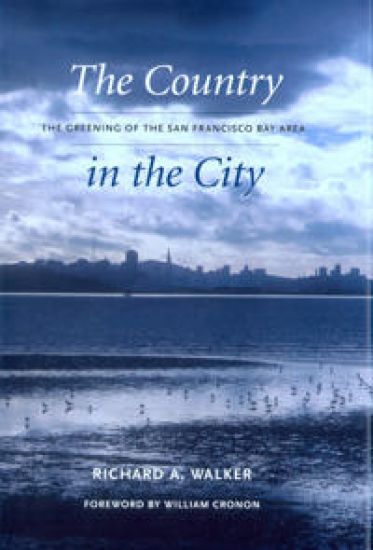
Winner of the Western History Association's 2009 Hal K. Rothman AwardFinalist in the Western Writers of America Spur Award for the Western Nonfiction Contemporary category (2008). The San Francisco Bay Area is one of the world's most beautiful cities. Despite a population of 7 million people, it is more greensward than asphalt jungle, more open space than hardscape. A vast quilt of countryside is tucked into the folds of the metropolis, stitched from fields, farms and woodlands, mines, creeks, and wetlands. In The Country in the City, Richard Walker tells the story of how the jigsaw geography of this greenbelt has been set into place. The Bay Area's civic landscape has been fought over acre by acre, an arduous process requiring popular mobilization, political will, and hard work. Its most cherished environments--Mount Tamalpais, Napa Valley, San Francisco Bay, Point Reyes, Mount Diablo, the Pacific coast--have engendered some of the fiercest environmental battles in the country and have made the region a leader in green ideas and organizations. This book tells how the Bay Area got its green grove: from the stirrings of conservation in the time of John Muir to origins of the recreational parks and coastal preserves in the early twentieth century, from the fight to stop bay fill and control suburban growth after the Second World War to securing conservation easements and stopping toxic pollution in our times. Here, modern environmentalism first became a mass political movement in the 1960s, with the sudden blooming of the Sierra Club and Save the Bay, and it remains a global center of environmentalism to this day. Green values have been a pillar of Bay Area life and politics for more than a century. It is an environmentalism grounded in local places and personal concerns, close to the heart of the city. Yet this vision of what a city should be has always been informed by liberal, even utopian, ideas of nature, planning, government, and democracy. In the end, green is one of the primary colors in the flag of the Left Coast, where green enthusiasms, like open space, are built into the fabric of urban life. Written in a lively and accessible style, The Country in the City will be of interest to general readers and environmental activists. At the same time, it speaks to fundamental debates in environmental history, urban planning, and geography.
Many Japanese once revered the wolf as Oguchi no Magami, or Large-Mouthed Pure God, but as Japan began its modern transformation wolves lost their otherworldly status and became noxious animals that needed to be killed. By 1905 they had disappeared from the country. In this spirited and absorbing narrative, Brett Walker takes a deep look at the scientific, cultural, and environmental dimensions of wolf extinction in Japan and tracks changing attitudes toward nature through Japan's long history. Grain farmers once worshiped wolves at shrines and left food offerings near their dens, beseeching the elusive canine to protect their crops from the sharp hooves and voracious appetites of wild boars and deer. Talismans and charms adorned with images of wolves protected against fire, disease, and other calamities and brought fertility to agrarian communities and to couples hoping to have children. The Ainu people believed that they were born from the union of a wolflike creature and a goddess. In the eighteenth century, wolves were seen as rabid man-killers in many parts of Japan. Highly ritualized wolf hunts were instigated to cleanse the landscape of what many considered as demons. By the nineteenth century, however, the destruction of wolves had become decidedly unceremonious, as seen on the island of Hokkaido. Through poisoning, hired hunters, and a bounty system, one of the archipelago's largest carnivores was systematically erased. The story of wolf extinction exposes the underside of Japan's modernization. Certain wolf scientists still camp out in Japan to listen for any trace of the elusive canines. The quiet they experience reminds us of the profound silence that awaits all humanity when, as the Japanese priest Kenko taught almost seven centuries ago, we "look on fellow sentient creatures without feeling compassion."
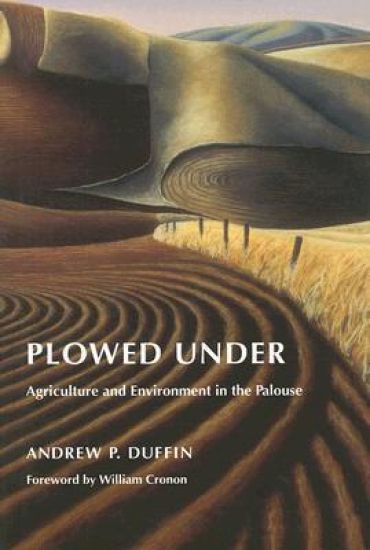
The transformation of the Palouse region of Washington and Idaho from land thought unusable and unproductive to a wealth-generating agricultural paradise is traced in this study that weighs the consequences of this progress.
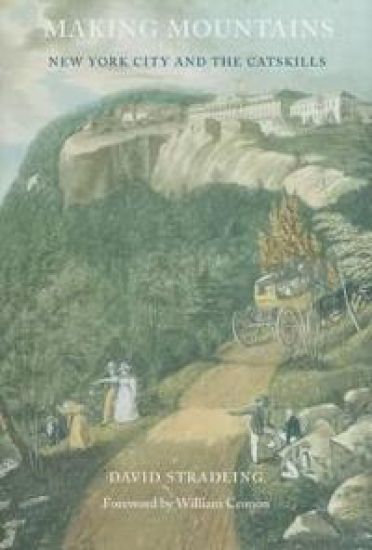
For over two hundred years, the Catskill Mountains have been repeatedly and dramatically transformed by New York City. In Making Mountains, David Stradling shows the transformation of the Catskills landscape as a collaborative process, one in which local and urban hands, capital, and ideas have come together to reshape the mountains and the communities therein. This collaboration has had environmental, economic, and cultural consequences. Early on, the Catskills were an important source of natural resources. Later, when New York City needed to expand its water supply, engineers helped direct the city toward the Catskills, claiming that the mountains offered the purest and most cost-effective waters. By the 1960s, New York had created the great reservoir and aqueduct system in the mountains that now supplies the city with 90 percent of its water. The Catskills also served as a critical space in which the nation's ideas about nature evolved. Stradling describes the great influence writers and artists had upon urban residents - especially the painters of the Hudson River School, whose ideal landscapes created expectations about how rural America should appear. By the mid-1800s, urban residents had turned the Catskills into an important vacation ground, and by the late 1800s, the Catskills had become one of the premiere resort regions in the nation. In the mid-twentieth century, the older Catskill resort region was in steep decline, but the Jewish "Borscht Belt" in the southern Catskills was thriving. The automobile revitalized mountain tourism and residence, and increased the threat of suburbanization of the historic landscape. Throughout each of these significant incarnations, urban and rural residents worked in a rough collaboration, though not without conflict, to reshape the mountains and American ideas about rural landscapes and nature.
Winner of the Western History Association's 2009 Hal K. Rothman AwardFinalist in the Western Writers of America Spur Award for the Western Nonfiction Contemporary category (2008). The San Francisco Bay Area is one of the world's most beautiful cities. Despite a population of 7 million people, it is more greensward than asphalt jungle, more open space than hardscape. A vast quilt of countryside is tucked into the folds of the metropolis, stitched from fields, farms and woodlands, mines, creeks, and wetlands. In The Country in the City, Richard Walker tells the story of how the jigsaw geography of this greenbelt has been set into place. The Bay Area's civic landscape has been fought over acre by acre, an arduous process requiring popular mobilization, political will, and hard work. Its most cherished environments--Mount Tamalpais, Napa Valley, San Francisco Bay, Point Reyes, Mount Diablo, the Pacific coast--have engendered some of the fiercest environmental battles in the country and have made the region a leader in green ideas and organizations. This book tells how the Bay Area got its green grove: from the stirrings of conservation in the time of John Muir to origins of the recreational parks and coastal preserves in the early twentieth century, from the fight to stop bay fill and control suburban growth after the Second World War to securing conservation easements and stopping toxic pollution in our times. Here, modern environmentalism first became a mass political movement in the 1960s, with the sudden blooming of the Sierra Club and Save the Bay, and it remains a global center of environmentalism to this day. Green values have been a pillar of Bay Area life and politics for more than a century. It is an environmentalism grounded in local places and personal concerns, close to the heart of the city. Yet this vision of what a city should be has always been informed by liberal, even utopian, ideas of nature, planning, government, and democracy. In the end, green is one of the primary colors in the flag of the Left Coast, where green enthusiasms, like open space, are built into the fabric of urban life. Written in a lively and accessible style, The Country in the City will be of interest to general readers and environmental activists. At the same time, it speaks to fundamental debates in environmental history, urban planning, and geography.
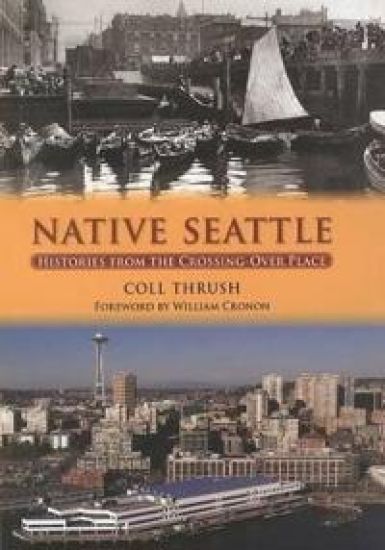
Winner of the 2008 Washington State Book Award for History/BiographyIn traditional scholarship, Native Americans have been conspicuously absent from urban history. Indians appear at the time of contact, are involved in fighting or treaties, and then seem to vanish, usually onto reservations. In Native Seattle, Coll Thrush explodes the commonly accepted notion that Indians and cities-and thus Indian and urban histories-are mutually exclusive, that Indians and cities cannot coexist, and that one must necessarily be eclipsed by the other. Native people and places played a vital part in the founding of Seattle and in what the city is today, just as urban changes transformed what it meant to be Native. On the urban indigenous frontier of the 1850s, 1860s, and 1870s, Indians were central to town life. Native Americans literally made Seattle possible through their labor and their participation, even as they were made scapegoats for urban disorder. As late as 1880, Seattle was still very much a Native place. Between the 1880s and the 1930s, however, Seattle's urban and Indian histories were transformed as the town turned into a metropolis. Massive changes in the urban environment dramatically affected indigenous people's abilities to survive in traditional places. The movement of Native people and their material culture to Seattle from all across the region inspired new identities both for the migrants and for the city itself. As boosters, historians, and pioneers tried to explain Seattle's historical trajectory, they told stories about Indians: as hostile enemies, as exotic Others, and as noble symbols of a vanished wilderness. But by the beginning of World War II, a new multitribal urban Native community had begun to take shape in Seattle, even as it was overshadowed by the city's appropriation of Indian images to understand and sell itself. After World War II, more changes in the city, combined with the agency of Native people, led to a new visibility and authority for Indians in Seattle. The descendants of Seattle's indigenous peoples capitalized on broader historical revisionism to claim new authority over urban places and narratives. At the beginning of the twenty-first century, Native people have returned to the center of civic life, not as contrived symbols of a whitewashed past but on their own terms. In Seattle, the strands of urban and Indian history have always been intertwined. Including an atlas of indigenous Seattle created with linguist Nile Thompson, Native Seattle is a new kind of urban Indian history, a book with implications that reach far beyond the region. Replaced by ISBN 9780295741345
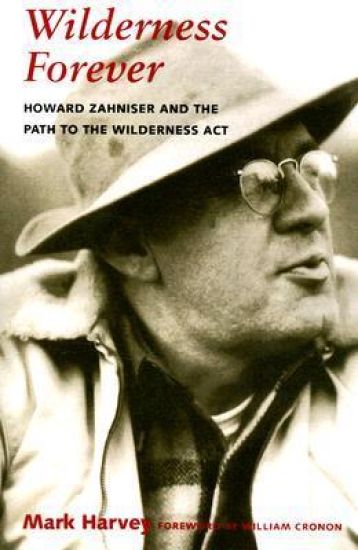
Winner of the Forest History Society's 2006 Charles A. Weyerhaeuser Book AwardAs a central figure in the American wilderness preservation movement in the mid-twentieth century, Howard Zahniser (1906-1964) was the person most responsible for the landmark Wilderness Act of 1964. While the rugged outdoorsmen of the earlyenvironmental movement, such as John Muir and Bob Marshall, gave the cause a charismatic face, Zahniser strove to bring conservation's concerns into the public eye and the preservationists' plans to fruition. In many fights to save besieged wild lands, he pulled together fractious coalitions, built grassroots support networks, wooed skittish and truculent politicians, and generated streams of eloquent prose celebrating wilderness. Zahniser worked for the Bureau of Biological Survey (a precursor to the Fish and Wildlife Service) and the Department of the Interior, wrote for Nature magazine, and eventually managed the Wilderness Society and edited its magazine, Living Wilderness. The culmination of his wilderness writing and political lobbying was the Wilderness Act of 1964. All of its drafts included his eloquent definition of wilderness, which still serves as a central tenet for the Wilderness Society: "an area where the earth and its community of life are untrammeled by man, where man himself is a visitor who does not remain." The bill was finally signed into law shortly after his death. Pervading his tireless work was a deeply held belief in the healing powers of nature for a humanity ground down by the mechanized hustle-bustle of modern, urban life. Zahniser grew up in a family of Methodist ministers, and although he moved away from any specific denomination, a spiritual outlook informed his thinking about wilderness. His love of nature was not so much a result of scientific curiosity as a sense of wonder at its beauty and majesty, and a wish to exist in harmony with all other living things. In this deeply researched and affectionate portrait, Mark Harvey brings to life this great leader of environmental activism.
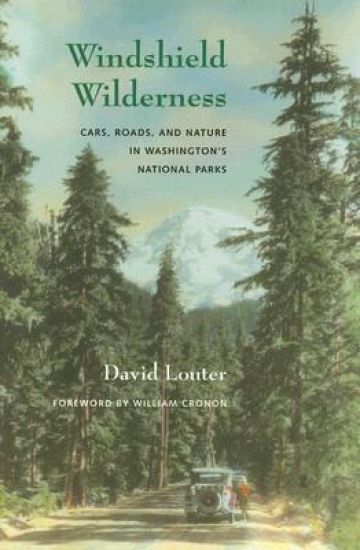
In his engaging book Windshield Wilderness, David Louter explores the relationship between automobiles and national parks, and how together they have shaped our ideas of wilderness. National parks, he argues, did not develop as places set aside from the modern world, but rather came to be known and appreciated through technological progress in the form of cars and roads, leaving an enduring legacy of knowing nature through machines. With a lively style and striking illustrations, Louter traces the history of Washington State's national parks -- Mount Rainier, Olympic, and North Cascades -- to illustrate shifting ideas of wilderness as scenic, as roadless, and as ecological reserve. He reminds us that we cannot understand national parks without recognizing that cars have been central to how people experience and interpret their meaning, and especially how they perceive them as wild places. Windshield Wilderness explores what few histories of national parks address: what it means to view parks from the road and through a windshield. Building upon recent interpretations of wilderness as a cultural construct rather than as a pure state of nature, the story of autos in parks presents the preservation of wilderness as a dynamic and nuanced process. Windshield Wilderness illuminates the difficulty of separating human-modified landscapes from natural ones, encouraging us to recognize our connections with nature in national parks.
In the years following World War II, the world's biggest dam was almost built in Hells Canyon on the Snake River in Idaho. Karl Boyd Brooks tells the story of the dam controversy, which became a referendum not only on public-power expansion but also on the environmental implications of the New Deal's natural resources and economic policy. Private-power critics of the Hells Canyon High Dam posed difficult questions about the implications of damming rivers to create power and to grow crops. Activists, attorneys, and scientists pioneered legal tactics and political rhetoric that would help to define the environmental movement in the 1960s. The debate, however, was less about endangered salmon or threatened wild country and more about who would control land and water and whether state enterprise or private capital would oversee the supply of electricity. By thwarting the dam's construction, Snake Basin irrigators retained control over water as well as economic and political power in Idaho, putting the state on a postwar path that diverged markedly from that of bordering states. In the end, the opponents of the dam were responsible for preserving high deserts and mountain rivers from radical change. With Public Power, Private Dams, Karl Brooks makes an important contribution not only to the history of the Pacific Northwest and the region's anadromous fisheries but also to the environmental history of the United States in the period after World War II.
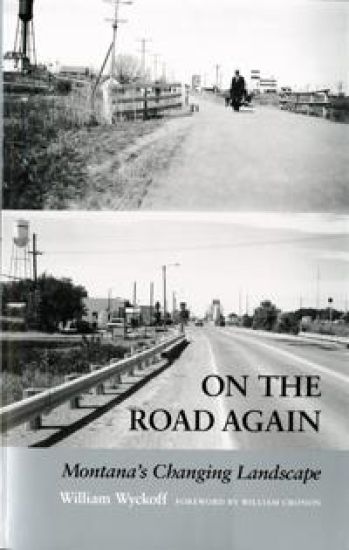
In On the Road Again, William Wyckoff explores Montana's changing physical and cultural landscape by pairing photographs taken by state highway engineers in the 1920s and 1930s with photographs taken at the same sites today. The older photographs, preserved in the archives of the Montana Historical Society, were intended to document the expenditure of federal highway funds. Because it is nearly impossible to photograph a road without also photographing the landscape through which that road passes, these images contain a wealth of information about the state's environment during the early decades of the twentieth century. To highlight landscape changes -- and continuities -- over more than eighty years, Wyckoff chose fifty-eight documented locations and traveled to each to photograph the exact same view. The pairs of old and new photos and accompanying interpretive essays presented here tell a vivid story of physical, cultural, and economic change. Wyckoff has grouped his selections to cover a fairly even mix of views from the eastern and western parts of the state, including a wide assortment of land use settings and rural and urban landscapes. The photo pairs are organized in thirteen "visual themes," such as forested areas, open spaces, and sacred spaces, which parallel landscape change across the entire American West. A close, thoughtful look at these photographs reveals how crops, fences, trees, and houses shape the everyday landscape, both in the first quarter of the twentieth century and in the present. The photographs offer an intimate view into Montana, into how Montana has changed in the past eighty years and how it may continue to change in the twenty-first century. This is a book that will captivate readers who have, or hope to have, a tie to the Montana countryside, whether as resident or visitor. Regional and agricultural historians, geographers and geologists, and rural and urban planners will all find it fascinating.
The Rhine River is Europe's most important commercial waterway, channeling the flow of trade among Switzerland, France, Germany, and the Netherlands. In this innovative study, Mark Cioc focuses on the river from the moment when the Congress of Vienna established a multinational commission charged with making the river more efficient for purposes of trade and commerce in 1815. He examines the engineering and administrative decisions of the next century and a half that resulted in rapid industrial growth as well as profound environmental degradation, and highlights the partially successful restoration efforts undertaken from the 1970s to the present. The Rhine is a classic example of a "multipurpose" river -- used simultaneously for transportation, for industry and agriculture, for urban drinking and sanitation needs, for hydroelectric production, and for recreation. It thus invites comparison with similarly over-burdened rivers such as the Mississippi, Hudson, Colorado, and Columbia. The Rhine's environmental problems are, however, even greater than those of other rivers because it is so densely populated (50 million people live along its borders), so highly industrialized (10% of global chemical production), and so short (775 miles in length). Two centuries of nonstop hydraulic tinkering have resulted in a Rhine with a sleek and slender profile. In their quest for a perfect canal-like river, engineers have modified it more than any other large river in the world. As a consequence, between 1815 and 1975, the river lost most of its natural floodplain, riverside vegetation, migratory fish, and biodiversity. Recent efforts to restore that biodiversity, though heartening, can have only limited success because so many of the structural changes to the river are irreversible. The Rhine: An Eco-Biography, 1815-2000 makes clear just how central the river has been to all aspects of European political, economic, and environmental life for the past two hundred years.
The human impulse to religion--the drive to explain the world, humans, and humans' place in the universe – can be seen to encompass environmentalism as an offshoot of the secular, material faith in human reason and power that dominates modern society. Faith in Nature traces the history of environmentalism--and its moral thrust--from its roots in the Enlightenment and Romanticism through the Progressive Era to the present. Drawing astonishing parallels between religion and environmentalism, the book examines the passion of the movement's adherents and enemies alike, its concern with the moral conduct of daily life, and its attempt to answer fundamental questions about the underlying order of the world and of humanity's place within it. Thomas Dunlap is among the leading environmental historians and historians of science in the United States. Originally trained as a chemist, he has a rigorous understanding of science and appreciates its vital importance to environmental thought. But he is also a devout Catholic who believes that the insights of religious revelation need not necessarily be at odds with the insights of scientific investigation. This book grew from his own religious journey and his attempts to understand human ethical obligations and spiritual debts to the natural world. CHOICE Outstanding Academic Title 2005
In its infancy, the movement to protect wilderness areas in the United States was motivated less by perceived threats from industrial and agricultural activities than by concern over the impacts of automobile owners seeking recreational opportunities in wild areas. Countless commercial and government purveyors vigorously promoted the mystique of travel to breathtakingly scenic places, and roads and highways were built to facilitate such travel. By the early 1930s, New Deal public works programs brought these trends to a startling crescendo. The dilemma faced by stewards of the nation's public lands was how to protect the wild qualities of those places while accommodating, and often encouraging, automobile-based tourism. By 1935, the founders of the Wilderness Society had become convinced of the impossibility of doing both. In Driven Wild, Paul Sutter traces the intellectual and cultural roots of the modern wilderness movement from about 1910 through the 1930s, with tightly drawn portraits of four Wilderness Society founders--Aldo Leopold, Robert Sterling Yard, Benton MacKaye, and Bob Marshall. Each man brought a different background and perspective to the advocacy for wilderness preservation, yet each was spurred by a fear of what growing numbers of automobiles, aggressive road building, and the meteoric increase in Americans turning to nature for their leisure would do to the country's wild places. As Sutter discovered, the founders of the Wilderness Society were "driven wild"--pushed by a rapidly changing country to construct a new preservationist ideal. Sutter demonstrates that the birth of the movement to protect wilderness areas reflected a growing belief among an important group of conservationists that the modern forces of capitalism, industrialism, urbanism, and mass consumer culture were gradually eroding not just the ecology of North America, but crucial American values as well. For them, wilderness stood for something deeply sacred that was in danger of being lost, so that the movement to protect it was about saving not just wild nature, but ourselves as well.
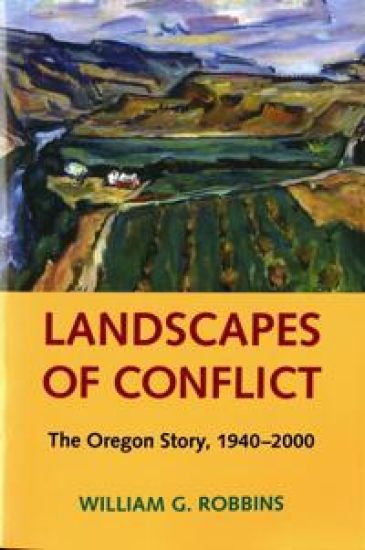
Post-World War II Oregon was a place of optimism and growth, a spectacular natural region from ocean to high desert that seemingly provided opportunity in abundance. With the passing of time, however, Oregon's citizens — rural and urban — would find themselves entangled in issues that they had little experience in resolving. The same trees that provided income to timber corporations, small mill owners, loggers, and many small towns in Oregon, also provided a dramatic landscape and a home to creatures at risk. The rivers whose harnessing created power for industries that helped sustain Oregon's growth — and were dumping grounds for municipal and industrial wastes — also provided passageways to spawning grounds for fish, domestic water sources, and recreational space for everyday Oregonians. The story of Oregon's accommodation to these divergent interests is a divisive story between those interested in economic growth and perceived stability and citizens concerned with exercising good stewardship towards the state's natural resources and preserving the state's livability. In his second volume of Oregon's environmental history, William Robbins addresses efforts by individuals and groups within and outside the state to resolve these conflicts. Among the people who have had roles in this process, journalists and politicians Richard Neuberger and Tom McCall left substantial legacies and demonstrated the ambiguities inherent in the issues they confronted.
Conservation was the first nationwide political movement in American history to grapple with environmental problems like waste, pollution, resource exhaustion, and sustainability. At its height, the conservation movement was a critical aspect of the broader reforms undertaken in the Progressive Era (1890-1910), as the rapidly industrializing nation struggled to protect human health, natural beauty, and "national efficiency." This highly effective Progressive Era movement was distinct from earlier conservation efforts and later environmentalist reforms. Conservation in the Progressive Era places conservation in historical context, using the words of participants in and opponents to the movement. Together, the documents collected here reveal the various and sometimes conflicting uses of the term "conservation" and the contested nature of the reforms it described. This collection includes classic texts by such well-known figures as Theodore Roosevelt, Gifford Pinchot, and John Muir, as well as texts from lesser-known but equally important voices that are often overlooked in environmental studies: those of rural communities, women, and the working class. These lively selections provoke unexpected questions and ideas about many of the significant environmental issues facing us today.
Sara Walsh was born in 1919 in the west of Ireland, in a land of storytellers. In prose that is neither history nor memoir but something larger and brighter than both, Remembering Ahanagran captures her memories of her early years in Ireland, her migration to the United States, and her marriage to Harry White, the Harvard-educated son of Russian Jewish emigrants. Her son, eminent historian Richard White, in collaboration with Sara, forces history as it is traditionally written into conversation with personal recollections.