Kirjojen hintavertailu – 12 859 828 kirjaa ja 27 kauppaa

Kirjailija

William Crooke

Kirjat ja teokset yhdessä paikassa: 36 kirjaa, julkaisuja vuosilta 2007–2026, suosituimpiin kuuluu The Popular Religion and Folk-Lore of Northern India, Vol. 2 (of 2) (Cram Edition). Vertaile teosten hintoja ja tarkista saatavuus suomalaisista kirjakaupoista.

36 kirjaa

Kirjojen julkaisuvuodet: 2007–2026.

An Ethnographical Hand-Book

An Ethnographical Hand-Book

William Crooke

Hansebooks
2020
pokkari
An Ethnographical Hand-Book - for the N. W. Provinces and Oudh is an unchanged, high-quality reprint of the original edition of 1890. Hansebooks is editor of the literature on different topic areas such as research and science, travel and expeditions, cooking and nutrition, medicine, and other genres. As a publisher we focus on the preservation of historical literature. Many works of historical writers and scientists are available today as antiques only. Hansebooks newly publishes these books and contributes to the preservation of literature which has become rare and historical knowledge for the future.
Popular Religion and Folklore of Northern India
Popular Religion and Folklore of Northern India - Vol. II is an unchanged, high-quality reprint of the original edition of 1896. Hansebooks is editor of the literature on different topic areas such as research and science, travel and expeditions, cooking and nutrition, medicine, and other genres. As a publisher we focus on the preservation of historical literature. Many works of historical writers and scientists are available today as antiques only. Hansebooks newly publishes these books and contributes to the preservation of literature which has become rare and historical knowledge for the future.

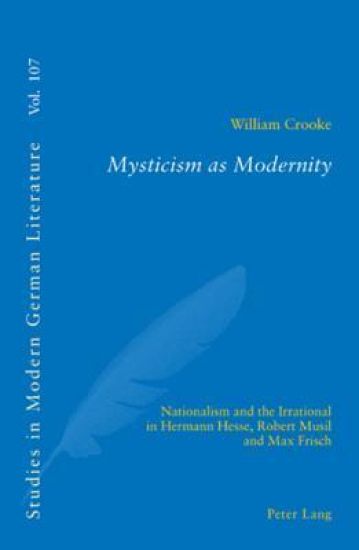
Mysticism as Modernity

Mysticism as Modernity

William Crooke

Verlag Peter Lang
2008
nidottu
This work reconsiders the connections between mysticism, nationalism and modernity in twentieth-century German cultures. Disengaging mysticism from occultism, the author creates a new space for reconsidering mysticism’s links to larger structures of modernity already at play at the turn of the century. Rather than dismissing mysticism as a strain of anti-modern irrationalism with troubling links to radical politics such as Nazism, the author reconceptualizes modern mysticism as an unwittingly logical expression of the same compression of time and space created by the emergence of the newspaper, radio, railways and telegraph and reflected in the novels of Hermann Hesse, Robert Musil and Max Frisch.