Kirjojen hintavertailu – 12 859 829 kirjaa ja 27 kauppaa

Kirjailija

William D. Nordhaus

Kirjat ja teokset yhdessä paikassa: 8 kirjaa, julkaisuja vuosilta 1987–2023, suosituimpiin kuuluu Economics and Policy Issues in Climate Change. Vertaile teosten hintoja ja tarkista saatavuus suomalaisista kirjakaupoista.

8 kirjaa

Kirjojen julkaisuvuodet: 1987–2023.

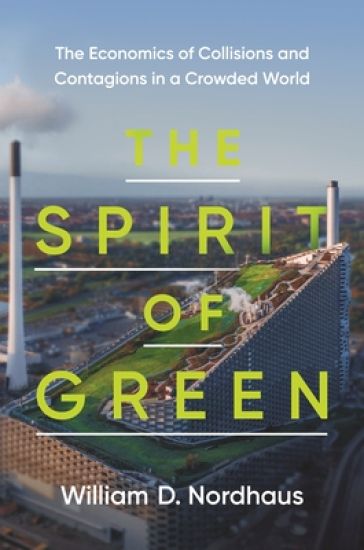
The Spirit of Green

The Spirit of Green

William D. Nordhaus

PRINCETON UNIVERSITY PRESS
2023
pokkari

Halvin toimitettuna 29,00 €

From a Nobel Prize–winning pioneer in environmental economics, an innovative account of how and why “green thinking” could cure many of the world’s most serious problems—from global warming to pandemicsSolving the world’s biggest problems—from climate catastrophe and pandemics to wildfires and corporate malfeasance—requires, more than anything else, coming up with new ways to manage the powerful interactions that surround us. For carbon emissions and other environmental damage, this means ensuring that those responsible pay their full costs rather than continuing to pass them along to others, including future generations. In The Spirit of Green, Nobel Prize–winning economist William Nordhaus describes a new way of green thinking that would help us overcome our biggest challenges without sacrificing economic prosperity, in large part by accounting for the spillover costs of economic collisions. In a discussion that ranges from the history of the environmental movement to the Green New Deal, Nordhaus explains how the spirit of green thinking provides a compelling and hopeful new perspective on modern life. At the heart of green thinking is a recognition that the globalized world is shaped not by isolated individuals but rather by innumerable interactions inside and outside the economy. He shows how rethinking economic efficiency, sustainability, politics, profits, taxes, individual ethics, corporate social responsibility, finance, and more would improve the effectiveness and equity of our society. And he offers specific solutions—on how to price carbon, how to pursue low-carbon technologies, how to design an efficient tax system, and how to foster international cooperation through climate clubs. The result is a groundbreaking new vision of how we can have our environment and our economy too.
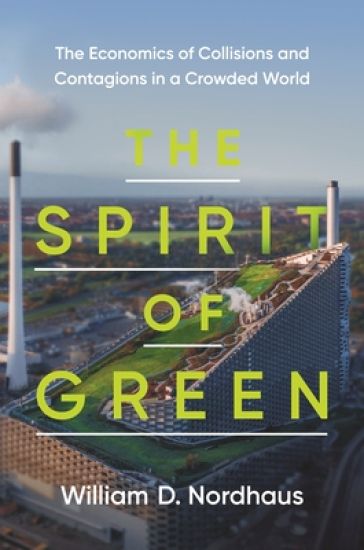
The Spirit of Green

The Spirit of Green

William D. Nordhaus

PRINCETON UNIVERSITY PRESS
2021
sidottu
From a Nobel Prize–winning pioneer in environmental economics, an innovative account of how and why “green thinking” could cure many of the world’s most serious problems—from global warming to pandemicsSolving the world’s biggest problems—from climate catastrophe and pandemics to wildfires and corporate malfeasance—requires, more than anything else, coming up with new ways to manage the powerful interactions that surround us. For carbon emissions and other environmental damage, this means ensuring that those responsible pay their full costs rather than continuing to pass them along to others, including future generations. In The Spirit of Green, Nobel Prize–winning economist William Nordhaus describes a new way of green thinking that would help us overcome our biggest challenges without sacrificing economic prosperity, in large part by accounting for the spillover costs of economic collisions. In a discussion that ranges from the history of the environmental movement to the Green New Deal, Nordhaus explains how the spirit of green thinking provides a compelling and hopeful new perspective on modern life. At the heart of green thinking is a recognition that the globalized world is shaped not by isolated individuals but rather by innumerable interactions inside and outside the economy. He shows how rethinking economic efficiency, sustainability, politics, profits, taxes, individual ethics, corporate social responsibility, finance, and more would improve the effectiveness and equity of our society. And he offers specific solutions—on how to price carbon, how to pursue low-carbon technologies, how to design an efficient tax system, and how to foster international cooperation through climate clubs. The result is a groundbreaking new vision of how we can have our environment and our economy too.
Economics and Policy Issues in Climate Change
Although the negotiation of the Kyoto Protocol focused world attention on the global climate, it was just one step in the ongoing process of addressing climate change in all its facets. Research by the UN's Intergovernmental Panel on Climate Change (IPCC) has been ongoing since 1988. An extensive IPCC Working Group report published in 1995 examined the economic and social aspects of climate change. In this volume, eminent analysts assess that IPCC report and address the questions that emerge from it. The result is an instructive and cogent look at the realities of climate change and some methods (and difficulties) of dealing with them. William Nordhaus's introduction establishes the context for the book. It provides basic scientific background on climate change, reviews the IPCC's activities, and explains the genesis of the analyses. Subsequent contributions fall into two categories. Early chapters review analytical issues critical to social and economic understanding of climate change. A second set of chapters address specific economic questions surrounding climate-change policy. The result is an original and significant contribution to the evolving debate on this crucial hot-button topic.
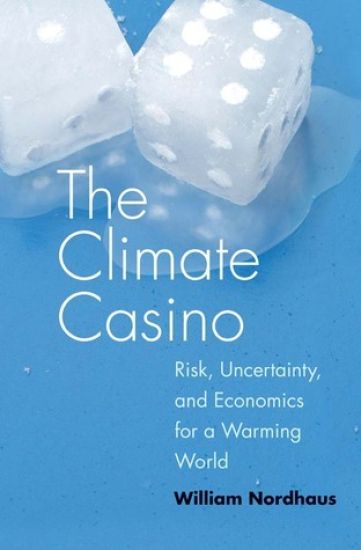
The Climate Casino

The Climate Casino

William D. Nordhaus

Yale University Press
2015
pokkari

Halvin toimitettuna 39,90 €

The 2018 Nobel laureate for economics analyzes the politics and economics of the central environmental issue of today and points the way to real solutions “A one-stop source on global warming, seen through the prism of a brilliant economist.”—Fred Andrews, New York Times Selected as one of the year’s best books by the Financial Times Climate change is profoundly altering our world in ways that pose major risks to human societies and natural systems. We have entered the Climate Casino and are rolling the global-warming dice, warns economist William Nordhaus. But there is still time to turn around and walk back out of the casino, and in this essential book the author explains how. Bringing together all the important issues surrounding the climate debate, Nordhaus describes the science, economics, and politics involved—and the steps necessary to reduce the perils of global warming. Using language accessible to any concerned citizen and taking care to present different points of view fairly, he discusses the problem from start to finish: from the beginning, where warming originates in our personal energy use, to the end, where societies employ regulations or taxes or subsidies to slow the emissions of gases responsible for climate change. Nordhaus offers a new analysis of why earlier policies, such as the Kyoto Protocol, failed to slow carbon dioxide emissions, how new approaches can succeed, and which policy tools will most effectively reduce emissions. In short, he clarifies a defining problem of our times and lays out the next critical steps for slowing the trajectory of global warming.
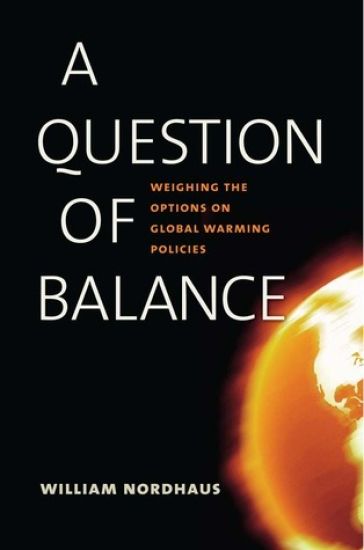
A Question of Balance

A Question of Balance

William D. Nordhaus

Yale University Press
2015
pokkari
The 2018 Nobel laureate for economics shows how economic analysis can help us design economic policies to address the looming challenges of global warming As scientific and observational evidence on global warming piles up every day, questions of economic policy in this central environmental topic have taken center stage. But as author and prominent Yale economist William Nordhaus observes, the issues involved in understanding global warming and slowing its harmful effects are complex and cross disciplinary boundaries. For example, ecologists see global warming as a threat to ecosystems, utilities as a debit to their balance sheets, and farmers as a hazard to their livelihoods. In this important work, William Nordhaus integrates the entire spectrum of economic and scientific research to weigh the costs of reducing emissions against the benefits of reducing the long-run damages from global warming. The book offers one of the most extensive analyses of the economic and environmental dynamics of greenhouse-gas emissions and climate change and provides the tools to evaluate alternative approaches to slowing global warming. The author emphasizes the need to establish effective mechanisms, such as carbon taxes, to harness markets and harmonize the efforts of different countries. This book not only will shape discussion of one the world’s most pressing problems but will provide the rationales and methods for achieving widespread agreement on our next best move in alleviating global warming.
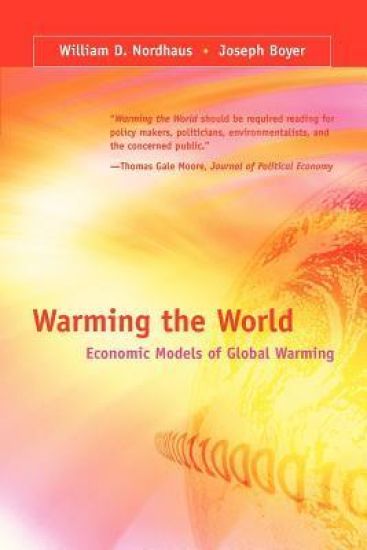
Warming the World

Warming the World

William D. Nordhaus; Joseph Boyer

MIT Press
2003
pokkari
This book presents in detail a pair of models of the economics of climate change. The models, called RICE-99 (for the Regional Dynamic Integrated model of Climate and the Economy) and DICE-99 (for the Dynamic Integrated Model of Climate and the Economy) build on the authors' earlier work, particularly their RICE and DICE models of the early 1990s. Humanity is risking the health of the natural environment through a myriad of interventions, including the atmospheric emission of trace gases such as carbon dioxide, the use of ozone-depleting chemicals, the engineering of massive land-use changes, and the destruction of the habitats of many species. It is imperative that we learn to protect our common geophysical and biological resources. Although scientists have studied greenhouse warming for decades, it is only recently that society has begun to consider the economic, political, and institutional aspects of environmental intervention. To do so raises formidable challenges of data modeling, uncertainty, international coordination, and institutional design. Attempts to deal with complex scientific and economic issues have increasingly involved the use of models to help analysts and decision makers understand likely future outcomes as well as the implications of alternative policies. This book presents in detail a pair of models of the economics of climate change. The models, called RICE-99 (for the Regional Dynamic Integrated model of Climate and the Economy) and DICE-99 (for the Dynamic Integrated Model of Climate and the Economy) build on the authors' earlier work, particularly their RICE and DICE models of the early 1990s. They can help policy makers design better economic and environmental policies.
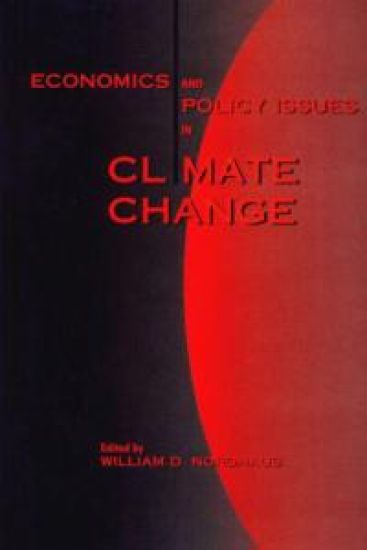
Economics and Policy Issues in Climate Change

Economics and Policy Issues in Climate Change

William D. Nordhaus

Resources for the Future Press (RFF Press)
1998
sidottu
Global climate change has emerged to become one of the most challenging and controversial policy issues. In this volume a group of scholars examines economic and social aspects of the phenomenon including discounting and intergenerational equity, and the role of cost-benefit analysis.
Toward a New Iron Age?

Toward a New Iron Age?

Robert B. Gordon; Tjalling C. Koopmans; William D. Nordhaus; Brian J. Skinner

Harvard University Press
1987
sidottu
Experts agree that the earth will eventually run out of certain low-cost, nonrenewable resources, possibly as early as a century from now. Will the transition to reliance on other, more abundant resources be smooth or discontinuous? Might industrial societies experience a marked decline in living standards—a radically different kind of society from the one we now know? Geologists maintain that once inexpensive high-grade resources are exhausted, economic growth will slow. Economists are more optimistic: they believe that new technologies and materials will be substituted rapidly enough to prevent minor economic dislocations. Toward a New Iron Age? takes an important step toward reconciling these divergent views. It is the most comprehensive study of the economic consequences of resource depletion—in particular, it is a thorough exploration of the prospects for one key metal, copper. The authors draw on geological and engineering data to calculate the resources now available and to assess the feasibility of substituting alternatives. Using linear programming and a range of hypothetical base conditions, they are able to estimate the course, through the next century and beyond, of several crucial factors: the rate at which copper resources will be used and when they will be depleted; how the price of the metal will fluctuate; when alternative materials will be substituted, in what patterns, and at what costs. By the late twenty-first century, the authors believe, low-cost copper will no longer be available. Industrial societies will have to operate on more abundant resources such as iron, silica, and aluminum. They will enter, in short, a New Iron Age.