Kirjailija
William De Lange
Kirjat ja teokset yhdessä paikassa: 35 kirjaa, julkaisuja vuosilta 1980–2026, suosituimpiin kuuluu Tokyo. Vertaile teosten hintoja ja tarkista saatavuus suomalaisista kirjakaupoista.
35 kirjaa
Kirjojen julkaisuvuodet: 1980–2026.
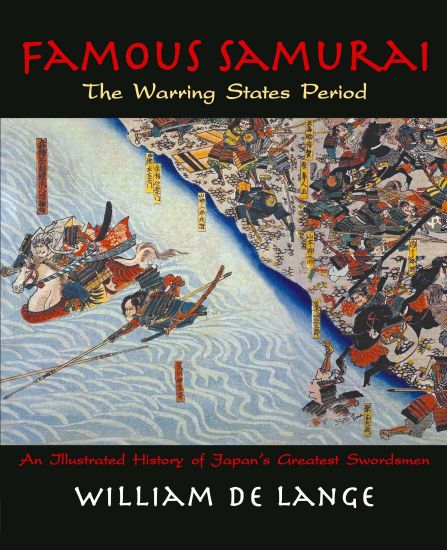
Known from his collaboration on the Netflix documentary Age of Samurai, historian William de Lange returns to what he does best: highly anecdotal stories from one of the most exciting episodes in Japanese history: the Warring States period. De Lange takes the reader right back to the 16th century's closing decades. In the course of the ensuing journey we witness the major battles fought by the country's three great unifiers: Oda Nobunaga, Toyotomi Hideyoshi, and Tokugawa Ieyasu. Quoting directly and at length from a wide range of contemporary sources, De Lange paints events and figures like no other, 'so richly rendered, ' according to one critic, 'that you'd swear De Lange was present at the time, taking notes.'Samurai Battles is an epic account of a dramatic period in Japanese history--a period in which the whole country was consumed by the fire of civil strife that raged hardest on the field of battle.
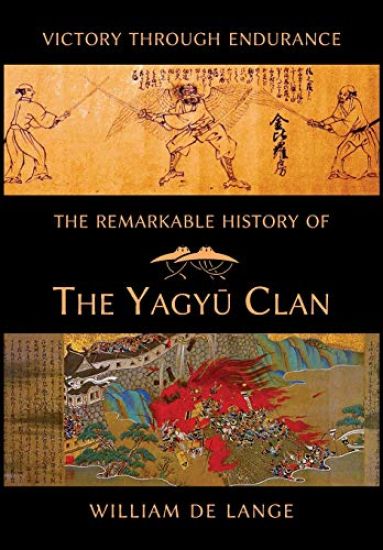
This is the true story of the eventful history of the famous Yagyū clan--a story that began during the early heady days of the Genkō Rebellion (1331-33), when emperor Go-Daigo sought to restore power to the throne with the support of the Yagyū and other loyal clans. It follows their campaigns on behalf of Go-Daigo's southern court during the Northern and Southern Courts period (1334-1392), and their long and hard struggle to retain their independence when the country rapidly descended into anarchy in the wake of the Ōnin Rebellion (1467-77). This first full Yagyū history in the English language recounts how, through a succession of misfortunes beyond their control, the Yagyū clan first lost its independence, then its castle and domains, until finally its members were thrown upon the mercy of a local temple. Yet it was in the very depth of those bleak and desperate years, that its leader, Yagyū Muneyoshi, discovered his true strength and began his clan's remarkable recovery--a recovery crowned with the ascendancy of his son, Munenori, to the exalted rank of Daimyō. It is perhaps no coincidence that the two Chinese characters that make up the name of Yagyū stand for the willow tree and life, or the giving of birth, for both seem to sum up perfectly the particular characteristics that helped propel this ancient clan to such exalted heights. Like the pliable willow tree, it was their resilience in the face of irresistible forces that enabled the Yagyū to outweather the raging storms of fortune and remain standing, alive and well, their spirit intact. In doing so, the Yagyū gave birth to an art of fencing that has survived for more than five centuries. Among the countless schools of swordsmanship brought forth by Japan's feudal era the Yagyū Shinkage-ryū still stands out for its sheer continuity.
This is the true story of the eventful history of the famous Yagyū clan--a story that began during the early heady days of the Genkō Rebellion (1331-33), when emperor Go-Daigo sought to restore power to the throne with the support of the Yagyū and other loyal clans. It follows their campaigns on behalf of Go-Daigo's southern court during the Northern and Southern Courts period (1334-1392), and their long and hard struggle to retain their independence when the country rapidly descended into anarchy in the wake of the Ōnin Rebellion (1467-77). This first full Yagyū history in the English language recounts how, through a succession of misfortunes beyond their control, the Yagyū clan first lost its independence, then its castle and domains, until finally its members were thrown upon the mercy of a local temple. Yet it was in the very depth of those bleak and desperate years, that its leader, Yagyū Muneyoshi, discovered his true strength and began his clan's remarkable recovery--a recovery crowned with the ascendancy of his son, Munenori, to the exalted rank of Daimyō. It is perhaps no coincidence that the two Chinese characters that make up the name of Yagyū stand for the willow tree and life, or the giving of birth, for both seem to sum up perfectly the particular characteristics that helped propel this ancient clan to such exalted heights. Like the pliable willow tree, it was their resilience in the face of irresistible forces that enabled the Yagyū to outweather the raging storms of fortune and remain standing, alive and well, their spirit intact. In doing so, the Yagyū gave birth to an art of fencing that has survived for more than five centuries. Among the countless schools of swordsmanship brought forth by Japan's feudal era the Yagyū Shinkage-ryū still stands out for its sheer continuity.

To any student of the Japanese language, the staggering number of onomatopoeia seems so daunting that one simply does not know where to begin. What, for instance, to make of karakara, karikari, kurikuri, or korikori? They may sound pretty similar, but they carry a wealth of information, modulated by emphasis, context, and grammatical function. Thus karakara alone can be used to describe someone laughing loudly, a vehicle rattling along, being parched with thirst, or being out of money. This is the first comprehensive dictionary of Japanese onomatopoeia. Multiple English sample sentences highlight every meaning and nuance of expressions used by Japanese speakers of all walks of life--from hip youths in Roppongi to erudite professors at university.
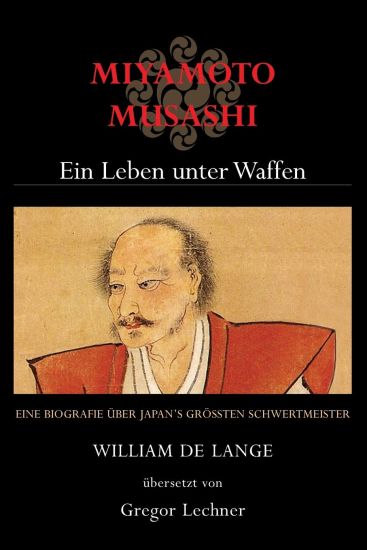
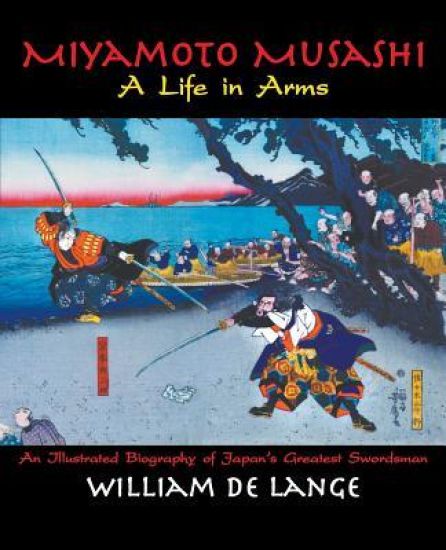
Dies ist der gelungene Versuch uns der historischen Person Miyamoto Musashi, Japans ber hmtesten Schwertk mpfer, zu n hern. W. de Lange forschte in Japan in den unterschiedlichsten Archiven akribisch nach Quellen ber M. Musashi, bersetzte diese und f gte sie zu einer realistischen Biografie zusammen, die sowohl den Lebensweg des legend ren Schwertk mpfers, als auch die kriegerische Zeit der japanischen Reichseinigung lebhaft vor den Augen des Lesers entstehen l sst. Sie halten mit diesem Buch die derzeit detaillierteste Ann herung an die gr te und bekannteste Schwertlegende des mittelalterlichen Japans in den H nden. Miyamoto Musashi hinterlie der Nachwelt den Geist seiner Kampfkunst im Buch der f nf Ringe, welches noch f r unsere Gegenwart so bedeutende Lehren enth lt, dass es nicht nur in Manager-Seminaren zitiert wird, sondern auch in fachspezifischen Kreisen eines der wichtigsten Grundlagenwerke bildet. Vor Ihnen, liebe Leserin, lieber Leser, liegt ein Ausschnitt lebendiger japanischer Geschichte, bevor die Grenzen f r ber 250 Jahre vor der Au enwelt geschlossen wurden. Erst im Jahre 1853 -, aber das ist eine andere Geschichte ...
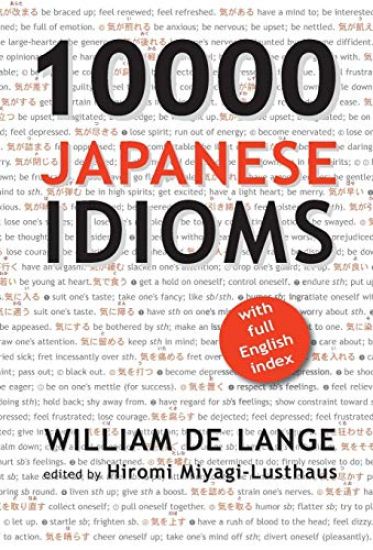
What student of Japanese has not grappled with the amazing diversity and tantalizingly elusive nuances of its idioms? One certainly would not want to confuse, for example, ki ga mawaru (to be considerate) with ki o mawasu (to be suspicious). And it would be useful to know whether your boss is hara ga tatsu (angry) or merely ki ga tatsu (upset). Indeed, even a single idiom can have a bewildering number of meanings depending on context; te o ireru, for instance, can mean tidying up (as a room), sounding out someone, or making a raid. This dictionary offers the most comprehensive compilation and English translation of those idiomatic expressions that so enrich the Japanese language but fail to find their way into conventional dictionaries. It presents more than 10000 idiomatic phrases under 1000 main entries, including several thousands of idioms never presented and explained in English before. Multiple sample sentences are given for each entry, and furigana allows even beginning students to pronounce correctly and to use the expressions immediately. A thumb index and two-color printing, with all kanji and kana in red, make entries exceptionally easy to access.
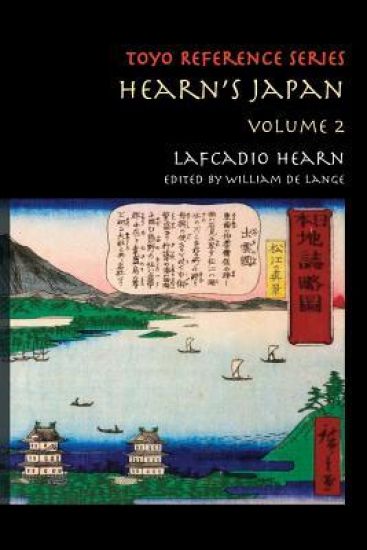
Lafcadio Hearn (1850-1904), the son of an Irish Surgeon-Major and a Greek woman of noble lineage, who settled in Japan after a checkered career in journalism in Cincinnati and New Orleans, is still considered by many the most astute interpreter of the country and its people. In the second part of this series, we join Hearn in Matsue in Izumo province, the place to which his name has become so inextricably linked. We are introduced to his samurai dwelling (yashiki) and its three gardens with exotic flowers, birds, and insects. And we meet his fellow teachers and eager students at the two schools at which he takes up his new position of teacher, a role in which he would support his new Japanese family for the rest of his life. We join him on yet more excursions, to the neighboring province of H ki (Tottori), and by ferry to the Oki archipelago to visit and explore its many varied islands and communities. There, far away from 'the far-reaching influences of high-pressure civilization, ' he learns more about the Japanese soul, about ghosts and goblins, and about the enigmatic Japanese smile, which seems always on display, even in the most wretched of times. Led, introduced, and informed by guides and friends, with each experience, Hearn's love for the Japanese grows, his understanding for their ways deepens. And it is this pairing of love and insight that make his Writings From a Mystical Country so compelling and enchanting--even now, more than a century after his death.