Kirjojen hintavertailu – 12 903 725 kirjaa ja 27 kauppaa

Kirjailija

William Deresiewicz

Kirjat ja teokset yhdessä paikassa: 7 kirjaa, julkaisuja vuosilta 2005–2023, suosituimpiin kuuluu Liberties Journal of Culture and Politics. Vertaile teosten hintoja ja tarkista saatavuus suomalaisista kirjakaupoista.

7 kirjaa

Kirjojen julkaisuvuodet: 2005–2023.

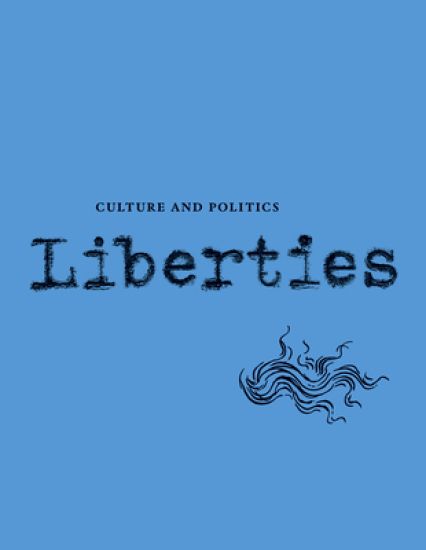
Liberties Journal of Culture and Politics

Liberties Journal of Culture and Politics

Giles Kepel; Ingrid Rowland; Vladimir Kara-Murza; Enrique Krauze; Paul Muldoon; Mitchell Abidor; Agnes Callard; Henri Cole; William Deresiewicz; Benjamin Moser; David Nirenberg; Peter Phillips; Becca Rothfeld; Paul Starr; David Thomson; Chaim Nacham Bialik

Liberties Journal Foundation
2021
pokkari
“A Meteor of Intelligent Substance” “Something was Missing in our Culture, and Here It Is” “Liberties sure is needed in these times.” In a short time since its launch, Liberties - A Journal of Culture and Politics, a quarterly, has become essential reading for those engaged in the cultural and political issues and causes of our time. The writers in Liberties offer deep experience from across borders, national identities, political affiliations and artistic achievements. As the introductory essay in the inaugural edition noted, “At this journal we are betting on what used to be called the common reader, who would rather reflect than belong and asks of our intellectual life more than a choice between orthodoxies.” Each issue of Liberties features original in-depth essays and compelling new poetry from some of the world's most significant writers, artists, and scholars, as well as introducing new talent, to inspire and impact the intellectual and creative lifeblood of today’s culture and politics. This spring issue of Liberties includes: Giles Kepel on the Murder of Samuel Paty; Ingrid Rowland’s Long Live the Classics!; Vladimir Kara-Murza Surviving Putin’s Poisons; Paul Starr on Reckoning with National Failure from Covid; Becca Rothfeld on Today's Sanctimony Literature; Enrique Krauze explores What is Latin America?; William Deresiewicz on Why Great Visual Art Forces Us to Think; Benjamin Moser on Rediscovering Frans Hals; David Nirenberg on What We Can Learn from Earlier Plagues; Agnes Callard’s view of Romance without Love, Love without Romance; Mitchell Abidor looks back to “Social Media” in 1895 to Understand a Crowd’s “Wisdom”; The Tallis Scholars' Peter Phillips on the Secrets of Josquin; David Thomson on Movies’ Poetic Desire; Poetry from Henri Cole, Chaim Nachman Bialik, and Paul Muldoon; and, Leon Wieseltier (editor) asks "Where Are the Americans?” and Celeste Marcus (managing editor) writes for a Pluralistic Heart.
The End of Solitude

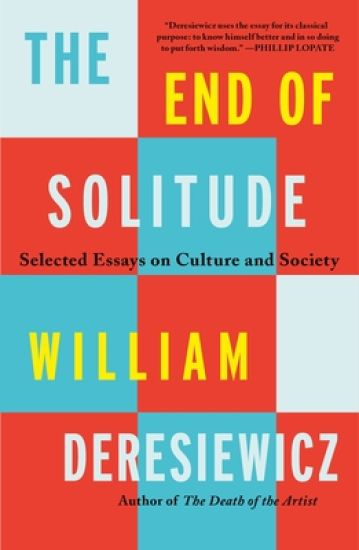
The End of Solitude

William Deresiewicz

HENRY HOLT COMPANY INC
2023
nidottu

Halvin toimitettuna 22,00 €

A passionate, probing collection gathering nearly thirty years of groundbreaking reflection on culture and society alongside four new essays, by one of our most respected essayists and critics--former Yale English professor and National Book Critics Circle Award-winner William Deresiewicz. What is the internet doing to us? What is college for? What are the myths and metaphors we live by? These are the questions that William Deresiewicz has been pursuing over the course of his award-winning career. The End of Solitude brings together more than forty of his finest essays, including four that are published here for the first time. Ranging widely across the culture, they take up subjects as diverse as Mad Men and Harold Bloom, the significance of the hipster, and the purpose of art. Drawing on the past, they ask how we got where we are. Scrutinizing the present, they seek to understand how we can live more mindfully and freely, and they pose two fundamental questions: What does it mean to be an individual, and how can we sustain our individuality in an age of networks and groups?
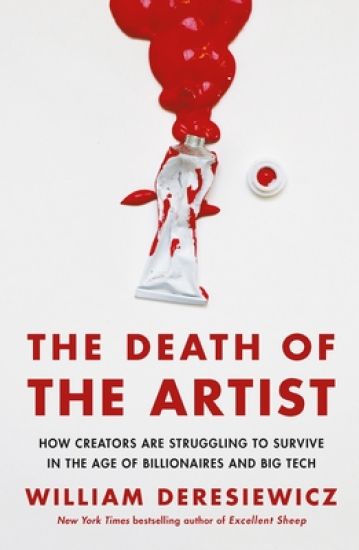
The Death of the Artist

The Death of the Artist

William Deresiewicz

St Martin's Press
2022
pokkari
A deeply researched warning about how the digital economy threatens artists' lives and work--the music, writing, and visual art that sustain our souls and societies--from an award-winning essayist and critic There are two stories you hear about earning a living as an artist in the digital age. One comes from Silicon Valley. There's never been a better time to be an artist, it goes. If you've got a laptop, you've got a recording studio. If you've got an iPhone, you've got a movie camera. And if production is cheap, distribution is free: it's called the Internet. Everyone's an artist; just tap your creativity and put your stuff out there. The other comes from artists themselves. Sure, it goes, you can put your stuff out there, but who's going to pay you for it? Everyone is not an artist. Making art takes years of dedication, and that requires a means of support. If things don't change, a lot of art will cease to be sustainable. So which account is true? Since people are still making a living as artists today, how are they managing to do it? William Deresiewicz, a leading critic of the arts and of contemporary culture, set out to answer those questions. Based on interviews with artists of all kinds, The Death of the Artist argues that we are in the midst of an epochal transformation. If artists were artisans in the Renaissance, bohemians in the nineteenth century, and professionals in the twentieth, a new paradigm is emerging in the digital age, one that is changing our fundamental ideas about the nature of art and the role of the artist in society.
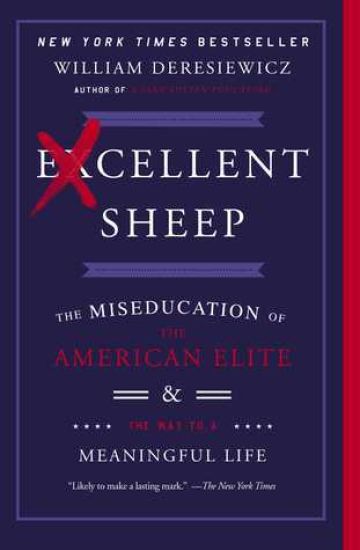
Excellent Sheep

Excellent Sheep

William Deresiewicz

The Free Press
2015
pokkari

Halvin toimitettuna 20,90 €

As a professor at Yale, William Deresiewicz saw something that troubled him deeply. His students, some of the nation's brightest minds, were adrift when it came to the big questions: how to think critically and creatively and how to find a sense of purpose. Now he argues that elite colleges are turning out conformists without a compass. Excellent Sheep takes a sharp look at the high-pressure conveyor belt that begins with parents and counsellors who demand perfect grades and culminates in the skewed applications Deresiewicz saw first-hand as a member of Yale's admissions committee. As schools shift focus from the humanities to "practical" subjects like economics, students are losing the ability to think independently. It is essential, says Deresiewicz, that college be a time for self-discovery, when students can establish their own values and measures of success in order to forge their own paths. He features quotes from real students and graduates he has corresponded with over the years, candidly exposing where the system is broken and offering clear solutions on how to fix it. "Excellent Sheep is likely to make…a lasting mark…. He takes aim at just about the entirety of upper-middle-class life in America…. Mr. Deresiewicz's book is packed full of what he wants more of in American life: passionate weirdness" (The New York Times).
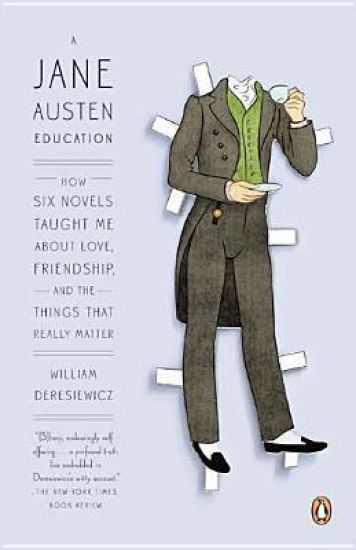
A Jane Austen Education: How Six Novels Taught Me About Love, Friendship, and the Things That Really Matter
Before Jane Austen, William Deresiewicz was a very different young man. A sullen and arrogant graduate student, he never thought Austen would have anything to offer him. Then he read Emma--and everything changed. In this unique and lyrical book, Deresiewicz weaves the misadventures of Austen's characters with his own youthful follies, demonstrating the power of the great novelist's teachings--and how, for Austen, growing up and making mistakes are one and the same. Honest, erudite, and deeply moving, A Jane Austen Education is the story of one man's discovery of the world outside himself.
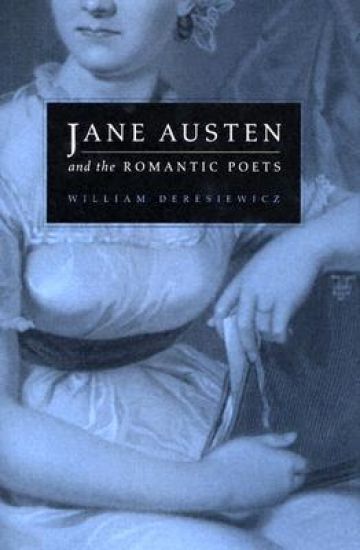
Jane Austen and the Romantic Poets

Jane Austen and the Romantic Poets

William Deresiewicz

Columbia University Press
2005
sidottu
This elegant and thoughtful work offers an important new way of understanding Jane Austen by defining the fundamental impact and influence of British Romanticism on her later novels. In comparing the earlier and later phases of Austen's career, Deresiewicz addresses an important yet neglected issue regarding her work: the longstanding critical consensus that Austen's last three novels (Mansfield Park, Emma, and Persuasion) represent far greater artistic achievements than do her first three (Northanger Abbey, Sense and Sensibility, and Pride and Prejudice). Jane Austen and the Romantic Poets offers a rich account of the differences between the two phases of Austen's career. In doing so, it contextualizes her later novels within the British Romantic movement and the works of Wordsworth, Coleridge, Scott, and Byron. Through close readings of Mansfield Park, Emma, and Persuasion, Deresiewicz reveals the importance of Romantic ideas in Austen's later work, considering the ways in which the novels investigate hidden mechanisms of psychic and affective life, including "substitution," "ambiguous relationships," and "widowhood." Deresiewicz's innovative approach and its emphasis on Romanticism opens up new perspectives on Austen's later novels by exploring their patterns of imagery, narrative logics, and social and historical dimensions.