Kirjojen hintavertailu – 12 903 725 kirjaa ja 27 kauppaa

Kirjailija

William Fawcett

Kirjat ja teokset yhdessä paikassa: 26 kirjaa, julkaisuja vuosilta 2006–2026, suosituimpiin kuuluu Hunting in Northumbria. Vertaile teosten hintoja ja tarkista saatavuus suomalaisista kirjakaupoista.

26 kirjaa

Kirjojen julkaisuvuodet: 2006–2026.

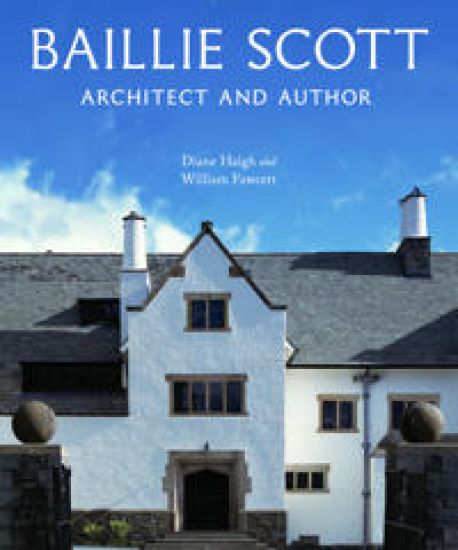
Baillie Scott

Baillie Scott

William Fawcett; Diane Haigh

LUND HUMPHRIES PUBLISHERS LTD
2026
sidottu
Mackay Hugh Baillie Scott (1865-1945) was a leading and influential architect and designer of the Arts and Crafts movement in Britain, who adhered to the philosophy that good design should be made available to everyone. Based on Diane Haigh’s much praised and successful Baillie Scott: the Artistic House, which featured a charming and vivid portrait of the architect in the context of his time and his contemporaries by John Betjeman, this book is not only updated with new information, but it is now illustrated with full colour photography and architectural drawings. While Baillie Scott was mainly an architect of country houses and gardens, he also explored the grouping of houses and contributed to Hampstead Garden Suburb, as well as designing distinctive furniture and a great diversity of decorative details, including joinery, stained glass and embroidery. He was innovative in his spatial planning and was one of the first architects to develop open-plan living arrangements, in common with his American contemporary Frank Lloyd Wright (1867-1959). These aspects of his work are covered in a clear, engaging and insightful way. The book also includes a large new section on Baillie Scott’s own writings, including extracts from his highly influential book Houses and Gardens (1906). Other extracts discuss the influence of William Morris, Baillie Scott’s views on Modernism, asides on designing for servants and heights of windowsills, as well as two sets of correspondence – the first with the German critic Hermann Muthesius, and the second with a client who built an English country house in Switzerland. Throughout, Baillie Scott writes with good sense, careful thought and humour, and these pieces are still extremely relevant. Each of the extracts include William Fawcett’s informative commentary.
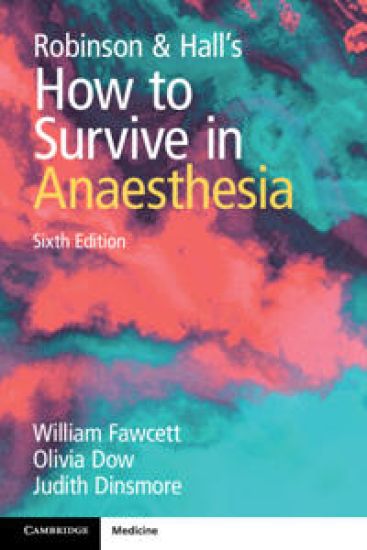
Robinson and Hall's How to Survive in Anaesthesia

Robinson and Hall's How to Survive in Anaesthesia

William Fawcett; Olivia Dow; Judith Dinsmore

Cambridge University Press
2025
pokkari
The initial months working as a trainee anaesthetist are daunting, with a wealth of new drugs, terminology, anaesthetic equipment, and practical procedures to master. This essential guide, now in its sixth edition, provides doctors and clinical staff with a clear introduction on the delivery of safe anaesthesia from day one. Fully updated and split into four key parts for quick consultation, it covers the airway and anaesthetic equipment, and offers advice on how to manage common crises and emergencies such as cardiac arrest, haemorrhage, and blood transfusion. Proceeding parts explore subspecialties and provide information on intensive care and perioperative medicine. Thoroughly revised and updated to reflect recent changes in anaesthesia, and including new chapters on obstetric anaesthesia, common regional nerve blocks, and emergency laparotomy. Written in an accessible style, it is an essential resource for learning the safe fundamentals of anaesthetic practice for trainee anaesthetists and clinical staff working alongside anaesthetists.
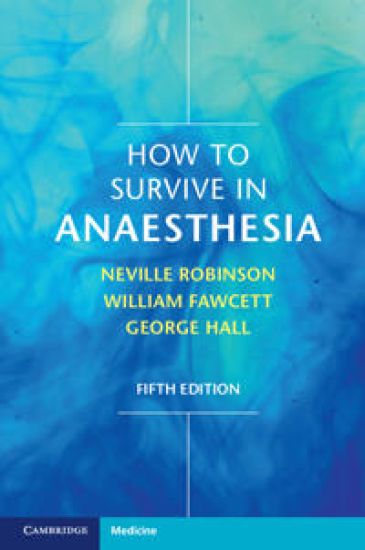
How to Survive in Anaesthesia

How to Survive in Anaesthesia

Neville Robinson; George Hall; William Fawcett

Cambridge University Press
2017
pokkari
The first few months as a trainee anaesthetist are a daunting prospect, filled with new information, skills and terminology. This concise reference, now in its fifth edition, provides doctors with a clear introduction to the practice. Fully updated and split into four key parts for quick consultation, the reader can recap on the airway and anaesthetic equipment, and find crucial advice on crises such as cardiac arrest, haemorrhage and blood transfusion. Part III focuses on subspecialties, with new chapters on obstetric anaesthesia, common regional nerve blocks, and laparoscopy, while the newly added fourth part provides information on intensive care and peri-operative medicine. Written in an accessible and often humorous style, How to Survive in Anaesthesia is an essential resource in learning the safe fundamentals of the practice for trainee anaesthetists, as well as operating department practitioners, physicians' assistants and anaesthetic nurses.
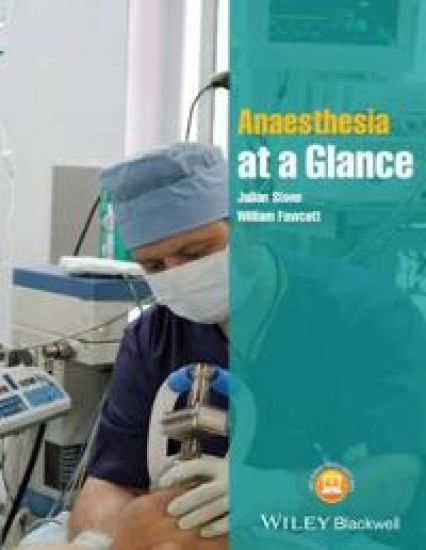
Anaesthesia at a Glance

Anaesthesia at a Glance

Julian Stone; William Fawcett

Wiley-Blackwell (an imprint of John Wiley Sons Ltd)
2014
nidottu
Anaesthesia at a Glance is a brand new title that provides a concise and visually-orientated summary of a comprehensive lecture course in anaesthesia. Ideal for clinical undergraduate medical students and Foundation Programme doctors undertaking anaesthesia attachments, it gives a systematic, broad view of anaesthesia in various specialties, taking the reader through preparation, management and the pharmacology behind anaesthetic medicine. Anaesthesia at a Glance is supported by a companion website at www.ataglanceseries.com/anaesthesia containing interactive multiple-choice questions and answers together with a selection of interactive cases – perfect for study and revision. Whether you want to refresh your knowledge or need a thorough overview of the specialty, Anaesthesia at a Glance presents all the vital clinical information you need.
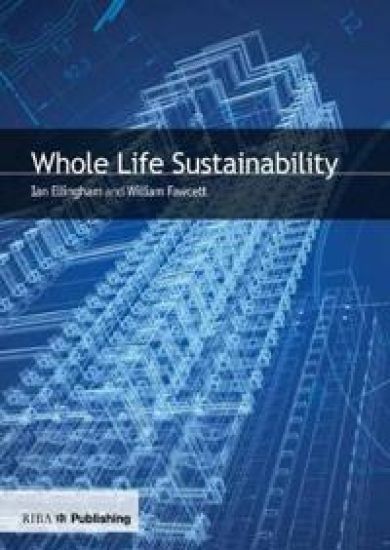
Whole Life Sustainability

Whole Life Sustainability

Ian Ellingham; William Fawcett

RIBA Publishing
2013
nidottu
Whole Life Costing (WLC) needs to become a tool in the design process: that is the argument of this new title by Ian Ellingham and William Fawcett. For too long WLC has been misunderstood, considered too complicated for designers to undertake on a readily practical basis. But techniques are changing, and Whole Life Sustainability presents a selection of simple analytical tools that architects can use to arm themselves with confident and qualitative justifications for making sustainable decisions. Increasing numbers of clients are demanding that environmental design is balanced with financial and long-term cost issues, and WLC is a way of finding common currency for making decisions. Whole Life Sustainability shows a number of approaches for doing so, steering clear of number-crunching, and instead using simple ‘back-of-the-envelope’ techniques, and easy self-assessment tools for the architect to evaluate and understand the whole life of their building. Whole Life Sustainability is a simple route to more insightful, better-quality analysis in the design process.