Kirjojen hintavertailu – 12 859 818 kirjaa ja 27 kauppaa

Kirjailija

William Finnegan

Kirjat ja teokset yhdessä paikassa: 11 kirjaa, julkaisuja vuosilta 1992–2021, suosituimpiin kuuluu Fight of the Century. Vertaile teosten hintoja ja tarkista saatavuus suomalaisista kirjakaupoista.

11 kirjaa

Kirjojen julkaisuvuodet: 1992–2021.

Fight of the Century

Fight of the Century

Dave Cole; Viet Thanh Nguyen; Jacqueline woodson; Ann Patchett; Brit Bennett; Steven Okazaki; David Handler; Geraldine Brooks; Yaa Gyasi; Sergio De La Pava; Dave Eggers; Timothy Egan; Li Yiyun; Meg Wolitzer; Hector Tobar; Aleksandar Hemon; Elizabeth Strout; Rabih Alameddine; Moriel Rothman-Zecher; Jonathan Lethem; Salman Rushdie; Lauren Groff; Jennifer Egan; Scott Turow; Morgan Parker; Victor Lavalle; Michael Cunningham; Neil Gaiman; Jesmyn Ward; Moses Sumney; George Saunders; Marlon James; William Finnegan; Anthony Doerr

Simon Schuster
2021
pokkari
The American Civil Liberties Union partners with award-winning authors Michael Chabon and Ayelet Waldman in this “forceful, beautifully written” (Associated Press) collection that brings together many of our greatest living writers, each contributing an original piece inspired by a historic ACLU case. On January 19, 1920, a small group of idealists and visionaries, including Helen Keller, Jane Addams, Roger Baldwin, and Crystal Eastman, founded the American Civil Liberties Union. A century after its creation, the ACLU remains the nation’s premier defender of the rights and freedoms guaranteed by the Constitution. In collaboration with the ACLU, authors Michael Chabon and Ayelet Waldman have curated an anthology of essays “full of struggle, emotion, fear, resilience, hope, and triumph” (Los Angeles Review of Books) about landmark cases in the organization’s one-hundred-year history. Fight of the Century takes you inside the trials and the stories that have shaped modern life. Some of the most prominent cases that the ACLU has been involved in—Brown v. Board of Education, Roe v. Wade, Miranda v. Arizona—need little introduction. Others you may never even have heard of, yet their outcomes quietly defined the world we live in now. Familiar or little-known, each case springs to vivid life in the hands of the acclaimed writers who dive into the history, narrate their personal experiences, and debate the questions at the heart of each issue. Hector Tobar introduces us to Ernesto Miranda, the felon whose wrongful conviction inspired the now-iconic Miranda rights—which the police would later read to the man suspected of killing him. Yaa Gyasi confronts the legacy of Brown v. Board of Education, in which the ACLU submitted a friend of- the-court brief questioning why a nation that has sent men to the moon still has public schools so unequal that they may as well be on different planets. True to the ACLU’s spirit of principled dissent, Scott Turow offers a blistering critique of the ACLU’s stance on campaign finance. These powerful stories, along with essays from Neil Gaiman, Meg Wolitzer, Salman Rushdie, Ann Patchett, Viet Thanh Nguyen, Louise Erdrich, George Saunders, and many more, remind us that the issues the ACLU has engaged over the past one hundred years remain as vital as ever today, and that we can never take our liberties for granted. Chabon and Waldman are donating their advance to the ACLU and the contributors are forgoing payment.
Fight of the Century

Fight of the Century

Dave Cole; Viet Thanh Nguyen; Jacqueline woodson; Ann Patchett; Brit Bennett; Steven Okazaki; David Handler; Geraldine Brooks; Yaa Gyasi; Sergio De La Pava; Dave Eggers; Timothy Egan; Li Yiyun; Meg Wolitzer; Hector Tobar; Aleksandar Hemon; Elizabeth Strout; Rabih Alameddine; Moriel Rothman-Zecher; Jonathan Lethem; Salman Rushdie; Lauren Groff; Jennifer Egan; Scott Turow; Morgan Parker; Victor Lavalle; Michael Cunningham; Neil Gaiman; Jesmyn Ward; Moses Sumney; George Saunders; Marlon James; William Finnegan; Anthony Doerr

Simon Schuster
2020
sidottu
To mark its 100-year anniversary, the American Civil Liberties Union partners with award-winning authors Michael Chabon and Ayelet Waldman to bring together many of our greatest living writers, each contributing an original piece inspired by a historic ACLU case. On January 19, 1920, a small group of idealists and visionaries, including Helen Keller, Jane Addams, Roger Baldwin, and Crystal Eastman, founded the American Civil Liberties Union. A century after its creation, the ACLU remains the nation’s premier defender of the rights and freedoms guaranteed by the Constitution. In collaboration with the ACLU, authors Michael Chabon and Ayelet Waldman have curated an anthology of essays about landmark cases in the organization’s one-hundred-year history. Fight of the Century takes you inside the trials and the stories that have shaped modern life. Some of the most prominent cases that the ACLU has been involved in—Brown v. Board of Education, Roe v. Wade, Miranda v. Arizona—need little introduction. Others you may never even have heard of, yet their outcomes quietly defined the world we live in now. Familiar or little-known, each case springs to vivid life in the hands of the acclaimed writers who dive into the history, narrate their personal experiences, and debate the questions at the heart of each issue. Hector Tobar introduces us to Ernesto Miranda, the felon whose wrongful conviction inspired the now-iconic Miranda rights—which the police would later read to the man suspected of killing him. Yaa Gyasi confronts the legacy of Brown v. Board of Education, in which the ACLU submitted a friend of- the-court brief questioning why a nation that has sent men to the moon still has public schools so unequal that they may as well be on different planets. True to the ACLU’s spirit of principled dissent, Scott Turow offers a blistering critique of the ACLU’s stance on campaign finance. These powerful stories, along with essays from Neil Gaiman, Meg Wolitzer, Salman Rushdie, Ann Patchett, Viet Thanh Nguyen, Louise Erdrich, George Saunders, and many more, remind us that the issues the ACLU has engaged over the past one hundred years remain as vital as ever today, and that we can never take our liberties for granted. Chabon and Waldman are donating their advance to the ACLU and the contributors are forgoing payment.
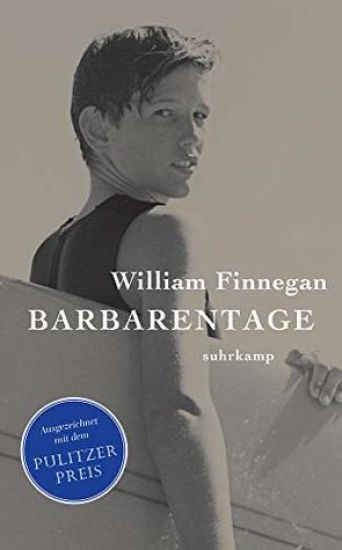
Barbarian Days: A Surfing Life (Pulitzer Prize Winner)

Barbarian Days: A Surfing Life (Pulitzer Prize Winner)

William Finnegan

PENGUIN BOOKS
2016
nidottu

Halvin toimitettuna 22,00 €

**Winner of the 2016 Pulitzer Prize for Autobiography** Included in President Obama's 2016 Summer Reading List "Without a doubt, the finest surf book I've ever read . . . " --The New York Times Magazine Barbarian Days is William Finnegan's memoir of an obsession, a complex enchantment. Surfing only looks like a sport. To initiates, it is something else: a beautiful addiction, a demanding course of study, a morally dangerous pastime, a way of life. Raised in California and Hawaii, Finnegan started surfing as a child. He has chased waves all over the world, wandering for years through the South Pacific, Australia, Asia, Africa. A bookish boy, and then an excessively adventurous young man, he went on to become a distinguished writer and war reporter. Barbarian Days takes us deep into unfamiliar worlds, some of them right under our noses--off the coasts of New York and San Francisco. It immerses the reader in the edgy camaraderie of close male friendships forged in challenging waves. Finnegan shares stories of life in a whites-only gang in a tough school in Honolulu. He shows us a world turned upside down for kids and adults alike by the social upheavals of the 1960s. He details the intricacies of famous waves and his own apprenticeships to them. Youthful folly--he drops LSD while riding huge Honolua Bay, on Maui--is served up with rueful humor. As Finnegan's travels take him ever farther afield, he discovers the picturesque simplicity of a Samoan fishing village, dissects the sexual politics of Tongan interactions with Americans and Japanese, and navigates the Indonesian black market while nearly succumbing to malaria. Throughout, he surfs, carrying readers with him on rides of harrowing, unprecedented lucidity. Barbarian Days is an old-school adventure story, an intellectual autobiography, a social history, a literary road movie, and an extraordinary exploration of the gradual mastering of an exacting, little-understood art.
Barbarian Days: A Surfing Life

Barbarian Days: A Surfing Life

William Finnegan

PENGUIN PRESS
2015
sidottu

Halvin toimitettuna 35,60 €

**Winner of the 2016 Pulitzer Prize for Autobiography** Included in President Obama's 2016 Summer Reading List "Without a doubt, the finest surf book I've ever read . . . " --The New York Times Magazine Barbarian Days is William Finnegan's memoir of an obsession, a complex enchantment. Surfing only looks like a sport. To initiates, it is something else: a beautiful addiction, a demanding course of study, a morally dangerous pastime, a way of life. Raised in California and Hawaii, Finnegan started surfing as a child. He has chased waves all over the world, wandering for years through the South Pacific, Australia, Asia, Africa. A bookish boy, and then an excessively adventurous young man, he went on to become a distinguished writer and war reporter. Barbarian Days takes us deep into unfamiliar worlds, some of them right under our noses--off the coasts of New York and San Francisco. It immerses the reader in the edgy camaraderie of close male friendships forged in challenging waves. Finnegan shares stories of life in a whites-only gang in a tough school in Honolulu. He shows us a world turned upside down for kids and adults alike by the social upheavals of the 1960s. He details the intricacies of famous waves and his own apprenticeships to them. Youthful folly--he drops LSD while riding huge Honolua Bay, on Maui--is served up with rueful humor. As Finnegan's travels take him ever farther afield, he discovers the picturesque simplicity of a Samoan fishing village, dissects the sexual politics of Tongan interactions with Americans and Japanese, and navigates the Indonesian black market while nearly succumbing to malaria. Throughout, he surfs, carrying readers with him on rides of harrowing, unprecedented lucidity. Barbarian Days is an old-school adventure story, an intellectual autobiography, a social history, a literary road movie, and an extraordinary exploration of the gradual mastering of an exacting, little-understood art.
On All Sides Nowhere

On All Sides Nowhere

William Gruber; William Finnegan

HOUGHTON MIFFLIN
2002
nidottu
When Bill Gruber left Philadelphia for graduate school in Idaho, he and his wife decided to experience true rural living. His longing for the solitude and natural beauty that Thoreau found on Walden Pond led him to buy an abandoned log cabin and its surrounding forty acres in Alder Creek, a town considered small even by Idaho standards. But farm living was far from the bucolic wonderland he expected: he now had to rise with the sun to finish strenuous chores, cope with the lack of modern conveniences, and shed his urban pretensions to become a real local. Despite the initial hardships, he came to realize that reality was far better than his wistful fantasies. Instead of solitude, he found a warm, welcoming community; instead of rural stolidity, he found intelligence and wisdom; instead of relaxation, he found satisfaction in working the land. What began as a two-year experiment became a seven-year love affair with a town he'll always consider home.
Cold New World: Growing Up in Harder Country

Cold New World: Growing Up in Harder Country

William Finnegan

Modern Library
1999
nidottu
From the Pulitzer Prize-winning author of Barbarian Days, this narrative nonfiction classic documents the rising inequality and cultural alienation that presaged the crises of today. "A status report on the American Dream that] gets its power from] the unpredictable, rich specifics of people's lives."--Time " William] Finnegan's real achievement is to attach identities to the steady stream of faceless statistics that tell us America's social problems are more serious than we want to believe."--The Washington Post A fifteen-year-old drug dealer in blighted New Haven, Connecticut; a sleepy Texas town transformed by crack; Mexican American teenagers in Washington State, unable to relate to their immigrant parents and trying to find an identity in gangs; jobless young white supremacists in a downwardly mobile L. A. suburb. William Finnegan spent years embedded with families in four communities across the country to become an intimate observer of the lives he reveals in Cold New World. What emerges from these beautifully rendered portraits is a prescient and compassionate book that never loses sight of its subjects' humanity. A NEW YORK TIMES NOTABLE BOOK - A LOS ANGELES TIMES BEST NONFICTION SELECTION Praise for Cold New World "Unlike most journalists who drop in for a quick interview and fly back out again, Finnegan spent many weeks with families in each community over a period of several years, enough time to distinguish between the kind of short-term problems that can beset anyone and the longer-term systemic poverty and social disintegration that can pound an entire generation into a groove of despair."--Los Angeles Times Book Review "The most remarkable of William Finnegan's many literary gifts is his compassion. Not the fact of it, which we have a right to expect from any personal reporting about the oppressed, but its coolness, its clarity, its ductile strength. . . . Finnegan writes like a dream. His prose is unfailingly lucid, graceful, and specific, his characterization effortless, and the pull of his narrative pure seduction."--The Village Voice "Four astonishingly intimate and evocative portraits. . . . All of these stories are vividly, honestly and compassionately told. . . . While Cold New World may make us look in new ways at our young people, perhaps its real goal is to make us look at ourselves."--The Philadelphia Inquirer
Dateline Soweto

Dateline Soweto

William Finnegan

University of California Press
1995
pokkari
"Dateline Soweto" documents the working lives of black South African reporters caught between the mistrust of militant blacks, police harassment, and white editors who - fearing government disapproval - may not print the stories these reporters risk their lives to get. William Finnegan revisited several of these reporters during the May 1994 election and describes their post-apartheid working experience in a new preface and epilogue.
A Complicated War

A Complicated War

William Finnegan

University of California Press
1992
pokkari
Powerful, instructive, and full of humanity, this book challenges the current understanding of the war that has turned Mozambique - a naturally rich country - into the world's poorest nation. Before going to Mozambique, William Finnegan saw the war, like so many foreign observers, through a South African lens, viewing the conflict as apartheid's 'forward defense'. This lens was shattered by what he witnessed and what he heard from Mozambicans, especially those who had lived with the bandidos armado, the 'armed bandits' otherwise known as the Renamo rebels. The shifting, wrenching, ground-level stories that people told combine to form an account of the war more local and nuanced, more complex, more African - than anything that has been politically convenient to describe. "A Complicated War" combines frontline reporting, personal narrative, political analysis, and comparative scholarship to present a picture of a Mozambique harrowed by profound local conflicts - ethnic, religious, political and personal. Finnegan writes that South Africa's domination and destabilization are basic elements of Mozambique's plight, but he offers a subtle description and analysis that will allow us to see the post-apartheid region from a new, more realistic, if less comfortable, point of view.