

Kirjailija
William FitzGerald
Kirjat ja teokset yhdessä paikassa: 27 kirjaa, julkaisuja vuosilta 2000–2022, suosituimpiin kuuluu Forskning och skrivande - Konsten att skriva enkelt och effektivt. Vertaile teosten hintoja ja tarkista saatavuus suomalaisista kirjakaupoista.
27 kirjaa
Kirjojen julkaisuvuodet: 2000–2022.

In this age of the sound bite, what sort of author could be more relevant than a master of the epigram? Martial, the most influential epigrammatist of classical antiquity, was just such a virtuoso of the form, but despite his pertinence to today's culture, his work has been largely neglected in contemporary scholarship. Arguing that Martial is a major author who deserves more sustained attention, William Fitzgerald provides an insightful tour of his works, shedding new and much-needed light on the Roman poet's world - and how it might speak to our own. Writing in the late first century CE - when the epigram was firmly embedded in the social life of the Roman elite - Martial published his poems in a series of books that were widely read and enjoyed. Exploring what it means to read such a collection of epigrams, Fitzgerald examines the paradoxical relationship between the self-enclosed epigram and the book of poems that is more than the sum of its parts. And he goes on to show how Martial, by imagining these books being displayed in shops and shipped across the empire to admiring readers, prophetically behaved like a modern author. Chock-full of epigrams itself - in both Latin and English versions - Fitzgerald's study will delight classicists, literary scholars, and anyone who appreciates an ingenious witticism.
Selection from the Nicomachean Ethics of Aristotle Containing a Delineation of the Moral Virtues (1850)
William Fitzgerald
KESSINGER PUBLISHING CO
2003
pokkari
Slavery and the Roman Literary Imagination
William Fitzgerald
Cambridge University Press
2000
pokkari
This book explores the presence of slaves and slavery in Roman literature and asks particularly what the free imagination made of the experience of living with slaves, beings who both were and were not fellow humans. As a shadow humanity, slaves furnished the free with other selves and imaginative alibis as well as mediators between and substitutes for their peers. As presences that witnessed their owners’ most unguarded moments they possessed a knowledge that was the object of both curiosity and anxiety. The book discusses not only the ideological relations of Roman literature to the institution of slavery, but also the ways in which slavery provided a metaphor for a range of other relationships and experiences, and in particular for literature itself. It is arranged thematically and covers a broad chronological and generic field.
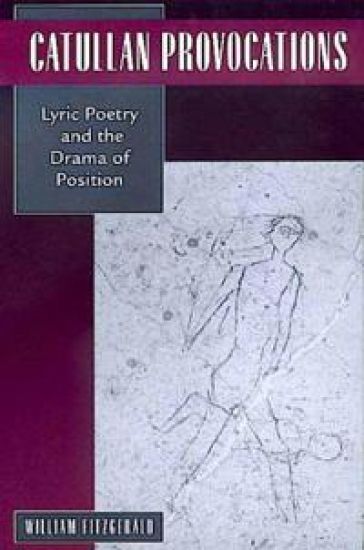
Restoring to Catullus a provocative power that familiarity has tended to dim, this book argues that Catullus challenges us to think about the nature of lyric in new ways. Fitzgerald shows how Catullus's poetry reflects the conditions of its own consumption as it explores the terms and possibilities of the poet's license. Reading the poetry in relation to the drama of position played out between poet, poem, and reader, the author produces a fresh interpretation of almost all of Catullus's oeuvre. Running through the book is an analysis of the ideological stakes behind the construction of the author Catullus in twentieth-century scholarship and of the agenda governing the interpreter's position in relation to Catullus.