Kirjailija
William Godwin
Kirjat ja teokset yhdessä paikassa: 274 kirjaa, julkaisuja vuosilta 1987–2026, suosituimpiin kuuluu Antonio. Vertaile teosten hintoja ja tarkista saatavuus suomalaisista kirjakaupoista.
274 kirjaa
Kirjojen julkaisuvuodet: 1987–2026.
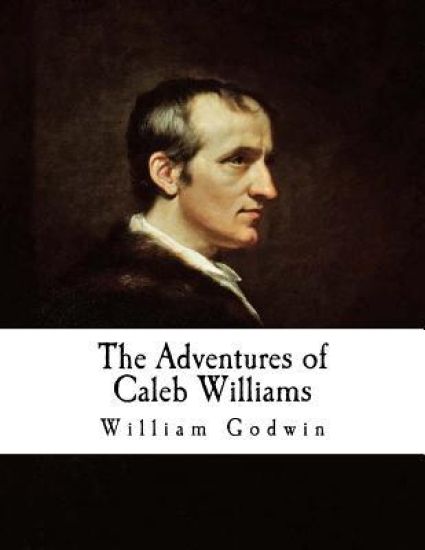
The Adventures of Caleb Williams: Things as They Are
William Godwin
Createspace Independent Publishing Platform
2016
nidottu
The Adventures of Caleb Williams or Things as They Are - William Godwin
Caleb Williams: Or things as they are
William Godwin
Createspace Independent Publishing Platform
2016
nidottu
Memoirs of The Author of A Vindication of The Rights of Woman
William Godwin
Createspace Independent Publishing Platform
2016
nidottu
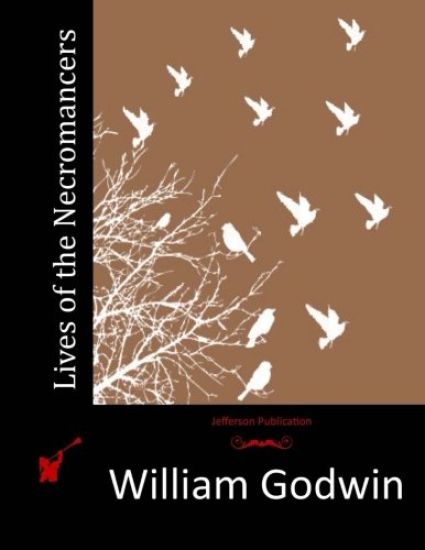
A brief history of the major places, texts and people that have had a contributing influence on the occult practices as they stand today. Although the title uses the term "necromancer" this is a generalized label for witches, warlocks, psychics and anyone else that practices the occult arts.

Caleb Williams Or Things As They Are
William Godwin
Createspace Independent Publishing Platform
2016
nidottu
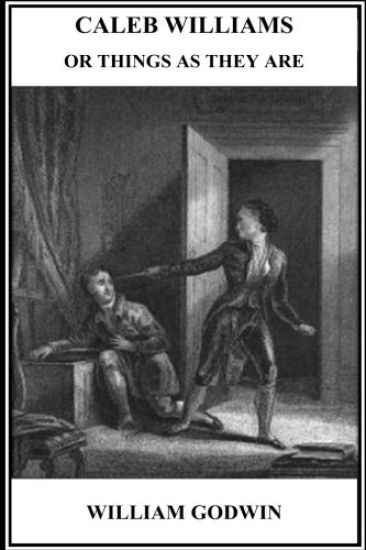
Caleb Williams. Things As They Are
William Godwin
Createspace Independent Publishing Platform
2016
nidottu
Fleetwood: Or, the New Man of Feeling, (3 Volumes in 1)by William Godwin: Fleetwood (novel)
William Godwin
Createspace Independent Publishing Platform
2016
nidottu
Halvin toimitettuna 18,20 €
Caleb Williams Or Things As They Are
William Godwin
Createspace Independent Publishing Platform
2016
nidottu
Italian Letters or The History of the Count de St. Julian
William Godwin
Createspace Independent Publishing Platform
2016
nidottu
Godwin's Mandeville, published in 1817, was described as his best novel by Shelley, who sent a copy to Byron, and it was recognized by its admirers as a work of unique psychological power. As Shelley wrote in a letter to Godwin, the novel's interest is of "that irresistible and overwhelming kind." Written one year after the battle of Waterloo and set in an earlier revolutionary period between the execution of Charles I and the Restoration, Mandeville is a novel of psychological warfare. The narrative proceeds through Mandeville's early education by a fanatical Presbyterian minister to his persecution at Winchester school, his constant (and not unjustified) paranoia, and his confinement in an asylum. Mandeville's final, desperate attempt to prevent his sister's marriage to his enemy ends in tragedy. The historical appendices offer contemporary reviews, material elucidating the novel's complex historical background, and contemporary writings on war, madness, and trauma.
History of the Commonwealth of England. from Its Commencement, to the Restoration of Charles the Second Volume 2
William Godwin
Arkose Press
2015
sidottu
The Esoteric Library: Lives of the Necromancers
William Godwin
Createspace Independent Publishing Platform
2015
nidottu
History of the Commonwealth of England, from Its Commencement to the Restoration of Charles The Second
William Godwin
Createspace Independent Publishing Platform
2015
nidottu
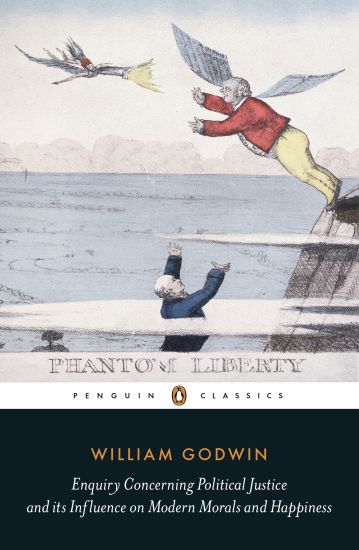
One of the great polemics and the key founding anarchist text, Godwin's Enquiry is his major work of political philosophy. Enquiry Concerning Political Justice established William Godwin as the chief exponent of British radicalism, in the tradition of the French Revolution. In it, he criticizes the 'brute engine' of government for systematizing oppression of individual liberty in the name of law and order, and calls for the abolition of all forms of rule and for the institution of an anarchist society based on the principles of simplicity, sincerity and equality. His book influenced everyone from Shelley and Coleridge (who revered him) to Thomas Malthus (who wrote his Essay on the Principle of Population in outraged response to him). The book's ideas would later echo through the writings of thinkers as diverse as Proudhon, Kropotkin, Marx and Thoreau, and it remains one of the great polemics of political literature. William Godwin, the famous philosopher and novelist, was born in East Anglia in 1756. The son of a Presbyterian minister, he was educated to follow in his father's footsteps, but subsequently lost his faith in God. He then devoted himself to writing, expounding his enlightenment and anarchist ideals in novels and essays. In 1797 he married Mary Wollstonecraft, the famous feminist; their daughter would grow up to be Mary Shelley, the author of Frankenstein. Godwin died in 1836. Isaac Kramnick is the Richard J. Schwartz Professor of Government at Cornell where he has taught since 1972. He has written or edited some twenty books among which his Bolingbroke and His Circle: The Politics of Nostalgia in the Age of Walpole won the Conference of British Studies Prize for best book on British politics.
Memoirs of the Author of a Vindication of the Rights of Woman
William Godwin
Createspace Independent Publishing Platform
2015
nidottu
The races at Southampton have, for time immemorial, constituted a scene of rivalship, war, and envy. All the passions incident to the human frame have here assumed as true a scope, as in the more noisy and more tragical contentions of statesmen and warriors. Here nature has displayed her most hidden attractions, and art has furnished out the artillery of beauty. Here the coquet has surprised, and the love-sick nymph has sapped the heart of the unwary swain. The scene has been equally sought by the bolder and more haughty, as by the timid sex. Here the foxhunter has sought a new subject of his boast in the nonchalance of dishabille; the peer has played off the dazzling charms of a coronet and a star; and the petit ma tre has employed the anxious niceties of dress.