Kirjojen hintavertailu – 12 859 827 kirjaa ja 27 kauppaa
Kirjailija
William H. McNeill
Kirjat ja teokset yhdessä paikassa: 20 kirjaa, julkaisuja vuosilta 1984–2012, suosituimpiin kuuluu Arnold Toynbee and the Western Tradition. Vertaile teosten hintoja ja tarkista saatavuus suomalaisista kirjakaupoista.
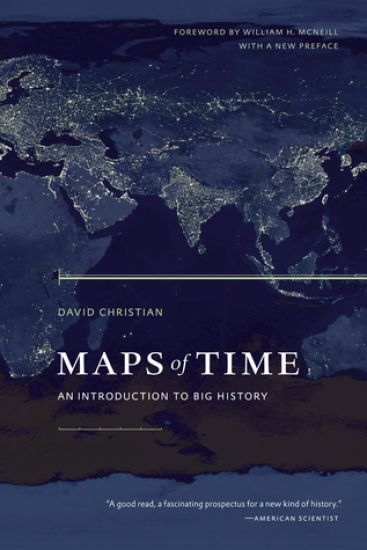
An introduction to a new way of looking at history, from a perspective that stretches from the beginning of time to the present day, "Maps of Time" is world history on an unprecedented scale. Beginning with the Big Bang, David Christian views the interaction of the natural world with the more recent arrivals in flora and fauna, including human beings. Cosmology, geology, archeology, and population and environmental studies - all figure in David Christian's account, which is an ambitious overview of the emerging field of 'Big History.' "Maps of Time" opens with the origins of the universe, the stars and the galaxies, the sun and the solar system, including the earth, and conducts readers through the evolution of the planet before human habitation. It surveys the development of human society from the Paleolithic era through the transition to agriculture, the emergence of cities and states, and the birth of the modern, industrial period right up to intimations of possible futures. Sweeping in scope, finely focused in its minute detail, this riveting account of the known world, from the inception of space-time to the prospects of global warming, lays the groundwork for world history - and 'Big History' - true as never before to its name.
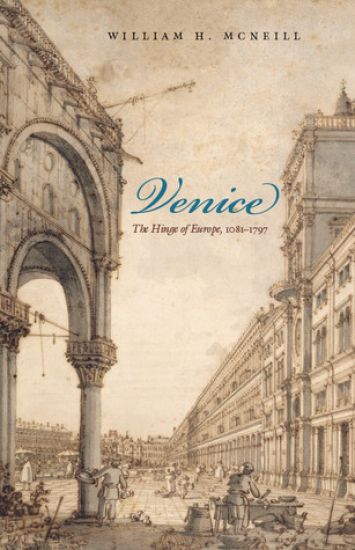
In this magisterial history, National Book Award winner William H. McNeill chronicles the interactions and disputes between Latin Christians and the Orthodox communities of eastern Europe during the period of 1081 to 1797. Concentrating on Venice as the hinge of European history in the late medieval and early modern period, McNeill explores the technological, economic, and political bases of Venetian power and wealth, and the city's unique status at the frontier between the papal and Orthodox Christian worlds. He pays particular attention to Venetian influence upon southeastern Europe, and from such an angle of vision, the familiar pattern of European history changes shape.
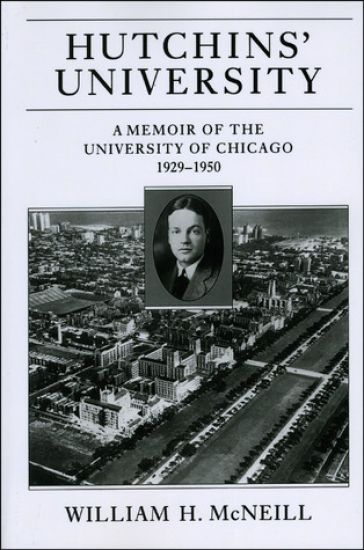
The inauguration of Robert Maynard Hutchins as the fifth President of the University of Chicago in 1929 marked the beginning of an extraordinarily vibrant period for the university and for American higher education in general. That same year, William H. McNeill arrived at the university to pursue his education. Here, McNeill creates a vivid portrait of the institutional life of the university at that time, showing how both life on campus and in Hyde Park revolved around the charismatic figure of President Hutchins.
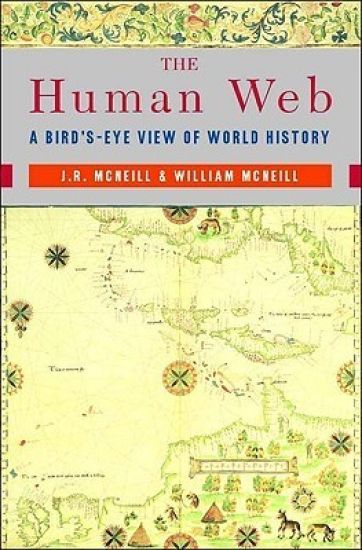
World-historical questions such as these, the subjects of major works by Jared Diamond, David Landes, and others, are now of great moment as global frictions increase. In a spirited and original contribution to this quickening discussion, two renowned historians, father and son, explore the webs that have drawn humans together in patterns of interaction and exchange, cooperation and competition, since earliest times. Whether small or large, loose or dense, these webs have provided the medium for the movement of ideas, goods, power, and money within and across cultures, societies, and nations. From the thin, localized webs that characterized agricultural communities twelve thousand years ago, through the denser, more interactive metropolitan webs that surrounded ancient Sumer, Athens, and Timbuktu, to the electrified global web that today envelops virtually the entire world in a maelstrom of cooperation and competition, J. R. McNeill and William H. McNeill show human webs to be a key component of world history and a revealing framework of analysis. Avoiding any determinism, environmental or cultural, the McNeills give us a synthesizing picture of the big patterns of world history in a rich, open-ended, concise account.
Global in scope, William McNeill's widely acclaimed one-volume history emphasizes the four Old World civilizations of the Middle East, India, China, and Europe, paying particular attention to their interaction across time as well as the impact on historical scholarship in light of the most recent archaeological discoveries. The engaging and informative narrative touches on all aspects of civilization, including geography, communication, and technological and artistic developments, and provides extensive coverage of the modern era. This new edition includes a thoroughly updated bibliographic essay and a new discussion of the most significant events in world history and civilization since 1976.
Upon its original publication, Plagues and Peoples was an immediate critical and popular success, offering a radically new interpretation of world history as seen through the extraordinary impact--political, demographic, ecological, and psychological--of disease on cultures. From the conquest of Mexico by smallpox as much as by the Spanish, to the bubonic plague in China, to the typhoid epidemic in Europe, the history of disease is the history of humankind. With the identification of AIDS in the early 1980s, another chapter has been added to this chronicle of events, which William McNeill explores in his new introduction to this updated editon. Thought-provoking, well-researched, and compulsively readable, Plagues and Peoples is that rare book that is as fascinating as it is scholarly, as intriguing as it is enlightening. "A brilliantly conceptualized and challenging achievement" (Kirkus Reviews), it is essential reading, offering a new perspective on human history.
Could something as simple and seemingly natural as falling into step have marked us for evolutionary success? In Keeping Together in Time one of the most widely read and respected historians in America pursues the possibility that coordinated rhythmic movement--and the shared feelings it evokes--has been a powerful force in holding human groups together. As he has done for historical phenomena as diverse as warfare, plague, and the pursuit of power, William H. McNeill brings a dazzling breadth and depth of knowledge to his study of dance and drill in human history. From the records of distant and ancient peoples to the latest findings of the life sciences, he discovers evidence that rhythmic movement has played a profound role in creating and sustaining human communities. The behavior of chimpanzees, festival village dances, the close-order drill of early modern Europe, the ecstatic dance-trances of shamans and dervishes, the goose-stepping Nazi formations, the morning exercises of factory workers in Japan--all these and many more figure in the bold picture McNeill draws. A sense of community is the key, and shared movement, whether dance or military drill, is its mainspring. McNeill focuses on the visceral and emotional sensations such movement arouses, particularly the euphoric fellow-feeling he calls "muscular bonding." These sensations, he suggests, endow groups with a capacity for cooperation, which in turn improves their chance of survival. A tour de force of imagination and scholarship, Keeping Together in Time reveals the muscular, rhythmic dimension of human solidarity. Its lessons will serve us well as we contemplate the future of the human community and of our various local communities.
Arnold Toynbee was the most prolific historian of the twentieth century. In his massive "A Study of History," Toynbee made a comparative study of all the world's civilizations, surviving and extinct, analyzing their rise, growth, breakdown, and disintegration. "Arnold Toynbee and the Western Tradition" summarizes and appraises Toynbee's understanding of the nature, evolution, and destiny of Western civilization, focusing on his critique of the liberal-rational tradition.
The Rise of the West, winner of the National Book Award for history in 1964, is famous for its ambitious scope and intellectual rigor. In it, McNeill challenges the Spengler-Toynbee view that a number of separate civilizations pursued essentially independent careers, and argues instead that human cultures interacted at every stage of their history. The author suggests that from the Neolithic beginnings of grain agriculture to the present major social changes in all parts of the world were triggered by new or newly important foreign stimuli, and he presents a persuasive narrative of world history to support this claim. In a retrospective essay titled "The Rise of the West after Twenty-five Years," McNeill shows how his book was shaped by the time and place in which it was written (1954-63). He discusses how historiography subsequently developed and suggests how his portrait of the world's past in The Rise of the West should be revised to reflect these changes. "This is not only the most learned and the most intelligent, it is also the most stimulating and fascinating book that has ever set out to recount and explain the whole history of mankind. . . . To read it is a great experience. It leaves echoes to reverberate, and seeds to germinate in the mind."—H. R. Trevor-Roper, New York Times Book Review
Renowned historian William H. McNeil provides a brilliant narrative chronology of the development of Western civilization, representing its socio-political as well as cultural aspects. This sixth edition includes new material for the twentieth-century period and completely revised bibliographies. An invaluable tool for the study of Western civilization, the Handbook is an essential complement to readings in primary and secondary sources such as those in the nine-volume University of Chicago Readings in Western Civilization.