Kirjojen hintavertailu – 12 903 725 kirjaa ja 27 kauppaa

Kirjailija

William H. Miller

Kirjat ja teokset yhdessä paikassa: 59 kirjaa, julkaisuja vuosilta 1954–2026, suosituimpiin kuuluu Studies in Schizophrenia. Vertaile teosten hintoja ja tarkista saatavuus suomalaisista kirjakaupoista.

Nimi esiintyy myös muodoissa: William H Miller

59 kirjaa

Kirjojen julkaisuvuodet: 1954–2026.

The Ships of Ellis Island

The Ships of Ellis Island

William H. Miller

Amberley Publishing
2016
nidottu
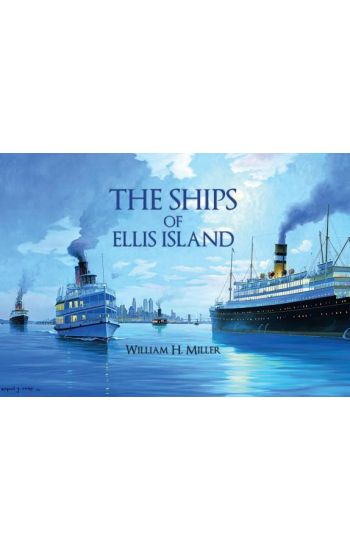
The federal immigration station on Ellis Island, in Upper New York Bay, opened on 1 January 1892. In the peak years of immigration to the United States, between 1905 and 1914, an average of 1 million people were processed each year at Ellis Island, the peak coming in 1907, when on 17 April alone over 11,000 migrants passed through the station on their way to a new life. After the First World War, a series of Immigration Acts, especially that of 1924, dramatically reduced the numbers passing through Ellis Island. During the peak years of immigration, migrants constituted the main source of revenue for transatlantic steamship companies sailing to New York from ports across Europe, from Trieste in the Adriatic to Queenstown on the coast of Ireland (now Cobh). They travelled in ships of all sizes, from the massive prestige liners of Cunard and the White Star Line down to much smaller vessels. In this book, ocean liner expert William H. Miller looks at the ships of Ellis Island.
Along the Waterfront

Along the Waterfront

William H. Miller

Amberley Publishing
2016
nidottu
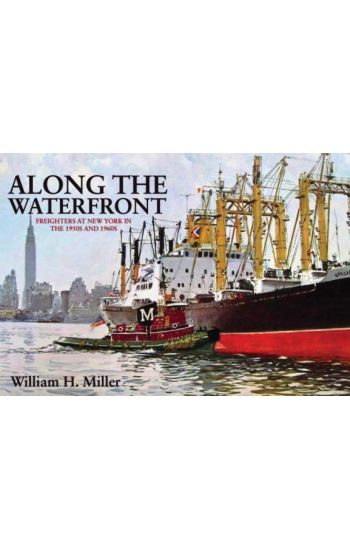
The 1954 film On the Waterfront brought to life the New York docks of the 1950s, when it was often said that a ship, usually a freighter, arrived or departed every 24 minutes, around the clock. Now, the Port of New York is handling more cargo than ever before, but all of it containerised. Along the Waterfront, a follow on to Along the Hudson (which looked at passenger ships in the Port of New York), covers the vast and fascinating fleet of freighters that once called at New York, including ships and companies that did not quite make it, such as the Bull Line, Standard Fruit, Torm Lines and the Booth Steamship Company. In this book, William H. Miller takes the reader on an evocative trip back to the days of the New York docks as they were portrayed in On the Waterfront.
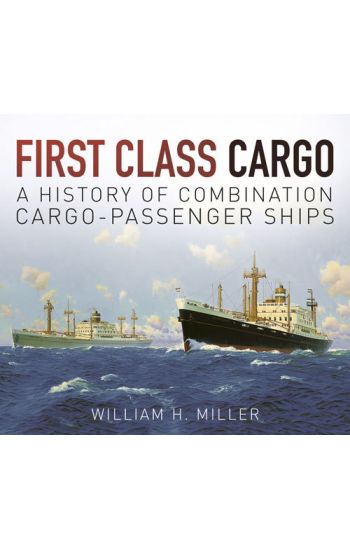
First Class Cargo

First Class Cargo

William H. Miller

The History Press Ltd
2016
nidottu
An unusual blend of cargo freight, holiday-making passengers and government officials, the combination cargo-passenger ship is an oddity now all but relegated to the past. In its heyday, however, royals such as Princess Alice, Countess of Athlone, were known to travel by ‘banana boat’ to the Caribbean. Ships such as Fyffes Line’s Golfito would stop at Trinidad, Barbados and Kingston to load up with bananas, whilst passengers would make the most of the exotic setting. Carrying between 50 and 100 passengers with anything up to 10,000 tons of cargo, these ships were both working freighters as well as elegant cruise-like ships, renowned for their intimate, yacht-like atmosphere. William Miller is the author of ninety books on passenger ships and is an acknowledged world expert on the subject. Told with affection, this nostalgic insight into the world of passenger-cargo ships brings to life, in full colour, the magnificent ships and passengers from the golden age of interoceanic travel.
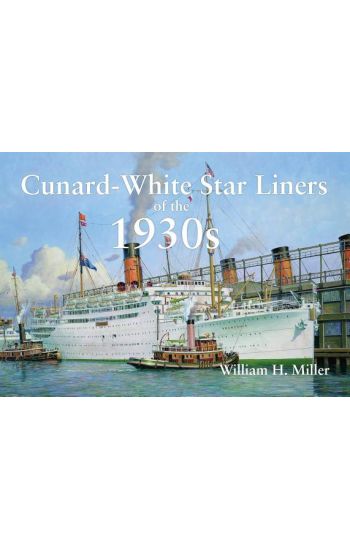
Cunard-White Star Liners of the 1930s

Cunard-White Star Liners of the 1930s

William H. Miller

Amberley Publishing
2015
nidottu
The early 1930s could not have been worse for shipping. With the coming of the Depression, the North Atlantic had grown very short of its most precious commodity: passengers. Ships began to sail half-full, and sometimes even emptier, and future prospects were bleak. Both Cunard and its nearest rival, the White Star Line, were hard hit, with too many ships against far too few occupied passenger berths. Called upon to assist, the British government authorised a loan of £9.5 million, on condition that Cunard and White Star merge. Cunard-White Star Line formed on 1 January 1934 and lasted until 1949. Cunard’s fifteen liners were joined by a further ten from White Star and these twenty-five ships included such legendary names as the Mauretania, Aquitania, Olympic, Majestic, Queen Mary and Queen Elizabeth. In this book, William H. Miller offers a nostalgic review of the ships of the Cunard-White Star Line in Cunard’s 175th anniversary year.
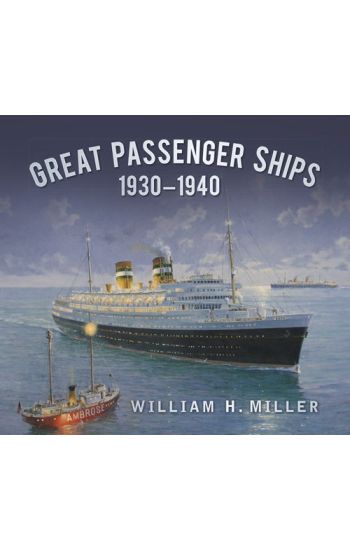
Great Passenger Ships 1930-1940

Great Passenger Ships 1930-1940

William H. Miller

The History Press Ltd
2015
nidottu
The 1930s was perhaps the most glamorous and exciting decade for the great liners, highlighted by ferocious international shipbuilding rivalry: Germany’s Bremen and Europa, Italy’s Rex and Conte Di Savoia, France’s Normandie and Britain’s Queen Mary and Queen Elizabeth. Passengers travelled on some of the most popular liners of all time, such as L’Atlantique, Empress of Britain, Empress of Japan, Queen of Bermuda, President Coolidge, Strathnaver and Strathaird, Orion, Capetown Castle, Oranje, Mauretania, Andes, and many more. Despite the worldwide Depression and a great shift in trading patterns, it was a wonderful decade for shipbuilding and the era of art deco on the high seas – the age of ‘floating Ginger Rogers’.
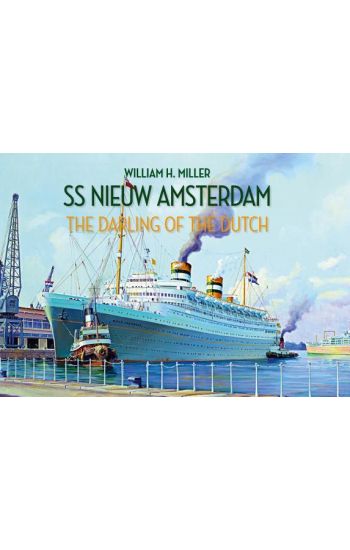
SS Nieuw Amsterdam

SS Nieuw Amsterdam

William H. Miller

Amberley Publishing
2015
nidottu
Entering service in 1938, the Nieuw Amsterdam was the Holland America Line flagship until the construction of the Rotterdam in the late 1950s. Her prewar life was short and she was used as a troopship during the Second World War, carrying many thousands of Allied troops to all corners of the world. Of 36,000 tons, she was the largest vessel built in Rotterdam and was launched by Queen Wilhelmina in April 1937. A perennial favourite of the Dutch and their finest Ship of State, Nieuw Amsterdam remained in Holland America Line service until 1974, the last ship to retain the Holland America Line’s familiar green, yellow and white funnels. Despite boiler problems in 1967, she was refitted with US Navy-surplus boilers and sailed on, cruising, until withdrawn from service in 1974. Sailing to the breakers, the art deco ‘Darling of the Dutch’, as she was affectionately known, was broken up. Today, she still has a following, from those who sailed on her but also from those who have grown to appreciate the importance of the Nieuw Amsterdam in terms of ocean liner design.
Post-war on the Liners

Post-war on the Liners

William H. Miller

Fonthill Media
2015
nidottu

Halvin toimitettuna 27,50 €

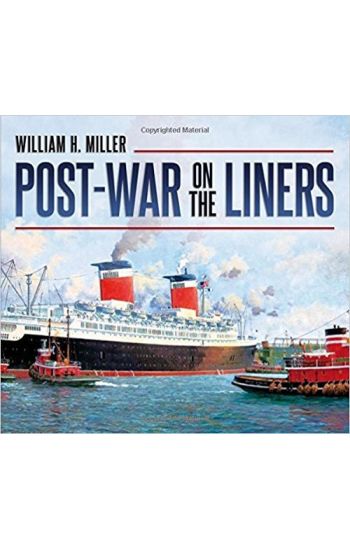
The period from the end of the Second World War to the late 1960s marked a golden era for the traditional port-to-port class-divided passenger ship business. It was an age of re-awakening, with the wealthy and adventurous seeking new experiences abroad and countless migrants wanting to leave war-shattered Europe for new lives and opportunities overseas. On the liners, everyone was catered for: from passengers such as the Duke and Duchess of Windsor, who required suites of luxurious rooms with space to unpack over a hundred pieces of luggage, to penniless migrants carrying nothing more than an overnight bag, for whom a berth in a fifty-bed dormitory was all that was needed. Atlantic crossings were popular throughout the period, but there were also three- and four-class ships to South America, combination passenger-cargo services carrying only 100 or so travelers, fast mail ships to South Africa, colonial passenger vessels to East Africa, crowded migrant sailings to Sydney and Auckland, and trans-Suez and trans-Pacific passages. This was an era when long-distance travel was entirely dependent on the ocean liners. Post-War on the Liners examines, through fascinating anecdotes and detailed research, the many passenger ship services of this bygone era, recapturing the charm, practicality, and importance of post-war sea travel. From the magnificent-Cunarders Queen Mary and Queen Elizabeth, Italian Line's Augustus, Union-Castle's Bloemfontein Castle, P&O's Oronsay, and Shaw Savill's Southern Cross-to the lesser known-Fyffes Line's Golfito, Royal Mail's Amazon, Sitmar Line's Fairsea, and NYK Line's Hikawa Maru-this book reveals the unique qualities of individual ships and why they were so often regarded with affection by the men and women who travelled and served on them.
Floating Palaces

Floating Palaces

William H. Miller

Amberley Publishing
2015
nidottu
From the mid-1890s a race was on between the merchant navies of the recently unified Germany, Britain and France. That race was to make the most luxurious and fastest ocean liners and it started with the Kaiser Wilhelm der Grosse, the first of fourteen four-stackers built between 1897 and 1921. The large vessels that followed each tried to outdo the previous one in terms of size and interior design. Using many of the most famous of interior designers, every part of the new ships was ‘designed’, from the cutlery to the china, from the furniture to the paneling, and from the bedrooms to the boat decks. Through Kronprinzessin Cecilie, Mauretania, Aquitania, Olympic, Titanic, Imperator, Vaterland, Ile de France, and Paris, the development and design of the ships grew grander and more luxurious. The process continued into the 1930s, with the Empress of Britain and the fabulously Art Deco Normandie, the finest and most expensive liner ever built, and designed to be a showcase for all that was France, as well as with the Queen Mary, a rather more traditional vessel, but one, nonetheless, which pushed the boundaries of design away from the traditional country house look of the Edwardian era. Each new vessel brought with it the finest of interiors, from the plush and palatial to the modern look of the time. Even today, the influence of these floating palaces can still be seen in vessels such as Cunard’s Queen Mary 2 and the multitude of new cruise vessels, all vying for the public’s interest and affection. The large liners were truly floating palaces, and here, William H. Miller brings together a collection of fabulous images of the finest ships ever built, showcasing the style and elegance of a time when ‘getting there was half the fun’.
P & O Orient Liners of the 1950s and 1960s

P & O Orient Liners of the 1950s and 1960s

William H. Miller

Amberley Publishing
2014
nidottu
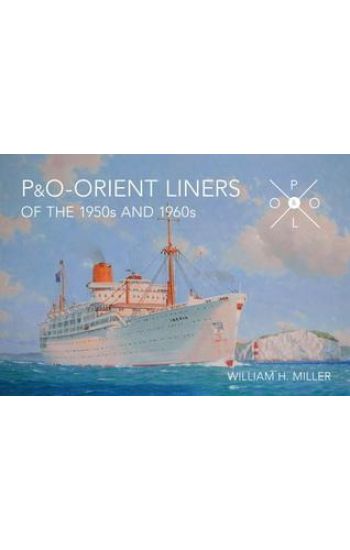
The 1950s and 1960s was the last golden age of ocean liners. It was an age of many modern, superbly designed ships that were created just before the great inroads of the jet age. The long route out to Australia and New Zealand was among the longest lasting, until the early 1970s. It was still supported by regular passenger traffic: one-way travelers, occasional tourists and, of course, the last waves of migrants, mostly heading for new lives Down Under. P&O had purchased 51 per cent of the Orient Line in 1918, but the two companies remained separate firms, even competitors. After the Second World War, however, more of their liner services were coordinated. By 1960, they were fully merged as P&O-Orient Lines. Together, this created the largest liner fleet in the world. There were eighteen passenger ships in the fleet in 1961, for example. The last of these liners, the Oriana and Canberra, were in fact their largest, fastest and most luxurious. By the 1970s, their trade was largely gone – P&O turned more and more to cruising. Bill Miller takes the reader on a nostalgic voyage through the 1950s and 1960s aboard the final passenger liners – from the Mooltan, Orontes and Stratheden to the Oronsay, Arcadia and Orsova – of the great P&O and Orient lines.
Great French Passenger Ships

Great French Passenger Ships

William H. Miller

The History Press Ltd
2014
nidottu
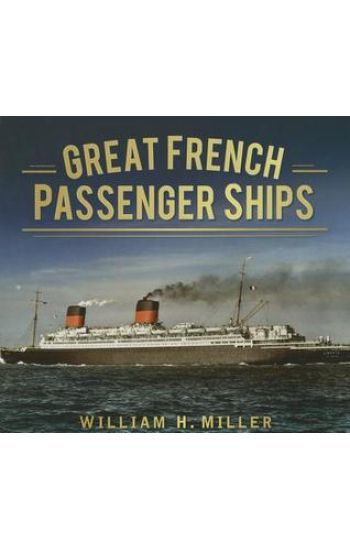
France produced some of the finest and best-decorated passenger ships of the twentieth century. Beginning in 1912 with the four-funnel France, the nostalgic voyage continues with the great and grand transatlantic liners of the French Line, the CGT. These include the famous Île-de-France, Normandie and Liberté, as well as the lesser passenger ships of the French Line. In addition, focus is given to Compagnie de Navigation Sud-Atlantique, Transports Maritimes and Chargeurs Réunis operating important South American routes and to Messageries Maritimes running in Africa, the East and the South Pacific. Packed full of nostalgic reminiscence of great ship days gone by, the book explores majestic liners, mail boats to Africa and colonial steamers to Saigon. Presenting many previously unpublished images alongside insightful text and anecdotes, William H. Miller brings the reader on board France’s greatest transatlantic liners.
British India Steam Navigation Co. Liners of the 1950's and 1960's
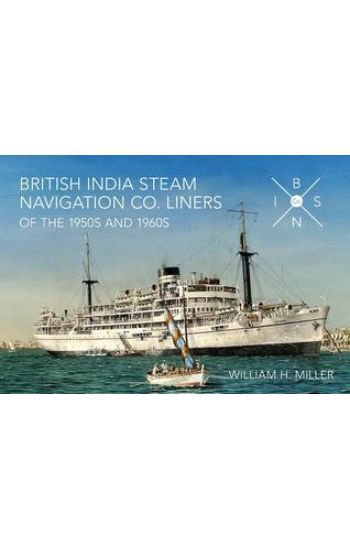
The British India Steam Navigation Company Limited, dating from 1862, was one of Britain’s largest and most important shipping firms and has been owned by the even larger P&O since 1914. BI, as it was commonly called, created and maintained a great network of sea-going services – to Africa, India and the Middle East, and to the more distant Far East. BI passenger ships in particular were important for the steady, uninterrupted flow of representatives and citizens of the Crown – from the likes of High Commissioners in first class to Indian workers in deck class. These were links in an age now gone completely. William H. Miller, author of over eighty maritime books, reviews the final fleet, the last great era, in the 1950s and 1960s, of the British India Steam Navigation Company’s passenger ships.
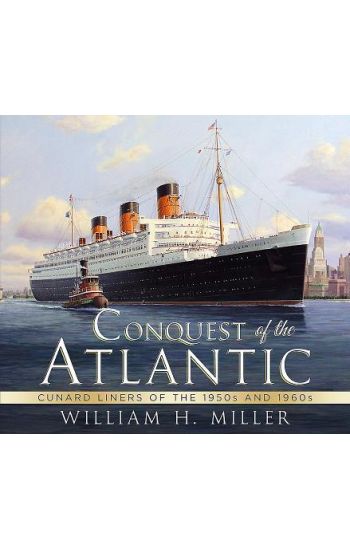
Conquest of the Atlantic

Conquest of the Atlantic

William H. Miller

Fonthill Media
2014
nidottu
Cunard, the most famous name in shipping, turns 175 years old in 2015. Cunard began back in 1840 with paddlewheel steamers, but grew and progressed and created some of the largest, fastest and most luxurious liners in their time. The final 'golden age' on the Atlantic run between Europe and North America was in the 1950s when the company slogan 'Getting there was half the fun' seemed so apt. Cunard had twelve liners running Atlantic crossings in 1958 but the same year saw the introduction of the speedy and efficient passenger jet that immediately stole transatlantic travellers. The Cunard 'cast' of the late 1950s includes such celebrated ocean liners such as Queen Mary and Queen Elizabeth as well as others like Mauretania, Caronia, Britannic, Saxonia and small ships including the Media and Parthia. Conquest of the Atlantic: Cunard Liners of the 1950s and 1960s is the story of these great ships that are all still remembered with much fondness and of the life onboard them. Cunard would face furious competition with jet aircraft and by 1969 be reduced to one Atlantic liner, the legendary and iconic Queen Elizabeth 2.
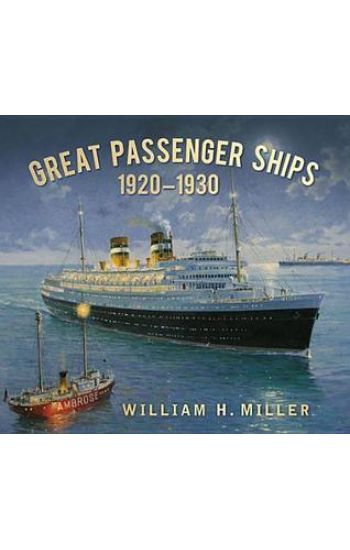
Great Passenger Ships 1920-1930

Great Passenger Ships 1920-1930

William H. Miller

The History Press Ltd
2014
nidottu
Celebrating the majestic passenger liners of the twenties, Great Passenger Ships 1920–1930 looks at well-loved ships, such as Majestic, Olympic, Berengaria, Viceroy of India and Rawalpindi, alongside lesser known but still fascinating vessels. This series follows ships serving all over the world rather than just famed Atlantic liners, with personal anecdotes of the ships and their voyages from passengers and crew alike. The 1920s have become a fabled era for ocean liners, a period of growth and opulence as companies began recovery after the First World War. As the decade went on plans were drawn for great superliners, until the Wall Street Crash changed the world. During the 1920s, the German Imperator became Berengaria for Cunard, Columbus became Homeric for White Star and Bismarck was renamed Majestic for White Star, becoming the line’s most popular ship. Cunard, White Star and P&O had great success while the likes of Orient Line, Union Steamship Company, Union Castle and Furness- Bermuda Line all added their own ships to the mix during these golden days of ocean travel. Featuring unpublished photographs in a stunning colour section, Great Passenger Ships 1920–1930 showcases the zenith of ocean travel in the 1920s.
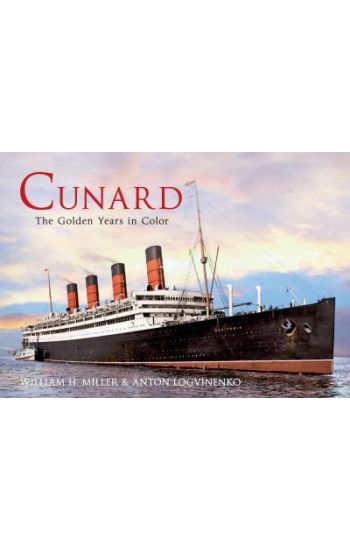
Cunard the Golden Years in Colour

Cunard the Golden Years in Colour

William H. Miller; Anton Logvinenko

Amberley Publishing
2014
nidottu
The Golden Age of liner travel was from the early 1900s to the 1950s, a period dominated by black-and-white photography, with few colour views. William H. Miller and Anton Logvinenko show off colour views of the magnificent ships, from the Mauretania and Lusitania to the Queen Mary, as well as the A Class liners of the 1920s and the sublime Deco Mauretania (2) of 1939. Experience the glamour of liner travel as it was for the Edwardians and through the 1920s and 1930s, in colour, as never seen before. The great transatlantic liners were often photographed in their home ports, as well as at sea, and the images here give an idea of the splendour that was ocean liner travel on the Cunard Line in the golden age of shipping. A mixture of colour photographs, period advertising and paintings give a feel for the Cunard of old, when 'Getting There Was Half the Fun'.
East of Suez

East of Suez

William H. Miller; Tim Noble

Amberley Publishing
2014
nidottu
The advent of the jet airliner all but killed the liner on the Atlantic route but the ships to Australia survived into the 1970s, not just on the liner trade but also carrying emigrants from the UK and Europe to Australia. Many a tenpound- pom was carried on the ships of Orient, P&O, Shaw Savill and the foreign vessels of the Chandris and Sitmar lines, as well as other Italian ships too. Bill Miller and Tim Noble tell the story of the liners that travelled East of Suez. Ships such as Canberra, Orsova, Oriana, Britannis, Ellinis and Guglielmo Marconi are all included in the rare and unseen images.
Cunard's Modern Queens

Cunard's Modern Queens

William H. Miller

Amberley Publishing
2014
nidottu
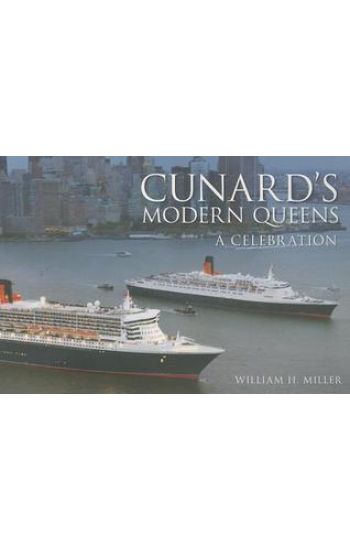
2008 was a magical year for Cunard. For the first time, the line had three Queens in service: Queen Elizabeth 2, Queen Mary 2 and Queen Victoria. Queen Elizabeth 2 retired during the year, sailing for Dubai on 11 November, while Queen Mary 2 had reached her fifth anniversary as the largest ocean liner afloat and Queen Victoria entered service. On 13 January 2008, all three liners were together for the first and last time in New York. After a successful first world cruise for Queen Victoria and Queen Elizabeth 2's twenty-sixth and final world cruise, all three ships rendezvoused in Southampton on 22 April for the last meeting of these three Queens. Bowing out after a successful farewell season that saw her sail full on every voyage of the year, QE2 left Southampton amid the biggest fireworks display seen in the port since the advent of Queen Mary 2 five years earlier. In October 2010, Cunard once again had a third Queen in service, with the new Queen Elizabeth, built in Italy and named by Her Majesty the Queen at Southampton. No other ships envoke the magic that Cunard's Queens have done since Queen Mary entered service in May 1936. Since then, a Cunard Queen has reigned the ocean wave. William H. Miller brings together a fantastic selection of images, with informative text, telling the story of Cunard's legendary modern Queens.
SS Normandie

SS Normandie

William H. Miller

The History Press Ltd
2013
nidottu

Halvin toimitettuna 28,40 €

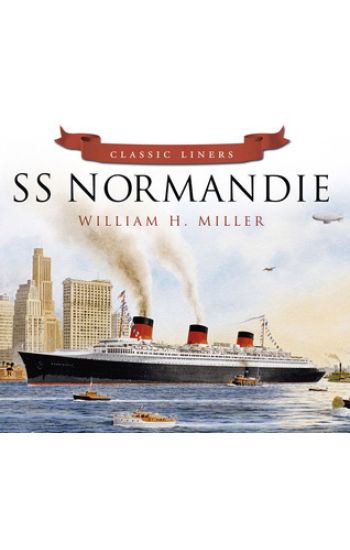
The world of ocean liners, those built for French lines were the epitome of style and panache, and SS Normandie perhaps the pinnacle of this. When she entered service in 1935, she was the largest, longest, fastest and certainly the best fed ship of her time, serving the finest food imaginable in a dining room longer than the Hall of Mirrors at Versailles. Normandie embodied high glamour and was a firm favourite of many, albeit for a short time. Times were changing and even the French government's massive subsidies to the builders, an attempt to make Normandie a flagship for the drive out of the Depression. could only work for so long, as the Second World War drew nearer. She might have been a valuable troopship, and served a the USS Lafayette for a time, but caught fire at her New York pier in 1942. The great ship was salvaged, but with an expensive restoration in prospect she could not escape being scrapped in 1946-47. Through beautiful illustrations and evocative writing, William H. Miller presents the story of one of the most lavish liners ever to cross the seas.
Union Castle Liners

Union Castle Liners

William H. Miller

Amberley Publishing
2013
nidottu
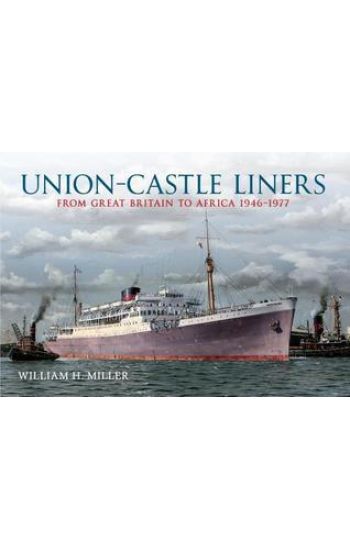
It was one of the most important British liner routes of all - the express run from Southampton to the South African Cape. Carrying passengers as well as cargo, including the all-important mail, it was a byword in travel - 'every Thursday at 4', as one of the big Union-Castle liners set off for Cape Town and beyond. By the late 1950s, these mail ships included the Arundel Castle, Carnarvon Castle, Winchester Castle, Athlone Castle, Stirling Castle, Capetown Castle and two post-war sensations, the Edinburgh Castle and Pretoria Castle. Three new liners arrived in 1959, the last great ships built for Union-Castle. They were Pendennis Castle, Windsor Castle and Transvaal Castle. The route was not just to the Cape - for Union-Castle also offered a service down the East coast of Africa and a round-Africa route too. In 1977, with the mail contract and passengers lost to the jet and cargo to container ships, the service ceased in October that year and Union-Castle was no more.
Ile de France and Liberte: France's Premier Post-War Liners
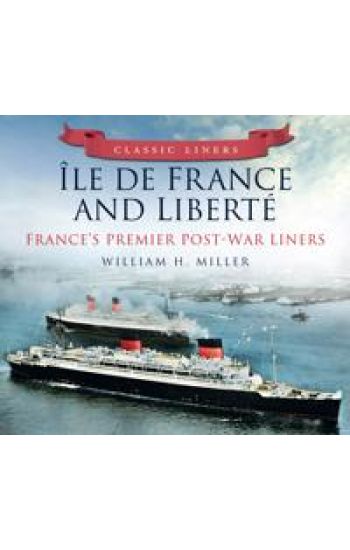
This beautifully illustrated history portrays two of the French fleet’s most glamorous liners in their post-war heyday. Île de France was a ship with unique style and character, restored and re-launched in 1949 after wartime service as a troopship. Liberté was built as the German Europa in 1930, but was ceded to France in 1946 and restyled in French Line luxury. The ships were famed for their service and on-board ambience, but most of all for being the ‘best-fed liners on the Atlantic’. Each ended their days on the silver screen, Île de France as a prop in The Last Voyage, for which she was partly sunk in 1958, and Liberté in the closing scenes of the classic film Sabrina before being scrapped in 1961. William H. Miller’s latest work in the Classic Liners series brings together an unrivalled collection of images, including previously unpublished colour photography, and truly evokes the glamour of two of the most beloved ocean liners of the era.
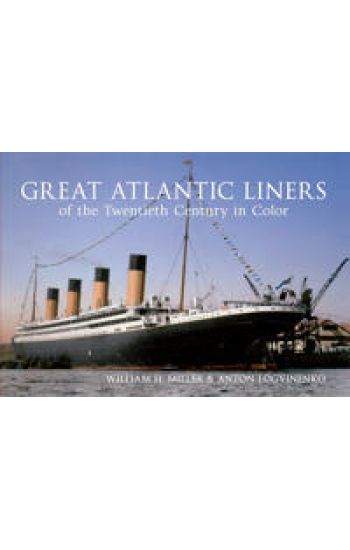
Great Atlantic Liners of the Twentieth Century in Color

Great Atlantic Liners of the Twentieth Century in Color

William H. Miller; Anton Logvinenko

Amberley Publishing
2013
nidottu
The Golden Age of Liner travel was from the early 1900s to the 1950s, a period dominated by black and white photography, with little colour views. William H Miller and Anton Logvinenko show off colour views if the magnificent ships, from the Mauretania and Lusitania to the German four stackers, as well as Olympic and Titanic and the crack liners of the 1920s and 1930s, including Paris, Normandie and Queen Mary. Experience the glamour of liner travel as it was for the Edwardians and through the 1920s and 1930s, in colour, as never seen before. The great transatlantic liners were often photographed in their home ports, as well as at sea, and the images here give an idea of the splendour that was ocean liner travel in the golden age of shipping.