Kirjojen hintavertailu – 12 903 724 kirjaa ja 27 kauppaa

Kirjailija

William Hayes

Kirjat ja teokset yhdessä paikassa: 31 kirjaa, julkaisuja vuosilta 2000–2025, suosituimpiin kuuluu Forex Mindshift. Vertaile teosten hintoja ja tarkista saatavuus suomalaisista kirjakaupoista.

31 kirjaa

Kirjojen julkaisuvuodet: 2000–2025.

The Progressive Education Movement

The Progressive Education Movement

William Hayes

Rowman Littlefield Education
2006
sidottu
For more than one hundred years, the United States has been the scene of academic warfare between traditional and progressive educators. During most of our nation's history, many Americans have assumed that the primary purpose of school is to pass on to children the information and skills necessary to survive in our society. This traditional view accepts the fact that a teacher's task is to inform children as to what they should know. Officials at the state and local level determine the content of students' education, and it is the teacher's job to ensure that the content is taught. Even before the beginning of the twentieth century, John Dewey and others introduced a different model. They believed that students learn best "by doing" not by being passive listeners. For progressive educators, the teacher's role was to be a facilitator of learning in classrooms where students' interest helped to provide appropriate developmental learning experience. This new approach to education has greatly affected our schools during the past century. More recently, we have seen the emergence in American education of four initiatives that have threatened the continued influence of progressive education. They include the "back to basics movement," mandated state curriculum standards, high-stakes testing, and school accountability. Despite these trends, there appears to be several factors that might lead one to conclude that progressive education is remaining a viable approach in the United States. This book considers these factors as well as past, present, and possible future of the progressive education movement.
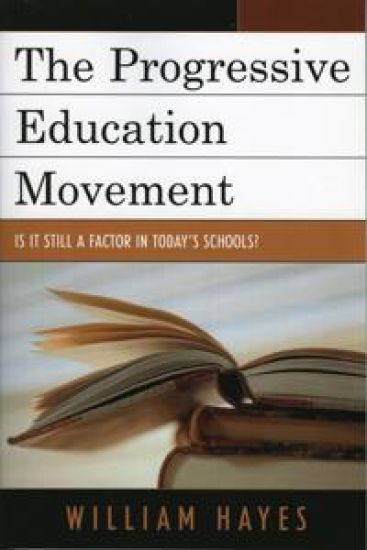
The Progressive Education Movement

The Progressive Education Movement

William Hayes

Rowman Littlefield Education
2006
nidottu
For more than one hundred years, the United States has been the scene of academic warfare between traditional and progressive educators. During most of our nation's history, many Americans have assumed that the primary purpose of school is to pass on to children the information and skills necessary to survive in our society. This traditional view accepts the fact that a teacher's task is to inform children as to what they should know. Officials at the state and local level determine the content of students' education, and it is the teacher's job to ensure that the content is taught. Even before the beginning of the twentieth century, John Dewey and others introduced a different model. They believed that students learn best 'by doing' not by being passive listeners. For progressive educators, the teacher's role was to be a facilitator of learning in classrooms where students' interest helped to provide appropriate developmental learning experience. This new approach to education has greatly affected our schools during the past century. More recently, we have seen the emergence in American education of four initiatives that have threatened the continued influence of progressive education. They include the 'back to basics movement,' mandated state curriculum standards, high-stakes testing, and school accountability. Despite these trends, there appears to be several factors that might lead one to conclude that progressive education is remaining a viable approach in the United States. This book considers these factors as well as past, present, and possible future of the progressive education movement.
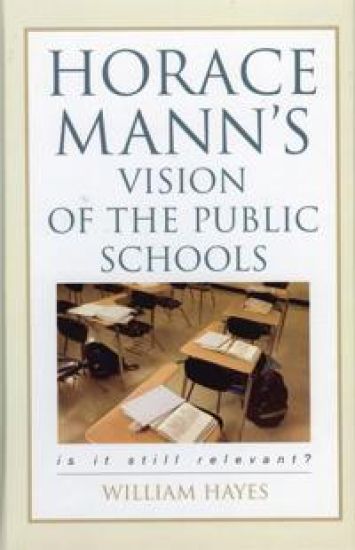
Horace Mann's Vision of the Public Schools

Horace Mann's Vision of the Public Schools

William Hayes

Rowman Littlefield Education
2006
sidottu
Horace Mann has been labeled by historians as the "father of the public schools." Just as judges and historians consult the views of the nation's Founding Fathers for guidance on contemporary issues, current educators can benefit by revisiting the original vision of Horace Mann for publicly supported schools. Such a study will not only be of interest to anyone interested in our schools, but it will also offer guidance as we consider our current educational issues. Much has changed since Horace Mann led the struggle to establish the common or public schools in the mid-19th century. Drastic changes in demographics, the emergence of teacher unions, and more recently, the standards movement, high-stakes testing, and accountability have greatly affected public schools. These factors, along with the additional powers taken on by the state and federal government have altered how schools function. The result has been the creation of a system that currently fails to offer an equal educational opportunity to all of our students. This book looks to the educational ideas of Horace Mann to offer guidance as to how this nation might preserve his original vision of a public school system that will offer a free and equal educational opportunity to all the children of this nation.
Horace Mann's Vision of the Public Schools

Horace Mann's Vision of the Public Schools

William Hayes

Rowman Littlefield Education
2006
nidottu
Horace Mann has been labeled by historians as the 'father of the public schools.' Just as judges and historians consult the views of the nation's Founding Fathers for guidance on contemporary issues, current educators can benefit by revisiting the original vision of Horace Mann for publicly supported schools. Such a study will not only be of interest to anyone interested in our schools, but it will also offer guidance as we consider our current educational issues. Much has changed since Horace Mann led the struggle to establish the common or public schools in the mid-19th century. Drastic changes in demographics, the emergence of teacher unions, and more recently, the standards movement, high-stakes testing, and accountability have greatly affected public schools. These factors, along with the additional powers taken on by the state and federal government have altered how schools function. The result has been the creation of a system that currently fails to offer an equal educational opportunity to all of our students.
Are We Still a Nation at Risk Two Decades Later?

Are We Still a Nation at Risk Two Decades Later?

William Hayes

Rowman Littlefield Education
2004
nidottu
For the past twenty years, federal and state education departments and school districts have been engaged in efforts that have touched every phase of public education. We have seen the emergence of the standards movement, "high-stake" testing, and an emphasis on school accountability. Requirements for those entering the teaching profession have become more stringent in order to provide "highly qualified" teachers. School personnel on all levels must deal with constantly changing requirements, often without the financial support necessary. High school graduation requirements have been changed, especially in the areas of technology, math, and science. The ideas of school choice, charter schools, and school vouchers are being experimented with in many forms. These changes have all been accelerated with the passage of the No Child Left Behind Act signed in 2002. This book is a study of the 1983 report A Nation at Risk and its impact on public education. Hayes analyzes the impact of this reform and suggests future priorities for public education in the United States.
So You Want to be a Principal?

So You Want to be a Principal?

William Hayes

Rowman Littlefield Education
2004
nidottu
So You Want to be a Principal? describes the challenging and positive aspects of the career of a school principal. At a time when our society needs an ever increasing number of school building leaders, Hayes writes for teachers who might wish to consider a career in school administration. In addition, many chapters are helpful to the aspiring administrator in finding a job and being successful in the role of building principal. In So You Want to be a Principal?, Bill Hayes provides valuable and unbiased information about an important role in our society, helping readers analyze their own future careers.
So You Want to Be a School Board Member?

So You Want to Be a School Board Member?

William Hayes

Rowman Littlefield Education
2001
nidottu
Dedicated, informed school board members are basic to school improvement and success. This practical book explains the role of the board member, from election to taking office. Potential board members are introduced to timely issues they are likely to face, including school violence, high-stake testing, curriculum reform, and school choice. In addition to an overview of issues, Hayes examines the relational aspect of the job—working with the superintendent, school employees, and the community. All superintendents should buy this book for potential board members, and the readable style will attract anyone interested in the job.
So You Want To Be A Superintendent?

So You Want To Be A Superintendent?

William Hayes

Rowman Littlefield Education
2001
sidottu
The perfect primer for anyone interested in becoming a superintendent. Veteran superintendent, William Hayes shares his insight and experience in areas ranging from relationships with the Boards of Education, faculty, staff, the administrative team, and the media to balancing the public and personal life of a chief school officer. He closely analyzes current issues in education such as integrating technology into the school system and the legal problems facing superintendents and school districts.
So You Want To Be A Superintendent?

So You Want To Be A Superintendent?

William Hayes

Rowman Littlefield Education
2001
nidottu
The perfect primer for anyone interested in becoming a superintendent. Veteran superintendent, William Hayes shares his insight and experience in areas ranging from relationships with the Boards of Education, faculty, staff, the administrative team, and the media to balancing the public and personal life of a chief school officer. He closely analyzes current issues in education such as integrating technology into the school system and the legal problems facing superintendents and school districts.
Real-Life Case Studies for School Administrators

Real-Life Case Studies for School Administrators

William Hayes

Rowman Littlefield Education
2000
nidottu
Budget cuts, sexual harassment, ethnic issues, and a multitude of moral and legal dilemmas confront school administrators at every level. Proper training is essential in order to deal soundly with each problem that arises. Hayes provides a variety of real-life case studies that will contribute important supplemental information on specific aspects of an administrator's work. There are no simple answers to the questions raised by these cases, but their presentation will help administrators and future administrators better understand the ambiguities and difficulties in each of these cases.
Real-Life Case Studies for Teachers

Real-Life Case Studies for Teachers

William Hayes

Rowman Littlefield Education
2000
nidottu
Disgruntled parents, technology in the classroom—these and many other potentially problematic situations are covered in this collection of education case studies for aspiring teachers. By studying and discussing these situations, all aspiring and experienced teachers will be equipped to handle difficult situations with aplomb and confidence.