Kirjojen hintavertailu – 12 859 826 kirjaa ja 27 kauppaa
Kirjailija
William Howard Russell
Kirjat ja teokset yhdessä paikassa: 130 kirjaa, julkaisuja vuosilta 2006–2026, suosituimpiin kuuluu My Diary. Vertaile teosten hintoja ja tarkista saatavuus suomalaisista kirjakaupoista.
The Adventures of Doctor Brady - Vol. II is an unchanged, high-quality reprint of the original edition of 1868. Hansebooks is editor of the literature on different topic areas such as research and science, travel and expeditions, cooking and nutrition, medicine, and other genres. As a publisher we focus on the preservation of historical literature. Many works of historical writers and scientists are available today as antiques only. Hansebooks newly publishes these books and contributes to the preservation of literature which has become rare and historical knowledge for the future.
The Adventures of Doctor Brady - Vol. III is an unchanged, high-quality reprint of the original edition of 1868. Hansebooks is editor of the literature on different topic areas such as research and science, travel and expeditions, cooking and nutrition, medicine, and other genres. As a publisher we focus on the preservation of historical literature. Many works of historical writers and scientists are available today as antiques only. Hansebooks newly publishes these books and contributes to the preservation of literature which has become rare and historical knowledge for the future.
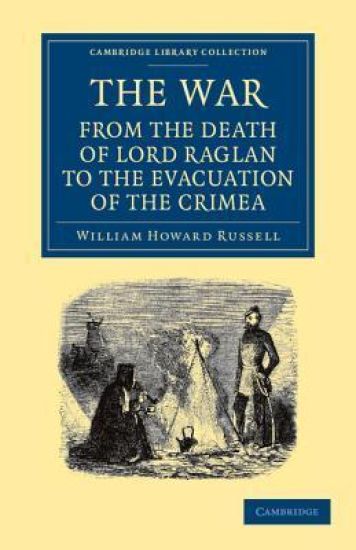
William Howard Russell (1820–1907) is today credited with having shaped the image and role of the modern war correspondent. His dispatches for The Times during the Crimean War were so influential that they led to military reforms and the fall of the Aberdeen Government. Moreover, his unflinching accounts of the appalling and insanitary conditions endured by ill-provisioned troops helped inspire the work of Florence Nightingale. He was not afraid to highlight poor leadership and planning, and was quick to praise the heroism of the 'common' soldier. Wearing military-style clothes, he obtained his information through his easy relationships with junior officers, helped by his fondness for brandy and cigars. This volume, published in 1856, includes his last Crimean dispatches, concluding with poignant descriptions of visits by the soldiers to the battlefields to erect memorials to their fallen comrades.
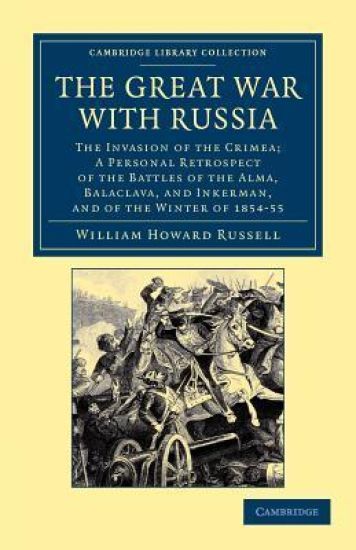
The journalist William Howard Russell (1820–1907) is sometimes regarded as being the first war correspondent, and his reports from the conflict in the Crimea are also credited with being a cause of reforms in the British military system. This account of his time there, first published in 1858 and expanded in this 1895 edition, explains how Russell was sent by The Times of London in 1854 to join British troops stationed in Malta. He spent the next two years witnessing some of the key moments of the war, including the battle of Balaclava and the ill-fated Charge of the Light Brigade. His newspaper reports of the fighting and of the living conditions for the troops were widely read and very influential. In this retrospective work, Russell gives a more personal narrative of his experiences, making this an important account of one the most brutal wars of the nineteenth century.
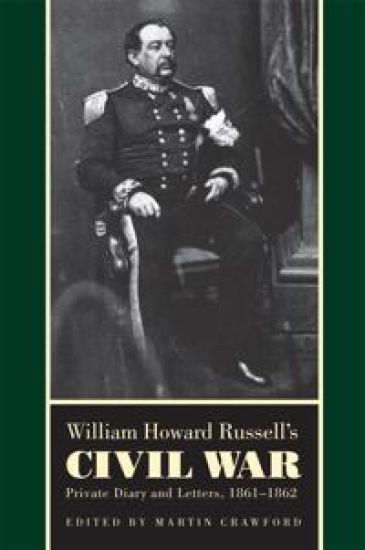
Having won renown in the 1850s for his vivid warfront dispatches from the Crimea, William Howard Russell was the most celebrated foreign journalist in America during the first year of the Civil War. As a special correspondent for The Times of London, Russell was charged with explaining the American crisis to a British audience, but his reports also had great impact in America. They so alienated both sides, North and South, that Russell was forced to return to England prematurely in April 1862. My Diary North and South (1863), Russell's published account of his visit, remains a classic of Civil War literature. It was not in fact a diary but a narrative reconstruction of the author's journeys and observations based on his private notebooks and published dispatches. Despite his severe criticisms of American society and conduct, Russell offered in that work generally sympathetic characterizations of the Northern and Southern leadership during the war. In this new volume, Martin Crawford brings together the journalist's original diary and a selection of his private correspondence to resurrect the fully uninhibited Russell and to provide, accordingly, a true documentary record of this important visitor's first impressions of America during the early months of its greatest crisis. Over the course of his American visit, Russell traveled widely throughout the Union and the new Confederacy, meeting political and social leaders on both sides. Included here are spontaneous—and often unflattering—comments on such prominent figures as William H. Seward, Jefferson Davis, Mary Todd Lincoln, and George B. McClellan, as well as quick sketches of New York, Washington, New Orleans, and other cities. Also revealed for the first time are the anxiety and despair that Russell experienced during his American visit—a state induced by his own self-doubt, by concern over the health and situation of his wife in England, and, finally, by the bitter criticism he received in the United States over his reports. A sometimes vain and pompous figure, Russell also emerges here as an individual of exceptionally tough spirit—a man who abhorred slavery and remained convinced of the essential rectitude of the Northern cause even as he criticized Northern leaders, their lack of preparedness for war, and the apparent disunity of the Northern population.