Kirjojen hintavertailu – 12 903 725 kirjaa ja 27 kauppaa

Kirjailija

William Inboden

Kirjat ja teokset yhdessä paikassa: 6 kirjaa, julkaisuja vuosilta 2008–2026, suosituimpiin kuuluu Marknaden : Kapital, stater och tankar om en fri värld. Vertaile teosten hintoja ja tarkista saatavuus suomalaisista kirjakaupoista.

6 kirjaa

Kirjojen julkaisuvuodet: 2008–2026.

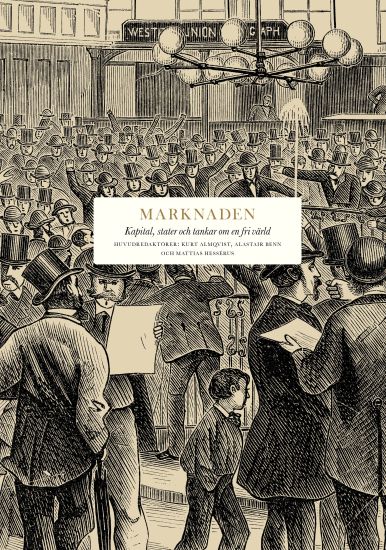
Marknaden : Kapital, stater och tankar om en fri värld

Marknaden : Kapital, stater och tankar om en fri värld

David Abulafia; Ali Ansari; Richard Bratby; Mary Bridges; Caroline Burt; David Butterfield; Edward Chancellor; Marie Kawthar Daouda; Eloise Davies; Ulrike Franke; Francis J. Gavin; Magnus Henrekson; William Inboden; Shashank Joshi; Knut N. Kjaer; Kwasi Kwarteng; Charlie Laderman; Ian Leslie; Nicklas Berild Lundblad; Iain Martin; Jade McGlynn; Mario Pisani; Alina Polyakova; Sergey Radchenko; Mick Ryan; Paul Tucker; Rikard Westerberg; Adrian Wooldridge; David Wootton; Linda Yueh

Bokförlaget Stolpe
2026
sidottu
Från det romerska torget till digitala valutor – hur har marknaden utvecklats under historiens gång och hur kan den komma att se ut i framtiden? Denna antologi gör en djupdykning i marknadsutvecklingen och tittar närmare på marknaders avgörande roll i att utforma samtiden men tar också upp den brännande frågan om hur vi ska navigera mot en hållbar framtid. I tankeväckande essäer skrivna av internationella forskare, politiker och andra sakkunniga utforskas marknadens dynamik. Med utgångspunkt i de antika torgen och i det medeltida Europas marknader undersöker författarna hur tekniska framsteg, konsumentbeteende och geopolitisk strategi – till exempel den politik som utövades under Reagan-eran – har format nutida marknader. Slutligen tar boken upp de utmaningar för stabiliteten på marknaden som utgörs av auktoritära stater och AI. Boken finns även i engelsk utgåva, The Market.
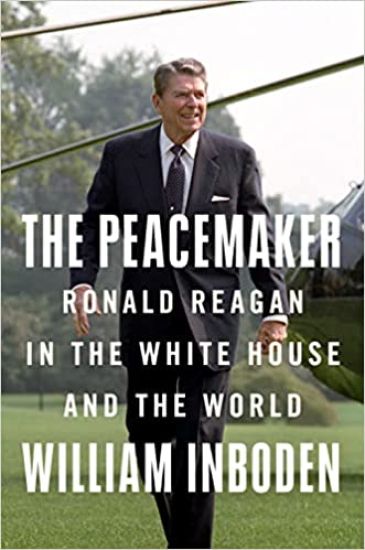
The Peacemaker

The Peacemaker

William Inboden

Penguin Putnam Inc
2022
sidottu
A masterful account of how Ronald Reagan and his national security team confronted the Soviets, reduced the nuclear threat, won the Cold War, and supported the spread of freedom around the world. "Remarkable... a great read."--Robert Gates - "Mesmerizing... hard to put down."--Paul Kennedy - "Clearly written, thoroughly researched, full of fresh information... will shape all future studies of the role the United States played in ending the Cold War."--John Lewis Gaddis - "A major contribution to our understanding of the Reagan presidency and the twilight of the Cold War era."--David Kennedy With decades of hindsight, the peaceful end of the Cold War seems a foregone conclusion. But in the early 1980s, most experts believed the Soviet Union was strong, stable, and would last into the next century. Ronald Reagan entered the White House with no certainty of what would happen next, only an overriding faith in democracy and an abiding belief that Soviet communism--and the threat of nuclear war--must end. The Peacemaker reveals how Reagan's White House waged the Cold War while managing multiple crises around the globe. From the emergence of global terrorism, wars in the Middle East, the rise of Japan, and the awakening of China to proxy conflicts in Latin America, Africa, and Asia, Reagan's team oversaw the worldwide expansion of democracy, globalization, free trade, and the information revolution. Yet no issue was greater than the Cold War standoff with the Soviet Union. As president, Reagan remade the four-decades-old policy of containment and challenged the Soviets in an arms race and ideological contest that pushed them toward economic and political collapse, all while extending an olive branch of diplomacy as he sought a peaceful end to the conflict. Reagan's revolving team included Secretaries of State Al Haig and George Shultz; Secretaries of Defense Caspar Weinberger and Frank Carlucci; National Security Advisors Bill Clark, John Poindexter, and Bud McFarlane; Chief of Staff James Baker; CIA Director Bill Casey; and United Nations Ambassador Jeane Kirkpatrick. Talented and devoted to their president, they were often at odds with one another as rivalries and backstabbing led to missteps and crises. But over the course of the presidency, Reagan and his team still developed the strategies that brought about the Cold War's peaceful conclusion and remade the world. Based on thousands of pages of newly-declassified documents and interviews with senior Reagan officials, The Peacemaker brims with fresh insights into one of America's most consequential presidents. Along the way, it shows how the pivotal decade of the 1980s shaped the world today.
The Reagan Moment

The Reagan Moment

William Inboden

Cornell University Press
2021
pokkari
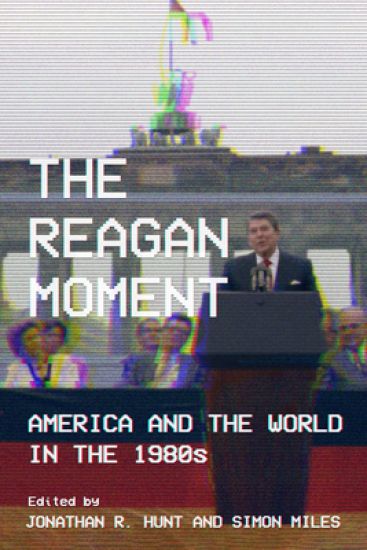
In The Reagan Moment, the ideas, events, strategies, trends, and movements that shaped the 1980s are revealed to have had lasting effects on international relations: The United States went from a creditor to a debtor nation; democracy crested in East Asia and returned to Latin America; the People's Republic of China moved to privatize, decentralize, and open its economy; Osama bin Laden founded Al Qaeda; and relations between Washington and Moscow thawed en route to the Soviet Union's dissolution. The Reagan Moment places US foreign relations into global context by examining the economic, international, and ideational relationships that bound Washington to the wider world. Editors Jonathan R. Hunt and Simon Miles bring together a cohort of scholars with fresh insights from untapped and declassified global sources to recast Reagan's pivotal years in power. Contributors: Seth Anziska, James Cameron, Elizabeth Charles, Susan Colbourn, Michael De Groot, Stephanie Freeman, Christopher Fuller, Flavia Gasbarri, Mathias Haeussler, William Inboden, Mark Atwood Lawrence, Elisabeth Mariko Leake, Melvyn P. Leffler, Evan D. McCormick, Jennifer Miller, David Painter, Robert Rakove, William Michael Schmidli, Sarah Snyder, Lauren Frances Turek, James Wilson
The Reagan Moment

The Reagan Moment

William Inboden

Cornell University Press
2021
sidottu
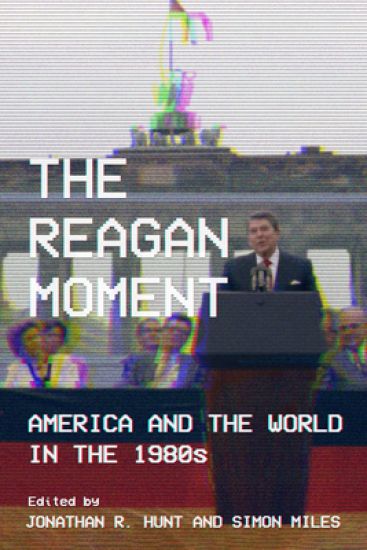
In The Reagan Moment, the ideas, events, strategies, trends, and movements that shaped the 1980s are revealed to have had lasting effects on international relations: The United States went from a creditor to a debtor nation; democracy crested in East Asia and returned to Latin America; the People's Republic of China moved to privatize, decentralize, and open its economy; Osama bin Laden founded Al Qaeda; and relations between Washington and Moscow thawed en route to the Soviet Union's dissolution. The Reagan Moment places US foreign relations into global context by examining the economic, international, and ideational relationships that bound Washington to the wider world. Editors Jonathan R. Hunt and Simon Miles bring together a cohort of scholars with fresh insights from untapped and declassified global sources to recast Reagan's pivotal years in power. Contributors: Seth Anziska, James Cameron, Elizabeth Charles, Susan Colbourn, Michael De Groot, Stephanie Freeman, Christopher Fuller, Flavia Gasbarri, Mathias Haeussler, William Inboden, Mark Atwood Lawrence, Elisabeth Mariko Leake, Melvyn P. Leffler, Evan D. McCormick, Jennifer Miller, David Painter, Robert Rakove, William Michael Schmidli, Sarah Snyder, Lauren Frances Turek, James Wilson
Religion and American Foreign Policy, 1945–1960

Religion and American Foreign Policy, 1945–1960

William Inboden

Cambridge University Press
2010
pokkari
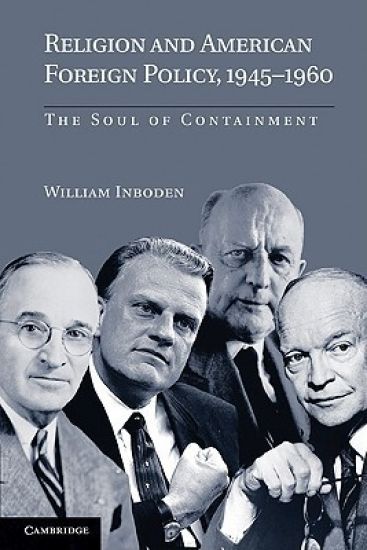
The Cold War was in many ways a religious war. Presidents Truman and Eisenhower and other American leaders believed that human rights and freedom were endowed by God, that God had called the United States to defend liberty, and that Soviet communism was evil because of its atheism and enmity to religion. Along with security and economic concerns, these religious convictions helped determine both how the United States defined the enemy and how it fought the conflict. Meanwhile, American Protestant churches failed to seize the moment. Internal differences over theology and politics, and resistance to cooperation with Catholics and Jews, hindered Protestant leaders domestically and internationally. Frustrated by these internecine disputes, Truman and Eisenhower attempted to construct a new civil religion to mobilize domestic support for Cold War measures, determine the strategic boundaries of containment, unite all religious faiths against communism, and to undermine the authority of communist governments abroad.
Religion and American Foreign Policy, 1945–1960

Religion and American Foreign Policy, 1945–1960

William Inboden

Cambridge University Press
2008
sidottu
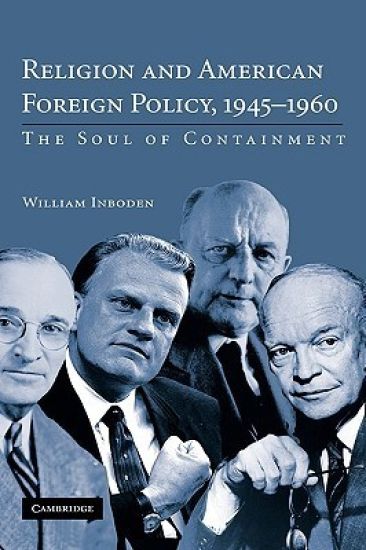
The Cold War was in many ways a religious war. Presidents Truman and Eisenhower and other American leaders believed that human rights and freedom were endowed by God, that God had called the United States to defend liberty, and that Soviet communism was evil because of its atheism and enmity to religion. Along with security and economic concerns, these religious convictions helped determine both how the United States defined the enemy and how it fought the conflict. Meanwhile, American Protestant churches failed to seize the moment. Internal differences over theology and politics, and resistance to cooperation with Catholics and Jews, hindered Protestant leaders domestically and internationally. Frustrated by these internecine disputes, Truman and Eisenhower attempted to construct a new civil religion to mobilize domestic support for Cold War measures, determine the strategic boundaries of containment, unite all religious faiths against communism, and to undermine the authority of communist governments abroad.