Kirjailija
William Irwin
Kirjat ja teokset yhdessä paikassa: 19 kirjaa, julkaisuja vuosilta 1999–2022, suosituimpiin kuuluu God Is a Question, Not an Answer. Vertaile teosten hintoja ja tarkista saatavuus suomalaisista kirjakaupoista.
19 kirjaa
Kirjojen julkaisuvuodet: 1999–2022.
The first book to give Metallica's lyrics the care and contemplation they deserve More than 40 years since their formation, and 125 million albums later, Metallica is as relevant as ever. Much has been written about the band, but The Meaning of Metallica is the first book to focus exclusively on their lyrics. Their mighty guitar riffs and pounding drums are legendary, but Metallica's words match the intensity of their tunes. Lead singer James Hetfield writes rock poetry dealing with death, war, addiction, alienation, corruption, freedom, religion, and other weighty topics. Painting a rainbow of emotions with a deft palette, subtle but not obscure, Hetfield's lyrics deserve careful attention. A master of narrative, Metallica makes listeners care about a vast array of characters, from a vengeful God, to a suicidal teenager, to a man in mid-life crisis. The Meaning of Metallica is like a riveting conversation with a close friend. A thematic tour de force that traces Hetfield's lyrical development across the decades, this companion examines everything from deep cuts like "Confusion" to megahits like "Enter Sandman." Sure to spark debate and discussion, The Meaning of Metallica provides a close reading of lyrics dense with details and rich with allusions.
Critical Thinking: A Students Introduction ISE
Gregory Bassham; William Irwin
McGraw-Hill Education
2022
pokkari
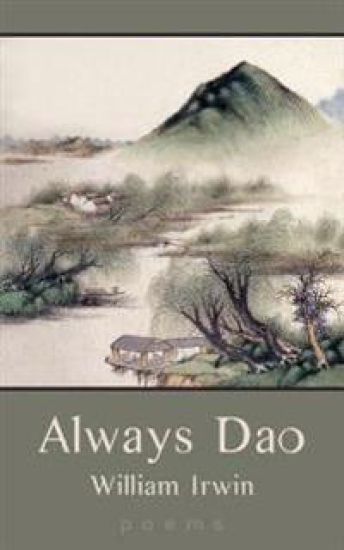
Inspired by Daoism, this collection of playful poems depicts the peace of going with the flow and the pain of going against it. In deceptively simple, spare language, these poems guide us on the road of recovery. With impish paradox and winking wisdom, these brief verses impart hope and encourage joy.
A Glimpse of War is a true account by British Army Sergeant William Irwin M. M. of 1st Battalion Leicestershire 'Tigers' regiment of the liberation of Europe in 1944-45. An infantry platoon member who became platoon leader due to loss of comrades, he describes in frank detail the trials and tribulations of the ordinary soldier on the frontline across Normandy, Belgium to north-west Holland and the Rhine, Germany, with the combined 49th Infantry Division known as the 'Polar Bears'. Sgt William Irwin, M. M. A British Infantryman's account of his experience during the liberation of Europe 1944-45 is extraordinary on so many levels. Beautifully written, emotionally evocative, powerfully sustained imagery.
True Blood and Philosophy Lib/E: We Wanna Think Bad Things with You
William Irwin; George A. Dunn
Tantor Audio
2020
cd
Teeming with complex, mythical characters in the shape of vampires, telepaths, shapeshifters, and the like, True Blood, the popular HBO series adapted from Charlaine Harris's bestselling Southern Vampire Mysteries, has a rich collection of themes to explore, from sex and romance to bigotry and violence to death and immortality. The goings-on in the mythical town of Bon Temps, Louisiana, where vampires satiate their blood lust and openly commingle with ordinary humans, present no shortages of juicy metaphysical morsels to sink your teeth into. Now True Blood and Philosophy calls on the minds of some of history's great thinkers to perform some philosophical bloodletting on such topics as Sookie and the metaphysics of mindreading; Maryann and sacrificial religion; werewolves, shapeshifters, and personal identity; vampire politics, evil, desire, and much more. Smart and entertaining, True Blood and Philosophy provides food--or blood--for thought, and a fun, new way to look at the series.
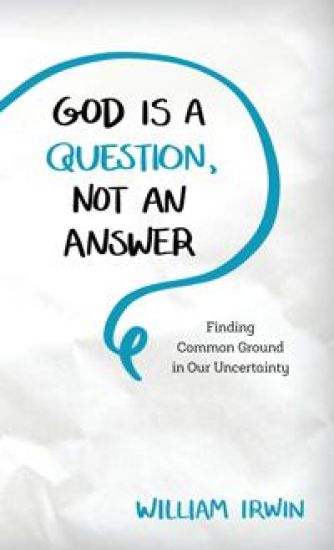
Uncertainty is the essence of the human condition, and nothing is more uncertain than God. Yet passions run hot when it comes to God, both among believers and non-believers. God is a Question, Not an Answer aims to unsettle readers on both sides of the issue. William Irwin argues that because belief occurs along a continuum of doubt and we can never reach full certainty, believers and non-believers can find common ground in uncertainty. Beginning with the questions of what we mean when we talk about God and faith, Irwin shows that from a philosophical perspective, the tendency to doubt is a virtue, and from a religious perspective there is no faith without doubt. Rather than avoid uncertainty as an uncomfortable state of emotional despair, we should embrace it as an ennobling part of the human condition. We do not have to agree about the existence of God, but we do need to practice intellectual humility and learn to see doubt as a gift. By engaging in civil discourse we can see those who disagree with us as not only fully human but capable of teaching us something.
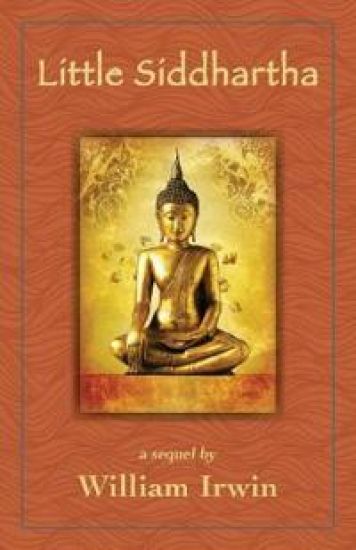
A sequel to Siddhartha, the classic novel by Hermann Hesse.
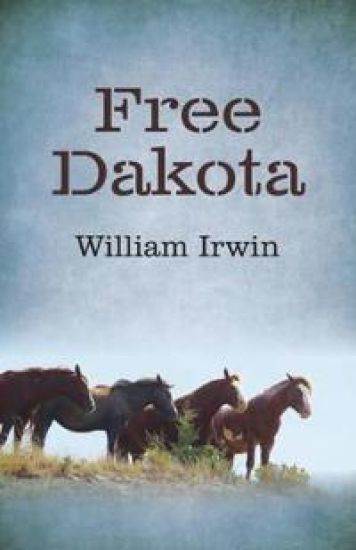
Don Jenkins wants a divorce from the United States. He's tired of a government that can't balance its budget but thinks it can dictate how much soda he should drink. Combining political intrigue and political theory, Free Dakota explores the new possibilities when Don follows the call of a charismatic diner owner who promises a libertarian paradise on the prairie. After years of struggle they have the votes for a peaceful secession, but the feds say it's 'til death do us part. Stopping the feds may cost more in integrity than in blood, however, when Don has to decide whether to stay after an assassination changes everything.
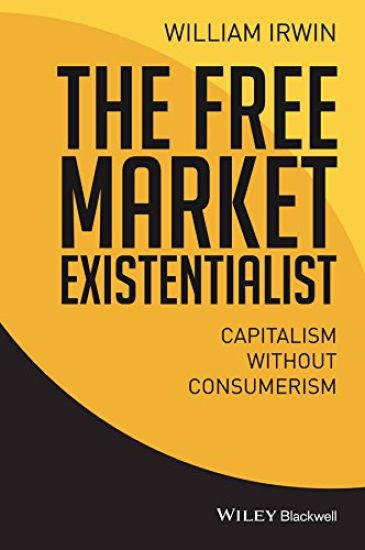
Incisive and engaging, The Free Market Existentialist proposes a new philosophy that is a synthesis of existentialism, amoralism, and libertarianism. Argues that Sartre’s existentialism fits better with capitalism than with MarxismServes as a rallying cry for a new alternative, a minimal state funded by an equal taxConfronts the “final delusion” of metaphysical morality, and proposes that we have nothing to fear from an amoral worldBegins an essential conversation for the 21st century for students, scholars, and armchair philosophers alike with clear, accessible discussions of a range of topics across philosophy including atheism, evolutionary theory, and ethics
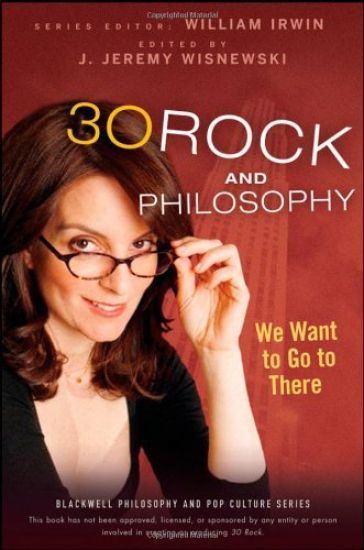
A fascinating exploration of the philosophy behind NBC’s hit TV series, 30 Rock With edgy writing and a great cast, 30 Rock is one of the funniest television shows on the air—and where hilarity ensues, philosophical questions abound: Are Liz Lemon and Jack Donaghy ethical heroes? Kenneth redefines "goody two shoes", but what does it really mean to be good? Dr. Leo Spaceman routinely demonstrates that medicine is not a science, so what is the role of the incompetent professional in America today? In 30 Rock and Philosophy, Tina Fey and her fellow cast members are thrust onto the philosophical stage with Plato, Aristotle, Kantand other great thinkers to examine these key questions and many others that involve the characters and plotlines of 30 Rock and its fictional TGS with Tracy Jordan comedy show. Takes an entertaining, up-close look at the philosophical issues behind 30 Rock's characters and storylines, from post-feminist ideals to workaholism and the meaning of lifeEquips you with a new understanding of Liz Lemon, Jack Donaghy, Tracy Jordan, Jenna Maroney, Dr. Spaceman, and other charactersGives you deep and meaningful new reasons (who knew?) for watching Tina Fey and your other favorites on 30 Rock Ideal for both casual and diehard fans, this book is the essential companion for every 30 Rock-watcher.
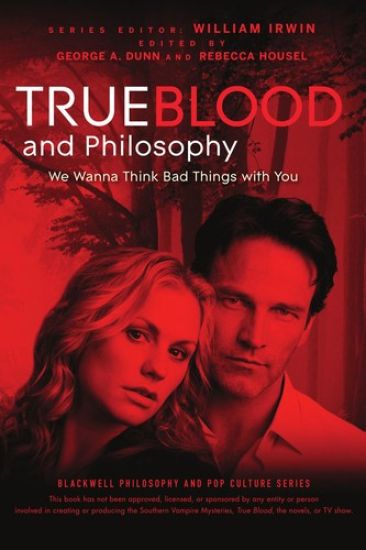
True Blood and Philosophy
William Irwin; George A. Dunn; Rebecca Housel
John Wiley Sons Inc
2010
nidottu
Halvin toimitettuna 31,30 €
TRUEBLOOD and Philosophy Does God hate fangs? Is Sam still Sam when he turns into a collie? Is coming out of the coffin the same as coming out of the closet? Are all vampires created evil? Vampires, werewolves, shapeshifters, fairies, telepaths—True Blood has it all. In a world where supernatural creatures coexist with human beings, Sookie Stackhouse and Bill Compton wrestle with powerful desires while facing complex issues concerning sex, romance, bigotry, violence, death, and immortality. Now, True Blood and Philosophy calls on the minds of some of history’s great thinkers to perform some philosophical bloodletting on this thought-provoking series. From the metaphysics of mind reading to Maryann Forrester’s cult of Dionysus, from vampire politics to the nature of personal identity, and from contemporary feminism to the rights of nonhuman species, True Blood and Philosophy mines the thinking of philosophers such as Plato, Aristotle, Thomas Aquinas, John Locke, Immanuel Kant, Friedrich Nietzsche, and John Rawls to enlighten us on the intriguing themes that surround this supernatural world. You’ll find no shortage of juicy metaphysical morsels to sink your teeth into! To learn more about the Blackwell Philosophy and Pop Culture series, visit www.andphilosophy.com
Robert Alsop Versus Robert Barclay, The Apologist (1873)
William Irwin
KESSINGER PUBLISHING, LLC
2010
sidottu
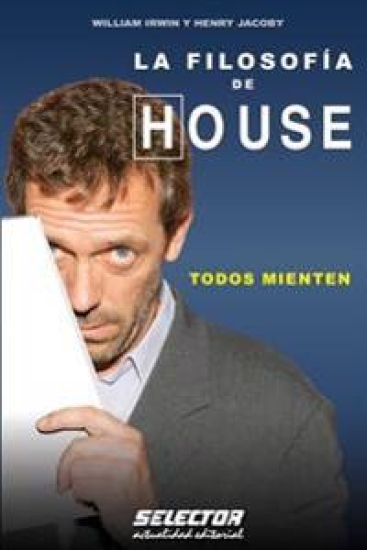
La Filosofía de HOUSE: Todos Mienten
Henry Jacoby; William Irwin
Selector, S.A. de C.V.
2010
nidottu
- Exageramos con eso de portarnos bien? - Realmente somos s lo unos animales evolucionados, ego stas, que vagamos por la Tierra y nuestra existencia no tienen ning n significado? - Ser a mejor leer menos y ver m s televisi n? - Es HOUSE un maestreo de la filosof a occidental o simplemente un perfecto sangr n? Podr a decirse que el doctor Gregory House es el antih roe m s desafiante y complejo en toda la historia de la televisi n, pero existe algo m s que materia gris y ego para este genio engre do? Esta obra analiza la serie Dr. House con el fin de explicar sus bases filos ficas y la conducta extravagante de su protagonista gru n. Se trata de un personaje compuesto por pedazos de Sherlock Homes, S crates, Nietzsche y la ret rica tao sta, y no es tan retorcido como uno creer a. LA FILOSOF A DE HOUSE abarca desde Arist teles hasta el Zen. Fascinar a los devotos de este genio mis ntropo y su equipo en el Hospital Princeton-Plainsboro.
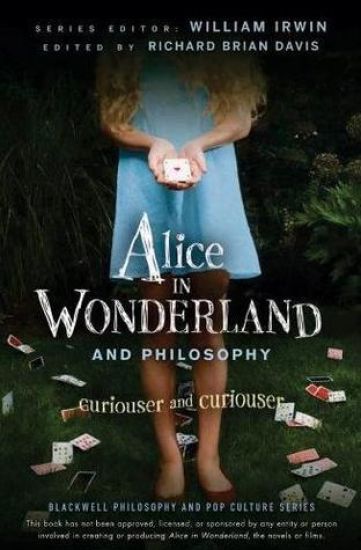
Alice in Wonderland and Philosophy
William Irwin; Richard Brian Davis
John Wiley Sons Inc
2010
nidottu
The perfect companion to Lewis Carroll's classic book and director Tim Burton's March 2010 remake of Alice in Wonderland Alice?s Adventures in Wonderland has fascinated children and adults alike for generations. Why does Lewis Carroll introduce us to such oddities as blue caterpillars who smoke hookahs, cats whose grins remain after their heads have faded away, and a White Queen who lives backwards and remembers forwards? Is it all just nonsense? Was Carroll under the influence? This book probes the deeper underlying meaning in the Alice books, and reveals a world rich with philosophical life lessons. Tapping into some of the greatest philosophical minds that ever lived? Aristotle, Hume, Hobbes, and Nietzsche? Alice in Wonderland and Philosophy explores life?s ultimate questions through the eyes of perhaps the most endearing heroine in all of literature. Looks at compelling issues such as perception and reality as well as how logic fares in a world of lunacy, the Mad Hatter, clocks, and temporal passageOffers new insights into favorite Alice in Wonderland characters and scenes, including the Mad Hatter and his tea party, the violent Queen of Hearts, and the grinning Cheshire Cat Accessible and entertaining, Alice in Wonderland and Philosophy will enrich your experience of Alice's timeless adventures with new meaning and fun.
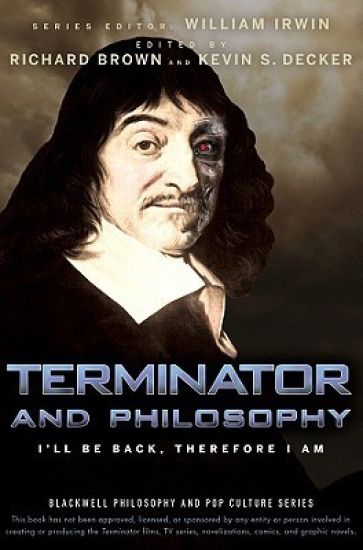
Terminator and Philosophy
William Irwin; Richard Brown; Kevin S. Decker
John Wiley Sons Inc
2009
nidottu
Are cyborgs our friends or our enemies? Was it morally right for Skynet to nuke us? Is John Connor free to choose to defend humanity, or not? Is Judgment Day inevitable? The Terminator series is one of the most popular sci-fi franchises ever created, captivating millions with its edgy depiction of the struggle of humankind for survival against its own creations. This book draws on some of history’s philosophical heavy hitters: Descartes, Kant, Karl Marx, and many more. Nineteen leather-clad chapters target with extreme prejudice the mysteries surrounding intriguing philosophical issues raised by the series, including the morality of terminating other people for the sake of peace, whether we can really use time travel to protect our future resistance leaders in the past, and if Arnold’s famous T-101 is a real person or not. You’ll say “Hasta la vista, baby” to philosophical confusion as you develop a new appreciation for the complexities of John and Sarah Connor and the battles between Skynet and the human race.
Have the reports of the author's death been greatly exaggerated? When Roland Barthes famously announced the death of the author, he heralded a major new debate in modern literary criticism and aesthetics. This volume is a dialogical collection of key essays discussing the nature of authorship and the place, if any, of authorial intention in the interpretation of literary texts. Including seminal essays by Barthes and Foucault, along with other previously published and newly commissioned contributions, this collection examines the philosophical underpinnings and arguments of both sides of the debate.
The tension between the roles of authorial intention and the text itself is a basic concern of contemporary hermeneutics. Challenging much of the current thinking in the field, this volume argues that the text itself, in its various forms, is an untenable criterion for correct interpretation, and through compelling moral and epistemological arguments defends an intentionalist approach to interpretation. After discussing the shortcomings of earlier intentionalist theories, Irwin proposes a new, normative approach, urinterpretation, which is based on an author construct, the urauthor, that includes several elements traditionally seen as separate from the author. The book closes with a theoretical application of intentionalism to philosophical, literary, and legal texts.
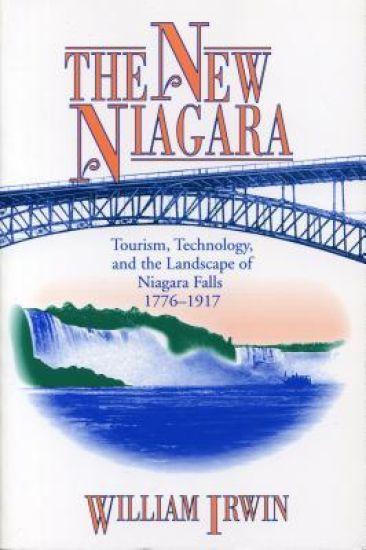
A surprising account of Niagara Falls’ appeal to Americans as an icon of progress and technology. "The book does a splendid job of highlighting the interconnections among nature, technology, and culture. In addition to its clear prose and well-chosen illustrations, it engages the scholarly literature in a meaningful but understated manner. It is, in short, that rare kind of book that is well suited for a broad array of undergraduate courses, including those in environmental history, the history of technology, historical geography, American studies, and American history."—American Historical Review "The New Niagara is a most valuable work of American cultural and environmental history."—American Studies "The New Niagara takes a fresh look at the history of Niagara Falls and makes a major contribution to our understanding of the role the Falls has played in American culture."—John F. Sears, author of Sacred Places: American Tourist Attractions in the Nineteenth Century Visitors may wonder how Niagara Falls came to be the site of magnificent bridges, a famous cereal factory, and a picturesque New York state reservation, designed by Frederick Law Olmsted. Although many have always admired the natural splendor of the Falls, William Irwin explains that it was not until the mid-1800s that Niagara truly captured the American imagination. With the coming of John Roebling’s railway suspension bridge in 1855 came the promise of a "new" Niagara, one in which nature and technology could flourish in harmony. Although some saw the transformation of Niagara Falls as a national shame, for many others it stimulated utopian visions of a great modern America. Tourists flocked to a place that showcased both the beauty of nature and the marvels of technology. Companies such as Shredded Wheat (later absorbed by Nabisco)fed on the public’s expectations of novel and revolutionary progress at Niagara. The Shredded Wheat factory and the Niagara Power Company became tourist attractions in their own right. Some developers went so far as to claim that their works exceeded Niagara’s natural beauty. It was not until the 1920s that failed expectations revealed the scope of the blighted landscape. By taking us back to a period when Niagara Falls was appreciated as much for its utopian promise as for its natural beauty, The New Niagara reveals America’s remarkable romance with technology and its faith in human mastery of the environment.