Kirjojen hintavertailu – 12 903 725 kirjaa ja 27 kauppaa

Kirjailija

William J Barber

Kirjat ja teokset yhdessä paikassa: 38 kirjaa, julkaisuja vuosilta 1984–2025, suosituimpiin kuuluu We Cry Justice. Vertaile teosten hintoja ja tarkista saatavuus suomalaisista kirjakaupoista.

Nimi esiintyy myös muodoissa: William J. Barber

38 kirjaa

Kirjojen julkaisuvuodet: 1984–2025.

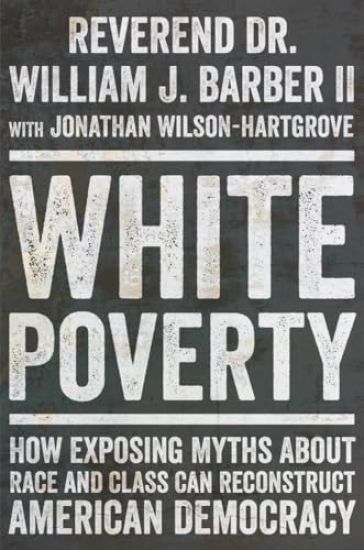
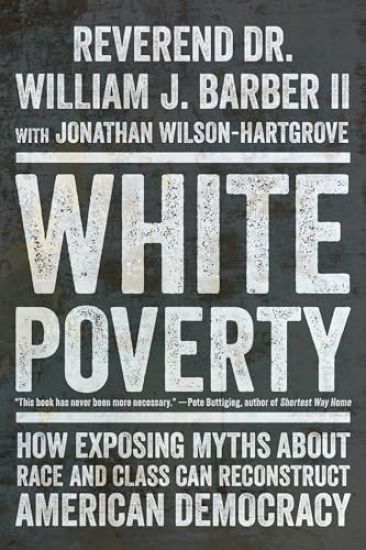
White Poverty

White Poverty

William J. Barber

WW NORTON CO
2025
nidottu
Challenging the definition of who is poor in America, in White Poverty, William J. Barber II writes about the lies that prevent us from seeing the pain of poor white American families who have been offered little more than their “whiteness” and angry social media posts to sustain them in an economy where the costs of housing, healthcare and education have skyrocketed while wages have stagnated for all but the very rich. White Poverty, lifts the hope for a new “moral fusion movement” that seeks to unite people “who have been pitted against one another by politicians (and billionaires) who depend on the poorest of us not being here.” One of the most empathetic and visionary approaches to American poverty in decades, Barber braids poignant autobiographical recollections with astute historical analysis, contending that tens of millions of America’s poorest earners have much in common.

Rebirth of a Nation

Rebirth of a Nation

Joel Edward Goza; William J Barber

WILLIAM B EERDMANS PUBLISHING CO
2024
sidottu
Joel Edward Goza dismantles the deep-seated myths that perpetuate white supremacy--and makes the case that reparations are necessary to heal America's racial wounds and live up to our democratic ideals. Like many well-intentioned white people, Goza once believed that he could support Black America's struggle for equality without supporting reparations. Reparations, he thought, were altogether irrelevant to the real work of racial justice. This is a book about why he was wrong. In fact, any effort to heal our nation's wounds will fail without reparations. In Rebirth of a Nation, Goza exposes lesser-known aspects of racism in American history and how Black people have consistently been depicted as responsible for their own oppression to justify slavery, Jim Crow, mass incarceration and gross inequality. Goza's iconoclastic and incisive account exposes how revered figures like Thomas Jefferson and Abraham Lincoln embedded white supremacy deep into our nation's consciousness--and how Ronald Reagan manipulated this ideology so that society cheered as he advanced a set of policies that wounded our nation and intensified Black America's suffering. But Rebirth of a Nation is not merely about accountability. It is also about hope. A reparations process is not a utopian dream; Goza offers a practical path toward closing the racial wealth gap. Rebirth of a Nation shows readers how they can join the reparative process, working toward the creation of a more perfect union.
White Poverty

White Poverty

William J. Barber

WW NORTON CO
2024
sidottu
When most Americans think of poverty, they imagine Black faces. As a teenager, Reverend William J Barber II recalls seeing Black mothers interviewed on television whenever there was a story on food stamps or unemployment; poverty, then as now, was depicted as an essentially Black problem. In a work that promises to have lasting repercussions, Barber—now a leading advocate for the rights of America's poor and the “closest person we have to Dr King” (Cornel West)—addresses white poverty as a hugely neglected subject that might just be the key to mitigating racism and bringing together the tens of millions working-class and impoverished whites with low-income Blacks. Recognising that angry social media posts have replaced food, education and housing as a “salve” for the white poor, Barber contends that the millions of America’s lowest-income earners have much in common, and together with Jonathan Wilson-Hartgrove, provides one of the most sympathetic and visionary approaches to endemic poverty in decades.
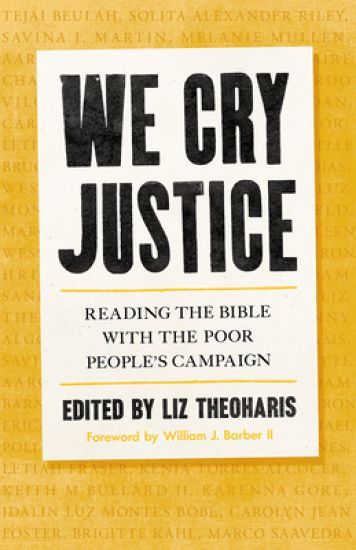
We Cry Justice

We Cry Justice

William J. Barber

Broadleaf Books
2021
pokkari
From Genesis to Revelation, the Bible proclaims justice and abundance for the poor. Yet these powerful passages about poverty are frequently overlooked and misinterpreted. Enter the Poor People's Campaign, a movement against racism, poverty, ecological devastation, militarism, and religious nationalism. In We Cry Justice, Liz Theoharis, co-chair of the campaign, is joined by pastors, community organizers, scholars, low-wage workers, lay leaders, and people in poverty to interpret sacred stories about the poor seeking healing, equity, and freedom. In a world roiled by poverty and injustice, Scripture still speaks. Organized into fifty-two chapters, each focusing on a key Scripture passage, We Cry Justice offers comfort and challenge from the many stories of the poor taking action together. Read anew the story of the exodus that frees people from debt and slavery, the prophets who denounce the rich and ruling classes, the stories of Jesus's healing and parables about fair wages, and the early church's sharing of goods. Reflection questions and a short prayer at the end of each chapter offer the opportunity to use the book devotionally through a year. The Bible cries for justice, and we do too. It's time to act on God's persistent call to repair the breach and fight poverty, not the poor.
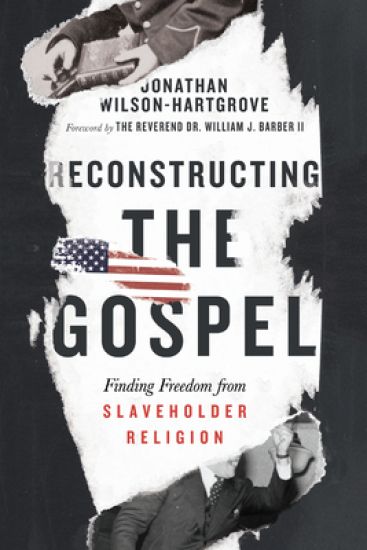
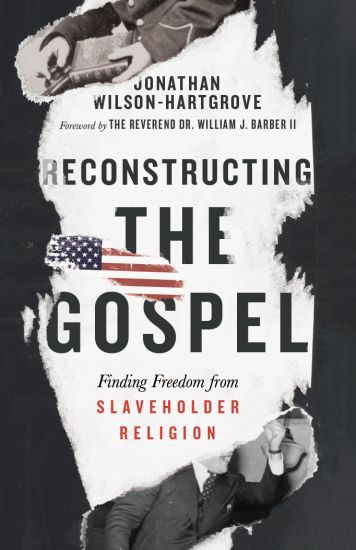
Reconstructing the Gospel – Finding Freedom from Slaveholder Religion

Reconstructing the Gospel – Finding Freedom from Slaveholder Religion

Jonathan Wilson–hartgrov; William J. Barber

Inter-Varsity Press,US
2020
nidottu
2018 Foreword INDIES Book of the Year Award Finalists - Multicultural Jonathan Wilson-Hartgrove grew up in the Bible Belt in the American South as a faithful church-going Christian. But he gradually came to realize that the gospel his Christianity proclaimed was not good news for everybody. The same Christianity that sang, "Amazing grace, how sweet the sound" also perpetuated racial injustice and white supremacy in the name of Jesus. His Christianity, he discovered, was the religion of the slaveholder. Just as Reconstruction after the Civil War worked to repair a desperately broken society, our compromised Christianity requires a spiritual reconstruction that undoes the injustices of the past. Wilson-Hartgrove traces his journey from the religion of the slaveholder to the Christianity of Christ. Reconstructing the gospel requires facing the pain of the past and present, from racial blindness to systemic abuses of power. Grappling seriously with troubling history and theology, Wilson-Hartgrove recovers the subversiveness of the gospel that sustained the church through centuries of slavery and oppression, from the civil rights era to the Black Lives Matter movement and beyond. When the gospel is reconstructed, freedom rings for both individuals and society as a whole. Discover how Jesus continues to save us from ourselves and each other, to repair the breach and heal our land.
Reconstructing the Gospel – Finding Freedom from Slaveholder Religion

Reconstructing the Gospel – Finding Freedom from Slaveholder Religion

Jonathan Wilson–hartgrov; William J. Barber

IVP Books
2018
sidottu
2018 Foreword INDIES Book of the Year Award Finalists - Multicultural "I am a man torn in two. And the gospel I inherited is divided." Jonathan Wilson-Hartgrove grew up in the Bible Belt in the American South as a faithful church-going Christian. But he gradually came to realize that the gospel his Christianity proclaimed was not good news for everybody. The same Christianity that sang, "Amazing grace, how sweet the sound" also perpetuated racial injustice and white supremacy in the name of Jesus. His Christianity, he discovered, was the religion of the slaveholder. Just as Reconstruction after the Civil War worked to repair a desperately broken society, our compromised Christianity requires a spiritual reconstruction that undoes the injustices of the past. Wilson-Hartgrove traces his journey from the religion of the slaveholder to the Christianity of Christ. Reconstructing the gospel requires facing the pain of the past and present, from racial blindness to systemic abuses of power. Grappling seriously with troubling history and theology, Wilson-Hartgrove recovers the subversiveness of the gospel that sustained the church through centuries of slavery and oppression, from the civil rights era to the Black Lives Matter movement and beyond. When the gospel is reconstructed, freedom rings for both individuals and society as a whole. Discover how Jesus continues to save us from ourselves and each other, to repair the breach and heal our land.
A History of Economic Thought

A History of Economic Thought

William J. Barber

Wesleyan University Press
2009
nidottu
An invigorating study of the development of systematic economic ideas. WILLIAM J. BARBER is Andrews Professor of Economics, Emeritus at Wesleyan University in Middletown, Connecticut, where he taught from 1957 to 1993. He has served as the president of the History of Economics Society (1989-1990) and in 2002 was named a Distinguished Fellow of that society.