
Kirjojen hintavertailu – 12 903 725 kirjaa ja 27 kauppaa

Kirjailija

William J. Cohen

Kirjat ja teokset yhdessä paikassa: 2 kirjaa, julkaisuja vuodelta 2019, suosituimpiin kuuluu Ecohumanism and the Ecological Culture. Vertaile teosten hintoja ja tarkista saatavuus suomalaisista kirjakaupoista.

2 kirjaa

Ecohumanism and the Ecological Culture

Ecohumanism and the Ecological Culture

William J. Cohen; Frederick R. Steiner

Temple University Press,U.S.
2019
nidottu
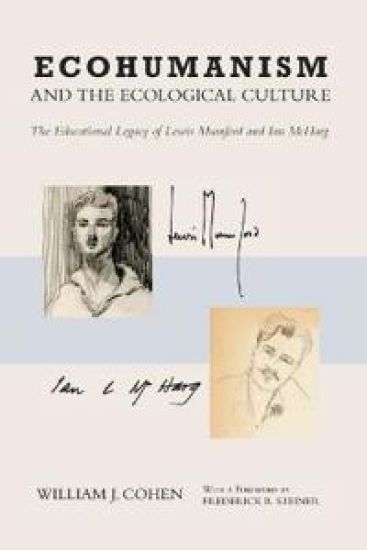
Lewis Mumford, one of the most respected public intellectuals of the twentieth century, speaking at a conference on the future environments of North America, said, “In order to secure human survival we must transition from a technological culture to an ecological culture.” In Ecohumanism and the Ecological Culture, William Cohen shows how Mumford’s conception of an educational philosophy was enacted by Mumford’s mentee, Ian McHarg, the renowned landscape architect and regional planner at the University of Pennsylvania. McHarg advanced a new way to achieve an ecological culture-through an educational curriculum based on fusing ecohumanism to the planning and design disciplines. Cohen explores Mumford’s important vision of ecohumanism-a synthesis of natural systems ecology with the myriad dimensions of human systems, or human ecology-and how McHarg actually formulated and made that vision happen. He considers the emergence of alternative energy systems and new approaches to planning and community development to achieve these goals. The ecohumanism graduate curriculum should become the basis to train the next generation of planners and designers to lead us into the ecological culture, thereby securing the educational legacy of both Lewis Mumford and Ian McHarg.
Ecohumanism and the Ecological Culture

Ecohumanism and the Ecological Culture

William J. Cohen; Frederick R. Steiner

Temple University Press,U.S.
2019
sidottu
Lewis Mumford, one of the most respected public intellectuals of the twentieth century, speaking at a conference on the future environments of North America, said, “In order to secure human survival we must transition from a technological culture to an ecological culture.” In Ecohumanism and the Ecological Culture, William Cohen shows how Mumford’s conception of an educational philosophy was enacted by Mumford’s mentee, Ian McHarg, the renowned landscape architect and regional planner at the University of Pennsylvania. McHarg advanced a new way to achieve an ecological culture-through an educational curriculum based on fusing ecohumanism to the planning and design disciplines. Cohen explores Mumford’s important vision of ecohumanism-a synthesis of natural systems ecology with the myriad dimensions of human systems, or human ecology-and how McHarg actually formulated and made that vision happen. He considers the emergence of alternative energy systems and new approaches to planning and community development to achieve these goals. The ecohumanism graduate curriculum should become the basis to train the next generation of planners and designers to lead us into the ecological culture, thereby securing the educational legacy of both Lewis Mumford and Ian McHarg.