Kirjojen hintavertailu – 12 859 829 kirjaa ja 27 kauppaa

Kirjailija

William J. Layton

Kirjat ja teokset yhdessä paikassa: 3 kirjaa, julkaisuja vuosilta 2005–2012, suosituimpiin kuuluu Mathematics of Large Eddy Simulation of Turbulent Flows. Vertaile teosten hintoja ja tarkista saatavuus suomalaisista kirjakaupoista.

3 kirjaa

Kirjojen julkaisuvuodet: 2005–2012.

Approximate Deconvolution Models of Turbulence

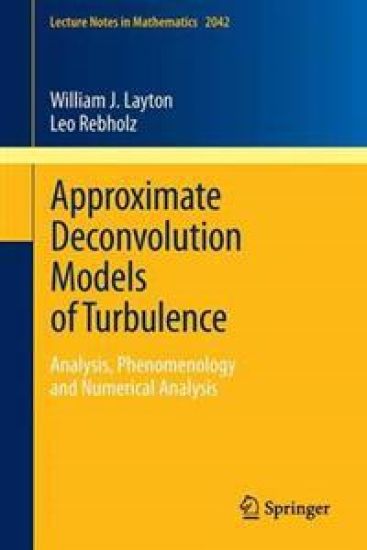
Approximate Deconvolution Models of Turbulence

William J. Layton; Leo G. Rebholz

Springer-Verlag Berlin and Heidelberg GmbH Co. K
2012
nidottu
This volume presents a mathematical development of a recent approach to the modeling and simulation of turbulent flows based on methods for the approximate solution of inverse problems. The resulting Approximate Deconvolution Models or ADMs have some advantages over more commonly used turbulence models – as well as some disadvantages. Our goal in this book is to provide a clear and complete mathematical development of ADMs, while pointing out the difficulties that remain. In order to do so, we present the analytical theory of ADMs, along with its connections, motivations and complements in the phenomenology of and algorithms for ADMs.
Mathematics of Large Eddy Simulation of Turbulent Flows

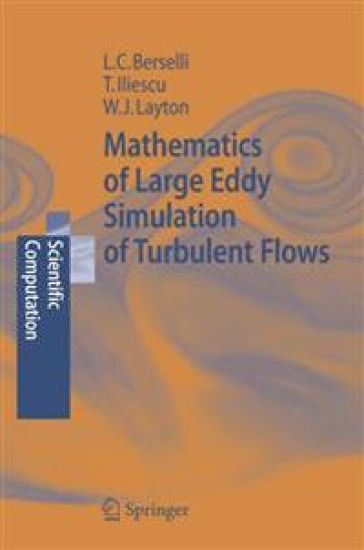
Mathematics of Large Eddy Simulation of Turbulent Flows

Luigi Carlo Berselli; Traian Iliescu; William J. Layton

Springer-Verlag Berlin and Heidelberg GmbH Co. K
2010
nidottu
Large eddy simulation (LES) is a method of scientific computation seeking to predict the dynamics of organized structures in turbulent flows by approximating local, spatial averages of the flow. Since its birth in 1970, LES has undergone an explosive development and has matured into a highly-developed computational technology. It uses the tools of turbulence theory and the experience gained from practical computation. This book focuses on the mathematical foundations of LES and its models and provides a connection between the powerful tools of applied mathematics, partial differential equations and LES. Thus, it is concerned with fundamental aspects not treated so deeply in the other books in the field, aspects such as well-posedness of the models, their energy balance and the connection to the Leray theory of weak solutions of the Navier-Stokes equations. The authors give a mathematically informed and detailed treatment of an interesting selection of models, focusing on issues connected with understanding and expanding the correctness and universality of LES. This volume offers a useful entry point into the field for PhD students in applied mathematics, computational mathematics and partial differential equations. Non-mathematicians will appreciate it as a reference that introduces them to current tools and advances in the mathematical theory of LES.
Mathematics of Large Eddy Simulation of Turbulent Flows

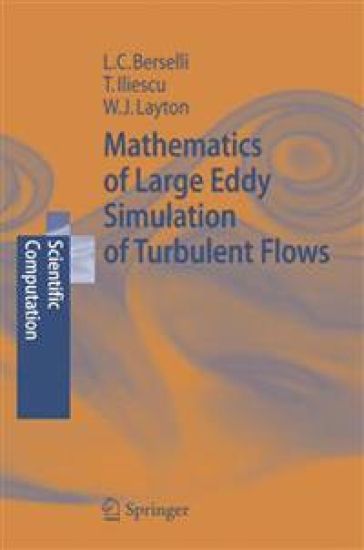
Mathematics of Large Eddy Simulation of Turbulent Flows

Luigi Carlo Berselli; Traian Iliescu; William J. Layton

Springer-Verlag Berlin and Heidelberg GmbH Co. K
2005
sidottu
Large eddy simulation (LES) is a method of scientific computation seeking to predict the dynamics of organized structures in turbulent flows by approximating local, spatial averages of the flow. Since its birth in 1970, LES has undergone an explosive development and has matured into a highly-developed computational technology. It uses the tools of turbulence theory and the experience gained from practical computation. This book focuses on the mathematical foundations of LES and its models and provides a connection between the powerful tools of applied mathematics, partial differential equations and LES. Thus, it is concerned with fundamental aspects not treated so deeply in the other books in the field, aspects such as well-posedness of the models, their energy balance and the connection to the Leray theory of weak solutions of the Navier-Stokes equations. The authors give a mathematically informed and detailed treatment of an interesting selection of models, focusing on issues connected with understanding and expanding the correctness and universality of LES. This volume offers a useful entry point into the field for PhD students in applied mathematics, computational mathematics and partial differential equations. Non-mathematicians will appreciate it as a reference that introduces them to current tools and advances in the mathematical theory of LES.