
Kirjailija
William Kentridge
Kirjat ja teokset yhdessä paikassa: 15 kirjaa, julkaisuja vuosilta 2014–2026, suosituimpiin kuuluu Catalogue Raisonné Volume 2. Vertaile teosten hintoja ja tarkista saatavuus suomalaisista kirjakaupoista.
15 kirjaa
Kirjojen julkaisuvuodet: 2014–2026.
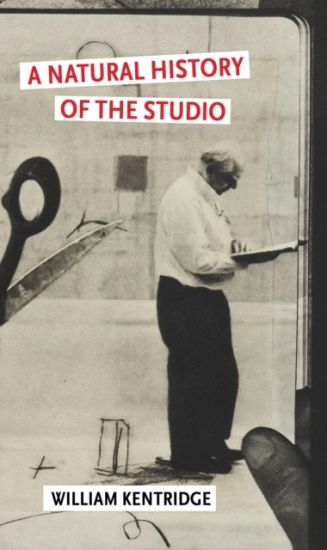
For more than three decades, South African artist William Kentridge has created a vast body of work comprising drawings and multimedia installations that have been exhibited worldwide. Here he immerses us in the artistic, intellectual and production processes of his creations, providing philosophical, autobiographical, technical and practical commentary and giving intimate insight into the studios where he has created throughout his life. A Natural History of the Studio is not only a must-read for admirers of Kentridge's work, but also a vibrant personal and philosophical exploration of the creative process and a critical look at the world and the human condition.
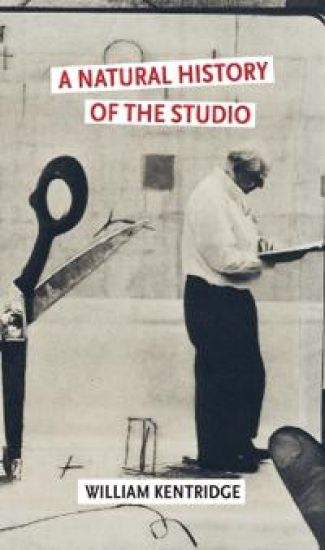
South African artist William Kentridge, one of the leading artists of our time, offers a personal insight into his work, his childhood, and his artistic techniques, and the studio spaces he has occupied throughout his lifeWhat is of us, and what is not? Where to find our edge? This is another theme of these talks: what is me and what is the world beyond me? And particularly, what are the negotiations that happen at this border, the meeting point where the world comes towards us, and we go out to meet it? For more than three decades, South African artist William Kentridge has created a vast body of work of charcoal-, pencil- and black ink drawings and multimedia installations about history and politics that have been exhibited in museums, opera and art houses, film centers, galleries and outdoor installations worldwide. At the same time, his creative work has stretched the boundaries of the very media he employs. The six chapters of A Natural History of the Studio immerse us in the artistic, intellectual, and production processes of his outstanding body of work. They also provide philosophical, autobiographical, technical and practical commentary and give intimate insight into the studios where he has created throughout his life - from his first workspace as a young student to his current studio in Johannesburg, where all his projects start. A Natural History of the Studio is not only a must-read for admirers of Kentridge's work, but also a vibrant personal and philosophical exploration of the creative process and a critical look at the world and the human condition.


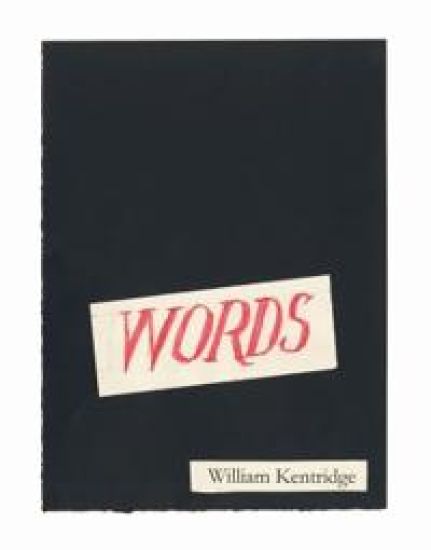
An exploration of phrases and excerpts that inspire a major contemporary artist. Over the past several years, renowned South African artist William Kentridge has made a collection of particular phrases and sentences that have called out to him from the pages of whatever he has been reading. And these phrases, which he has written into a studio notebook titled Words, have been put to work in many of his artistic projects. Kentridge has often begun a project by paging through the notebook, waiting for a phrase to claim its place in the new work. The text excerpts come from many sources: Aimé Césaire, Yehuda Amichai, Sigmund Freud, James Joyce, Setswana proverbs, the Book of Ecclesiastes, Tristan Tzara’s Dada Manifesto, and a range of eastern European poets. This volume presents a selection made from the notebook, with phrases arranged neither randomly nor with a clear agenda but finding a space in between. Cleverly designed by the artist and beautifully produced, Words is a thought-provoking collection that provides a window to the mind of a contemporary creative genius.
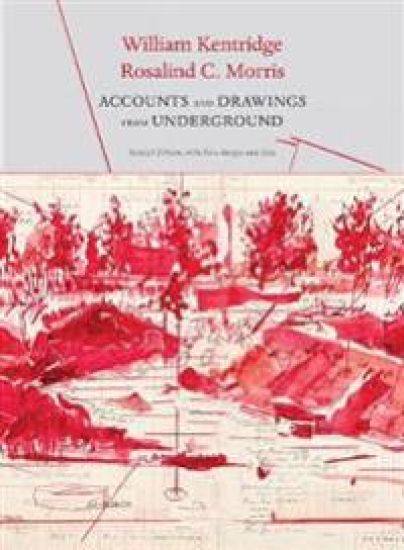
Accounts and Drawings from Underground
William Kentridge; Rosalind C Morris
Seagull Books London Ltd
2021
sidottu
In Accounts and Drawings from Underground, published in 2015, renowned artist William Kentridge and scholar Rosalind C. Morris brought us an unprecedented collaboration, taking pages of the 1906 Cash Book of the East Rand Proprietary Mines Corporation in South Africa and transforming them into something entirely new. While Kentridge contributed breathtaking landscape drawings in response to the transient terrain mining created, Morris plumbed the text of the cash book to generate a unique narrative account. Now, they revisit those ruined mines, with a visual and verbal addendum that provides an account of the ongoing metamorphosis of the world that gold mines created. Kentridge works on the threshold between the visible and the invisible, while Morris mines the unsaid in order to make it understandable. Together they’ve created a landmark book that chronicles the exploitation of African communities and sheds further light on global Black history. With fifteen stunning new color drawings by Kentridge and an additional coda, this revised edition of Accounts and Drawings from Underground continues its remarkable documentation of the stories of migrant laborers and the flows of capital and desire, providing us with a palpable sense of a vanished world.
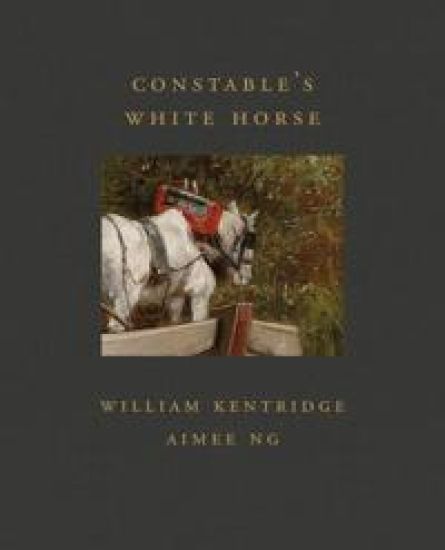
Designed to foster critical engagement and interest the specialist and non-specialist alike, each book in the Frick Diptych series illuminates a single work in the Frick's rich collection with an essay by a Frick curator paired with a contribution from a contemporary artist or writer. The White Horse (1819) by John Constable (1776?1837) is the first of the series of the "six-footers," monumental landscapes of the English countryside that would become the artist's most famous works. Constable described the scene as "a placid representation of a serene, grey morning, summer." Years later, he said, "there are generally in the life of an artist perhaps one, two or three pictures, on which hang more than usual interest - this is mine". An essay by Aimee Ng, Frick Curator, paired with a contribution by artist William Kentridge bring to life one of Constable's most serene depictions of rural life, the artist's personal favorite. AUTHORS: William Kentridge (born 28 April 1955) is a South African artist whose work spans a diverse range of artistic media such as drawing, performance, film, printmaking, sculpture and painting. Kentridge has also directed a number of acclaimed operas and theatrical productions. Aimee Ng is a curator at The Frick Collection, New York, and is a specialist in Italian Renaissance art. 38 colour illustrations
William Kentridge: Why Should I Hesitate?
Elana Brundyn; David Freedberg; Seven Keys; Karel Nel; William Kentridge; Koyo Kouoh; Tammy Langtry; Nástio Mosquito; Azu Nwagbogu
Verlag der Buchhandlung Walther Konig,Germany
2020
sidottu
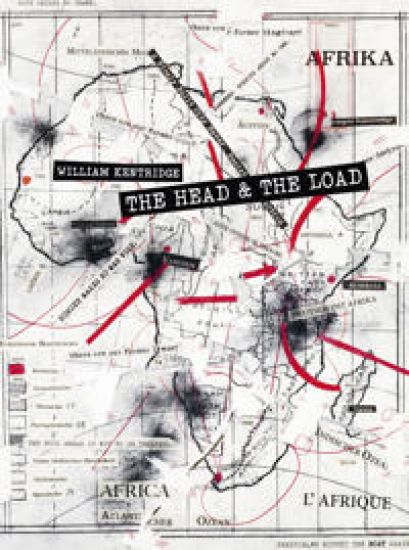
For over thirty years, William Kentridge has been combining fine arts, performance, theatre, and opera to create dreamlike, political, and humanist works. His installation, films, and drawings often deal with the political situation in South Africa, apartheid, and the consequences of colonialism. This book gives an in-depth examination of his performance piece The Head & The Load, which explores the role of Africa during World War I. Throughout the war, more than one million Africans carried provisions and military equipment in hazardous conditions for British, French, and German troops at minimal or no pay. William Kentridge tells the story of these African porters who ensured the success of the victors, but remain in the shadows. This history, rarely studied today, unfolds in a staged tableau combining music, dance, acting, screenings, and mechanized sculptures. The book includes photos and text from the performance, essays, and artworks created specifically by Kentridge to complement the play. Accompanied by an international cast of singers, actors, and dancers, and with music composed by Philip Miller, The Head & The Load is a powerful and multifaceted work that reconsiders colonial history and its repercussions in today’s world.
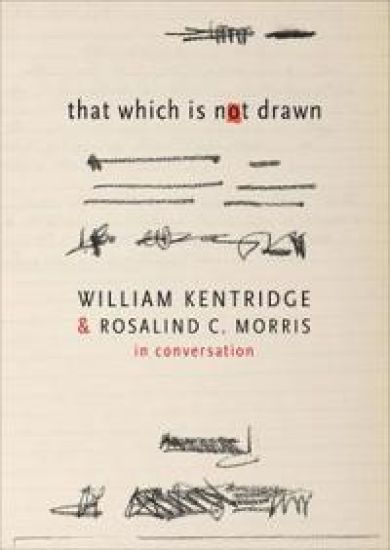
That Which Is Not Drawn
William Kentridge; Rosalind C. Morris
Seagull Books London Ltd
2017
nidottu
Halvin toimitettuna 30,80 €
For more than three decades, artist William Kentridge has explored in his work the nature of subjectivity, the possibilities of revolution, the Enlightenment's legacy in Africa, and the nature of time itself. At the same time, his creative work has stretched the boundaries of the very media he employs. Though his pieces have allowed viewers to encounter the traditions of landscape and self-portraiture, the limits of representation and the possibilities for animated drawing, and the labor of art, a guide to understanding the full scope of his art has been available until now. For five days, Kentridge sat with Rosalind C. Morris to talk about his work. The result That Which Is Not Drawn;is a wide-ranging conversation and deep investigation into the artist's techniques and into the psychic and philosophical underpinnings of his body of work. In these pages, Kentridge explains the key concerns of his art, including the virtues of bastardy, the ethics of provisionality, the nature of translation and the activity of the viewer. And together, Kentridge and Morris trace the migration of images across his works and consider the possibilities for a revolutionary art that remains committed to its own transformation. "That's the thing about a conversation," Kentridge reflects. "The activity and the performance, whether it's the performance of drawing or the performance of speech and conversation, is also the engine for new thoughts to happen. It's not just a report of something you know." And here, in this engaging dialogue, we at last have a guide to the continually exciting, continually changing work of one of our greatest living artists.

William Kentridge
Alfreda Murck; Andrew Solomon; Philip Tinari; William Kentridge
Verlag der Buchhandlung Walther Konig
2016
sidottu
To accompany William Kentridge's (born 1955) Notes Towards a Model Opera project in China, the artist's personal notebooks--filled with annotations, drawings and ideas--were meticulously reproduced in this eponymous publication to allow the reader into Kentridge's own thought process. With an in-depth profile of Kentridge by author Andrew Solomon, and essays by China art historian Alfreda Murck and UCCA director Philip Tinari, Notes Towards a Model Opera is a personal exploration of the layered meanings behind the aesthetics and ideals of socialist China as well as an exploration of the artist himself.
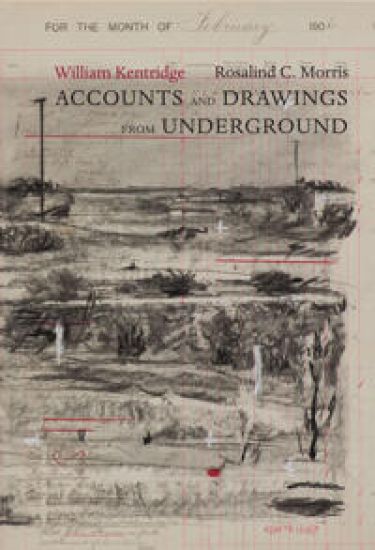
Accounts and Drawings from Underground
William Kentridge; Rosalind C. Morris
Seagull Books London Ltd
2015
sidottu
Over the last twenty years, William Kentridge has built a world-wide reputation as a contemporary artist, best known for his series of ten animated films created from charcoal drawings. The films introduced a significant character in contemporary fiction: Soho Eckstein, a Highveld mining magnate and Kentridge's alter ego. In The Soho Chronicles, Kentridge's brother, Matthew, shares a never-before-seen perspective on both William and Soho that sheds new light on the creator and his alter ego. Richly illustrated, the book includes a special feature that connects with smartphones and tablets. In Accounts and Drawings from Underground, William Kentridge and Rosalind C. Morris bring us an unprecedented collaboration using the pages of the 1906 Cash Book of the East Rand Proprietary Mines Corporation. Kentridge contributes forty landscape drawings in response to the transient terrain mining, while Morris plumbs the text of the cash book to generate a unique narrative account, drawing together the stories of migrant laborers and charting the flows of capital and desire.
Over the last three decades, the visual artist William Kentridge has garnered international acclaim for his work across media including drawing, film, sculpture, printmaking, and theater. Rendered in stark contrasts of black and white, his images reflect his native South Africa and, like endlessly suggestive shadows, point to something more elemental as well. Based on the 2012 Charles Eliot Norton Lectures, Six Drawing Lessons is the most comprehensive collection available of Kentridge’s thoughts on art, art-making, and the studio. Art, Kentridge says, is its own form of knowledge. It does not simply supplement the real world, and it cannot be purely understood in the rational terms of traditional academic disciplines. The studio is the crucial location for the creation of meaning: the place where linear thinking is abandoned and the material processes of the eye, the hand, the charcoal and paper become themselves the guides of creativity. Drawing has the potential to educate us about the most complex issues of our time. This is the real meaning of “drawing lessons.” Incorporating elements of graphic design and ranging freely from discussions of Plato’s cave to the Enlightenment’s role in colonial oppression to the depiction of animals in art, Six Drawing Lessons is an illustration in print of its own thesis of how art creates knowledge. Foregrounding the very processes by which we see, Kentridge makes us more aware of the mechanisms—and deceptions—through which we construct meaning in the world.