Kirjojen hintavertailu – 12 903 725 kirjaa ja 27 kauppaa

Kirjailija

William Kerrigan

Kirjat ja teokset yhdessä paikassa: 11 kirjaa, julkaisuja vuosilta 1983–2016, suosituimpiin kuuluu Salt Fork State Park. Vertaile teosten hintoja ja tarkista saatavuus suomalaisista kirjakaupoista.

11 kirjaa

Kirjojen julkaisuvuodet: 1983–2016.

California Hell: A Tale of the Ghost Killers

California Hell: A Tale of the Ghost Killers

William Kerrigan

William Kerrigan
2016
nidottu
CALIFORNIA HELL, the third novel of the Ghost Killers, combines superb myth-making with fascinating historical detail. Its tone runs the gamut from eerie to hilarious. Mike Buckman and his companions journey to the Babalon Bar on old Route 66 in the desert wastelands of California, where they battle a vicious cult of Satanists. With the aid of a local Palm Springs medium and an investigative reporter for an evangelical weekly, Mike traces the cult's ancestry to Jack Parsons, pioneer in rocketry and devout follower of British magus Aleister Crowley, and to his wife, the artist and underground film star Marjorie Cameron. Due to their previous case (see THE PASSED ON), the Ghost Killers are able to secure the advice and cooperation of Crowley's spirit. At the book's climax they meet an ancient Syrian demon with a raging appetite for light.
Santa Barbara Malice

Santa Barbara Malice

William Kerrigan

William Kerrigan
2015
nidottu
For years the author believed that 'Santa Barbara Malice' was lost in a computer crash. He was delighted to discover, during a recent cleaning, a disk of the novel resting safely in a seldom-visited corner of his home office Though written before the author had conceived of the Kerrigan/Seagrove series, this book now serves as a natural prequel to those five novels, since its mystery unfolds at the American Film Manufacturing Studio in Santa Barbara in 1912-13, just before the Kerrigan twins move to Hollywood to work for Universal Pictures (as chronicled in 'Shooting in Universal City, ' the first Kerrigan/Seagrove adventure). Flying A suffers a flurry of mysterious attacks on its movie sets, some of which appear to be aimed at Warren Kerrigan, at this time the most popular movie actor in America. Although Warren is apparently gay, he has become involved with a young heiress from Cleveland. It falls to American's busy production manager, Wallace Kerrigan, to interrupt his courtship of Nina Mae Richdale to solve these malicious crimes with the assistance of director Allan Dwan and cowboy artist Edward Borein. Rumors of an embarrassing photograph begin to circulate. Before long a murder is committed. Kerrigan and Borein ride into the deserted canyons east of Santa Barbara in search of the killer.
Fade to Orange

Fade to Orange

William Kerrigan

William Kerrigan
2015
nidottu
The last and best novel in the Wallace Kerrigan/Pearl Seagrove mystery series contains a richly nuanced portrayal of Orange County in 1952. The author recreates various aspects of Orange, Santa Ana, Corona Del Mar, Laguna Beach, Silverado Canyon, and Catalina Island. In 1952 Kerrigan visits his oldest son Bud in Orange, where he also hopes to enjoy a clandestine vacation with his mistress, jewelry designer Pearl Seagrove. But all is not well with Bud's family. On top of that, his old friend Ed Sanchez, now the acting Police Chief of Orange, asks Wally to investigate the "Matinee Killer," a serial murderer who is strangling young women at local movie theaters. Kerrigan learns that these killings are apparently triggered by old movies shown on a Los Angeles television station. Clues point toward Silverado Canyon. That odd community may harbor a second killer, one who eluded Kerrigan in Voluptuous Death and now seems to have resurfaced in the area. After a brief interlude on Catalina, things come to a head, and Wally and Pearl must battle a vengeful psychopath.
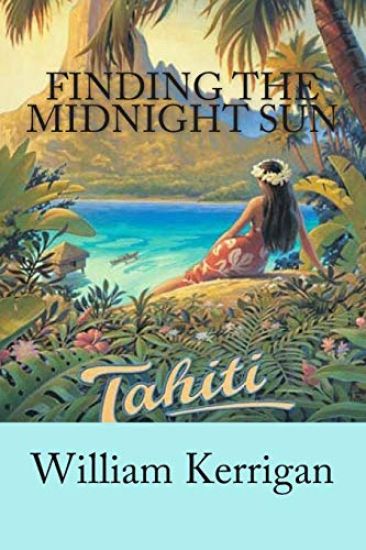
Finding the Midnight Sun

Finding the Midnight Sun

William Kerrigan

William Kerrigan
2015
nidottu
Raymond Chandler meets Robert Louis Stevenson The third novel of the Kerrigan/Seagrove series is set in a richly imagined 1932. Wally, still toiling in the film industrty, is Vice President of the failing United Costumers. At the request of old friend Douglas Fairbanks, he and his mistress Pearl Seagrove travel by oceanliners to Tahiti (one of them a Matson ship), where they stay in a villa built by director F. W. Murnau. The couple try to locate a legendery pearl necklace known as "Midnight Sun," whose recent owners have died or disappeared. They become targets of a mysterious Turtle Cult devoted to an esoteric god named Kiho. Strengthened by the rituals of a native priest, they sail to a deserted island in the Tuamotus to find the "Midnight Sun" and thwart a determined killer.
Johnny Appleseed and the American Orchard

Johnny Appleseed and the American Orchard

William Kerrigan

Johns Hopkins University Press
2013
sidottu
"Johnny Appleseed and the American Orchard" illuminates the meaning of Johnny "Appleseed" Chapman's life and the environmental and cultural significance of the plant he propagated. Creating a startling new portrait of the eccentric apple tree planter, William Kerrigan carefully dissects the oral tradition of the "Appleseed" myth and draws upon material from archives and local historical societies across New England and the Midwest. The character of Johnny Appleseed stands apart from other frontier heroes like Davy Crockett and Daniel Boone, who employed violence against Native Americans and nature to remake the West. His apple trees, nonetheless, were a central part of the agro-ecological revolution at the heart of that transformation. Yet men like Chapman, who planted trees from seed rather than grafting, ultimately came under assault from agricultural reformers who promoted commercial fruit stock and were determined to extend national markets into the West. Over the course of his life John Chapman was transformed from a colporteur of a new ecological world to a curious relic of a pre-market one. Weaving together the stories of the Old World apple in America and the life and myth of John Chapman, "Johnny Appleseed and the American Orchard" casts new light on both.
Johnny Appleseed and the American Orchard

Johnny Appleseed and the American Orchard

William Kerrigan

Johns Hopkins University Press
2013
pokkari
"Johnny Appleseed and the American Orchard" illuminates the meaning of Johnny "Appleseed" Chapman's life and the environmental and cultural significance of the plant he propagated. Creating a startling new portrait of the eccentric apple tree planter, William Kerrigan carefully dissects the oral tradition of the "Appleseed" myth and draws upon material from archives and local historical societies across New England and the Midwest. The character of Johnny Appleseed stands apart from other frontier heroes like Davy Crockett and Daniel Boone, who employed violence against Native Americans and nature to remake the West. His apple trees, nonetheless, were a central part of the agro-ecological revolution at the heart of that transformation. Yet men like Chapman, who planted trees from seed rather than grafting, ultimately came under assault from agricultural reformers who promoted commercial fruit stock and were determined to extend national markets into the West. Over the course of his life John Chapman was transformed from a colporteur of a new ecological world to a curious relic of a pre-market one. Weaving together the stories of the Old World apple in America and the life and myth of John Chapman, "Johnny Appleseed and the American Orchard" casts new light on both.
Shakespeare's Promises

Shakespeare's Promises

William Kerrigan

Johns Hopkins University Press
2003
pokkari
"It is impossible to imagine any kind of moral life without obligations, and impossible to imagine obligations without types of promises. We are always up against them. Before we ever reflect on what a promise is, we have made them and are expected to make more of them. We are born into nations that enter into treaties and agreements. Promises are with us like gravity. Man is a promising animal."-from Shakespeare's Promises Oaths, vows, contracts, and promises are among the most momentous actions human beings can perform, in art as well as life. Although virtually ignored by literary theorists, these obligations motivate plots, test characters, provide rhetorical occasions, structure ironies, and open thematic horizons. According to William Kerrigan, they had particular importance for Shakespeare, who wrote at a decisive moment in the history of promising, toward the end of its High Christian phase and near the beginning of its metaphysically lessened, though still central, role in the "contractual" state. Motivating his plots and supplying his characters with lofty rhetorical occasions, Shakespeare gave promising great dramatic life. More than that, promises made and kept "in good faith" reside at the heart of his idealism. Yet he also explores the ways in which promising and morality, for a variety of reasons, part company. Kerrigan's is the first book to treat this subject with the amplitude it deserves. After a discussion of promises in philosophy, law, psychology, politics, language, and ordinary life, the author presents detailed studies of Richard III, The Merchant of Venice, and Othello, and concludes with a brief visit to the swearing scene in Hamlet. Shakespeare's Promises is a unique and valuable resource, providing a fresh perspective that will benefit all readers of Shakespeare.

Hamlet's Perfection

Hamlet's Perfection

William Kerrigan

Johns Hopkins University Press
1996
pokkari
In this lively study, Kerrigan celebrates both Hamlet's perfection, the character's creation of new ideals out of an inheritance of disillusionment, and Hamlet's perfection, the play's brilliance as Shakespeare's greatest tragedy. Kerrigan's approach reflects his interests in literary formalism, historical scholarship, intellectual history, and psychoanalysis. In an overview of the history of Hamlet criticism, Kerrigan argues that recent critics have done little or nothing to elucidate the play, and he suggests ways in which the abandoned tradition of Hamlet commentary might still inspire fruitful approaches to the play.
Taking Chances

Taking Chances

Joseph H. Smith; William Kerrigan

Johns Hopkins University Press
1988
pokkari
A challenging and multisided meditation on the importance of Derrida to current developments in psychoanalysis and psychoanalytical interpretations of literature.