Kirjojen hintavertailu – 12 859 824 kirjaa ja 27 kauppaa
Kirjailija
William Kittredge
Kirjat ja teokset yhdessä paikassa: 9 kirjaa, julkaisuja vuosilta 1993–2008, suosituimpiin kuuluu The Next Rodeo. Vertaile teosten hintoja ja tarkista saatavuus suomalaisista kirjakaupoista.
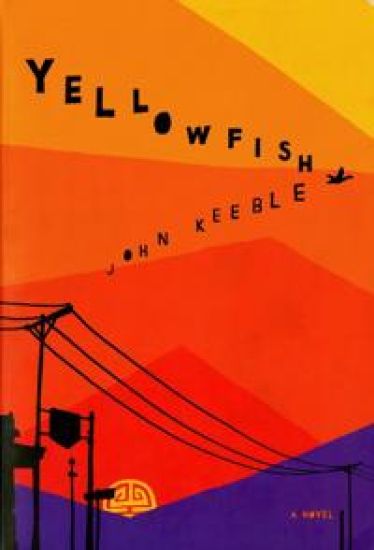
Wesley Erks, itinerant machinist and "high class jack-of-all-trades," takes a hefty fee for smuggling a group of illegal Chinese immigrants ("yellowfish") from Vancouver, B. C., to San Francisco in the 1970s. Three are teenaged "Hong Kong boys," one of whom has been grievously injured. The fourth, a fugitive and the son of a rich Chinese casino owner, means to settle a grudge with a Chinese American secret society, the Triad, but is himself being pursued. The tale of the perilous journey of these five men, along with a woman who becomes implicated in a double-cross, is filled with vivid fictional and historical characters. The whole of it conjures the story of the West itself. Visit the author's website: http://www.keeblefiction.com/
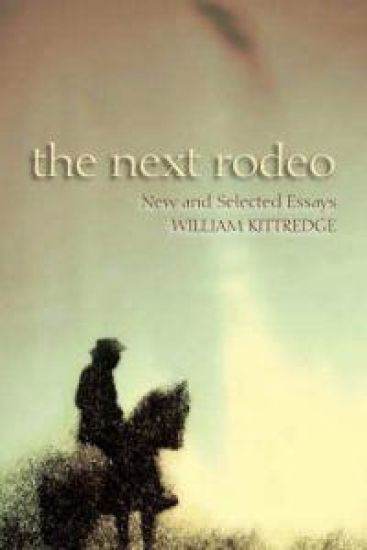
An intimate discussion of the landscape of the American West and the challenges of ownership, environmental crises, and greed. Kittredge describes his contradictory relationship to the spare and often unforgiving western landscape through these luminous essays that move from the personal to the political. Kittredge is intimately connected with the West through his family's Oregon cattle ranch, and he has watched his region decline for many decades now. These essays directly address environmental concerns, and the problematic mythologies of the western experience.
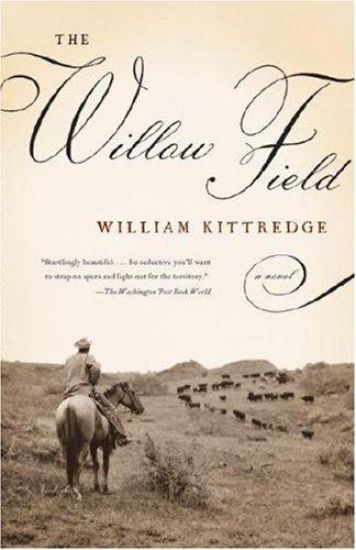
After numerous essays, short stories and the heralded memoir A Hole in the Sky, William Kittredge gives us a debut novel that ratifies his standing as a leading writer of the American West. Rossie Benasco's horseback existence begins at age 15 and culminates in a thousand-mile drive of more than 200 head of horses through the Rockies into Calgary. It's a journey that leads him, ultimately, to Eliza Stevenson and a passion so powerful, his previously unfocused life gains clarity and purpose. From the settlers, cowboys, and gamblers who opened up this country to the landholders and politicians who ran it, this is an epic tale of love and wide open spaces that stretches over the grand canvas of the twentieth-century West.
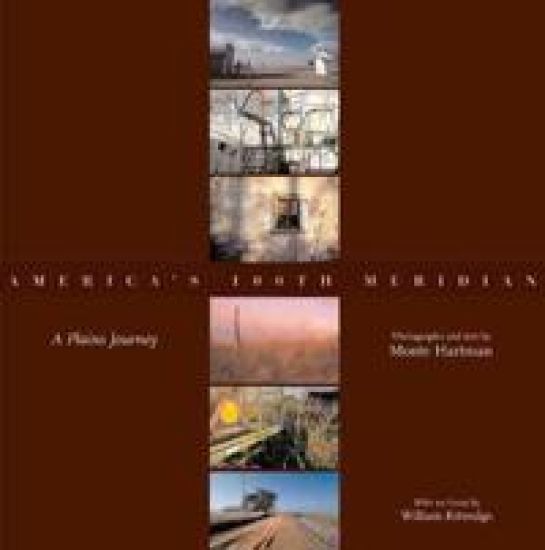
There's no denying [Hartman's] abilities as a photographer. Shape, color, and light, he has an impeccable eye for composition, for juxtaposing line against line, drawing the viewer's eye into his subject... In North Dakota, he likes a flood-drenched plain in orange twilight, one stretch of barbed wire fence in a strong horizontal, another triangulating stretch (just the fence posts visible above the water) disappearing into the distance. In South Dakota, he gives us a flat plain with alternating gold, green, and brown strips of field, a dark storm building overhead... Accompanying the first third of Hartman's photos is a new essay by William Kittredge (always an occasion)... There is no one more authoritatively positioned to comment on the West than Kittredge, nor anyone who can write about it half as well' - NewWest.net. 'Tells the story of the region in textures of flaking paint and rust juxtaposed against stunning sunsets and big skies. Intense color photographs narrate the 1500-mile, often-inhospitable route from Texas to Canada' - Texas Parks & Wildlife. 'A lavish and glorious new coffee-table book ... Hartman has a gifted eye for both the natural and man-made vistas that he encounters, and his color images are breathtaking. Beginning in North Dakota and working south, Hartman presents pictures that are themselves eloquent essays in rural and small-town spaces. An aura of loneliness and abandonment clings to many of these shots. It's no secret that people have been fleeing the harsh physical and economic realities of the Great Plains for years, and these pictures document that fact. Unpainted farm houses and rickety windmills hold silent vigil amid awesome expanses of earth and sky, weeds grow through a Nebraska sidewalk, and an old truck rusts into the Oklahoma soil... A testament to the alluring visual appeal of this country's great middle' - Mobile Register. Resulting from an arduous series of six journeys along the two-thousand-mile line that divides East from West, Monte Hartmans perceptive photographs provide the intimate yet dispassionate observations of a person who chose to explore the meanings inherent in the great empty middle between our coasts. These images inspired William Kittredge to travel the Meridian himself. His essay, an unblinking yet sensitive musing on what once was and what now remains, offers a poignant counterpoint to Hartmans visual tapestry. 'This slice of North America requires stamina unimaginable to the rest of us, and is populated by enduring people who've lost all patience with strangers when their efforts to convey their attachment to this place have fallen on deaf ears. It is not easy to know why a land so lonesome, so often melancholy, parts of which have never surpassed frontier density, will go on having such meaning to those who choose to stay. Hartman and Kittredge, discerning souls, have caught their attachment' - Thomas McGuane, author of The Cadence of Grass. '""Americas100th Meridian"" exposes our nations heartland in its beauty and desolation land as open and mysterious as the palm of Gods hand' - Annick Smith, co-producer of ""A River Runs Through It"". 'A breathtaking reminder of the beauty concentrated in that narrow slice of the continent' - ""North Dakota Quarterly"". 'An astounding coffee-table book tour ... A truly splendid and pristine memory, capturing timeless moments and locations' - ""Wisconsin Bookwatch"". 'A testament to the alluring visual appeal of this country's great middle' - ""Mobile Press-Register"". Monte Hartman has an M. A. in art from UCLA and forty years of experience in photography, design, and the arts. He lives with his wife in Hayward, California. William Kittredge, one of America's great Western writers, has authored many books, including ""Hole in the Sky"" and ""Who Owns the West?"".
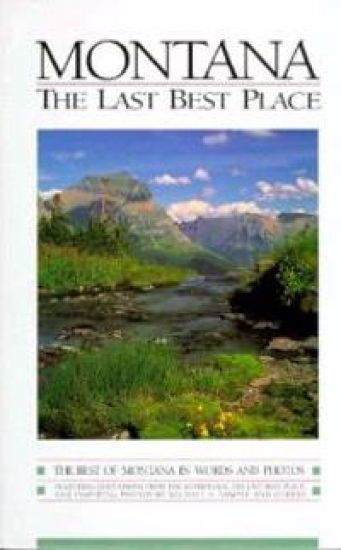
"Montana: The Last Best Place" celebrates the magnificent beauty and spirit of the last best state. Inspired by the remarkable literary anthology "The Last Best Place," this new book combines the best writing with the finest photography to create an unforgettable portrait of Montana. For those who are introduced to the state through this book, it will be love at first sight. For those who love Montana already, this book will help them remember why.
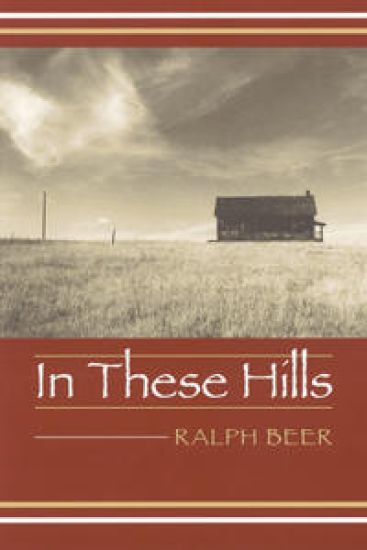
After a lifetime spent writing and working on his family's cattle ranch outside of Helena, Montana, Ralph Beer has gathered his best magazine essays into one collection called In These Hills. In thirty-three essays he provides a moving and elegiac tribute to lives now passed, an often humorous homage to the provincial, and an attempt "to fathom the place where we live . . . to decipher who we are," as he writes in his introduction. Beer, praised as one of the finest writers in the West, offers an authentic literary voice paired with a lifetime spent exploring a particularly beloved piece of land. From his first experience with a wheat harvest, to the winter rebuilding of a 1947 Dodge Power Wagon, to his moving exploration of an old family mystery, these essays slice sharply under the sod of our embedded romanticism, exploring not only the brute hardships of a living made from cattle ranching but the inextricable satisfaction of it as well. As Beer himself says in the final pages of this collection, "Stories outshine instruments of gold. Stories outlast stone."
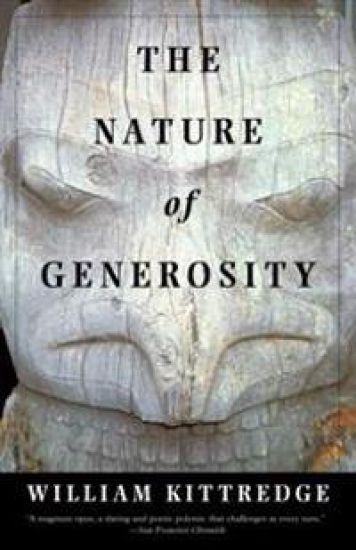
The Nature of Generosity is at once a natural sequel to the acclaimed memoir Hole in the Sky and an entirely unique masterwork from one of the finest writers of the American West. Taking as his topic the "ordinary yearning to take physical and emotional care," William Kittredge embarks upon a literary and philosophical grand tour that explores the very core of who we are. Whether he's recalling a childhood in Oregon, touring Europe, or studying photographs of Japanese gardens in a bookstore in New York City, Kittredge's connections are as unexpected as they are inspiring. Shattering the myth that survival of the fittest means "survival of the violent, or the cruelest, or the selfish," Kittredge imagines a world in which altruism dominates--and offers ample evidence that this is not an unreachable utopian ideal.
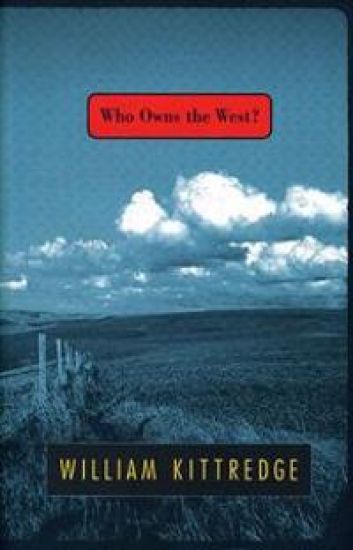
"One quotable line after another and elegat descriptions of place". -- Los Angeles TimesWho Owns the West? asks the important question that is at the heart of the change transforming the region, and no one is better prepared to lead this discussion than William Kittredge". -- The Bloomsbury Review
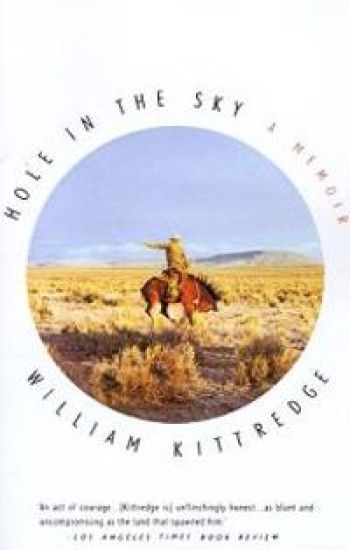
William Kittredge's stunning memoir is at once autobiography, a family chronicle, and a Westerner's settling of accounts with the land he grew up in. This is the story of a grandfather whose single-minded hunger for property won him a ranch the size of Delaware but estranged him from his family; of a father who farmed with tractors and drainage ditches but consorted with movie stars; and of Kittredge himself, who was raised by cowboys and saw them become obsolete, who floundered through three marriages, hard drinking, and madness before becoming a writer. Host hauntingly, Hole in the Sky is an honest reckoning of the American myth that drove generations of Americans westward -- and what became of their dream after they reached the edge. Autobiography/Memoir"A pleasure to read ... [Kittredge] has written a remarkably frank account of his own life, and at every stage it was interesting.... You will not have read another Western like this."-- Washington Post Book World"A grand and true story by one of our finest writers."-- Annie Dillard"The story of the Kittredges ... intersects mightily with the myth of American expansion and 'improvement' of the 'wilderness.'... a valuable memoir that should be read with care ... [Kittredge's] voice should be a prophetic one." Chicago Tribune