Kirjojen hintavertailu – 12 903 735 kirjaa ja 27 kauppaa

Kirjailija

William Kuskin

Kirjat ja teokset yhdessä paikassa: 4 kirjaa, julkaisuja vuosilta 2008–2022, suosituimpiin kuuluu Vixens, Vamps & Vipers. Vertaile teosten hintoja ja tarkista saatavuus suomalaisista kirjakaupoista.

4 kirjaa

Kirjojen julkaisuvuodet: 2008–2022.

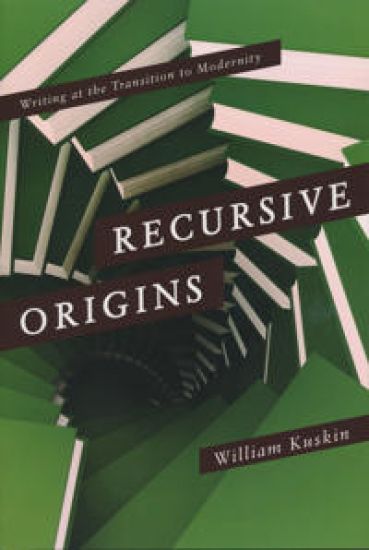
Recursive Origins

Recursive Origins

William Kuskin

UNIVERSITY OF NOTRE DAME PRESS
2022
sidottu
In Recursive Origins: Writing at the Transition to Modernity, William Kuskin asks us to reconsider the relationship between literary form and historical period. As Kuskin observes, most current literary histories of medieval and early modern English literature hew to period, presenting the Middle Ages and modernity as discrete, separated by a heterodox and unstable fifteenth century. In contrast, the major writers of the sixteenth century—Philip Sidney, Edmund Spenser, William Shakespeare, the Holinshed Syndicate, and their editors—were intense readers of the fifteenth century and consciously looked back to its history and poetry as they shaped their own. Kuskin examines their work in light of the writings they knew—that of Thomas Hoccleve, John Lydgate, William Caxton, and the anonymous London Chronicles—to demonstrate that fifteenth-century textual forms exist within the most significant statements of literary modernity. In short, by reconsidering the relationship between literary form and temporality, we can reach across the firewall of 1500 to write a more complex literary history of reading and writing than has previously been told. Moving beyond his central critique—that notions of period and progress are poor measures of literary history—Kuskin develops and demonstrates the hermeneutic power of recursivity as a powerful challenge to a linear view of literary historical periods. Kuskin appropriates the term "recursion" from computer science, where it describes a computer program's return to a subprogram within itself to perform a more complex procedure. Books, for Kuskin, are recursive: they imagine within themselves a return to an earlier moment of writing, which, when read, they enact in the present. His is a profound claim for the grip of the past on the present and, more locally, a reclamation of the importance of the fifteenth century for any discussion of sixteenth-century literature and of the relationship between the medieval and the early modern.
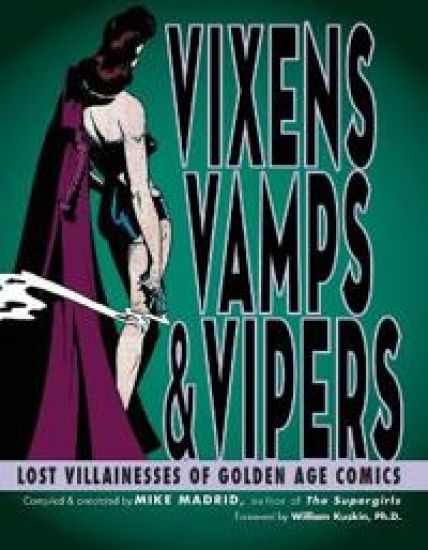
Vixens, Vamps & Vipers

Vixens, Vamps & Vipers

Mike Madrid; William Kuskin

Exterminating Angel Press
2014
pokkari
"Mike Madrid is doing God's work...mak[ing] accessible a lost, heady land of female adventure." -ComicsAlliance Between the covers of Vixens, Vamps & Vipers, fans will rediscover the original bad girls of comics-as fierce and full of surprises as they were when the comic book industry was born. From murderous Madame Doom to He-She, dubbed by io9 as "the most unsung comic book villain ever," Mike Madrid resurrects twenty-two glorious evildoers in fully reproduced comics and explores the ways they both transcend and become ensnared in a web of cultural stereotypes. Among the deadly femme fatales, ruthless jungle queens, devious secret agents, double-dealing criminal masterminds, and gender-bending con artists are some of the very first women of color in comics. These women may have been overlooked in the annals of history, but-like their superheroine counterparts in Divas, Dames & Daredevils-their influence, on popular culture and the archenemies that thrill us today, is unmistakable. Mike Madrid is the author of Divas, Dames & Daredevils, a ComicsAlliance and ComicsBlend Best Book of the Year, and The Supergirls, an NPR "Best Book To Share With Your Friends" and American Library Association Amelia Bloomer Project Notable Book. A San Francisco native and lifelong fan of comic books and popular culture, Madrid also appears in the documentary Wonder Women! The Untold Story of American Superheroines.
Recursive Origins

Recursive Origins

William Kuskin

University of Notre Dame Press
2013
nidottu
In Recursive Origins: Writing at the Transition to Modernity, William Kuskin asks us to reconsider the relationship between literary form and historical period. As Kuskin observes, most current literary histories of medieval and early modern English literature hew to period, presenting the Middle Ages and modernity as discrete, separated by a heterodox and unstable fifteenth century. In contrast, the major writers of the sixteenth century—Philip Sidney, Edmund Spenser, William Shakespeare, the Holinshed Syndicate, and their editors—were intense readers of the fifteenth century and consciously looked back to its history and poetry as they shaped their own. Kuskin examines their work in light of the writings they knew—that of Thomas Hoccleve, John Lydgate, William Caxton, and the anonymous London Chronicles—to demonstrate that fifteenth-century textual forms exist within the most significant statements of literary modernity. In short, by reconsidering the relationship between literary form and temporality, we can reach across the firewall of 1500 to write a more complex literary history of reading and writing than has previously been told. Moving beyond his central critique—that notions of period and progress are poor measures of literary history—Kuskin develops and demonstrates the hermeneutic power of recursivity as a powerful challenge to a linear view of literary historical periods. Kuskin appropriates the term "recursion" from computer science, where it describes a computer program's return to a subprogram within itself to perform a more complex procedure. Books, for Kuskin, are recursive: they imagine within themselves a return to an earlier moment of writing, which, when read, they enact in the present. His is a profound claim for the grip of the past on the present and, more locally, a reclamation of the importance of the fifteenth century for any discussion of sixteenth-century literature and of the relationship between the medieval and the early modern.
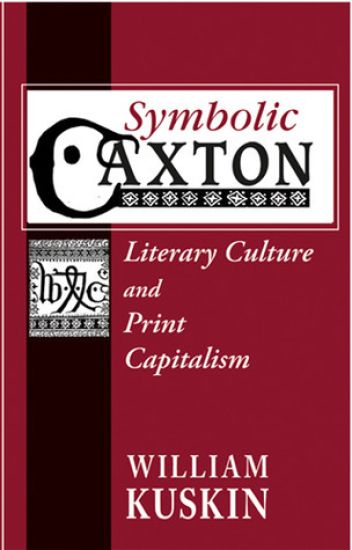
Symbolic Caxton

Symbolic Caxton

William Kuskin

University of Notre Dame Press
2008
nidottu
Symbolic Caxton is the first study to explore the introduction of printing in symbolic terms. It presents a powerful literary history in which the fifteenth century is crucial to the overall story of English literature. William Kuskin argues that the development of print production is part of a larger social network involving the political, economic, and literary systems that produce the intangible constellations of identity and authority. For Kuskin, William Caxton (1422–1491), the first English printer, becomes a unique lens through which to view these issues. Kuskin contends that recognizing the fundamental complexity inherent in the transformation from manuscript to print—the power of literature to formulate its audience, the intimacy of capital and communication, the closeness of commodities and identity—makes possible a clear understanding of the way cultural, bibliographical, financial, and technological instruments intersect in a process of symbolic production. While this book is the first to connect the contents of late medieval literature to its technological form, it also speaks to contemporary culture, wrestling with our own paradigm shift in the relationship between literature and technology.