Kirjojen hintavertailu – 12 903 725 kirjaa ja 27 kauppaa

Kirjailija

William L. Andrews

Kirjat ja teokset yhdessä paikassa: 9 kirjaa, julkaisuja vuosilta 1988–2020, suosituimpiin kuuluu The Quest of the Silver Fleece (The Oxford W. E. B. Du Bois). Vertaile teosten hintoja ja tarkista saatavuus suomalaisista kirjakaupoista.

Nimi esiintyy myös muodoissa: William L Andrews

9 kirjaa

Kirjojen julkaisuvuodet: 1988–2020.

Slavery and Class in the American South

Slavery and Class in the American South

William L. Andrews

Oxford University Press Inc
2020
nidottu
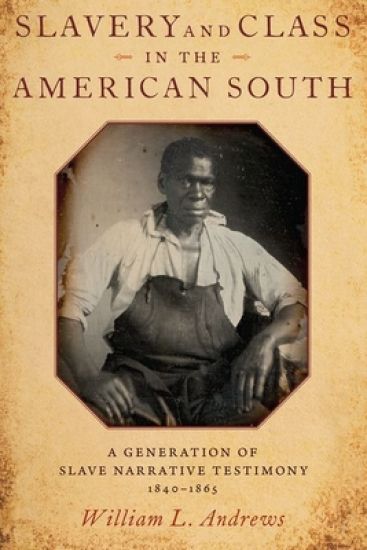
"The distinction among slaves is as marked, as the classes of society are in any aristocratic community. Some refusing to associate with others whom they deem to be beneath them, in point of character, color, condition, or the superior importance of their respective masters." Henry Bibb, fugitive slave, editor, and antislavery activist, stated this in his Narrative of the Life and Adventures of Henry Bibb (1849). In William L. Andrews's magisterial study of an entire generation of slave narrators, more than 60 mid-nineteenth-century narratives reveal how work, family, skills, and connections made for social and economic differences among the enslaved of the South. Slave narrators disclosed class-based reasons for violence that broke out between "impudent," "gentleman," and "lady" slaves and their resentful "mean masters." Andrews's far-reaching book shows that status and class played key roles in the self- and social awareness and in the processes of liberation portrayed in the narratives of the most celebrated fugitives from U. S. slavery, such as Frederick Douglass, Harriet Jacobs, William Wells Brown, and William and Ellen Craft. Slavery and Class in the American South explains why social and economic distinctions developed and how they functioned among the enslaved. Noting that the majority of the slave narrators came from the higher echelons of the enslaved, Andrews also pays close attention to the narratives that have received the least notice from scholars, those from the most exploited class, the "field hands." By examining the lives of the most and least acclaimed heroes and heroines of the slave narrative, Andrews shows how the dividing edge of social class cut two ways, sometimes separating upper and lower strata of slaves to their enslavers' advantage, but at other times fueling pride, aspiration, and a sense of just deserts among some of the enslaved that could be satisfied by nothing less than complete freedom. The culmination of a career spent studying African American literature, this comprehensive study of the antebellum slave narrative offers a ground-breaking consideration of a unique genre of American literature.
Slavery and Class in the American South

Slavery and Class in the American South

William L. Andrews

Oxford University Press Inc
2019
sidottu
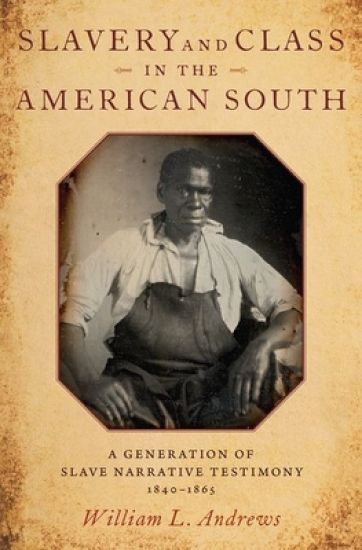
"The distinction among slaves is as marked, as the classes of society are in any aristocratic community. Some refusing to associate with others whom they deem to be beneath them, in point of character, color, condition, or the superior importance of their respective masters." Henry Bibb, fugitive slave, editor, and antislavery activist, stated this in his Narrative of the Life and Adventures of Henry Bibb (1849). In William L. Andrews's magisterial study of an entire generation of slave narrators, more than 60 mid-nineteenth-century narratives reveal how work, family, skills, and connections made for social and economic differences among the enslaved of the South. Slave narrators disclosed class-based reasons for violence that broke out between "impudent," "gentleman," and "lady" slaves and their resentful "mean masters." Andrews's far-reaching book shows that status and class played key roles in the self- and social awareness and in the processes of liberation portrayed in the narratives of the most celebrated fugitives from U. S. slavery, such as Frederick Douglass, Harriet Jacobs, William Wells Brown, and William and Ellen Craft. Slavery and Class in the American South explains why social and economic distinctions developed and how they functioned among the enslaved. Noting that the majority of the slave narrators came from the higher echelons of the enslaved, Andrews also pays close attention to the narratives that have received the least notice from scholars, those from the most exploited class, the "field hands." By examining the lives of the most and least acclaimed heroes and heroines of the slave narrative, Andrews shows how the dividing edge of social class cut two ways, sometimes separating upper and lower strata of slaves to their enslavers' advantage, but at other times fueling pride, aspiration, and a sense of just deserts among some of the enslaved that could be satisfied by nothing less than complete freedom. The culmination of a career spent studying African American literature, this comprehensive study of the antebellum slave narrative offers a ground-breaking consideration of a unique genre of American literature.
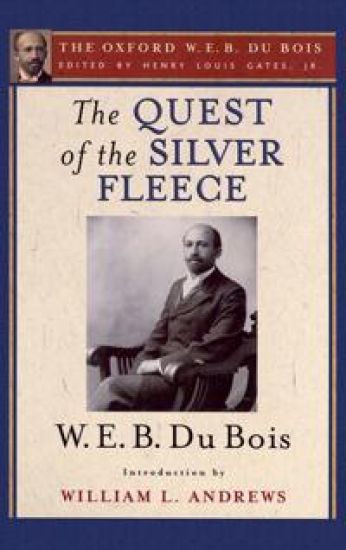
The Quest of the Silver Fleece (The Oxford W. E. B. Du Bois)

The Quest of the Silver Fleece (The Oxford W. E. B. Du Bois)

W. E. B. Du Bois; William L. Andrews

Oxford University Press Inc
2014
nidottu
W. E. B. Du Bois was a public intellectual, sociologist, and activist on behalf of the African American community. He profoundly shaped black political culture in the United States through his founding role in the NAACP, as well as internationally through the Pan-African movement. Du Bois's sociological and historical research on African-American communities and culture broke ground in many areas, including the history of the post-Civil War Reconstruction period. Du Bois was also a prolific author of novels, autobiographical accounts, innumerable editorials and journalistic pieces, and several works of history. Arguably a contender for the Great American Novel, The Quest of the Silver Fleece is W. E. B. Du Bois's powerful first novel about Zora, a determined, strong Southern black woman who seeks to transcend race and social class in the late nineteenth century. Following the same path of the Greek myth after which it was named, Du Bois's novel confronts not only economic and political circumstances, but also racial and social issues of the time. Over a century after its original publication, we return to The Quest again and again for its political boldness about sexual, gender, and economic institutions. Zora, a breakthrough in the portrayal of black women, stands as a model of courage in a volatile moment in history. The novel portrays not only a story of economics but also of love, gender, and race. With a series introduction by editor Henry Louis Gates, Jr., and an introduction by William L. Andrews, this edition is essential for anyone interested in African American history.
Life of William Grimes, the Runaway Slave

Life of William Grimes, the Runaway Slave

William L Andrews; Regina E Mason

Oxford University Press Inc
2008
nidottu

Halvin toimitettuna 32,10 €

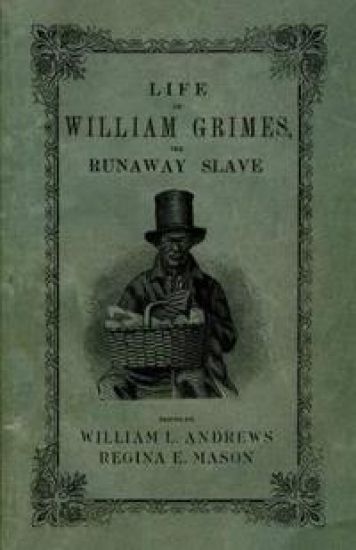
Life of William Grimes, the Runaway Slave is the first fugitive slave narrative in American history. When it appeared in New York in 1825, it was the longest African American autobiography published up to that time. Because Grimes wrote and published his narrative on his own, without deference to white editors, publishers, or sponsors, his Life has an immediacy, candor, and no-holds-barred realism unparalleled in antebellum slave narratives. The famous fugitives of the 1840s and 1850s, even Douglass, Brown, and Harriet Jacobs, all wrote in accordance with an antislavery script that circumscribed their freedom to speak out about what they had experienced as slaves in the South and as quasi-free men and women in the North. William Grimes, however, wrote before this formulaic script had been composed. Life appeared years before the advent of any organized national American antislavery movement, before David Walker's Appeal (1829), before the first African American newspaper, before William Lloyd Garrison had publicly acknowledged himself an abolitionist, before Frederick Douglass could read the word "abolitionist." Beholden to no one and unschooled in antislavery propaganda, Grimes's Life represents a truly unfiltered and personally authentic account of both southern slavery and the severely compromised "freedom" of the northern states in antebellum America. This edition of Life of William Grimes represents an historic partnership between a prominent scholar of the African American slave narrative and a genealogist who is also direct descendant of Grimes himself. Regina Mason, the great-great-great-granddaughter of William Grimes, combines her extensive historical research into her family and the text of her ancestor with William L. Andrews's scholarship on the origins and development of African American autobiography. The result is an authoritative, copiously annotated text that features pages from an original Grimes family Bible, transcriptions of the 1824 correspondence that set the terms for the author's self-purchase in Connecticut (nine years after his escape from Savannah, Georgia), and many other striking images that invoke the life and times of William Grimes.
Thirty Years a Slave - From Bondage to Freedom

Thirty Years a Slave - From Bondage to Freedom

Louis Hughes; William L. Andrews

UNIVERSITY OF GEORGIA PRESS
2002
pokkari
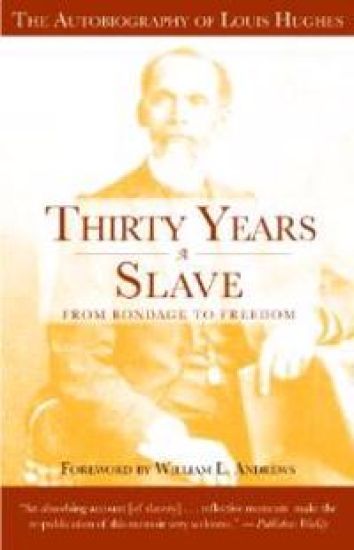
Louis Hughes was born as an enslaved person in Virginia and at age twelve was sold away from his mother, whom he never saw again. Sold to a wealthy slaveowner, who had a home near Memphis and plantation nearby in Mississippi, Hughes was held in bondage as an enslaved house servant for three decades. Near the end of the Civil War, he escaped to the Union lines with the paid help of two Union soldiers. Hughes later returned to the plantation to liberate his wife, and the couple made their way to safety in Canada. After the war, they traveled to Chicago and Detroit, eventually settling in Milwaukee as free people. There Hughes became relatively comfortable as a hotel attendant and as an entrepreneur laundry operator. Self-educated and eloquent, Hughes wrote and privately published this memoir in 1897. It is a compelling first-hand account of his enslavement and treatment from slaveowners. No reader can be unmoved as Hughes tells about his five attempts to escape or having to stand by helplessly while watching his wife being whipped. He also recounts the joy of finally reuniting with his brother, whom he had not seen since they were little children in Virginia. Hughes's story is a testimony to the human spirit and his courageous act of self-liberation in the face of oppression, injustice, and terror.
The Literary Career of Charles W. Chesnutt

The Literary Career of Charles W. Chesnutt

William L. Andrews

Louisiana State University Press
1999
nidottu
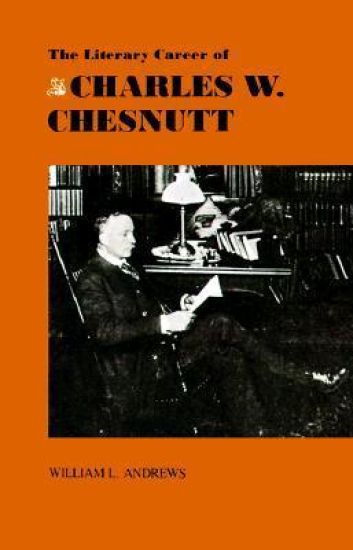
The career of any black writer in nineteenth-century American was fraught with difficulties, and William Andrews undertakes to explain how and why Charles Waddell Chesnutt (1858-1932) became the first Negro novelist of importance: ""Steering a difficult course between becoming co-opted by his white literary supporters and becoming alienated from then and their access to the publishing medium, Chesnutt became the first Afro-American writer to use the white-controlled mass media in the service of serious fiction on behalf of the black community.""Awarded the Spingarn Medal in 1928 by the National Association for the Advancement of coloured People, Chesnutt admitted without apologies that because of his own experiences, most of his writings concentrated on issue about racial identity. Only one-eighth Negro and able to pass for Caucasian, Chesnutt dramatized the dilemma of others like him. The House Behind the Cedars (1900), Chesnutt's most autobiographical novel, evokes the world of ""bright mulatto"" caste in post-Civil War North Carolina and pictures the punitive consequences of being of mixed heritage. Chesnutt not only made a crucial break with many literary conventions regarding Afro-American life, crafting his authentic material with artistic distinction, he also broached the moral issue of the racial caste system and dared to suggest that a gradual blending of the races would alleviate a pernicious blight on the nation's moral progress. Andrews argues that ""along with Cable in The Grandissimes and Mark Twain in Pudd'nhead Wilson, Chesnutt anticipated Faulkner in focusing on miscegenation, even more than slavery, as the repressed myth of the American past and a powerful metaphor of southern post-Civil War history."" Although Chesnutt's career suffered setback and though he was faced with compromises he consistently saw America's race problem as intrinsically moral rather than social or political. In his fiction he pictures the strengths of Afro-Americans and affirms their human dignity and heroic will. William L. Andrews provides an account of essentially all that Chesnutt wrote, covering the unpublished manuscripts as well as the more successful efforts and viewing these materials in he context of the author's times and of his total career. Though the scope of this book extends beyond textual criticism, the thoughtful discussions of Chesnutt's works afford us a vivid and gratifying acquaintance with the fiction and also account for an important episode in American letters and history.
The Literature of the American South

The Literature of the American South

William L. Andrews

WW Norton Co
1997
muu
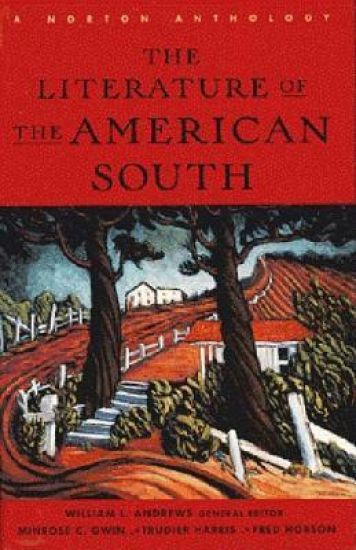
The Literature of the American South reconsiders southern writing from its seventeenth-century origins to its flourishing present. Featuring the works of eighty-seven classic, contemporary, and newly recovered writers of all genres-poetry, short fiction, drama, novels, autobiography, criticism, sermons, memoirs, journals, and letters-this groundbreaking anthology sheds new light on the creative power of the southern imagination.
To Tell a Free Story

To Tell a Free Story

William L. Andrews

University of Illinois Press
1988
nidottu
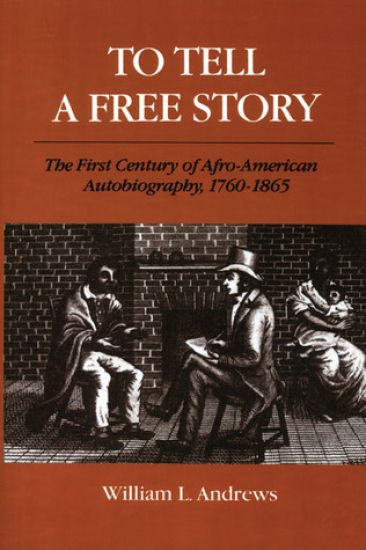
To Tell A Free Story traces in unprecedented detail the history of Black autobiography from the colonial era through Emancipation. Beginning with the 1760 narrative by Briton Hammond, William L. Andrews explores first-person public writings by Black Americans. Andrews includes but also goes beyond slave narratives to analyze spiritual biographies, criminal confessions, captivity stories, travel accounts, interviews, and memoirs. As he shows, Black writers continuously faced the fact that northern whites often refused to accept their stories and memories as sincere, and especially distrusted portraits of southern whites as inhuman. Black writers had to silence parts of their stories or rely on subversive methods to make facts tellable while contending with the sensibilities of the white editors, publishers, and readers they relied upon and hoped to reach.