Kirjojen hintavertailu – 12 903 735 kirjaa ja 27 kauppaa

Kirjailija

William L. Lang

Kirjat ja teokset yhdessä paikassa: 7 kirjaa, julkaisuja vuosilta 1991–2026, suosituimpiin kuuluu The Country for Me. Vertaile teosten hintoja ja tarkista saatavuus suomalaisista kirjakaupoista.

7 kirjaa

Kirjojen julkaisuvuodet: 1991–2026.

The Country for Me

The Country for Me

William L. Lang

University of Nebraska Press
2026
sidottu
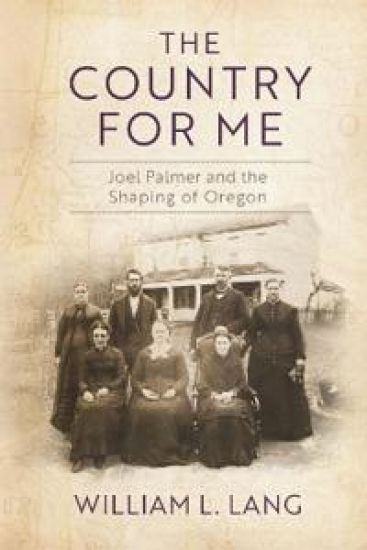
The Country for Me is the first full biography of Joel Palmer (1810–81), born in Canada to American parents, who played a central role in the political and economic shaping of Oregon. Having traveled on the Oregon Trail three times, he wrote a popular trail guidebook used by later emigrants. Palmer's experience in public life and government service during his first five years in Oregon led to his federal appointment as superintendent of Indian affairs for the territory. Palmer is honored by Native Nations in Oregon because he generally considered their conditions and honestly presented a federal government pledge to protect and support their interests. He did not use his office for personal enrichment, a legacy that did not adhere to most federal agents in their dealings with Native peoples. In this nuanced biography of one of Oregon's most significant nineteenth-century leaders, William L. Lang uses Palmer's story as a means to better understand the context and realities of change in Oregon as it transitioned from a contested territory to a state.
The Cayuse Indians

The Cayuse Indians

Robert H. Ruby; John A. Brown; William L. Lang

UNIVERSITY OF OKLAHOMA PRESS
2022
nidottu
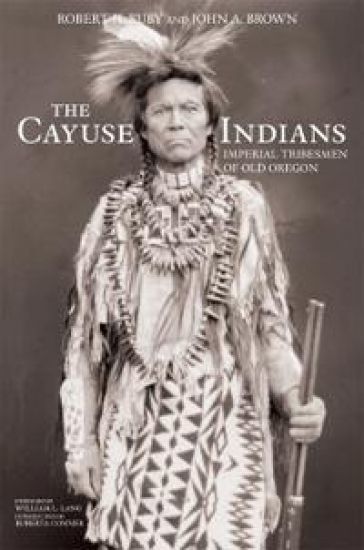
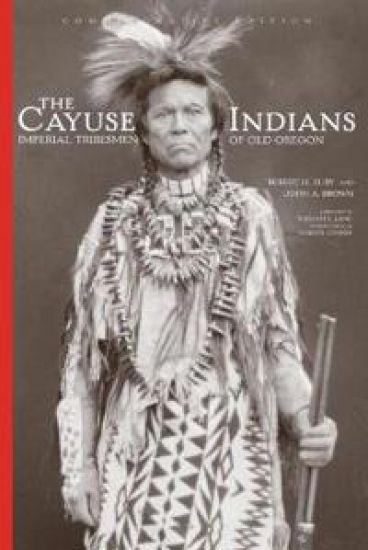
In this book, Robert H. Ruby and John A. Brown tell the story of the Cayuse people, from their early years through the nineteenth century, when the tribe was forced to move to a reservation. First published in 1972, this expanded edition is published in 2005 in commemoration of the sesquicentennial of the treaty between the Cayuse, Umatilla, and Walla Walla Confederated Tribes and the U. S. government on June 9, 1855, as well as the bicentennial of Lewis and Clark's visit to the tribal homeland in 1805 and 1806. Volume 120 in The Civilization of the American Indian Series
Confederacy of Ambition

Confederacy of Ambition

William L. Lang

University of Washington Press
2014
pokkari
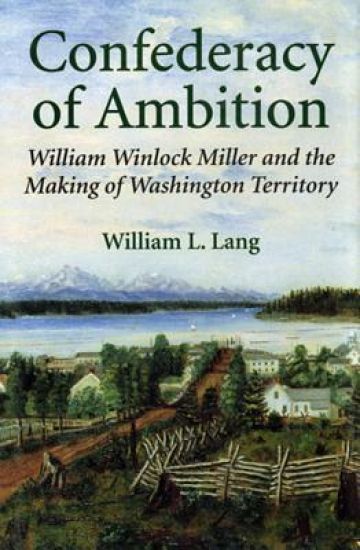
The promise of opportunity drew twenty-seven-year-old Illinois schoolteacher William Winlock Miller west to the future Washington Territory in 1850. Like so many other Oregon Trail emigrants Miller arrived cash-poor and ambitious, but unlike most he fulfilled his grandest ambitions. By the time of his death in 1876, Miller had amassed one of the largest private fortunes in the territory and had used it creatively in developing the region's assets, leaving a significant mark on the territory's political and economic history. Appointed Surveyor of Customs at the newly created Port of Nisqually in 1851, Miller was the first federal official north of the Columbia River. Two years later he helped organize the new territory's Democratic Party and quickly became a political and financial confidant of governor Isaac Stevens. His involvement in the Indian conflict in 1855–56, a term in the territorial legislature, and his bankrolling of key politicians made him the territory's most effective political networker. His role as a "hip-pocket banker" in a region without established banks made him a powerful financial broker and a major player in territorial affairs. But in his pursuit of success Miller compromised another ambition he carried west from Illinois. He postponed marriage and family until only a few years before his death and agonized about relationships with his family in Illinois. His experience reminds us that the pioneer settlement era was a period of social dislocation and that public economic and political success could mask personal disappointment. Lang's biography takes readers into the heart of Washington territorial politics, where alliances often hinged more on mutual economic interest than political principles and nearly all agreed that government should encourage ambitious and energetic men. In this world, Lang argues, Miller succeeded because he parlayed his talents in camaraderie politics and sharp-pencil business affairs with an unabashed mining of governmental opportunities. William Lang's account of William Winlock Miller and the first quarter century of Washington's history offers a new view of the pioneer era, emphasizing that the West was developed in large measure by men like Miller who manipulated government and its resources to their own and the region's advantage.

The Battle for Butte

The Battle for Butte

Michael P. Malone; William L. Lang

University of Washington Press
2006
pokkari
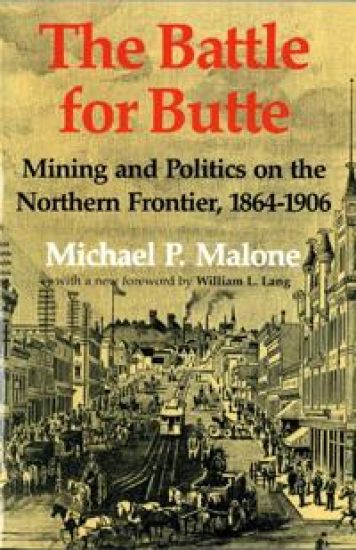
First published in 1981, The Battle for Butte has remained the best treatment of the influence of copper in the political history of Montana. "Fine history: rich in detail, full of finely drawn people, masterfully clear where the subject matter is most complex, constructed to preserve something of the tone and atmosphere of the age."-American Historical Review
The Cayuse Indians

The Cayuse Indians

Robert H. Ruby; John A. Brown; William L. Lang

University of Oklahoma Press
2005
sidottu
In this book, Robert H. Ruby and John A. Brown tell the story of the Cayuse people, from their early years through the nineteenth century, when the tribe was forced to move to a reservation. First published in 1972, this expanded edition is published in 2005 in commemoration of the sesquicentennial of the treaty between the Cayuse, Umatilla, and Walla Walla Confederated Tribes and the U. S. government on June 9, 1855, as well as the bicentennial of Lewis and Clark's visit to the tribal homeland in 1805 and 1806. Volume 120 in The Civilization of the American Indian Series
Two Centuries of Lewis and Clark

Two Centuries of Lewis and Clark

William L. Lang; Carl Abbott

Oregon Historical Society Press
2004
pokkari
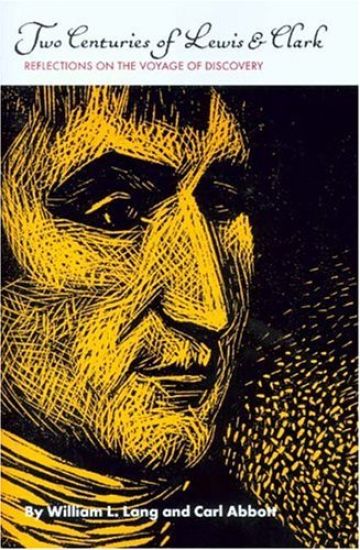
The landscape encountered by the Corps of Discovery during their multi-year, cross- country trek to the Pacific was dramatically different from the one that greeted visitors attending Portland's Lewis and Clark Centennial Exposition in 1905 or the one that exists in the Pacific Northwest today. On the occasion of the bicentennial of the Lewis and Clark expedition and the centennial of the Lewis and Clark Centennial Exposition, the time is ripe for reconciling those earlier events with present-day activities. In Two Centuries of Lewis and Clark, William L. Lang and Carl Abbott have collaborated to address those issues. Lang scrutinizes the motivations for the Lewis and Clark expedition and the environmental ramifications of its discoveries on the people and the landscape of the Columbia River Basin. Abbott examines the ways in which the Lewis and Clark Exposition advanced President Jefferson's goal of developing the economic potential of the Pacific Northwest, particularly through the exploitation of the region's abundant natural resources.
Montana

Montana

Michael P. Malone; Richard B. Roeder; William L. Lang

University of Washington Press
1991
pokkari
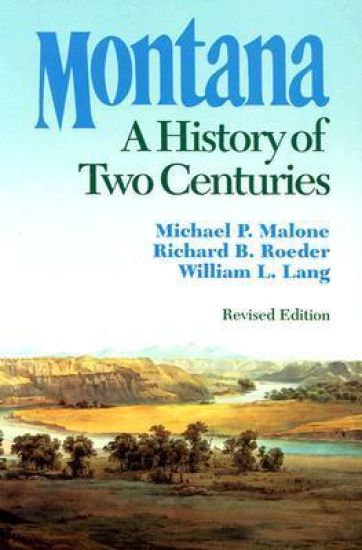
Montana: A History of Two Centuries first appeared in 1976 and immediately became the standard work in its field. In this thoroughgoing revision, William L. Lang has joined Michael P. Malone and Richard B. Roeder in carrying forward the narrative to the 1990s. Fully twenty percent of the text is new or revised, incorporating the results of new research and new interpretations dealing with pre-history, Native American studies, ethnic history, women's studies, oral history, and recent political history. In addition, the bibliography has been updated and greatly expanded, new maps have been drawn, and new photographs have been selected.