Kirjojen hintavertailu – 12 903 724 kirjaa ja 27 kauppaa

Kirjailija

William Lewis

Kirjat ja teokset yhdessä paikassa: 79 kirjaa, julkaisuja vuosilta 1994–2025, suosituimpiin kuuluu 13 Short Stories by William Lewis with translations into German. Vertaile teosten hintoja ja tarkista saatavuus suomalaisista kirjakaupoista.

79 kirjaa

Kirjojen julkaisuvuodet: 1994–2025.

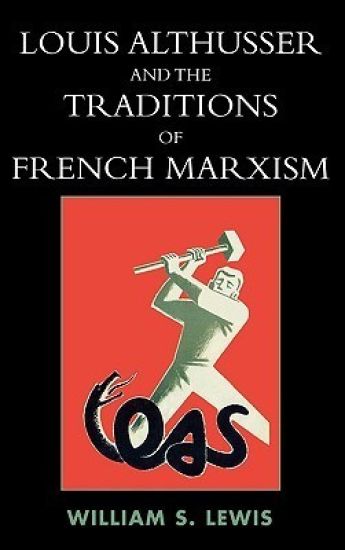
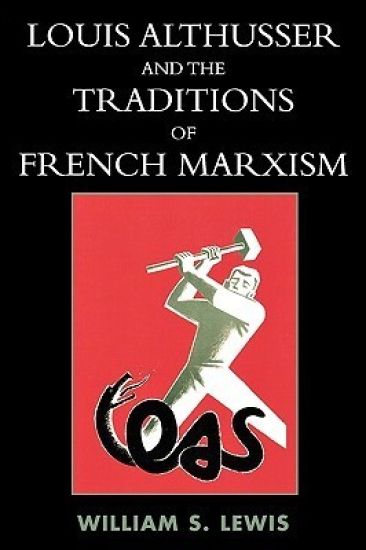
Louis Althusser and the Traditions of French Marxism
Throughout the course of the twentieth century communism has enjoyed direct competition with all other governmental and economic systems. Often, communist countries produced their own special brand of party intellectual. These figures rightly occupied their place within their own national context and within the context of the International. Some communist intellectuals, through the high level of erudition exhibited in their writing, have received a wider reception, despite their direct linkage to party politics e.g. Antonio Gramsci, Georg Lukacs, and, Victor Serge are good examples. After 1956, when Kruschev exposed Stalin's atrocities to the Twentieth Congress of the Communist Party of the Soviet Union and, as a result, to the entire world, Marxist philosophy was widely discredited. It had been assumed that Stalin's excesses were somehow encouraged or supported through Marx's thought. When, in the mid 1960s, Louis Althusser first offered his re-readings of Marx's philosophy it, and communist political practice, were in ruin. However Althusser was in a unique cultural and historical position. Thinking and writing concomitant with the structuralists and poststructuralists in France and also having access to certain theoretical tools while, simultaneously, committing himself entirely to Marxist thought-Althusser was, conceivably the last of his tradition. He was a Marxist philosopher who, unlike Sartre at the end of his life, did not abandon communism to, for instance existentialism. In Louis Althusser and the Traditions of French Marxism William Lewis gives readers a striking example of intellectual biography and critical theory. His approach, considering the work and life of Althusser within French Marxism and French intellectual culture, fills a void in contemporary scholarship. But, much more importantly, Lewis is able to show how Althusser's thought is the result of and a response to specific French intellectual and political traditions of reading Marx. It is through this combination of concerns
Louis Althusser and the Traditions of French Marxism
Throughout the course of the twentieth century communism has enjoyed direct competition with all other governmental and economic systems. Often, communist countries produced their own special brand of party intellectual. These figures rightly occupied their place within their own national context and within the context of the International. Some communist intellectuals, through the high level of erudition exhibited in their writing, have received a wider reception, despite their direct linkage to party politics e.g. Antonio Gramsci, Georg Lukacs, and, Victor Serge are good examples. After 1956, when Kruschev exposed Stalin's atrocities to the Twentieth Congress of the Communist Party of the Soviet Union and, as a result, to the entire world, Marxist philosophy was widely discredited. It had been assumed that Stalin's excesses were somehow encouraged or supported through Marx's thought. When, in the mid 1960s, Louis Althusser first offered his re-readings of Marx's philosophy it, and communist political practice, were in ruin. However Althusser was in a unique cultural and historical position. Thinking and writing concomitant with the structuralists and poststructuralists in France and also having access to certain theoretical tools while, simultaneously, committing himself entirely to Marxist thought-Althusser was, conceivably the last of his tradition. He was a Marxist philosopher who, unlike Sartre at the end of his life, did not abandon communism to, for instance existentialism. In Louis Althusser and the Traditions of French Marxism William Lewis gives readers a striking example of intellectual biography and critical theory. His approach, considering the work and life of Althusser within French Marxism and French intellectual culture, fills a void in contemporary scholarship. But, much more importantly, Lewis is able to show how Althusser's thought is the result of and a response to specific French intellectual and political traditions of reading Marx. It is through this combination of concerns that Louis Althusser and the Traditions of French Marxism offers us a contemporary and poignant Althusser whose ideas, under the weight of Lewis's pen, can help us better understand what resources it may hold for philosophy, political thought, and cultural thought today.

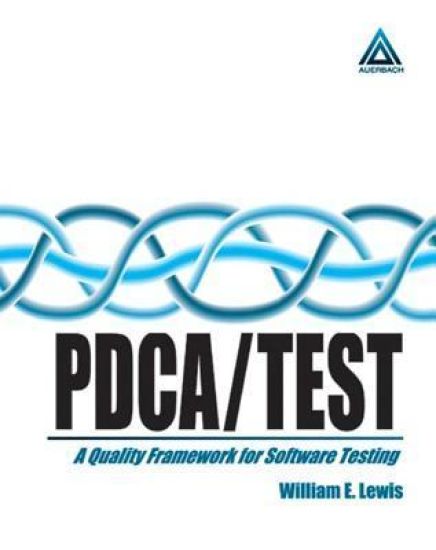
PDCA/Test

PDCA/Test

William Lewis

Auerbach Publishers Inc.
1998
sidottu
Most manuals assume software testing is being performed as part of a well-defined, structured development cycle based on clearly stated requirements and standards. Unfortunately, this is not often the case in the real world. Indeed, the one true constant in software development is change. PDCA/TEST presents a continuous quality framework based on Dr. Edward Deming's famous rapid application "spiral" development model for quality through a continuous improvement process to promote effective testing methods in both structured and unstructured environments. William E. Lewis shows you Deming's spiral approach as an alternative to the traditional waterfall method. In the waterfall method, one set of predefined sequential steps is followed with clearly enumerated requirements. But the spiral approach is one where these rigid sequential steps may, to varying degrees, be either lacking or different as circumstances demand. Starting from this fundamental building block, Lewis shows you how to: Apply the Plan-Do-Check-Act (PDCA) quality wheel to the software testing process Integrate a continuous quality framework into all phases of software development, including requirements analysis, logical design, physical design, program unit design, and coding And choose the right testing tool (such as Bender & Associates Softtest) for the right test. The book also details the spiral methodology for software testing broken down into parts, steps and tasks documented with extensive checklists, templates, and technical discussions. You will also learn to: Master black box, white box and gray box testing Incorporate continuous improvement into inspections and walkthroughs Verify the logical design, physical design, program unit design, and coding phases And more. In sum, PDCA/TEST: A Framework for Software Testing gives you all the tools and knowledge you need to assure quality software testing throughout all stages of development, no matter how unstructured that process may wind up being.
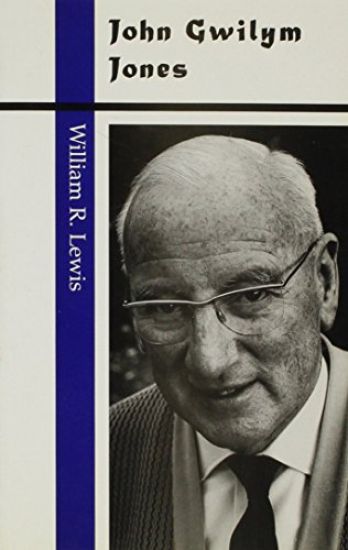
John Gwilym Jones

John Gwilym Jones

William Lewis

University of Wales Press
1994
nidottu
This is an introduction to the life and work of one of the greatest Welsh dramatists of this century. John Gwilym Jones (1904-1988) was also a short-story writer, novelist and literary critic whose work was almost exclusively in the Welsh language. The aim of this book is to present Jones's work to the English-speaking world.