Kirjojen hintavertailu – 12 859 819 kirjaa ja 27 kauppaa

Kirjailija

William M. Schniedewind

Kirjat ja teokset yhdessä paikassa: 10 kirjaa, julkaisuja vuosilta 1999–2025, suosituimpiin kuuluu A Social History of Hebrew. Vertaile teosten hintoja ja tarkista saatavuus suomalaisista kirjakaupoista.

10 kirjaa

Kirjojen julkaisuvuodet: 1999–2025.

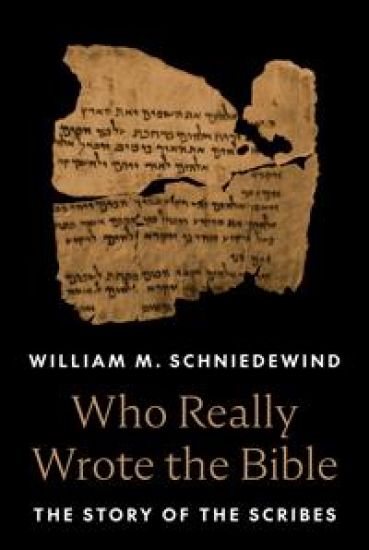
Who Really Wrote the Bible

Who Really Wrote the Bible

William M. Schniedewind

PRINCETON UNIVERSITY PRESS
2025
pokkari

Halvin toimitettuna 24,20 €

A groundbreaking new account of the writing of the Hebrew BibleWho wrote the Bible? Its books have no bylines. Tradition long identified Moses as the author of the Pentateuch, with Ezra as editor. Ancient readers also suggested that David wrote the psalms and Solomon wrote Proverbs and Qohelet. Although the Hebrew Bible rarely speaks of its authors, people have been fascinated by the question of its authorship since ancient times. In Who Really Wrote the Bible, William Schniedewind offers a bold new answer: the Bible was not written by a single author, or by a series of single authors, but by communities of scribes. The Bible does not name its authors because authorship itself was an idea enshrined in a later era by the ancient Greeks. In the pre-Hellenistic world of ancient Near Eastern literature, books were produced, preserved, and passed on by scribal communities. Schniedewind draws on ancient inscriptions, archaeology, and anthropology, as well as a close reading of the biblical text itself, to trace the communal origin of biblical literature. Scribes were educated through apprenticeship rather than in schools. The prophet Isaiah, for example, has his “disciples”; Elisha has his “apprentice.” This mode of learning emphasized the need to pass along the traditions of a community of practice rather than to individuate and invent. Schniedewind shows that it is anachronistic to impose our ideas about individual authorship and authors on the writing of the Bible. Ancient Israelites didn’t live in books, he writes, but along dusty highways and byways. Who Really Wrote the Bible describes how scribes and their apprentices actually worked in ancient Jerusalem and Judah.
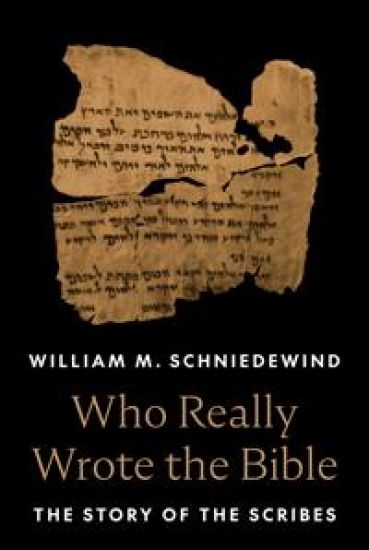
Who Really Wrote the Bible

Who Really Wrote the Bible

William M. Schniedewind

PRINCETON UNIVERSITY PRESS
2024
sidottu

Halvin toimitettuna 35,30 €

A groundbreaking new account of the writing of the Hebrew BibleWho wrote the Bible? Its books have no bylines. Tradition long identified Moses as the author of the Pentateuch, with Ezra as editor. Ancient readers also suggested that David wrote the psalms and Solomon wrote Proverbs and Qohelet. Although the Hebrew Bible rarely speaks of its authors, people have been fascinated by the question of its authorship since ancient times. In Who Really Wrote the Bible, William Schniedewind offers a bold new answer: the Bible was not written by a single author, or by a series of single authors, but by communities of scribes. The Bible does not name its authors because authorship itself was an idea enshrined in a later era by the ancient Greeks. In the pre-Hellenistic world of ancient Near Eastern literature, books were produced, preserved, and passed on by scribal communities. Schniedewind draws on ancient inscriptions, archaeology, and anthropology, as well as a close reading of the biblical text itself, to trace the communal origin of biblical literature. Scribes were educated through apprenticeship rather than in schools. The prophet Isaiah, for example, has his “disciples”; Elisha has his “apprentice.” This mode of learning emphasized the need to pass along the traditions of a community of practice rather than to individuate and invent. Schniedewind shows that it is anachronistic to impose our ideas about individual authorship and authors on the writing of the Bible. Ancient Israelites didn’t live in books, he writes, but along dusty highways and byways. Who Really Wrote the Bible describes how scribes and their apprentices actually worked in ancient Jerusalem and Judah.
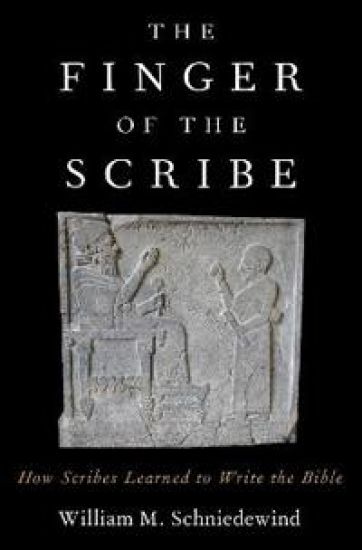
The Finger of the Scribe

The Finger of the Scribe

William M. Schniedewind

Oxford University Press Inc
2019
sidottu
One of the enduring problems in biblical studies is how the Bible came to be written. Clearly, scribes were involved. But our knowledge of scribal training in ancient Israel is limited. William Schniedewind explores the unexpected cache of inscriptions discovered at a remote, Iron Age military post called Kuntillet 'Ajrud to assess the question of how scribes might have been taught to write. Here, far from such urban centers as Jerusalem or Samaria, plaster walls and storage pithoi were littered with inscriptions. Apart from the sensational nature of some of the contents-perhaps suggesting Yahweh had a consort-these inscriptions also reflect actual writing practices among soldiers stationed near the frontier. What emerges is a very different picture of how writing might have been taught, as opposed to the standard view of scribal schools in the main population centers.
A Social History of Hebrew

A Social History of Hebrew

William M. Schniedewind

Yale University Press
2013
sidottu
More than simply a method of communication shared by a common people, the Hebrew language was always an integral part of the Jewish cultural system and, as such, tightly interwoven into the lives of the prophets, poets, scribes, and priests who used it. In this unique social history, William Schniedewind examines classical Hebrew from its origins in the second millennium BCE until the Rabbinic period, when the principles of Judaism as we know it today were formulated, to view the story of the Israelites through the lens of their language. Considering classical Hebrew from the standpoint of a writing system as opposed to vernacular speech, Schniedewind demonstrates how the Israelites’ long history of migration, war, exile, and other momentous events is reflected in Hebrew’s linguistic evolution. An excellent addition to the fields of biblical and Middle Eastern studies, this fascinating work brings linguistics and social history together for the first time to explore an ancient culture.
The Word of God in Transition

The Word of God in Transition

William M. Schniedewind

Continuum International Publishing Group Ltd.
2009
nidottu
The Chronicler distinguishes between "traditional prophets" and "inspired messengers", and thereby highlights a radical transition in the meaning of the "word of God" which takes place in the post-exilic period. The Chronicler summarizes his perspective in 2 Chron. 36.16, saying that Israel rejected "his prophets", "the messengers of God", and "his word" (i.e. Torah). This distinction is reflected in the forms and functions of prophetic speech in the books of Chronicles. Thus, the prophets speak to the king, and the inspired messengers (e.g. priests, levites) speak to the people. The prophets interpret narrative events for the king; they explain how God acts. The inspired messengers exhort the people, admonishing them how they should act. The prophets' speeches usually do not use any kind of inspiration formula, but the inspired messengers' speeches are prefaced with possession formulas. These possession formulas are not typical of classical prophecy and mark the rise of a new kind of prophecy, namely, the inspired interpretation of texts. These inspired messengers are thus forerunners of the inspired interpreters of scripture in Qumran, early Christianity and Judaism.
A Primer on Ugaritic

A Primer on Ugaritic

William M. Schniedewind; Joel H. Hunt

Cambridge University Press
2007
sidottu
A Primer on Ugaritic is an introduction to the language of the ancient city of Ugarit, a city that flourished in the second millennium BCE on the Lebanese coast, placed in the context of the culture, literature, and religion of this ancient Semitic culture. The Ugaritic language and literature was a precursor to Canaanite and serves as one of our most important resources for understanding the Old Testament and the Hebrew language. Special emphasis is placed on contextualization of the Ugaritic language and comparison to ancient Hebrew as well as Akkadian. The book begins with a general introduction to ancient Ugarit, and the introduction to the various genres of Ugaritic literature is placed in the context of this introduction. The language is introduced by genre, beginning with prose and letters, proceeding to administrative, and finally introducing the classic examples of Ugaritic epic. A summary of the grammar, a glossary, and a bibliography round out the volume.
A Primer on Ugaritic

A Primer on Ugaritic

William M. Schniedewind; Joel H. Hunt

Cambridge University Press
2007
pokkari
A Primer on Ugaritic is an introduction to the language of the ancient city of Ugarit, a city that flourished in the second millennium BCE on the Lebanese coast, placed in the context of the culture, literature, and religion of this ancient Semitic culture. The Ugaritic language and literature was a precursor to Canaanite and serves as one of our most important resources for understanding the Old Testament and the Hebrew language. Special emphasis is placed on contextualization of the Ugaritic language and comparison to ancient Hebrew as well as Akkadian. The book begins with a general introduction to ancient Ugarit, and the introduction to the various genres of Ugaritic literature is placed in the context of this introduction. The language is introduced by genre, beginning with prose and letters, proceeding to administrative, and finally introducing the classic examples of Ugaritic epic. A summary of the grammar, a glossary, and a bibliography round out the volume.
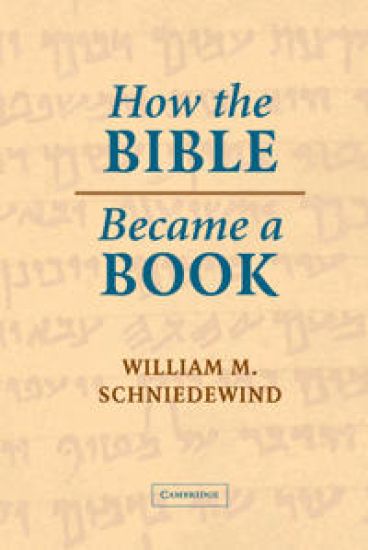
How the Bible Became a Book

How the Bible Became a Book

William M. Schniedewind

Cambridge University Press
2005
pokkari
For the past two hundred years biblical scholars have increasingly assumed that the Hebrew Bible was largely written and edited in the Persian and Hellenistic periods. As a result, the written Bible has dwelled in an historical vacuum. Recent archaeological evidence and insights from linguistic anthropology, however, point to the earlier era of the late-Iron Age as the formative period for the writing of biblical literature. How the Bible Became a Book combines these recent archaeological discoveries in the Middle East with insights culled from the history of writing to address how the Bible first came to be written down and then became sacred Scripture. This book provides rich insight into why these texts came to have authority as Scripture and explores why Ancient Israel, an oral culture, began to write literature, challenging the assertion that widespread literacy first arose in Greece during the fifth century BCE.
How the Bible Became a Book

How the Bible Became a Book

William M. Schniedewind

Cambridge University Press
2004
sidottu
For the past two-hundred years Biblical scholars have usually assumed that the Hebrew Bible was mostly written and edited in the Persian and Hellenistic periods. Recent archaeological evidence and insights from linguistic anthropology, however, point to the earlier era of the late-Iron Age (eighth-though-sixth centuries BCE) as the formative period for the writing of biblical literature. How the Bible Became a Book combines recent archaeological discoveries in the Middle East with insights culled from the history of writing to address how the Bible first came to be written down and then became sacred Scripture. It provides rich insight into why these texts came to have authority as Scripture and explores why Ancient Israel, an oral culture, began to write literature. It describes an emerging literate society in ancient Israel that challenges the assertion that literacy first arose in Greece during the fifth century BCE.
Society and the Promise to David

Society and the Promise to David

William M. Schniedewind

Oxford University Press Inc
1999
sidottu
In the second book of Samuel, the prophet Nathan tells King David that God will give to him and his descendants a great and everlasting kingdom. In this study William Schniedewind looks at how this dynastic Promise has been understood and transmitted from the time of its first appearance at the inception of the Hebrew monarchy until the dawn of Christianity. He shows in detail how, over the centuries, the Promise grew in importance and prestige.