Kirjojen hintavertailu – 12 859 826 kirjaa ja 27 kauppaa

Kirjailija

William Mallinson

Kirjat ja teokset yhdessä paikassa: 9 kirjaa, julkaisuja vuosilta 2016–2026, suosituimpiin kuuluu Kissinger and the Invasion of Cyprus. Vertaile teosten hintoja ja tarkista saatavuus suomalaisista kirjakaupoista.

9 kirjaa

Kirjojen julkaisuvuodet: 2016–2026.

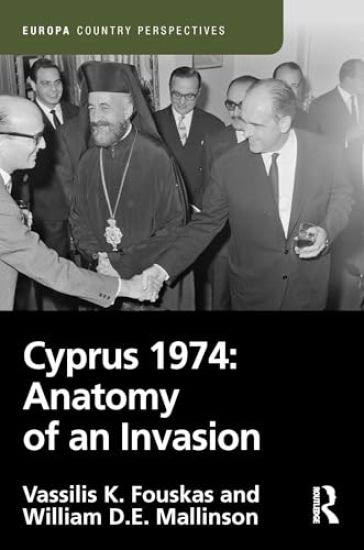
Cyprus 1974: Anatomy of an Invasion

Cyprus 1974: Anatomy of an Invasion

Vassilis Fouskas; William Mallinson

TAYLOR FRANCIS LTD
2026
nidottu
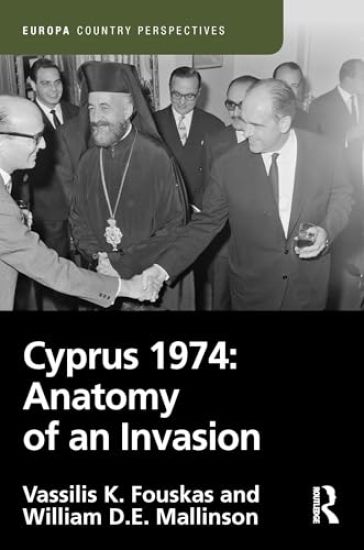
Conventional wisdom and ideologies hold that responsibility for the partition of the Republic of Cyprus in the wake of Turkey’s multiple advances on the island in summer 1974 rests on domestic ethnic and religious tensions between the Turks and the Greeks. This book, drawing on a wealth of archival material, shows that this is not the case at all. As the detailed report of the United Nations mediator, Galo Plaza, had shown in 1965, the Turks and the Greeks living on the island could easily have co-existed if left alone to determine their future. This did not happen. The partition of the island had been inscribed in NATO’s policy since the 1950s, rewarding the strongest component of NATO’s southern flank, Turkey, at the expense of Greece, the weaker component. The volume details the role of CIA agents in Greece and the machinations of the Greek junta of Dimitrios Ioannides to overthrow the charismatic leader of Cyprus, Archbishop Makarios, who had been fighting for an independent and non-aligned Cyprus. It also explains how the partition of Cyprus in 1974 has opened up prospects for the partition of the Aegean Sea between Greece and Turkey, with Greece’s eastern Aegean islands becoming ‘NATOlands’ in the service of the war against Russia. The volume is an essential reading for researchers and students of the history and politics of Cyprus, Greece, Turkey and south-eastern Europe.
Cyprus

Cyprus

William Mallinson

BLOOMSBURY PUBLISHING PLC
2025
nidottu
What are the mainsprings of international rivalry and conflict and how are they to be uncovered - by international relations theory, history or by the practice of diplomacy? Cyprus is ideal for thoroughly testing theory and practice. The island has been at the epicentre of international relations rivalry throughout its history and to this day Cyprus remains a geopolitical tinder-box with acute tension between Cyprus and Turkey over the Turkish occupation of a third of the island. Hostility has now been transferred to the forum of the EU, with Cyprus as a member and the US and Britain pushing for Turkey to join. Meanwhile in the geopolitical hinterland, Russia remains suspicious of the island's British bases which project NATO power in the Eastern Mediterranean and the Middle East. William Mallinson's approach in analyzing Cyprus' problems and the dangers for international relations is unique. He applies practical hands-on experience of international diplomacy with academic research as an historian and international relations theorist. Mallinson applies international theory to his minute analysis of revealing documents - the life-blood of the historian of diplomacy - and shows how historical research provides the essential basis for international relations theory.
Cyprus 1974: Anatomy of an Invasion

Cyprus 1974: Anatomy of an Invasion

Vassilis Fouskas; William Mallinson

TAYLOR FRANCIS LTD
2024
sidottu
Conventional wisdom and ideologies hold that responsibility for the partition of the Republic of Cyprus in the wake of Turkey’s multiple advances on the island in summer 1974 rests on domestic ethnic and religious tensions between the Turks and the Greeks. This book, drawing on a wealth of archival material, shows that this is not the case at all. As the detailed report of the United Nations mediator, Galo Plaza, had shown in 1965, the Turks and the Greeks living on the island could easily have co-existed if left alone to determine their future. This did not happen. The partition of the island had been inscribed in NATO’s policy since the 1950s, rewarding the strongest component of NATO’s southern flank, Turkey, at the expense of Greece, the weaker component. The volume details the role of CIA agents in Greece and the machinations of the Greek junta of Dimitrios Ioannides to overthrow the charismatic leader of Cyprus, Archbishop Makarios, who had been fighting for an independent and non-aligned Cyprus. It also explains how the partition of Cyprus in 1974 has opened up prospects for the partition of the Aegean Sea between Greece and Turkey, with Greece’s eastern Aegean islands becoming ‘NATOlands’ in the service of the war against Russia. The volume is an essential reading for researchers and students of the history and politics of Cyprus, Greece, Turkey and south-eastern Europe.
Guicciardini, Geopolitics and Geohistory

Guicciardini, Geopolitics and Geohistory

William Mallinson

Springer Nature Switzerland AG
2021
sidottu
This book demonstrates that geohistory is a more effective concept than geopolitics in understanding inter-state relations, at a time of considerable confusion in world affairs, and that Francesco Guicciardini’s thoughts are an efficient medium to demonstrate not only the inadequacies of geopolitics, but that a geohistorical approach can be a more responsible way of understanding international affairs. The book introduces a fresh approach, based on the individual, on which corporate characteristics and behaviour depend, often in the shape of state interests, which are unable on their own to predict actions driven by human behaviour. The book shows how show mainstream international relations theories are stuck in paradigms, inadequate in explaining why world politics is moving in a direction that nobody could predict even a decade ago. It shows how ideology can blur clear understanding. In short, it represents a new and intellectually refreshing approach and method in understanding,and tackling, the vagaries of relations between states.
From Neutrality to Commitment

From Neutrality to Commitment

William Mallinson

Bloomsbury Academic
2020
nidottu
Until the mid-twentieth century, the Dutch, with their overseas empire, had managed to stay aloof from the machinations of intra-European fighting. However, the beginning of the Cold War found them persuaded by Britain and the US to break with their independent past and fit into the emerging Western security system. William Mallinson here considers how major post-war developments in Europe affected Dutch foreign policy, traditionally one of abstentionism, and studies the extent of Dutch influence in post-war Western co-operation. Important landmarks, including the Marshall Plan, Brussels Treaty Organisation, North Atlantic Treaty Organisation, Council of Europe, Schuman Plan and Pleven Plan, so vital to an understanding of contemporary international relations, are all treated incisively. The book sheds light on defence, foreign and economic policy, treating European developments from a previously neglected angle. In so doing, it provides vital insights into the history of European recovery after World War II and into the development of a postwar international order.
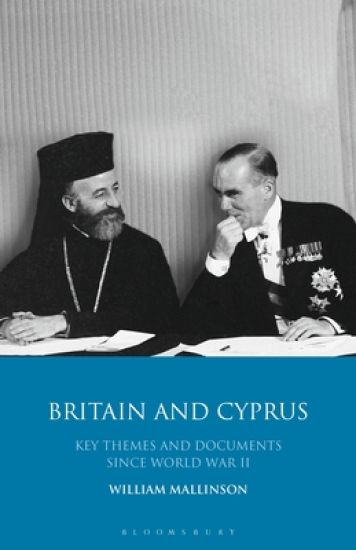
Britain and Cyprus

Britain and Cyprus

William Mallinson

Bloomsbury Academic
2020
nidottu
Cyprus after World War II was, and continues to be, a focal point for diplomatic and military negotiations and disagreements between both local and international powers. In Britain and Cyprus, William Mallinson, a former British diplomat, has selected from a wealth of documents drawn from the National Archives, skilfully combining the chronology of events with vital themes and motifs. Several of these documents have been obtained directly from the Foreign Office and Ministry of Defence, thanks to the help, and pressure, of the Information Commissioner, under the Freedom of Information Act. Its blend of documentation with incisive exploration and analysis makes this book an invaluable resource for all those interested in the politics of the Eastern Mediterranean, British history and in the process of policy formulation.
Kissinger and the Invasion of Cyprus

Kissinger and the Invasion of Cyprus

William Mallinson

Cambridge Scholars Publishing
2017
nidottu
Can Henry Kissinger be described as a serious statesman who altered the course of relations between states? Or was he a shallow impersonator of those whom he admired, and a geopolitical engineer who treated people as collateral fodder, reducing morality to the status of a strategic and tactical tool? Using the story of Kissinger’s behaviour over Cyprus, backed up by recently revealed government documents, many critical, William Mallinson, former diplomat and leading authority on Cyprus’ history, provides an incisive analysis and evaluation of Kissinger’s approach, revealing a man who appears to have considered political strategy more important than law and ethics.
The Threat of Geopolitics to International Relations

The Threat of Geopolitics to International Relations

William Mallinson

Cambridge Scholars Publishing
2016
sidottu
Geopolitics, both in name, and in its application via geostrategy, is a controversial area of international relations. Although the practice of obtaining resources is as old as Mankind, the word came into its own with the imperial policies of the great powers in the nineteenth century, was used to justify world wars, went into decline, but was 'taken to America' and then re-exported to Europe after the last war by the likes of Henry Kissinger. Nowadays, the term is used unconsciously by politicians obsessed with power, often to justify war. This book tears apart the simplistic thinking of geopolitics, and proposes its replacement with the authors' own method of 'geohistory', a method based on recognising that at the base of any analysis and evaluation of the international situation lie human characteristics.