Kirjojen hintavertailu – 12 903 725 kirjaa ja 27 kauppaa

Kirjailija

William Matthew Flinders Petrie

Kirjat ja teokset yhdessä paikassa: 60 kirjaa, julkaisuja vuosilta 2008–2026, suosituimpiin kuuluu Diez Anos Excavando En Egipto. Vertaile teosten hintoja ja tarkista saatavuus suomalaisista kirjakaupoista.

60 kirjaa

Kirjojen julkaisuvuodet: 2008–2026.

Ancient Gaza: Volume 2

Ancient Gaza: Volume 2

William Matthew Flinders Petrie

Cambridge University Press
2013
pokkari
A pioneering Egyptologist, Sir William Matthew Flinders Petrie (1853–1942) excavated over fifty sites and trained a generation of archaeologists. Now reissued in two volumes are the four excavation reports, published between 1931 and 1934, covering his extensive dig at Tell el-Ajjul in Palestine. The reports scrupulously record the finds of artefacts dating from the Copper Age and extending to the Hyksos period. Descriptions of the working party's struggles against malaria and the elements highlight Petrie's devotion to his work. Volume 2 combines the final two excavation reports, first published in 1933 and 1934, and includes the significant discovery of the large tomb of the governor under Tutankhamun. Each report features a section of photographs and sketches of tombs, pottery, weapons and jewellery. Petrie wrote prolifically throughout his long career, and a great many of his Egyptological publications - for both specialists and non-specialists - are also reissued in this series.
Ancient Gaza: Volume 1

Ancient Gaza: Volume 1

William Matthew Flinders Petrie

Cambridge University Press
2013
pokkari
A pioneering Egyptologist, Sir William Matthew Flinders Petrie (1853–1942) excavated over fifty sites and trained a generation of archaeologists. Now reissued in two volumes are the four excavation reports, published between 1931 and 1934, covering his extensive dig at Tell el-Ajjul in Palestine. The reports scrupulously record the finds of artefacts dating from the Copper Age and extending to the Hyksos period. Descriptions of the working party's struggles against malaria and the elements highlight Petrie's devotion to his work. Volume 1 combines the first two reports, first published in 1931 and 1932, and includes descriptions of various cemeteries, tombs, palaces and horse burials. Each report features a section of photographs and sketches of tombs, pottery, weapons and jewellery. Petrie wrote prolifically throughout his long career, and a great many of his Egyptological publications - for both specialists and non-specialists - are also reissued in this series.
Abydos

Abydos

William Matthew Flinders Petrie

Cambridge University Press
2013
pokkari
A pioneering Egyptologist, Sir William Matthew Flinders Petrie (1853–1942) excavated over fifty sites and trained a generation of archaeologists. Originally published between 1902 and 1904 for the Egypt Exploration Fund, this three-volume set of reports documents the excavations that Petrie initiated at one of ancient Egypt's most sacred sites, the necropolis at Abydos. These reports follow on from the findings published in The Royal Tombs of the First Dynasty (1900) and The Royal Tombs of the Earliest Dynasties (1901), both of which are reissued in this series. Volume 2 accounts for the discoveries made during the 1902–3 clearing of the site of ten successive temples, spanning the period from the first dynasty to the twenty-sixth. More than sixty pages of plates illustrate the discoveries, which range from first-dynasty ivory figures to thirteenth-dynasty stelae. A chapter by Francis Llewellyn Griffith (1862–1934) sheds light on the inscriptions.
Abydos

Abydos

William Matthew Flinders Petrie

Cambridge University Press
2013
pokkari
A pioneering Egyptologist, Sir William Matthew Flinders Petrie (1853–1942) excavated over fifty sites and trained a generation of archaeologists. Originally published between 1902 and 1904 for the Egypt Exploration Fund, this three-volume set of reports documents the excavations that Petrie initiated at one of ancient Egypt's most sacred sites, the necropolis at Abydos. These reports follow on from the findings published in The Royal Tombs of the First Dynasty (1900) and The Royal Tombs of the Earliest Dynasties (1901), both of which are reissued in this series. Volume 1 presents a detailed account of the objects found in the Osiris temenos (enclosure) and the cemetery known as 'G' during the dig of 1902. Eighty pages of plates illustrate the discoveries, which range from painted pottery to early dynastic graves. A chapter by Arthur Weigall (1880–1934) sheds light on the inscriptions.
Koptos, Qurneh

Koptos, Qurneh

William Matthew Flinders Petrie

Cambridge University Press
2013
pokkari
Among the leading Egyptologists of his day, Sir William Matthew Flinders Petrie (1853–1942) excavated over fifty sites and trained a generation of archaeologists. This single-volume reissue brings together two of his well-illustrated excavation reports. The first, originally published in 1896, covers the work undertaken in 1893–4 at Koptos (modern-day Qift), a key settlement in Upper Egypt on the Nile's east bank. This includes a chapter on classical inscriptions by David George Hogarth (1862–1927). The second report, first published in 1909, discusses recent archaeological work around Qurna in the Theban necropolis, including the discovery of an intact royal burial dating from the seventeenth dynasty. The epigraphic material is addressed in a chapter by James Herbert Walker (d.1914). Petrie wrote prolifically throughout his long career, and a great many of his other publications - for both specialists and non-specialists - are also reissued in this series.
Memphis I, The Palace of Apries (Memphis II), Meydum and Memphis III

Memphis I, The Palace of Apries (Memphis II), Meydum and Memphis III

William Matthew Flinders Petrie

Cambridge University Press
2013
pokkari
A pioneering Egyptologist, Sir William Matthew Flinders Petrie (1853–1942) excavated over fifty sites and trained a generation of archaeologists. This single-volume reissue brings together three well-illustrated reports of his excavations over three seasons at Memphis and Meidum on the west bank of the Nile, first published in 1909–10. Work at Memphis in 1908 and 1909 notably focused on the west hall of the temple of Ptah and the royal palace of Apries. Chapters on the inscriptions are provided by James Herbert Walker (d.1914). The excavations at Meidum continued those begun in 1891 and recorded in the 1892 report that is also reissued in this series. Petrie was assisted by Ernest Mackay (1880–1943) and Gerald Averay Wainwright (1879–1964) in working on the pyramid, built for the fourth-dynasty pharaoh Sneferu, and the mastaba of Nefermaat, one of the largest private tombs of the Old Kingdom.
Ehnasya, The Labyrinth, Gerzeh and Mazghuneh

Ehnasya, The Labyrinth, Gerzeh and Mazghuneh

William Matthew Flinders Petrie

Cambridge University Press
2013
pokkari
A pioneering Egyptologist, Sir William Matthew Flinders Petrie (1853–1942) excavated over fifty sites and trained a generation of archaeologists. This reissue brings together two of the well-illustrated excavation reports that he prepared with collaborators. The first, originally published in 1905, documents his work at Ehnasya (or Herakleopolis Magna), ranging in its coverage from the twelfth-dynasty temple to the houses of the Roman period. The text includes material by C. T. Currelly (1876–1957) on the various cemeteries. The second report, from 1912, records the findings from a number of sites. Petrie discusses the labyrinth located in the Faiyum; Gerald Wainwright (1879–1964) notes the discovery at Gerzeh of early examples of iron and ceramic artefacts; and the cemeteries and pyramids of Mazghuna are examined by Ernest Mackay (1880–1943). Petrie wrote prolifically throughout his long career, and a great many of his other publications are also reissued in this series.
Dendereh 1898

Dendereh 1898

William Matthew Flinders Petrie

Cambridge University Press
2013
pokkari
A pioneering Egyptologist, Sir William Matthew Flinders Petrie (1853–1942) excavated over fifty sites and trained a generation of archaeologists. This excavation report, first published in 1900, documents and illustrates the findings made at the cemetery of Dendera, until then neglected by archaeologists in favour of the more famous temple site. The work includes descriptions of the tombs and a chapter by Francis Llewellyn Griffith (1862–1934) on the inscriptions. Also covered are the pottery, funereal furniture and animal catacombs. The discoveries date from the Old Kingdom right through to the Roman period. The extensive section of plates includes plans of the tombs along with drawings and photographs of the many artefacts found within. Petrie wrote prolifically throughout his long career, believing that insights gained from his digs should be shared as swiftly as possible. A great many of his other publications - for both specialists and non-specialists - are also reissued in this series.
Naukratis I and II, Hawara, Biahmu, and Arsinoe

Naukratis I and II, Hawara, Biahmu, and Arsinoe

William Matthew Flinders Petrie; Ernest A. Gardner

Cambridge University Press
2013
pokkari
A pioneering Egyptologist, Sir William Matthew Flinders Petrie (1853–1942) excavated over fifty sites and trained a generation of archaeologists. Ernest A. Gardner (1862–1939) was to become a leading classical archaeologist, but his first major project was carrying on the work of Petrie at Naukratis, the ancient Greek colony in the Nile Delta that Petrie had discovered in 1884. Reissued here together are Petrie's initial excavation report of 1886 and Gardner's 1888 continuation, each with many illustrations and material contributed by specialists on certain topics. Notably, the finds of inscribed pottery yielded significant insights into how the Greek alphabet developed. The final component included here is Petrie's 1889 report covering recent digs, particularly his discovery of a Roman necropolis and dozens of remarkable mummy portraits at Hawara. He wrote prolifically throughout his long career, and a great many of his other publications are also reissued in this series.
The Royal Tombs of the First Dynasty

The Royal Tombs of the First Dynasty

William Matthew Flinders Petrie

Cambridge University Press
2013
pokkari
A pioneering Egyptologist, Sir William Matthew Flinders Petrie (1853–1942) excavated over fifty sites and trained a generation of archaeologists. His meticulous recording of artefacts and his sequence dating of pottery types found in Egypt and Palestine made Near Eastern archaeology a more rigorous and scientific discipline. This fully illustrated report of 1900 on the royal tombs at Abydos, capital of Upper Egypt, covers the first dynasty (c.3100–c.2900 BCE). Although Petrie acknowledges that it is only a preliminary report of ongoing work, he gives detailed descriptions of six tombs and the associated finds. A chapter on the inscriptions is provided by Francis Llewellyn Griffith (1862–1934). Petrie wrote prolifically throughout his long career for both specialists and non-specialists. His follow-up report, The Royal Tombs of the Earliest Dynasties (1901), and the three-part Abydos (1902–4) are among those works also reissued in this series.
Deshasheh, Diospolis Parva, Athribis

Deshasheh, Diospolis Parva, Athribis

William Matthew Flinders Petrie; F. Ll. Griffith; Arthur Cruttenden Mace

Cambridge University Press
2013
pokkari
A pioneering Egyptologist, Sir William Matthew Flinders Petrie (1853–1942) excavated over fifty sites and trained a generation of archaeologists. These three illustrated excavation reports, now reissued together, were originally published in 1898, 1901 and 1908 in collaboration with other experts. They focus on the cemeteries at Deshasheh, Abadiyeh and Hu (the latter known also as Diospolis Parva), and Athribis. Light is shed on the major discoveries, such as large quantities of beautifully preserved Neolithic linen, the 'pan graves' of semi-nomadic settlers, and a tomb featuring an early relief of Egyptians besieging a fortified Near Eastern town. Most significantly, these reports reflect Petrie's development of sequence dating, which influenced the use of seriation as a relative dating method in archaeology. Petrie wrote prolifically throughout his long career. Many of his other publications - for both Egyptologists and non-specialists - are also reissued in this series.
Six Temples at Thebes, Naqada and Ballas

Six Temples at Thebes, Naqada and Ballas

William Matthew Flinders Petrie; J. E. Quibell

Cambridge University Press
2013
pokkari
A pioneering Egyptologist, Sir William Matthew Flinders Petrie (1853–1942) excavated over fifty sites and trained a generation of archaeologists. This single-volume reissue brings together two of his well-illustrated excavation reports. The first, originally published in 1897, describes work on six of the temples at Thebes, including the discovery of the famous Merneptah Stele, which contains the first non-biblical reference to Israel. A chapter on this inscription and others found in the temples is provided by the German scholar Wilhelm Spiegelberg (1870–1930). The second report, first published in 1896, discusses the archaeological work carried out at Naqada and Ballas by Petrie and James Edward Quibell (1867–1935), with a chapter by F. C. J. Spurrell (1842–1915) on the flint implements found at Naqada. Petrie wrote prolifically throughout his long career, and a great many of his other publications - for both specialists and non-specialists - are also reissued in this series.
Tell el Hesy (Lachish), Hyksos and Israelite Cities

Tell el Hesy (Lachish), Hyksos and Israelite Cities

William Matthew Flinders Petrie

Cambridge University Press
2013
pokkari
A pioneering Egyptologist, Sir William Matthew Flinders Petrie (1853–1942) excavated over fifty sites and trained a generation of archaeologists. This reissue brings together two of his well-illustrated excavation reports. The first, originally published in 1891, covers his 1890 dig in Palestine at Tell el-Hesi. Although he identified it incorrectly as the biblical city of Lachish, his work here was significant in Near Eastern archaeology for the stratigraphic method of excavation and use of pottery to establish chronology. The second report, from 1906, records the work carried out at a number of Hyksos and Israelite sites in Egypt, such as Tell el-Yehudiyeh and Tell er-Retabeh. It also includes chapters by John Garrow Duncan (1872–1951) on the cemeteries of Suwa and Goshen. Each report contains a section of photographs and drawings of sites, artefacts and inscriptions. Petrie wrote prolifically throughout his long career, and a great many of his other publications are also reissued in this series.
Methods and Aims in Archaeology

Methods and Aims in Archaeology

William Matthew Flinders Petrie

Cambridge University Press
2013
pokkari
A pioneering Egyptologist, Sir William Matthew Flinders Petrie (1853–1942) excavated over fifty sites and trained a generation of archaeologists. In this short but classic work of 1904, he explains his vision for the young science of archaeology. Petrie outlines his processes and goals for an excavation, offering advice on how to manage workers drawn from the local population as well as guidance on creating a thorough record of a dig, the importance of which had not been fully appreciated by many contemporary archaeologists. His methods were highly influential in their more systematic and scientific approach to archaeology at a time when many of its practitioners were more focused on acquiring attractive artefacts than advancing knowledge. The text is accompanied by 66 illustrations. Petrie wrote prolifically throughout his long career, and a great many of his other publications - for both specialists and non-specialists - are also reissued in this series.
Egyptian Decorative Art

Egyptian Decorative Art

William Matthew Flinders Petrie

Cambridge University Press
2013
pokkari
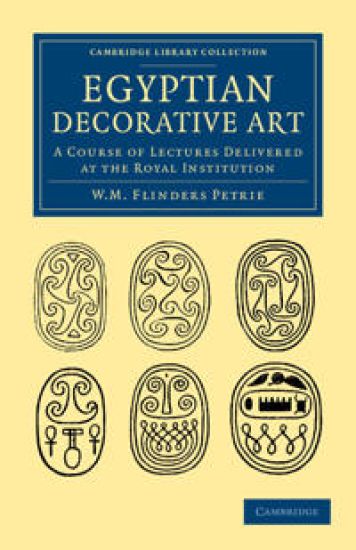
Among the leading Egyptologists of his day, Sir William Matthew Flinders Petrie (1853–1942) excavated over fifty sites and trained a generation of archaeologists. He published these carefully illustrated lectures in 1895. Exploring the ancient Egyptians' passion for decoration, he demonstrates his view that the elaborate use of hieroglyphs and design 'made the Egyptian the father of the world's ornament'. Petrie describes and illustrates the four main areas of decoration: the geometrical use of lines, spirals and curves; the representation of natural images such as feathers and flowers; the existence of structural patterns resulting from ancient techniques of building or manufacture; and the use of symbolic emblems such as the vulture, scarab and lion. Much modern-day design, Petrie argues, is influenced by ancient Egyptian aesthetics. Many of his other publications - for both Egyptologists and non-specialists - are also reissued in this series.
The Arts and Crafts of Ancient Egypt

The Arts and Crafts of Ancient Egypt

William Matthew Flinders Petrie

Cambridge University Press
2013
pokkari
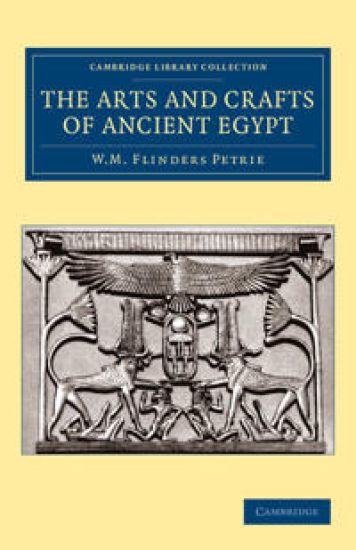
A pioneering Egyptologist, Sir William Matthew Flinders Petrie (1853–1942) excavated over fifty sites and trained a generation of archaeologists. In this 1909 handbook, ranging in coverage from the prehistoric period to the Roman era, he examines a sample of the work of Egyptian painters, sculptors and diverse craftsmen, touching on such topics as statuary, architecture, jewellery, pottery and textiles. Beginning with a discussion of the meteorological, religious and political factors that influenced Egyptian artistic responses, the book contains 140 illustrations of the most striking works of each period. Many of the featured artefacts formed part of Petrie's own collection, and over a third of the photographs had not been previously published. His earlier lectures on Egyptian Decorative Art (1895), along with many of his other publications, are also reissued in this series.
Ten Years' Digging in Egypt

Ten Years' Digging in Egypt

William Matthew Flinders Petrie

Cambridge University Press
2013
pokkari
Among the leading Egyptologists of his day, Sir William Matthew Flinders Petrie (1853–1942) excavated over fifty sites and trained a generation of archaeologists. Pioneering in his rigorous recording of evidence, Petrie wrote prolifically throughout his long career and is credited with bringing his subject to a wider audience. A great many of his other publications are also reissued in this series. First published in 1892 and intended for non-specialists, this highly readable book summarises Petrie's recent work in Egypt, including his surveying of the pyramids of Giza and his discovery of the city of Naukratis in the Nile Delta. Illustrated throughout with detailed line drawings, this work sheds much light on Petrie's influential approach as well as the technological and artistic achievements of ancient Egyptian civilisation. It will appeal to those who wish to learn about the birth of modern Egyptology and the methods of its founding father.
The Pyramids and Temples of Gizeh

The Pyramids and Temples of Gizeh

William Matthew Flinders Petrie

Cambridge University Press
2013
pokkari

Halvin toimitettuna 38,60 €

A pioneering Egyptologist, Sir William Matthew Flinders Petrie (1853–1942) excavated over fifty sites and trained a generation of archaeologists. In 1880 he began the first ever systematic survey of the Giza Plateau, with perhaps his most important work being on the Great Pyramid. Theories abounded as to how the Great Pyramid had been constructed, yet few were based on close examination of the structure itself. Petrie's findings, still used as a reference today, enabled him to disprove prominent theories, such as the belief of Charles Piazzi Smyth that the Great Pyramid was a product of divine revelation and therefore flawless. This first edition of 1883 was not reprinted, and subsequent editions summarised some of the material. Petrie wrote prolifically throughout his long career, and many of his other publications are also reissued in this series.
Seventy Years in Archaeology

Seventy Years in Archaeology

William Matthew Flinders Petrie

Cambridge University Press
2013
pokkari
Among the leading Egyptologists of his day, Sir William Matthew Flinders Petrie (1853–1942) excavated over fifty sites and trained a generation of archaeologists. He is credited with bringing his subject to a much wider audience, and his talent for exposition is reflected in this accessible autobiography, first published in 1931 and illustrated throughout. It describes life on digs in the late nineteenth and early twentieth centuries, providing rich insights into developing archaeological methods. Petrie's most important discoveries are recounted, including his unearthing of the Merneptah Stele, some of the earliest evidence of mummification, and elements of Greek and Roman cultural influence in Egypt. Furthermore, he reflects here on his innovative practice of recording and preserving every artefact, not just obvious museum pieces. Petrie wrote prolifically throughout his long career, and a great many of his other publications are also reissued in this series.
Egyptian Tales: Volume 1

Egyptian Tales: Volume 1

William Matthew Flinders Petrie

Cambridge University Press
2013
pokkari
Although some of Egypt's most important archaeological finds were made in the late nineteenth century, at a time when historical fiction was popular, the literature of Egypt had reached very few English readers. Aiming to bring ancient Egypt to life in the public imagination, eminent archaeologist W. M. Flinders Petrie (1853–1942) published in 1895 this two-volume collection of original stories, accompanied by illustrations and helpful contextualising comments. The six stories of Volume 1 include elements of both fantasy and historical fact, spanning the period from the court of Khufu during the fourth dynasty to the death of Amenemhat I, founder of the twelfth. Shedding light on contemporary life and literature, the stories represent a valuable resource for Egyptologists and folklorists. Petrie's rendering of the stories into English, based on translations of various papyri, remains accessible to all. Many more of his works, for both specialists and non-specialists, are also reissued in this series.