Kirjojen hintavertailu – 12 903 725 kirjaa ja 27 kauppaa

Kirjailija

William Moskoff

Kirjat ja teokset yhdessä paikassa: 9 kirjaa, julkaisuja vuosilta 1984–2002, suosituimpiin kuuluu Hard Times: Impoverishment and Protest in the Perestroika Years - Soviet Union, 1985-91. Vertaile teosten hintoja ja tarkista saatavuus suomalaisista kirjakaupoista.

9 kirjaa

Kirjojen julkaisuvuodet: 1984–2002.

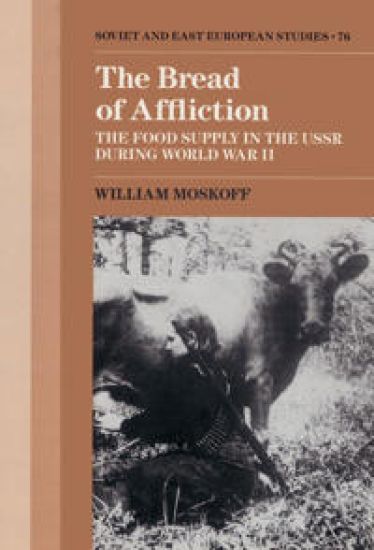
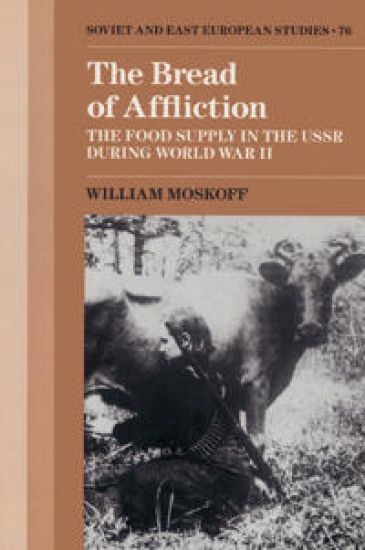
The Bread of Affliction

The Bread of Affliction

William Moskoff

Cambridge University Press
2002
pokkari
This book tells how the Soviet Union fed itself after the invasion by the Germans during World War II. The author argues that central planning became much less important in feeding the population, and civilians were thereby forced to become considerably more self reliant in feeding themselves. A rationing system was instituted soon after the war began, but quickly became irrelevant because of the chronic food shortages. The breakdown in central supplies of food was accompanied by the diminished importance of the rouble, which in many places was replaced by bread and clothing as the medium of exchange. Although the Soviet army was given high precedence over civilians, the author also shows that the population living under German occupation was much worse off than were Soviet civilians living in the rear. In addition to extensive use of American and German archives from the war period, the author interviewed more than thirty Soviet emigres who survived the war.
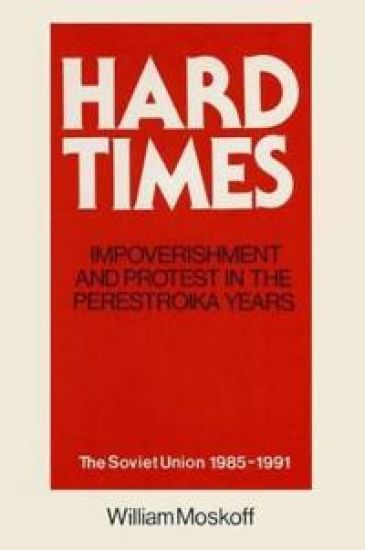
Hard Times: Impoverishment and Protest in the Perestroika Years - Soviet Union, 1985-91
The book offers guidance to aspiring historians at every stage and in every walk of life, from practical advice on tackling and organizing projects to recommendations for finding and using resources of all kinds, whether at the local library or historical society or on the world wide web. It is intended to be a serious guide to the best practices for researchers as well as a good read as a collection of research stories. The author includes useful bibliographies, vetted websites, and practical advice on doing research well.
Hard Times: Impoverishment and Protest in the Perestroika Years - Soviet Union, 1985-91
The book offers guidance to aspiring historians at every stage and in every walk of life, from practical advice on tackling and organizing projects to recommendations for finding and using resources of all kinds, whether at the local library or historical society or on the world wide web. It is intended to be a serious guide to the best practices for researchers as well as a good read as a collection of research stories. The author includes useful bibliographies, vetted websites, and practical advice on doing research well.
The Bread of Affliction

The Bread of Affliction

William Moskoff

Cambridge University Press
1990
sidottu
This book tells how the Soviet Union fed itself after the invasion by the Germans during World War II. The author argues that central planning became much less important in feeding the population, and civilians were thereby forced to become considerably more self reliant in feeding themselves. A rationing system was instituted soon after the war began, but quickly became irrelevant because of the chronic food shortages. The breakdown in central supplies of food was accompanied by the diminished importance of the rouble, which in many places was replaced by bread and clothing as the medium of exchange. Although the Soviet army was given high precedence over civilians, the author also shows that the population living under German occupation was much worse off than were Soviet civilians living in the rear. In addition to extensive use of American and German archives from the war period, the author interviewed more than thirty Soviet emigres who survived the war.
Perestroika in the Countryside

Perestroika in the Countryside

William Moskoff

M.E. Sharpe
1990
sidottu
This book is a collection of seven papers originally given at the 1989 meetings of the American Association for the Advancement of Slavic Studies. The authors come from the fields of economics, history, and political science and are all specialists in the field of Soviet and East European agriculture. The first essay, by David Macey, assesses Gorbachev's agricultural reform in light of the experience of the Stolypin reforms at the beginning of the century. The essays by Jim Butterfield and Ed Cook examine the impediments to successful reform from the perspective of a political scientist and an economist. Karen Brooks and Don Van Atta concentrate their attention on the efforts to introduce lease contracting into agriculture. D. Gale Johnson's essay examines the economic effects of trade liberalization in agriculture. The final paper, by Michael Marrese, suggests that there are lessons for the Soviet Union to be learned from the Hungarian experience, namely, that the changes in agriculture must be comprehensive and that the party can win over popular support if its agricultural policies succeed.
Reorganization and Reform in the Soviet Economy

Reorganization and Reform in the Soviet Economy

Susan J. Linz; William Moskoff

M.E. Sharpe
1988
sidottu
Richly represented in the Russian folktale tradition, the legends in this work are religious tales in a peasant village setting. Among the standard themes is the return of Christ, who wanders through rural Russia with his disciples. Satan appears too, as do a cast of spirits and lesser devils.