
Kirjailija
William Myers
Kirjat ja teokset yhdessä paikassa: 31 kirjaa, julkaisuja vuosilta 1984–2026, suosituimpiin kuuluu Nike: Form Follows Motion. Vertaile teosten hintoja ja tarkista saatavuus suomalaisista kirjakaupoista.
31 kirjaa
Kirjojen julkaisuvuodet: 1984–2026.
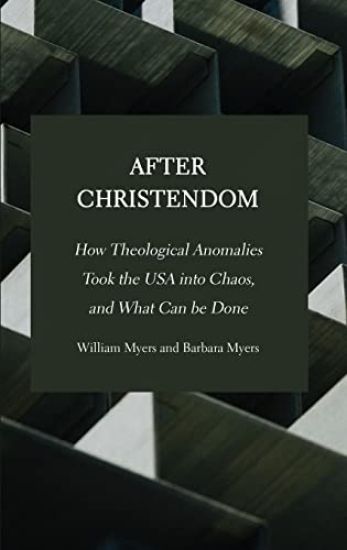
Historically affirming certain post-WWII constructive theologians and social theorists, After Christendom unpacks theological anomalies negatively denying the science underlying global warming, wedge issues supporting systemic racism, and certain erroneous decisions made by mainline churches and the evangelical movement. Anomalies occur when something taken for granted no longer fits current situations. The so-called mainline church and the evangelical movement have not addressed or reconstructed their theological anomalies. Caught inside cultural accommodation, the more liberal mainline church often does not recognize its historical tie to a pre-modern God, a transactional definition of the crucifixion, and Jesus' consignment to the cross. A companion argument suggests that the evangelical movement's inability to respond to the pre-modern depiction of God as an omnipotent, theocratic King helped provide sufficient votes for Trump's successful presidential run. Both groups inability to face such theological anomalies rests within a belief in conservative originalism, an unwillingness to move beyond European Christendom's earliest theological constructions. After Christendom will be of particular interest to seminary, divinity school, university, and college libraries, as well as seminary students and professors, members of college and university departments of religion, history, and political science, and ministers and church leaders.
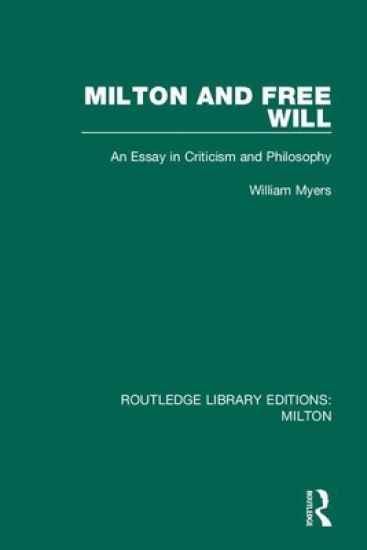
First published in 1987. Milton and Free Will is an incisive, ambitious and comprehensive analysis and defence of the concept of free will, using Milton as an example and exemplar. Written with passion, and out of a lifelong engagement with the poetry of Milton and the philosophical and theological problems it encompasses, the book will illuminate both Milton studies and philosophical debate. The author engages with all the major currents of the free will debate, starting with Aristotle and Aquinas and considering arguments advanced by Hume and Kant as well as those of a number of modern philosophers including Polanyi, Kenny, Parfit, Plantinga, Swinburne, Dennett and Davidson. He pays particular attention to the Marxist formalism of Bakhtin, the Catholic phenomenology of Pope John Paul II and the evolutionism of Monod and Sober. He concludes with a rebuttal of the deconstructionism of Barthes, Derrida and Foucault. He claims that all the major difficulties faced by defenders of free will can be overcome if a notion of willing implicit in the work of Milton is properly understood. Freedom as Milton represented and understood it, he suggests, is a condition of mind arising out of inter-personal awareness and not a property or consequence of practical reasoning. He finds supporting evidence for this view in the writings of Newman and in Henry James’s The Portrait of a Lady, which he reads as a narrative structurally reversing Milton’s representation of the fall of Eve in Paradise Lost. The author systematically analyses and reanalyses key passages in his texts in the light of the many arguments for and against free will, seeking thereby to affirm the validity in principle, and the personal and political importance in practice, of the Christian humanist tradition of which he sees Milton, Newman and the Pope as important (if sometimes misleading) spokesmen.
This book deals with important aspects of nineteenth-century culture, literary, philosophical and scientific, which remain live issues today. It examines in detail the writings of Dickens, Charlotte and Emily Bronte, James Hamilton, Eliot Mill, Arnold, Pater and Newman and makes substantial reference to Hawthorne, Dickinson, Spencer, Carlyle and Hardy, all in the context of the dominant intellectual movements of the nineteenth and twentieth centuries. The thought of Hamilton, Newman, Mill and Spencer is contrasted with that of twentieth-century figures like the philosophers Frege, Husserl, Wittenstein, Merleau-Ponty, the neo-Darwinists Monod and Dawkins and critics like Eagleton and Miller. William Myers argues for a traditional view, deriving largely from Newman, of the unity and autonomy of individual human beings. He suggests that science and literature depend on persons being actively and responsively present to each other, that freedom is always interpersonal, and that in great literature we can discover the workings of this deep mutuality and its enemies.
First published in 1987. Milton and Free Will is an incisive, ambitious and comprehensive analysis and defence of the concept of free will, using Milton as an example and exemplar. Written with passion, and out of a lifelong engagement with the poetry of Milton and the philosophical and theological problems it encompasses, the book will illuminate both Milton studies and philosophical debate. The author engages with all the major currents of the free will debate, starting with Aristotle and Aquinas and considering arguments advanced by Hume and Kant as well as those of a number of modern philosophers including Polanyi, Kenny, Parfit, Plantinga, Swinburne, Dennett and Davidson. He pays particular attention to the Marxist formalism of Bakhtin, the Catholic phenomenology of Pope John Paul II and the evolutionism of Monod and Sober. He concludes with a rebuttal of the deconstructionism of Barthes, Derrida and Foucault. He claims that all the major difficulties faced by defenders of free will can be overcome if a notion of willing implicit in the work of Milton is properly understood. Freedom as Milton represented and understood it, he suggests, is a condition of mind arising out of inter-personal awareness and not a property or consequence of practical reasoning. He finds supporting evidence for this view in the writings of Newman and in Henry James’s The Portrait of a Lady, which he reads as a narrative structurally reversing Milton’s representation of the fall of Eve in Paradise Lost. The author systematically analyses and reanalyses key passages in his texts in the light of the many arguments for and against free will, seeking thereby to affirm the validity in principle, and the personal and political importance in practice, of the Christian humanist tradition of which he sees Milton, Newman and the Pope as important (if sometimes misleading) spokesmen.
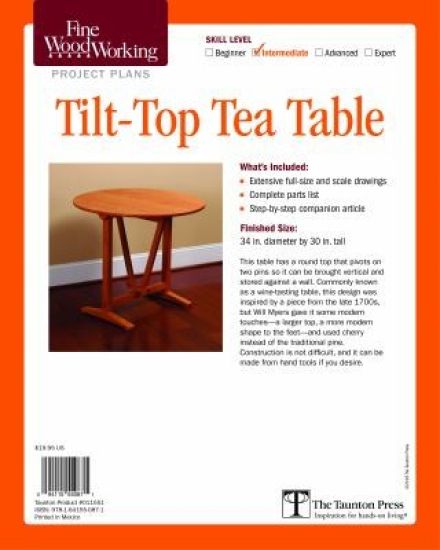
This table has a round top that pivots on two pins so it can be brought vertical and stored against a wall. Commonly known as a wine-tasting table, this design was inspired by a piece from the late 1700s, but Will Myers gave it some modern touches--a larger top, a more modern shape to the feet--and used cherry instead of the traditional pine. Construction is not difficult, and it can be made from hand tools if you desire. SKILL LEVEL: Intermediate DIMENSIONS: 34 in. diameter x 30 in. tall WHAT'S INCLUDED: extensive full-size and scale drawingscomplete parts liststep-by-step companion article
The Old Roman Catholic Ritual is a reconfiguring of Archbishop Mathew's text from 1909. It has been updated but still maintains the dignified language of its original publishing. This book will be useful for those clergy who want a traditional ritual in English in traditional language.
A Catechism for the Old Roman Catholic Church is based on the Longer Orthodox Catechism. The work provides insight into the teachings and beliefs of the historic church, as well as a reader friendly guide into the Old Roman Catholic tradition.
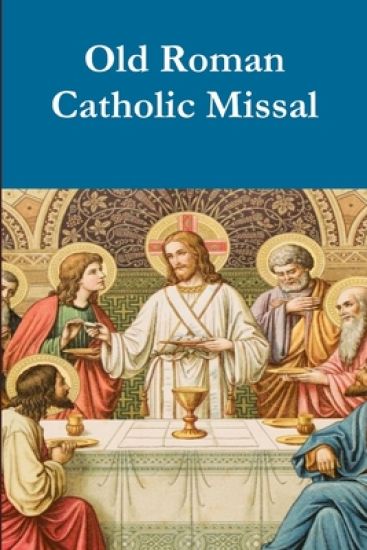
The Old Roman Catholic Missal provides the ordinary of the Mass. The text is based on the Knott Missal. Included is the ordinary, prayers after Mass, and Archbishop Mathew's prayer for the Old Roman Catholic Church.
This book deals with important aspects of nineteenth-century culture, literary, philosophical and scientific, which remain live issues today. It examines in detail the writings of Dickens, Charlotte and Emily Bronte, James Hamilton, Eliot Mill, Arnold, Pater and Newman and makes substantial reference to Hawthorne, Dickinson, Spencer, Carlyle and Hardy, all in the context of the dominant intellectual movements of the nineteenth and twentieth centuries. The thought of Hamilton, Newman, Mill and Spencer is contrasted with that of twentieth-century figures like the philosophers Frege, Husserl, Wittenstein, Merleau-Ponty, the neo-Darwinists Monod and Dawkins and critics like Eagleton and Miller. William Myers argues for a traditional view, deriving largely from Newman, of the unity and autonomy of individual human beings. He suggests that science and literature depend on persons being actively and responsively present to each other, that freedom is always interpersonal, and that in great literature we can discover the workings of this deep mutuality and its enemies.