Kirjojen hintavertailu – 12 903 725 kirjaa ja 27 kauppaa

Kirjailija

William N. Fenton

Kirjat ja teokset yhdessä paikassa: 20 kirjaa, julkaisuja vuosilta 1957–2023, suosituimpiin kuuluu Symposium on Local Diversity in Iroquois Culture: Smithsonian Institution, Bureau of American Ethnology, No. 149. Vertaile teosten hintoja ja tarkista saatavuus suomalaisista kirjakaupoista.

Nimi esiintyy myös muodoissa: William N Fenton

20 kirjaa

Kirjojen julkaisuvuodet: 1957–2023.

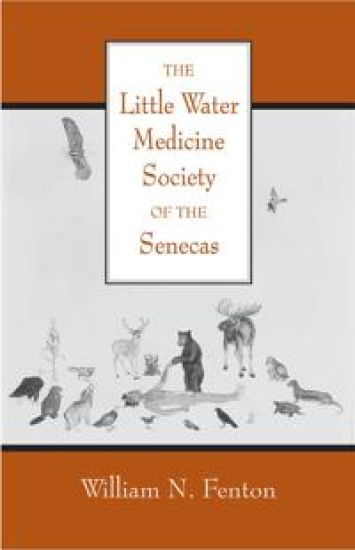
The Little Water Medicine Society of the Senecas Volume 242

The Little Water Medicine Society of the Senecas Volume 242

William N. Fenton

UNIVERSITY OF OKLAHOMA PRESS
2023
nidottu
For the Seneca Iroquois Indians, song is a crucial means of renewing both medicine and heritage. Two or three times a year, the Little Water Medicine Society of western New York meets to renew the potency of its medicine bundles through singing. These bundles have been inherited from eighteenth century Iroquois war parties, handed down from generation to generation. In this long-awaited book, William N. Fenton describes the remarkable ceremonies of one of the least recorded but most significant medicine societies of the Iroquois Indians. Most of the Senecas who were members of the Little Water Society, or Society of Shamans, have passed away, and their knowledge of ceremonial healing and spiritual renewal is fading. Fenton has written this book to preserve knowledge of the ceremonies and songs for the Iroquois people and as a contribution to anthropology, folklore, ethnomusicology, and American Indian studies. In The Little Water Medicine Society of the Senecas, he presents his original 1933 fieldwork, along with details from the published and unpublished works of other researchers, to describe rituals, poetry, and songs drawn from his more than six decades of research among the Six Nations.
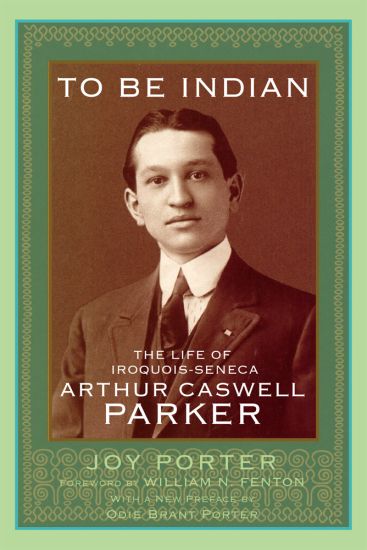
To Be Indian

To Be Indian

Joy Porter; William N. Fenton

UNIVERSITY OF OKLAHOMA PRESS
2023
nidottu
Born on the Seneca Indian Reservation in New York State, Arthur Caswell Parker (1881-1955) was a prominent intellectual leader both within and outside tribal circles. Of mixed Iroquois, Seneca, and Anglican descent, Parker was also a controversial figure-recognized as an advocate for Native Americans but criticized for his assimilationist stance. In this exhaustively researched biography-the first book-length examination of Parker’s life and career-Joy Porter explores complex issues of Indian identity that are as relevant today as in Parker’s time. From childhood on, Parker learned from his well-connected family how to straddle both Indian and white worlds. His great-uncle, Ely S. Parker, was Commissioner of Indian Affairs under Ulysses S. Grant--the first Native American to hold the position. Influenced by family role models and a strong formal education, Parker, who became director of the Rochester Museum, was best known for his work as a "museologist" (a word he coined). Porter shows that although Parker achieved success within the dominant Euro-American culture, he was never entirely at ease with his role as assimilated Indian and voiced frustration at having "to play Indian to be Indian." In expressing this frustration, Parker articulated a challenging predicament for twentieth-century Indians: the need to negotiate imposed stereotypes, to find ways to transcend those stereotypes, and to assert an identity rooted in the present rather than in the past.
Symposium on Local Diversity in Iroquois Culture: Smithsonian Institution, Bureau of American Ethnology, No. 149
Symposium On Local Diversity In Iroquois Culture is a book that delves into the cultural diversity of the Iroquois people. The book is authored by William N. Fenton and is published by the Smithsonian Institution, Bureau Of American Ethnology. The book is a collection of papers presented at a symposium that was held to discuss the various aspects of the Iroquois culture. The papers cover topics such as the history of the Iroquois, their language, religion, social structure, and their relationship with other indigenous groups. The book also includes photographs and illustrations that provide a visual representation of the Iroquois culture. The book is a valuable resource for anyone interested in Native American culture and history, particularly the Iroquois people. This scarce antiquarian book is a facsimile reprint of the old original and may contain some imperfections such as library marks and notations. Because we believe this work is culturally important, we have made it available as part of our commitment for protecting, preserving, and promoting the world's literature in affordable, high quality, modern editions, that are true to their original work.
Masked Medicine Societies of the Iroquois

Masked Medicine Societies of the Iroquois

William N. Fenton

Literary Licensing, LLC
2013
sidottu
Masked Medicine Societies of the Iroquois is a book written by William N. Fenton that explores the traditional healing practices of the Iroquois people. The Iroquois Confederacy, which includes the Mohawk, Oneida, Onondaga, Cayuga, Seneca, and Tuscarora nations, has a rich history of using masks, dances, and songs in their healing ceremonies. Fenton's book provides a detailed account of these practices, including the roles of the various members of the medicine societies, the symbolism of the masks and dances, and the ways in which these practices have evolved over time. The book also examines the cultural significance of these practices and their role in maintaining the social and spiritual well-being of the Iroquois people. Overall, Masked Medicine Societies of the Iroquois is a fascinating exploration of a unique and important aspect of Native American culture. This scarce antiquarian book is a facsimile reprint of the old original and may contain some imperfections such as library marks and notations. Because we believe this work is culturally important, we have made it available as part of our commitment for protecting, preserving, and promoting the world's literature in affordable, high quality, modern editions, that are true to their original work.
Symposium on Cherokee and Iroquois Culture: Smithsonian Institution, Bureau of American Ethnology, Bulletin No. 180
The Symposium on Cherokee and Iroquois Culture is a comprehensive book that delves into the culture and history of the Cherokee and Iroquois tribes. Published as Bulletin No. 180 by the Smithsonian Institution and Bureau of American Ethnology, the book features a collection of essays and papers presented at a symposium held in 1952. The book is edited by William N. Fenton, a renowned anthropologist and expert on the Iroquois people. The symposium brought together scholars and researchers from various fields to discuss and share their knowledge on the culture, history, and traditions of the Cherokee and Iroquois tribes. The book covers a wide range of topics, including the social organization, religion, art, music, and language of the Cherokee and Iroquois people. It also explores their interactions with European colonizers and the impact of colonization on their culture. The essays are written by experts in their respective fields, including linguists, archaeologists, and anthropologists. The book provides a wealth of information and insights into the Cherokee and Iroquois cultures, making it an invaluable resource for scholars, researchers, and anyone interested in Native American history and culture. Overall, the Symposium on Cherokee and Iroquois Culture is a comprehensive and insightful book that sheds light on the rich and complex cultures of these two important Native American tribes. Contributors Include Floyd G. Lounsbury, Mary R. Haas, William A. Ritchie And Others. This scarce antiquarian book is a facsimile reprint of the old original and may contain some imperfections such as library marks and notations. Because we believe this work is culturally important, we have made it available as part of our commitment for protecting, preserving, and promoting the world's literature in affordable, high quality, modern editions, that are true to their original work.
Seneca Myths and Folk Tales

Seneca Myths and Folk Tales

Arthur Caswell Parker; William N. Fenton

Literary Licensing, LLC
2011
sidottu
Seneca Myths and Folk Tales is a collection of traditional stories and legends from the Seneca people, a Native American tribe from the northeastern United States. The book, compiled by Arthur Caswell Parker, a Seneca anthropologist and historian, includes tales of creation, heroism, and trickery, as well as accounts of historical events and cultural practices. The stories are told in a simple, engaging style and offer insights into the Seneca worldview and way of life. The book also includes an introduction by Parker that provides context for the stories and discusses the importance of preserving Native American cultural traditions. Seneca Myths and Folk Tales is a valuable resource for anyone interested in Native American cultures and folklore, as well as for those studying anthropology, history, or literature. From The Buffalo Historical Society Publications, V27. This scarce antiquarian book is a facsimile reprint of the old original and may contain some imperfections such as library marks and notations. Because we believe this work is culturally important, we have made it available as part of our commitment for protecting, preserving, and promoting the world's literature in affordable, high quality, modern editions, that are true to their original work.
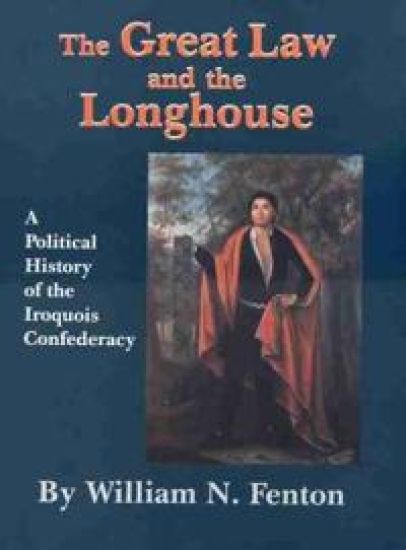
The Great Law and the Longhouse

The Great Law and the Longhouse

William N. Fenton

University of Oklahoma Press
2010
nidottu
An in-depth survey of Iroquois culture and historyThis masterful summary represents a major synthesis of the history and culture of the Six Nations from the mid-sixteenth century to the Canandaigua treaty of 1794. William N. Fenton, renowned as the dean of Iroquoian studies, draws on primary sources, in both French and English to create a readable narrative and an invaluable reference for all future scholars of Iroquois polity. Central to Fenton's study is the tradition of the Great Law, still practiced today by the conservative Iroquois. It is sustained by celebrations of the condolence ceremony when participants mourn a dead chief and install his successor for life on good behavior. This ritual act, reaching back to the dawn of history, maintained the League of the Iroquois, the legendary form of government that gave way over time to the Iroquois Confederacy.
William Fenton

William Fenton

William N. Fenton

University of Nebraska Press
2009
pokkari
William N. Fenton's contributions to the understanding of the cultures and histories of the Iroquois are formidable. Fenton grounded his studies in decades of fieldwork among the Senecas, an encyclopedic knowledge of pertinent historical accounts, a keen appreciation for interpretive theory and practice in ethnohistory and anthropology, and an enduring, generous character. William Fenton: Selected Writings brings together for the first time Fenton's most influential writings on the Iroquois and anthropology, written across nearly six decades. This volume includes Fenton's classic studies of such key issues as Iroquois folklore, factionalism, and the repatriation of material culture; discussions of theory and practice and the methodology of "upstreaming"; obituaries of colleagues and reviews of other studies of the Iroquois; and summaries of the early Conferences on Iroquois Research. This collection reveals much about the world of the Iroquois, past and present, as well as the career and accomplishments of Fenton himself.
Iroquois Journey

Iroquois Journey

William N. Fenton

University of Nebraska Press
2009
pokkari
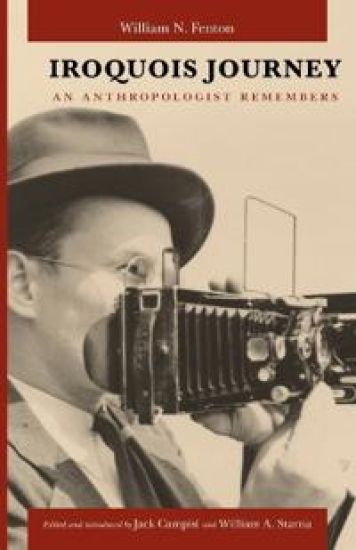
Iroquois Journey is the warm and illuminating memoir of William N. Fenton (1908–2005), a leading scholar who shaped Iroquois studies and modern anthropology in America. The memoir reveals the ambitions and struggles of the man and the many accomplishments of the anthropologist, the complex and sometimes volatile milieu of Native-white relations in upstate New York in the twentieth century, and key theoretical and methodological developments in American anthropology. Fenton's memoir, completed shortly before his death, takes us from his ancestors' lives in the Conewango Valley in western New York to his education at Yale. It affords valuable insights into the decades of his celebrated fieldwork among the Senecas, his distinguished scholarship at the Bureau of American Ethnology in Washington, DC, and his research at the New York State Museum in Albany. Offering portraits of legendary scholars he encountered and enriched through wonderful personal anecdotes, Fenton's memoir is a testament to the importance of anthropology and a reminder of how much the field has changed over the years.
Iroquois Journey

Iroquois Journey

William N. Fenton

University of Nebraska Press
2007
sidottu
Iroquois Journey is the warm and illuminating memoir of William N. Fenton (1908–2005), a leading scholar who shaped Iroquois studies and modern anthropology in America. The memoir reveals the ambitions and struggles of the man and the many accomplishments of the anthropologist, the complex and sometimes volatile milieu of Native-white relations in upstate New York in the twentieth century, and key theoretical and methodological developments in American anthropology. Fenton's memoir, completed shortly before his death, takes us from his ancestors' lives in the Conewango Valley in western New York to his education at Yale. It affords valuable insights into the decades of his celebrated fieldwork among the Senecas, his distinguished scholarship at the Bureau of American Ethnology in Washington, DC, and his research at the New York State Museum in Albany. Offering portraits of legendary scholars he encountered and enriched through wonderful personal anecdotes, Fenton's memoir is a testament to the importance of anthropology and a reminder of how much the field has changed over the years.
The Little Water Medicine Society of The Senecas

The Little Water Medicine Society of The Senecas

William N. Fenton

University of Oklahoma Press
2002
sidottu
For the Seneca Iroquois Indians, song is a crucial means of renewing both medicine and heritage. Two or three times a year, the Little Water Medicine Society of western New York meets to renew the potency of its medicine bundles through singing. These bundles have been inherited from eighteenth century Iroquois war parties, handed down from generation to generation. In this long-awaited book, William N. Fenton describes the remarkable ceremonies of one of the least recorded but most significant medicine societies of the Iroquois Indians. Most of the Senecas who were members of the Little Water Society, or Society of Shamans, have passed away, and their knowledge of ceremonial healing and spiritual renewal is fading. Fenton has written this book to preserve knowledge of the ceremonies and songs for the Iroquois people and as a contribution to anthropology, folklore, ethnomusicology, and American Indian studies. In The Little Water Medicine Society of the Senecas, he presents his original 1933 fieldwork, along with details from the published and unpublished works of other researchers, to describe rituals, poetry, and songs drawn from his more than six decades of research among the Six Nations.
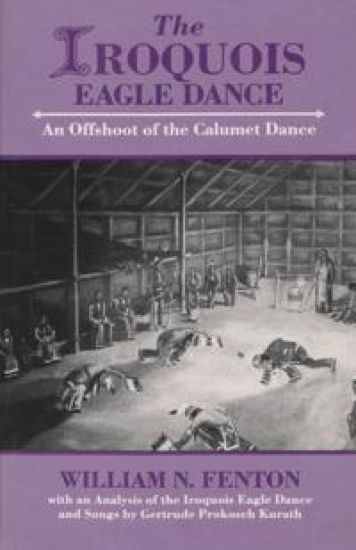
The Iroquois Eagle Dance

The Iroquois Eagle Dance

William N Fenton

Syracuse University Press
1991
nidottu
This volume explores how the Eagle Dance was celebrated in New York and Canada during the 1930s and how it related to the widespread Calumet Dance of the 17th century. Also included is an analysis of the Eagle Dance music and choreography, based on the author's own recordings and observations.
American Indian and White Relations to 1830

American Indian and White Relations to 1830

William N. Fenton

The University of North Carolina Press
1957
nidottu
In his essay on Indian and white relationships in early America, Fenton makes a plea for ethno-history, surveying the common ground between history and ethnology. The bibliography introduces the historian to important ethnological literature and provides the anthropologist with a guide to pertinent historical writings. Originally published in 1957. A UNC Press Enduring Edition -- UNC Press Enduring Editions use the latest in digital technology to make available again books from our distinguished backlist that were previously out of print. These editions are published unaltered from the original, and are presented in affordable paperback formats, bringing readers both historical and cultural value.