
Kirjailija
William O'Toole
Kirjat ja teokset yhdessä paikassa: 12 kirjaa, julkaisuja vuosilta 2002–2024, suosituimpiin kuuluu Risk Management for Events. Vertaile teosten hintoja ja tarkista saatavuus suomalaisista kirjakaupoista.
12 kirjaa
Kirjojen julkaisuvuodet: 2002–2024.
The events industry is a multi-million dollar fast-moving industry, ergo it is a key target for corruption. With multiple revenue sources, complex logistics, ,a strict deadline and the need for quick decision making, it is vital the organisers are fully aware of all ways and means events can leave themselves vulnerable. This new volume from William O’Toole , takes the reader through all the stages, identifying the ‘weak spots’ and opportunities, and advising how to identify and prevent corruption. His core thesis is that mega corruption is empowered and accepted when petty corruption abounds. Addressing the mega corruption of mega events, without minimising the smaller and highly distributed petty corruption, is less than a band aid. He believes preventing corruption in events is a matter of ethics from the ground up. Laws and compliance are necessary, but ultimately it depends on people, on trust and integrity. 'The Dark Side of Events' applies the advanced tools of risk management found in the International Standards ISO31010, 31000, 37001 to the prevention of corruption in events and includes a schema on how the text can be used as a training manual, teaching textbook and guide for events and event teams. The final chapter includes an ‘exposure to corruption assessment’ table. This provides events with a series of questions to assess their exposure to corruption. It will rate the event and event organisation and can be used in event tendering (bids) and proposals . International law increasingly requires all major companies, such as event sponsors, to only deal with other companies that have an anti-corruption policy. Written in a clear and user-friendly style, each chapter is designed to explore different aspects of the event process and where to be aware of risks of corruption. With over thirty real stories and examples from around the world, the reader will be fascinated by the depth and breadth of this dark side of events. Part of the Event Management Theory and Methods Series. This series examines the extent to which mainstream theory is being employed to develop event-specific theory, and to influence the very core practices of event management and event tourism. With online resource material, this mix-and-match collection is ideal for lecturers who need theoretical foundations and case studies for their classes, by students in need of reference works, and by professionals wanting increased understanding alongside practical methods. Series editors: Vassilios Ziakas, Consultant & Independent Scholar in Events Management, UK and Donald Getz PhD., Professor Emeritus, University of Calgary, Canada.
Events Management
Glenn A. J. Bowdin; Johnny Allen; Rob Harris; Leo Jago; William O'Toole; Ian McDonnell
TAYLOR FRANCIS LTD
2023
sidottu
A must-have introductory text of unrivalled coverage and depth focusing on events planning and management, the fourth edition of Events Management provides a complete A to Z of the principles and practices of planning, managing and staging events. The book offers a systematic guide to organising successful events, examining areas such as event design, logistics, marketing, human resource management, financial planning, risk management, impacts, evaluation and reporting. The fourth edition has been fully updated and revised to include content covering technology, including virtual and hybrid events, concepts such as social capital, soft power and events, social inclusion, equality, accessibility and diversity, and the latest industry reports, research and legal frameworks. The book is logically structured and features new case studies, showing real-life applications and highlighting issues with planning events of all types and scales in a range of geographical locations. This book has been dubbed ‘the events management bible’ and fosters an interactive learning experience amongst scholars of events management, tourism and hospitality.
Events Management
Glenn A. J. Bowdin; Johnny Allen; Rob Harris; Leo Jago; William O'Toole; Ian McDonnell
TAYLOR FRANCIS LTD
2023
nidottu
Halvin toimitettuna 72,20 €
A must-have introductory text of unrivalled coverage and depth focusing on events planning and management, the fourth edition of Events Management provides a complete A to Z of the principles and practices of planning, managing and staging events. The book offers a systematic guide to organising successful events, examining areas such as event design, logistics, marketing, human resource management, financial planning, risk management, impacts, evaluation and reporting. The fourth edition has been fully updated and revised to include content covering technology, including virtual and hybrid events, concepts such as social capital, soft power and events, social inclusion, equality, accessibility and diversity, and the latest industry reports, research and legal frameworks. The book is logically structured and features new case studies, showing real-life applications and highlighting issues with planning events of all types and scales in a range of geographical locations. This book has been dubbed ‘the events management bible’ and fosters an interactive learning experience amongst scholars of events management, tourism and hospitality.
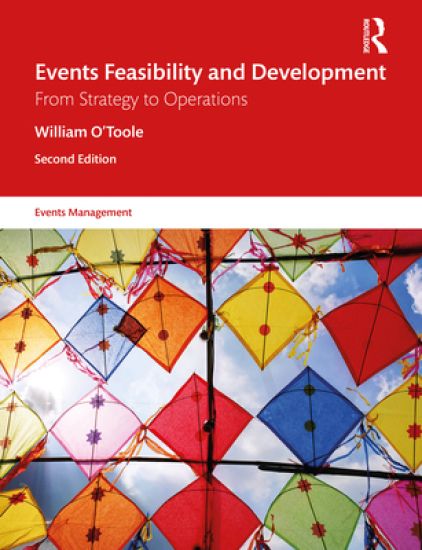
Events Feasibility and Development: From Strategy to Operations 2nd Edition outlines the best practice in event development and the global events sector. Tools and techniques from the first edition have been refined and expanded through their use in over 20 countries, including the USA, France, UAE, Malaysia and South Africa. These include strategy development and implementation, asset management, portfolio management, return on investment, management process mapping and the feasibility study. Fascinating current examples illustrate these professional management techniques. The second edition elaborates on the events sector maturity model as a measurement tool for cities, regions and countries. This has been tried and successfully tested in developing economies and assisted in the rapid development and sustainability of events in Dubai and many other destinations. Each chapter contains exhibits, questions, bullet points and clear explanations of the tools and techniques. Brand new material includes: A full explanation of the maturity model including post-pandemic solutions New case studies and exhibits A new section on teaching and training in event managementThe chapters are fully supported by further current case studies and examples on the publisher’s and the author’s website. Online material also includes 11 lesson plans for a semester course, containing assessment items, learning objectives and teaching tips for each topic, and event photos and author videos explaining the topics. This will be essential reading for all students of Event Management.
Events Feasibility and Development: From Strategy to Operations 2nd Edition outlines the best practice in event development and the global events sector. Tools and techniques from the first edition have been refined and expanded through their use in over 20 countries, including the USA, France, UAE, Malaysia and South Africa. These include strategy development and implementation, asset management, portfolio management, return on investment, management process mapping and the feasibility study. Fascinating current examples illustrate these professional management techniques. The second edition elaborates on the events sector maturity model as a measurement tool for cities, regions and countries. This has been tried and successfully tested in developing economies and assisted in the rapid development and sustainability of events in Dubai and many other destinations. Each chapter contains exhibits, questions, bullet points and clear explanations of the tools and techniques. Brand new material includes: A full explanation of the maturity model including post-pandemic solutions New case studies and exhibits A new section on teaching and training in event managementThe chapters are fully supported by further current case studies and examples on the publisher’s and the author’s website. Online material also includes 11 lesson plans for a semester course, containing assessment items, learning objectives and teaching tips for each topic, and event photos and author videos explaining the topics. This will be essential reading for all students of Event Management.
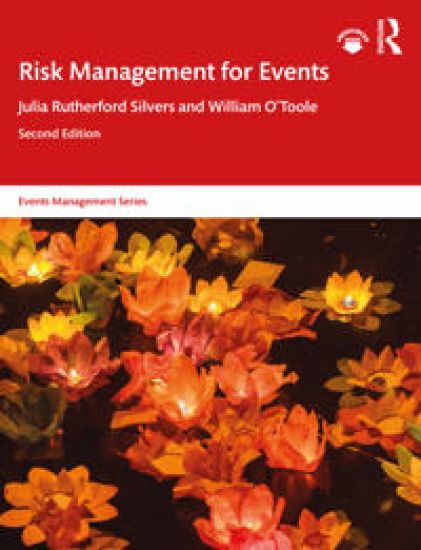
Risk Management for Events is a comprehensive and practical guide that supports academic and professional development programs to prepare individuals for entering or advancement in the international events industry. Events of all types are produced every day for all manner of purposes, attracting all sorts of people. Creating and managing the environment in which these people will gather carries with it awesome responsibilities — legal, ethical, and financial. To provide a safe and secure setting and to operate in a manner that ensures that the hosting organizations or individuals achieve their objectives in a proper and profitable way, event risk management must be fully integrated into all event plans and throughout the event management process. This new edition has been revised and updated to include: New case studies and examples from a wide range of international destinations and different types of events. Updated statistics and data throughout. New content on emergent risk, on-site decision-making, terrorism, and public health, including the COVID-19 pandemic, and corruption within events. Updated online material, including a case study archive and weblinks to useful resources. This will be an invaluable resource for all those studying events management.
Risk Management for Events is a comprehensive and practical guide that supports academic and professional development programs to prepare individuals for entering or advancement in the international events industry. Events of all types are produced every day for all manner of purposes, attracting all sorts of people. Creating and managing the environment in which these people will gather carries with it awesome responsibilities — legal, ethical, and financial. To provide a safe and secure setting and to operate in a manner that ensures that the hosting organizations or individuals achieve their objectives in a proper and profitable way, event risk management must be fully integrated into all event plans and throughout the event management process. This new edition has been revised and updated to include: New case studies and examples from a wide range of international destinations and different types of events. Updated statistics and data throughout. New content on emergent risk, on-site decision-making, terrorism, and public health, including the COVID-19 pandemic, and corruption within events. Updated online material, including a case study archive and weblinks to useful resources. This will be an invaluable resource for all those studying events management.
Crowd Management
William O'Toole
Goodfellow Publishers Limited
2019
nidottu
Halvin toimitettuna 64,90 €
This is the first text to present a system for crowd management which integrates security with the other concerns for the health and safety for crowds, looking at the theories and practices of the management processes, plans, monitoring and evaluation of crowds. The management of crowds in events and festivals is extremely complex as such situations are unpredictable. Whilst traditional planning is initially used, a fixed plan only works when the crowd is compliant. Every event management team now needs to understand the complexity, the decisions under uncertainty and the long tail risks in order to successfully plan and maintain optimum crowd safety. Structured into four sections (Risk, Management, Security and Health) with templates, explanation points and case studies throughout, each of the sections is written by experts who have global experience in their field of excellence. By William O’Toole, Events Management Specialist, Sydney, Australia with Dr Stephen Luke (Health) Senior Registrar, Team Rubicon Australia College of Intensive Care Medicine, Australia, Peter Ashwin (Security) Principal, Event Risk Management Solutions LLC, Idaho, USA, Dr Jason Brown (Risk) National Security Director, Thales Australia & New Zealand, and Andrew Tatrai (Crowds) Chairman (Non-Executive Director), Australian Concert and Entertainment Security The Events Management Theory and Methods Series examines the extent to which mainstream theory is being employed to develop event-specific theory, and to influence the very core practices of event management and event tourism. Each compact volume contains overviews of mainstream management theories and methods, examples from the events literature, case studies, and guidance on all aspects of planned-event management. They introduce the theory, show how it is being used in the events sector through a literature review, incorporate examples and case studies written by researchers and/or practitioners, and contain methods that can be used effectively in the real world. Series editor: Donald Getz. With online resource material, this mix-and-match collection is ideal for lecturers who need theoretical foundations and case studies for their classes, by students in need of reference works, by professionals wanting increased understanding alongside practical methods, and by agencies or associations that want their members and stakeholders to have access to a library of valuable resources.
This is the first text to present a system for crowd management which integrates security with the other concerns for the health and safety for crowds, looking at the theories and practices of the management processes, plans, monitoring and evaluation of crowds. The management of crowds in events and festivals is extremely complex as such situations are unpredictable. Whilst traditional planning is initially used, a fixed plan only works when the crowd is compliant. Every event management team now needs to understand the complexity, the decisions under uncertainty and the long tail risks in order to successfully plan and maintain optimum crowd safety. Structured into four sections (Risk, Management, Security and Health) with templates, explanation points and case studies throughout, each of the sections is written by experts who have global experience in their field of excellence. By William O’Toole, Events Management Specialist, Sydney, Australia with Dr Stephen Luke (Health) Senior Registrar, Team Rubicon Australia College of Intensive Care Medicine, Australia, Peter Ashwin (Security) Principal, Event Risk Management Solutions LLC, Idaho, USA, Dr Jason Brown (Risk) National Security Director, Thales Australia & New Zealand, and Andrew Tatrai (Crowds) Chairman (Non-Executive Director), Australian Concert and Entertainment Security The Events Management Theory and Methods Series examines the extent to which mainstream theory is being employed to develop event-specific theory, and to influence the very core practices of event management and event tourism. Each compact volume contains overviews of mainstream management theories and methods, examples from the events literature, case studies, and guidance on all aspects of planned-event management. They introduce the theory, show how it is being used in the events sector through a literature review, incorporate examples and case studies written by researchers and/or practitioners, and contain methods that can be used effectively in the real world. Series editor: Donald Getz. With online resource material, this mix-and-match collection is ideal for lecturers who need theoretical foundations and case studies for their classes, by students in need of reference works, by professionals wanting increased understanding alongside practical methods, and by agencies or associations that want their members and stakeholders to have access to a library of valuable resources.
Western Civilization: Forty centuries of history describing the birth, rise, and development of Western civilization, from ancient times unt
William O'Toole
Createspace Independent Publishing Platform
2018
nidottu
There's a reason the world drinks Coke, wears iPods, and watches English-language films. Western civilization has conquered the globe-not by invasion but through innovation, creativity, and wealth. Author William O'Toole's new book, Western Civilization, suggests that the West's emphasis on individual freedom-particularly the right to own property-is what made this possible. Written in simple, unfussy language, Western Civilization explains how, after the fall of ancient empires like Greece and Rome, the Western world gradually emerged from superstition and tyranny, a process that sped up after the Reformation. In their place grew up a legal system and an ideology that honored and protected individual ownership-the right to own physical property, patents, copyrights, and more. This right meant that people no longer needed to fear absolute monarchs or dictators stealing what they had earned, and the outcome was that merchants and businessmen began to innovate. New methods of financing, marketing, and manufacturing were developed and adopted, encouraging the evolution of industrial capitalism and joint-stock companies. The resulting economic and political system has now extended its influence across the globe. O'Toole's straightforward history of Western civilization will help you better understand the modern world.
Corporate Event Project Management
William O'Toole; Phyllis Mikolaitis
John Wiley Sons Inc
2002
sidottu
THE WILEY EVENT MANAGEMENT SERIES Introducing the cross-functional approach to corporate event management The first guide to apply project management to corporate events Corporate Event Project Management merges event and project management to create a new system of tools and techniques that enables corporate event managers to research, design, plan, coordinate, and evaluate any corporate event in order to produce a higher rate of return. It covers key topics such as choosing a venue or site, costing and procurement practices, evaluating risk management and reducing it with contract management, and maximizing exposure through the World Wide Web. Features include: *The first complete system for managing and organizing corporate events *A thorough and comprehensive system for measuring Return on Investment for corporate events *The only resource available for both corporate event and corporate project managers Enhanced with numerous checklists, tables, flowcharts, and models, it is also generously supplemented with case studies from North and South America, Europe, and the Asian-Pacific area to illustrate the versatility of the project management approach to corporate event planning. In addition, an accompanying Web site lets readers work with ten simulated events outlined in the book, right down to the forms and checklists that would be used to execute the actual events. This book will help anyone involved in event project management, including communications and human resource professionals, to be at the forefront of this emerging approach to planning and carrying out corporate events. The Wiley Event Management SeriesSeries Editor, Dr. Joe Goldblatt, CSEP The Wiley Event Management Series provides professionals with the essential knowledge and cutting-edge tools they need to excel in one of the most exciting and rapidly growing sectors of the hospitality and tourism industry. Written by recognized experts in the field, the volumes in the series cover the research, design, planning, coordination, and evaluation methods as well as specialized areas of event management.