Kirjojen hintavertailu – 12 859 818 kirjaa ja 27 kauppaa

Kirjailija

William Outhwaite

Kirjat ja teokset yhdessä paikassa: 19 kirjaa, julkaisuja vuosilta 2004–2020, suosituimpiin kuuluu Habermas. Vertaile teosten hintoja ja tarkista saatavuus suomalaisista kirjakaupoista.

19 kirjaa

Kirjojen julkaisuvuodet: 2004–2020.

Habermas

Habermas

William Outhwaite

Stanford University Press
2009
sidottu
This new edition of a well-regarded book provides a concise and exceptionally clear introduction to Habermas's work, from his early writings on the public sphere, through his work on law and the state, to his more recent discussion of science, religion and contemporary Europe. Outhwaite examines all of Habermas's major writings and steers a steady course through the many debates to which they have given rise. One major feature of this volume is that it provides a detailed critical analysis of Habermas's most important work, The Theory of Communicative Action. As well as looking at Habermas's appraisal of figures such as Foucault and Derrida, Outhwaite also examines the philosopher's resolute defense of the Enlightenment project and his work on law and democracy, with its implications for the important topic of European integration. Upon publication, Outhwaite's book quickly became established as an authoritative guide to Habermas. This updated edition will be invaluable for students and scholars across the social sciences and humanities, especially in sociology, politics, philosophy, and social theory.

Habermas

Habermas

William Outhwaite

Polity Press
2009
sidottu
This new edition of a well-regarded book provides a concise and exceptionally clear introduction to Habermas's work, from his early writings on the public sphere, through his work on law and the state, to his more recent discussion of science, religion and contemporary Europe. Outhwaite examines all of Habermas's major works and steers a steady course through the many debates to which they have given rise. A major feature of the book is that it provides a detailed critical analysis of Habermas's most important work, The Theory of Communicative Action. As well as looking at Habermas's appraisal of figures such as Foucault and Derrida, the book also examines his resolute defence of the Enlightenment project, his work on law and democracy and its implications for the important topic of European integration. This book quickly became established as an authoritative guide to Habermas's work, and this updated new edition will be an invaluable critical introduction for students and scholars across the social sciences and humanities, especially sociology, politics, philosophy and social theory.
Habermas

Habermas

William Outhwaite

Polity Press
2009
nidottu
This new edition of a well-regarded book provides a concise and exceptionally clear introduction to Habermas's work, from his early writings on the public sphere, through his work on law and the state, to his more recent discussion of science, religion and contemporary Europe. Outhwaite examines all of Habermas's major works and steers a steady course through the many debates to which they have given rise. A major feature of the book is that it provides a detailed critical analysis of Habermas's most important work, The Theory of Communicative Action. As well as looking at Habermas's appraisal of figures such as Foucault and Derrida, the book also examines his resolute defence of the Enlightenment project, his work on law and democracy and its implications for the important topic of European integration. This book quickly became established as an authoritative guide to Habermas's work, and this updated new edition will be an invaluable critical introduction for students and scholars across the social sciences and humanities, especially sociology, politics, philosophy and social theory.
Transregional Europe

Transregional Europe

William Outhwaite

Emerald Publishing Limited
2020
sidottu
Transregional Europe continues a line of argument developed in European Society (2008), Europe Since 1989 (2016) and Contemporary Europe (2017). It integrates work in human geography and planning with related scholarship in history and the other social sciences, covering public perceptions of European macro-regions and EU macro-regional planning. Are Europeans increasingly thinking, like North Americans, of their (sub-) continent in broad North/South and East/West categories? Are the macro-regional constructs such as the Danube or Baltic region identified or constructed by European policy-makers real, imaginary, or both? What is the relation between Europe and Eurasia and their respective political structures? Transregional Europe bridges the gap between stereotypical generalisations about southerners, the 'wild East', and so on and the constructions assembled by national and transnational policy-makers. It should be of interest to students of Europe within a wide range of disciplines and interdisciplinary programmes: not just sociology or European studies but also human geography, politics, economics, international relations and cultural studies.
Europe Since 1989

Europe Since 1989

William Outhwaite

Routledge
2019
nidottu
Europe Since 1989 charts the development of Europe east and west since the 1989 revolutions. It analyses the emergent European society, the development of a European public sphere, and civil society. Most books on Europe are heavily biased to the West and Europe Since 1989 takes the opposite approach. It argues that the transformation of the postcommunist world has implications for the whole of Europe and explores the interplay between long-term fundamental tendencies and chance events and the possible futures which confront contemporary Europe. With close attention to political, economic and other social transformations, and an appendix which gives special attention to European macro regions (Nordic/Baltic Europe, Mediterranean Europe), it offers a sociology of Europe with a strong interdisciplinary emphasis.
Contemporary Europe

Contemporary Europe

William Outhwaite

Routledge
2016
nidottu
Europe is one of the most dynamic and interesting areas of the world, pioneering in the European Union a new form of governance for half a billion people, represented in the world’s first directly elected transnational parliament. This book situates the European Union in a broader European, global, historical and geographical context, providing a readable presentation of the most important facts and drawing on the theoretical approaches which have transformed the study of contemporary Europe over the past two decades. The European Union is still on the road to what has been called 'an unknown destination', and this book presents its economic, political, legal and social trajectory from the middle of the last century to the present. Contemporary Europe covers some of these issues in an interdisciplinary framework, aiming to situate the development of the European Union in a broader context of pan-European and global processes. Europe has been cut down to size, but it does not have to become a global backwater, and the study of contemporary Europe’s institutional reality does not have to be boringThe book counter this misperception, conveying the essential facts and theories of contemporary European reality in a clear and approachable analysis. It will serve as a readable introduction both to the academic field of European studies and to contemporary Europe itself.
Contemporary Europe

Contemporary Europe

William Outhwaite

Routledge
2016
sidottu
Europe is one of the most dynamic and interesting areas of the world, pioneering in the European Union a new form of governance for half a billion people, represented in the world’s first directly elected transnational parliament. This book situates the European Union in a broader European, global, historical and geographical context, providing a readable presentation of the most important facts and drawing on the theoretical approaches which have transformed the study of contemporary Europe over the past two decades. The European Union is still on the road to what has been called 'an unknown destination', and this book presents its economic, political, legal and social trajectory from the middle of the last century to the present. Contemporary Europe covers some of these issues in an interdisciplinary framework, aiming to situate the development of the European Union in a broader context of pan-European and global processes. Europe has been cut down to size, but it does not have to become a global backwater, and the study of contemporary Europe’s institutional reality does not have to be boringThe book counter this misperception, conveying the essential facts and theories of contemporary European reality in a clear and approachable analysis. It will serve as a readable introduction both to the academic field of European studies and to contemporary Europe itself.
Social Theory: Ideas in Profile

Social Theory: Ideas in Profile

William Outhwaite

Profile Books Ltd
2015
nidottu
Ideas in Profile: Small Introductions to Big Topics In a world that is constantly changing, understanding the world has never been more important. But by thinking in neat segments, we miss the big picture. When economists think about globalisation, they often see trade; politicians see institutions and power; artists see a new global aesthetic. Social theory is what sees them all together. Renowned theorist William Outhwaite takes us on a journey through the major thinkers and topics of this often misunderstood discipline. We move from the the work of Rousseau to the still powerful insights of Marx and on to the great sociologists, Weber and Durkheim. We probe the big questions - why is religion powerful, where does capitalism come from - and move through the key ideas of the twentieth century thought from the Frankfurt School to Bourdieu and Giddens. Lastly Outhwaite questions the role of social theory today. Where does this vital discipline go next and how will its wide horizons help us stand up to the challenge of the twenty-first century?
Europe Since 1989

Europe Since 1989

William Outhwaite

Routledge
2015
sidottu
Europe Since 1989 charts the development of Europe east and west since the 1989 revolutions. It analyses the emergent European society, the development of a European public sphere, and civil society. Most books on Europe are heavily biased to the West and Europe Since 1989 takes the opposite approach. It argues that the transformation of the postcommunist world has implications for the whole of Europe and explores the interplay between long-term fundamental tendencies and chance events and the possible futures which confront contemporary Europe. With close attention to political, economic and other social transformations, and an appendix which gives special attention to European macro regions (Nordic/Baltic Europe, Mediterranean Europe), it offers a sociology of Europe with a strong interdisciplinary emphasis.
Critical Theory and Contemporary Europe

Critical Theory and Contemporary Europe

William Outhwaite

Bloomsbury Academic USA
2014
nidottu
Critical Theory and Contemporary Europe introduces the major contributions critical theorists made to the study of Europe, from the interwar years to the present time. The work begins with theorists such as Adorno who addressed Nazism and the Holocaust, then moves on to discuss the postwar affluence of capitalist Europe. It proceeds to examine how critical theorists provided much of the analysis that motivated the student and youth movements of 1968 and subsequent alternative social movements. Lastly, it relates the development of a critical theory of state socialism, looking at the works of thinkers such as Arato, Offe, and Habermas and how critical theory is now addressing social issues such as European xenophobia and the future of Europe. This new volume in the Critical Theory and Contemporary Society series brings together critical theory and European studies in a clear, accessible manner and shows the relevance of critical theory to practical political issues.
Concept Formation in Social Science (Routledge Revivals)
First published in 1983, this book examines the problems of concept formation in the social sciences, and in particular sociology, from the standpoint of a realistic philsophy of science. Beginning with a discussion of positivistic, hermeneutic, rationalist and realistic philsophies of science, Dr Outhwaite argues that realism is best able to furnish rational criteria for the choice and specification of social scientific concepts. A realistic philosophy of science therefore acts as his reference point for the dialectical presentation of alternative accounts.
Concept Formation in Social Science (Routledge Revivals)
First published in 1983, this book examines the problems of concept formation in the social sciences, and in particular sociology, from the standpoint of a realistic philosophy of science. Beginning with a discussion of positivistic, hermeneutic, rationalist and realistic philosophies of science, Dr Outhwaite argues that realism is best able to furnish rational criteria for the choice and specification of social scientific concepts. A realistic philosophy of science therefore acts as his reference point for the dialectical presentation of alternative accounts.
Habermas

Habermas

William Outhwaite

Stanford University Press
2009
pokkari
This new edition of a well-regarded book provides a concise and exceptionally clear introduction to Habermas's work, from his early writings on the public sphere, through his work on law and the state, to his more recent discussion of science, religion and contemporary Europe. Outhwaite examines all of Habermas's major writings and steers a steady course through the many debates to which they have given rise. One major feature of this volume is that it provides a detailed critical analysis of Habermas's most important work, The Theory of Communicative Action. As well as looking at Habermas's appraisal of figures such as Foucault and Derrida, Outhwaite also examines the philosopher's resolute defense of the Enlightenment project and his work on law and democracy, with its implications for the important topic of European integration. Upon publication, Outhwaite's book quickly became established as an authoritative guide to Habermas. This updated edition will be invaluable for students and scholars across the social sciences and humanities, especially in sociology, politics, philosophy, and social theory.

European Society

European Society

William Outhwaite

Polity Press
2008
nidottu
Does it make sense to speak of a European society, above and beyond its component states and regions? In this major new book William Outhwaite argues that it does. He goes beyond the study of individual states and specific regions of Europe to examine the changing contours of the continent as a whole, at a time when Europe is beginning to look and act more like a single entity. In what we have come to call Europe there developed distinctive forms of political, economic, and more broadly social organisation – many of course building on elements drawn from more advanced civilisations elsewhere in the world. During the centuries of European dominance these forms were often exported to other world regions, where the export versions often surpassed the original ones. In the present century many features of European life remain distinctive: the European welfare or social model, a substantially secularised culture, and particular forms of democratic politics and of the relations between politics and the economy. This book provides a concise overview and analysis of these features which continue to make Europe a relatively distinctive region of global modernity. The book will become a key text for students taking courses on contemporary Europe, whether these are in departments of politics, sociology, literature or European Studies. It will also be of great interest to anyone living in, or concerned with, Europe today.
European Society

European Society

William Outhwaite

Polity Press
2008
sidottu
Does it make sense to speak of a European society, above and beyond its component states and regions? In this major new book William Outhwaite argues that it does. He goes beyond the study of individual states and specific regions of Europe to examine the changing contours of the continent as a whole, at a time when Europe is beginning to look and act more like a single entity. In what we have come to call Europe there developed distinctive forms of political, economic, and more broadly social organisation – many of course building on elements drawn from more advanced civilisations elsewhere in the world. During the centuries of European dominance these forms were often exported to other world regions, where the export versions often surpassed the original ones. In the present century many features of European life remain distinctive: the European welfare or social model, a substantially secularised culture, and particular forms of democratic politics and of the relations between politics and the economy. This book provides a concise overview and analysis of these features which continue to make Europe a relatively distinctive region of global modernity. The book will become a key text for students taking courses on contemporary Europe, whether these are in departments of politics, sociology, literature or European Studies. It will also be of great interest to anyone living in, or concerned with, Europe today.
The Future of Society

The Future of Society

William Outhwaite

Blackwell Publishers
2005
sidottu
This important Manifesto argues that we still need a concept of society in order to make sense of the forces which structure our lives. Written by leading social theorist William Outhwaite Asks if the notion of society is relevant in the twenty-first century Goes to the heart of contemporary social and political debate Examines critiques of the concept of society from neoliberals, postmodernists, and globalization theorists
The Future of Society

The Future of Society

William Outhwaite

Blackwell Publishers
2005
nidottu
This important Manifesto argues that we still need a concept of society in order to make sense of the forces which structure our lives. Written by leading social theorist William Outhwaite Asks if the notion of society is relevant in the twenty-first century Goes to the heart of contemporary social and political debate Examines critiques of the concept of society from neoliberals, postmodernists, and globalization theorists
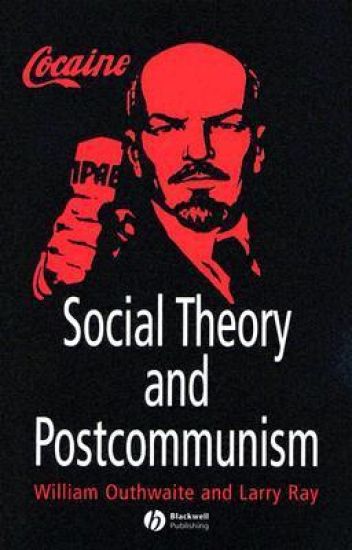
Social Theory and Postcommunism

Social Theory and Postcommunism

William Outhwaite; Larry Ray

Blackwell Publishers
2004
nidottu
Social Theory and Postcommunism undertakes a thorough study of the implications of post-communism for sociological theory. Written by two leading social theorists, the book discusses the thesis that the fall of communism has decimated alternative conceptions of social organizations other than capitalism. Analyzes the implications of the fall of communism on social theoryDiscusses alternative ideas of social organizations other than capitalism, in the wake of the collapse of communismCovers state/civil society, globalization, the future of “modernity,” and post-socialism
Social Theory and Postcommunism

Social Theory and Postcommunism

William Outhwaite; Larry Ray

Blackwell Publishers
2004
sidottu
Social Theory and Postcommunism undertakes a thorough study of the implications of post-communism for sociological theory. Written by two leading social theorists, the book discusses the thesis that the fall of communism has decimated alternative conceptions of social organizations other than capitalism. Analyzes the implications of the fall of communism on social theoryDiscusses alternative ideas of social organizations other than capitalism, in the wake of the collapse of communismCovers state/civil society, globalization, the future of “modernity,” and post-socialism