Kirjojen hintavertailu – 12 859 819 kirjaa ja 27 kauppaa
Kirjailija
William P. Browne
Kirjat ja teokset yhdessä paikassa: 9 kirjaa, julkaisuja vuosilta 1983–2021, suosituimpiin kuuluu Aging and Public Policy. Vertaile teosten hintoja ja tarkista saatavuus suomalaisista kirjakaupoista.
Sacred Cows and Hot Potatoes challenges many of the assumptions of current agricultural policies—such as equating "farm" with "rural," high farm prices with high farm incomes, or farm programs with food programs—and examines the agrarian roots of these policies. From the origins of agrarian myths to the latest controversies over farming and the environment, this book provides an overview of the use and abuse of agrarian values in policymaking. Illustrated with pictures, cartoons, and graphs, the book will appeal to a broad audience, including policymakers, rural sociologists, agricultural economists, political scientists, ethicists, and the interested public.
Sacred Cows and Hot Potatoes challenges many of the assumptions of current agricultural policies—such as equating "farm" with "rural," high farm prices with high farm incomes, or farm programs with food programs—and examines the agrarian roots of these policies. From the origins of agrarian myths to the latest controversies over farming and the environment, this book provides an overview of the use and abuse of agrarian values in policymaking. Illustrated with pictures, cartoons, and graphs, the book will appeal to a broad audience, including policymakers, rural sociologists, agricultural economists, political scientists, ethicists, and the interested public.
Modern farm policy emerged in the United States in 1862, leading to an industrialized agriculture that made the farm sector collectively more successful even as many individual farmers failed. Ever since, a healthy farm economy has been seen as the key to flourishing rural communities, and the problems of rural nonfarmers, former farmers, nonfarm residents, and unfarmed regions were ignored by policymakers. In "The Failure of National Rural Policy", William P. Browne blends history, politics, and economics to show that federal government emphasis on farm productivity has failed to meet broader rural needs and actually has increased rural poverty. He explains how strong public institutions, which developed agrarianism, led to narrowed concepts of the public interest. Reviewing past efforts to expand farm policy benefits to other rural residents, Browne documents the fragmentation of farm policy within the agricultural establishment as farm services grew, the evolution of political turf protection, and the resultant difficulties of rural advocacy. Arguing for an integrated theory of governing institutions and related political interests, he maintains that nonfarm rural society can make a realistic claim for public policy assistance. Written informally, each chapter is followed by comments on the implications of its topics and summaries of key points. This book will serve as a stimulating text for students of public policy, national affairs, rural sociology, and community development - as well as anyone concerned with the future of agrarian America.
Synthesizing theory, personal research, and prior studies on interest groups and other lobbies, William P. Browne offers a new, insightful overview of organized political interests and explains how and why they affect public policy. Drawing on his extensive experience researching interest groups, Browne assesses the impact that special interests have long had in shaping policy. He explains how they fit into the policymaking process and into society, how they exercise their influence, and how they adapt to changing circumstances. Browne describes the diversity of existing interests-associations, businesses, foundations, churches, and others-and explores the multidimensional tasks of lobbying, from disseminating information through making financial contributions to cultivating the media. He shows how organized interests target not just the public and policymakers but even other interest groups, and how they create policy niches as a survival strategy. He also looks at winnable issues, contrasts them with more difficult ones, and explains what makes the difference. "Groups, Interests, and U. S. Public Policy" is a serious study written in a lighthearted tone. It offers political scientists a new theory of how and why interest groups influence public policy while it enlightens students and general readers about how policy is actually shaped in America.
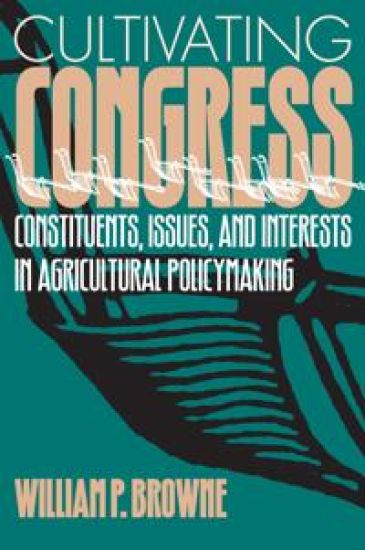
The American Congress, in the mid-1990s, remains the object of voter discontent. Public outcries against special interests and unresponsive incumbents have amplified an already pervasive scepticism towards Beltway politics. The book covers policy towards agricultural issues in particular.
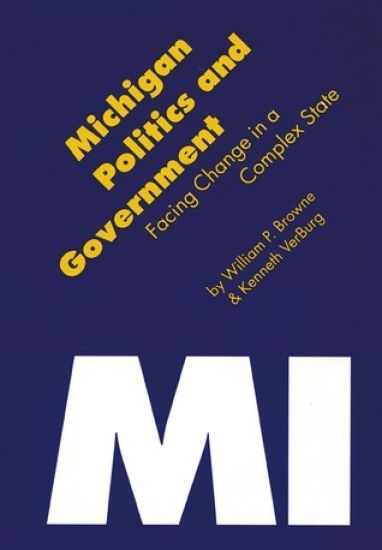
Michigan, like most of the states formed from the old Northwest, originated as a state of farmers, fishermen, and lumbermen and remained so until Detroit emerged as a major industrial center at the turn of the twentieth century. The growth of the automotive industry attracted new immigrants and new politics. Republican for most of its history, Michigan became a bipartisan state with political divisions: upper versus lower peninsula, agriculture versus industry, labor versus capital, developers versus ecologists, and conflicts between races. Lansing and its lobbyists and political action committees exemplify modern large-state politics. With double-digit unemployment and an enormous stake in cars, roads, and bridges, Michigan is acutely aware of its ties to the federal government. Two governors, G. Mennen Williams and George Romney, have contended for the presidency, and one representative, Gerald Ford, became president by legislative maneuver. A strong governorship, an independent and experienced bureaucracy, and a full-time legislature have created an activist, policy-directed state government that generally bears little resemblance to the laissez-faire leadership of Michigan's early years. Although this book provides much historical and geographical information, the primary focus remains Michigan's need to cope with its vacillating economy. The authors look at the state's regional, ethnic, racial, and socioeconomic diversity and show how these are affected by the forces of change.
This dictionary profiles 103 private US organizations involved with the nation's agricultural policy process. . . . It contains an introductory essay chronicling the growth, aims, and objectives of agricultureal groups, foolowed by the organization profiles in alphabetical order, an appendix of related groups not mentioned in the text, and an index of corporate and personal names. . . . U. S. Agricultural Groups also includes concise descriptions of each group's origins, organizational structure, funding, policy concerns, and electoral activity. Libraries seeking detailed descriptions of the major organizations in this area will benefit from this title. ChoiceThis reference source is ideal for anyone interested in the role of agricultural interests in American national politics. The book provides detailed profiles of more than 100 private organizations that are most likely to gain the greatest attention from those who observe, study, and participate in agricultural policy making. A range of organizations is covered, including mass membership organizations, trade associations, cooperatives, unions, public interest groups, think tanks, and policy research organizations, all of which are involved in some manner in the agricultural policy process. Preceding the profiles is an essay on both interests and policy, written by the editors of the volume. U. S. Agricultural Groups is intended to acquaint readers with the nature and activities of the organized interests in the agricultural policy arena, both historically and in the contemporary context. Entries in the volume are prepared from a common format. The first part of each entry is a summary statement concerning the type and purpose of the organization, who is represented, and where the membership is concentrated. Next, information is provided concerning when and under what circumstances the organization came into being, the historically important issues of its concern, and a general discussion of the historical development of the organization. Information concerning the governing structure of the organization, the basis of memberships, funding sources, and memberships benefits is also provided. This volume will be make a valuable addition to any public or university library.
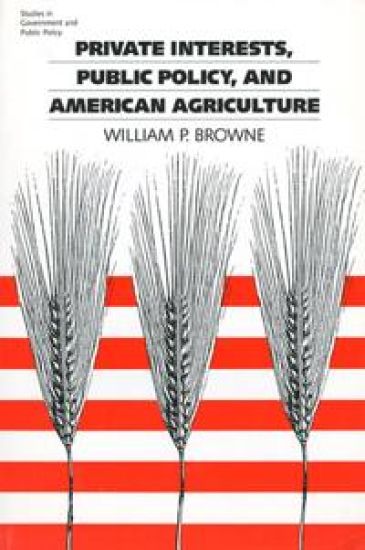
Agriculture is at a critical juncture. The Food Security Act of 1985, which was intended to reduce surpluses by making American farm products more competitive in world markets, has not yet succeeded. Food imports have outstripped food exports. Huge grain surpluses continue to pile up. Because many farmers and economists fault federal agricultural policies for the current predicament, this book examines how recent policies, like the 1985 law, have been made and focuses on the key role that private interests play in the policy process. Not only does Browne give us the first comprehensive study of all of the organized interests at work in agricultural policymaking, but he also makes an important contribution to understanding the interaction of organized interests in the American political process. His book should appeal to a wide audience composed of those interested in agriculture, policy process, and interest group behavior. In the early 1980s, 128 separate organizations employed Washington-based lobbyists who regularly worked to influence agricultural policies. Many other organizations periodically lobbied in agriculture. The general farm organizations have been joined by commodity organizations, trade associations, corporate spokesmen, farm activists, industry lobbyists, consumer groups, environmentalists, and advocates of a variety of food-related programs. Long gone are the days when the farm bloc preordained policy outcomes and when students of American politics looked upon agriculture as a classic example of the iron triangle or self-governing subsystem of interest groups, bureaucrats, and legislators. Now the policymaking process is fragmented by the clamor from competing organized interest groups, and the policy makers responded by fashioning piecemeal policy with no seeming thought to unity of purpose. In an attempt to throw light on what actually happens in Washington, Browne explains what groups and interests are active in agricultural policymaking, what strategy and tactics they employ, and why some have more influence than others. One of Browne's conclusions is that a surprising number of agricultural issues are uninfluenced by the interest groups because they ignore them. For nearly a decade William P. Browne has studied the major farm organizations, congressional hearings and records related to agricultural issues, and the American Agricultural Movement. But perhaps his richest source of information has been extensive interviews with lobbyists, executives, and grassroots activists during and just after the 1985 farm bill debates. In the course of his research, Browne sought to learn how interest groups behave in deciding their policy priorities and how this behavior actually relates to influence over the desired policy outcomes.