Kirjojen hintavertailu – 12 859 819 kirjaa ja 27 kauppaa

Kirjailija

William Palmer

Kirjat ja teokset yhdessä paikassa: 90 kirjaa, julkaisuja vuosilta 1995–2025, suosituimpiin kuuluu Pardon Of St Anne. Vertaile teosten hintoja ja tarkista saatavuus suomalaisista kirjakaupoista.

90 kirjaa

Kirjojen julkaisuvuodet: 1995–2025.

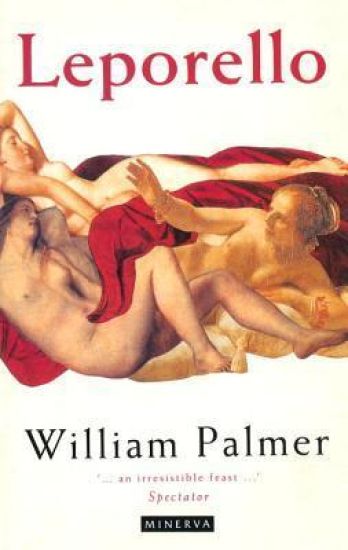
Leporello

Leporello

William Palmer

Vintage
2012
pokkari
Don Giovanni di Tenario, lives on in the memory of his servant Leporello. In Leporello's tale, the Don escapes his summons to Hell and master and servant travel through the courts and casinos, lodging houses and brothels of eighteenth-century Europe. Their journey ends with Don Giovanni returning to his family estates - and a terrible inheritance.
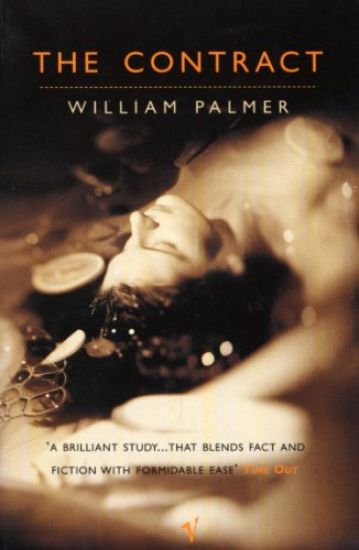
The Contract

The Contract

William Palmer

Vintage
2012
pokkari
One day in June 1931 the body of a young girl was found on a lonely beach in Long Island, New York. She was bruised and there were some signs that she had been raped. It was thought that she had been murdered. She was soon identified as Starr Faithfull, a nicely brought up girl from a good family, but the picture soon began to change. Starr was not what she seemed: she was sexually promiscuous, mentally unstable and, crucially, had been abused as a child by her guardian, a prominent Boston politician. A tabloid sensation in the 1930s, the story of Starr Faithfull is the basis of William Palmer's extraordinary new novel.
Four Last Things

Four Last Things

William Palmer

Faber Faber
2009
pokkari
Four Last Things is a collection of short stories, a brilliant collection of short stories. There is nothing of the occasional here, nothing of the secondary, these short fictions rank not just with William Palmer's own novels but with the best work in this medium over the last fifty years. In the title story, the longest, Cornelius Marten, an ageing, forgotten, booze-sozzled author reviews his life in the company of a young researcher and his girlfriend. Updating the Christian Catechism for our secular age, he enumerates the four last things as being: First Love, Friendship, Betrayal and Death. He takes each of these as hooks upon which to hang reminisces of his past. He resurrects his first lover, his closest friend, his early poetry and his wartime job, in each case releasing memories of pain and betrayal and unsatisfactory conclusions. The final story, Performance, Performance, is the shortest. To say it is based on the great jazz saxophonist Coleman Hawkins only allows this copywriter to show off. The name of the musician doesn't matter, in a mere six pages a perfect distillation of the creative temperament is conjured. Not only should it appear in all Jazz anthologies, it should appear in all anthologies of short stories, it is fautless.'On the strength of his previous books, it was to be expected that Palmer would produce something exceptional in the realm of the short story. The depth and eloquence of this fine collection, however, might surprise even the most ardent admirers of his novels. He revels in character and language, in the gradual, intricate revelation of plot-lines and themes ...' Paul Sussman, Independent on Sunday 'The strength of these robustly elliptical stories is that, in other hands, they might have been stretched into novels, even adequate novels but certainly not as haunting.' Christopher Hawtree, Independent

The Pardon of Saint Anne

The Pardon of Saint Anne

William Palmer

Faber Faber
2009
pokkari
Working as a news photographer in 1930s Berlin, Walther Klinger becomes, by a vicious twist of fate, a society photographer for the new aristocracy of the Nazi party. Walther's complicity makes him increasingly cynical and guilty, so that, for him, the coming of the war is almost a relief.'Absorbing ... an eminently successful cautionary tale about the function and possible dangerous malfunctions of Art.' Patrick Skene Catling, Spectator'A persuasive tale of sex and Nazism (love and its negation), as well as an intriguing argument about the adequacy of images to carry the truth of what they portray ... Palmer painstakingly reveals a sadly cruel and believable vision.' Tom Deveson, Sunday Times'William Palmer's excellent fourth novel ... is an impressive study of the effect of totalitarianism on the average emotional life.' D. J. Taylor, Independent
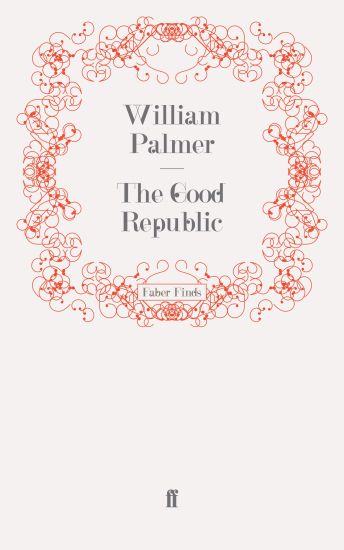
The Good Republic

The Good Republic

William Palmer

Faber Faber
2009
pokkari
The Good Republic is an unnamed Baltic state. Its geography is important, sandwiched, for a hellish part of the twentieth-century, between two totalitarian behemoths, Nazi Germany and Communist Russia. The central character of the novel is Jacob Balthus, a sort of Everyman, neither hero nor villain, but, in the end, a tragic victim of the two tyrannies that, at different times, overran his country. This was William Palmer's first novel published in 1990. It was timely then, and because of its subtle and profound handling of perennial moral issues, is no less timely now. For those of us living in less turbulent times and in countries unused to invasion, it forces the uncomfortable question, 'What would I have done?'. The novel rightly attracted thoughtful, enthusiastic, and slightly conflicting reviews on publication.'Palmer is a master of his complex material. The Baltic country itself - the capital with its Old Town and Jewish Shops, the coast with its pine-fringes and little islands - is palpably there, and makes the moral drama of Jacob and his associates the more compelling. ' Paul Binding, Independent 'The Good Republic is a powerful work ... It is not, however, an uplifting tale. One is left with the conviction that the good republic can be defined as that which leaves its citizens to tend to their own vanities, trivialities and banalities. As Mr Palmer notes in the narrative: ''The Chinese say it is a curse: 'May you live in interesting times.' '' Jonas Bernstein, Washington Times 'The achievement of the novel lies in the forgiveness it insists upon. Jacob does immense harm. But he is gentle and vulnerable. His anguished prevarications make him infinitely more likeable than the stronger and more principled characters who use and betray him. Jacob, too, is one of the victims of history.' Dinah Birch, The Times