Kirjojen hintavertailu – 12 859 818 kirjaa ja 27 kauppaa

Kirjailija

William Peniston

Kirjat ja teokset yhdessä paikassa: 6 kirjaa, julkaisuja vuosilta 2004–2021, suosituimpiin kuuluu Lesbian Decadence – Representations in Art and Literature of Fin–de–Sièclè France. Vertaile teosten hintoja ja tarkista saatavuus suomalaisista kirjakaupoista.

6 kirjaa

Kirjojen julkaisuvuodet: 2004–2021.

The Italian Invert – Intimate Confessions of a Homosexual to Émile Zola

The Italian Invert – Intimate Confessions of a Homosexual to Émile Zola

Michael Rosenfeld; William Peniston; Erber Nancy; Cyrille Zola–place; Alain Pagès

Harrington Park Press Inc
2021
sidottu
In the late 1880s, a dashing young Italian aristocrat confesses his life story to the famous novelist Émile Zola. In his revealing text, he frankly describes his seduction as a teenager by one of his father's (male) friends, his first love affair with a sergeant in his military regiment, and his “extraordinary” personality. Judging it too controversial, Zola gives it to a young doctor, Georges Saint-Paul, who publishes a censored version in 1896 in a medical study on sexual perversion. A few months later, the Italian finds this medical treatise in a bookstore and is shocked to discover that the doctor censored and distorted the most daring parts of his text in order to support his own theories. He protests by writing a long, unapologetic, and even more daring letter to the doctor, defending his right to lead his own life. Based on the newly discovered manuscript of the letter to the doctor, along with some additional resources, this edition is the first complete, unexpurgated version in English of this very famous gay autobiography. It brings to light the uniquely nineteenth-century experience of a privileged young man, forthrightly expressing his desires and defending his right to pleasure. Two analytical essays—one by Michael Rosenfeld on the relationship between Zola, Saint-Paul, and the Italian "invert," and the other by Clive Thomson on the doctor’s career—provide further context to this remarkable voice from the past. The Italian Invert is a rare autobiography in which a gay man frankly describes his desires, loves and life at the end of the nineteenth century. Written in French and previously published in censored versions only, recently discovered manuscripts allow readers to discover for the first time in English the complete story of this dashing young Italian aristocrat who dared to defend his right to sexual pleasure. It will appeal to anyone interested in the history of homosexuality, queer identities, or gender diversity. As an original source for the study of autobiographical texts as historical documents, it will serve undergraduate or graduate students in history and literature, in both French and Italian studies. Researchers in Jewish studies will be interested in the author’s revelations about his Jewish mother and her family. It is also an important addition to existing publications for historians of medicine, psychology, and sexology.

The Italian Invert – Intimate Confessions of a Homosexual to Émile Zola

The Italian Invert – Intimate Confessions of a Homosexual to Émile Zola

Michael Rosenfeld; William Peniston; Erber Nancy; Cyrille Zola–place; Alain Pagès

Harrington Park Press Inc
2021
nidottu
In the late 1880s, a dashing young Italian aristocrat confesses his life story to the famous novelist Émile Zola. In his revealing text, he frankly describes his seduction as a teenager by one of his father's (male) friends, his first love affair with a sergeant in his military regiment, and his “extraordinary” personality. Judging it too controversial, Zola gives it to a young doctor, Georges Saint-Paul, who publishes a censored version in 1896 in a medical study on sexual perversion. A few months later, the Italian finds this medical treatise in a bookstore and is shocked to discover that the doctor censored and distorted the most daring parts of his text in order to support his own theories. He protests by writing a long, unapologetic, and even more daring letter to the doctor, defending his right to lead his own life. Based on the newly discovered manuscript of the letter to the doctor, along with some additional resources, this edition is the first complete, unexpurgated version in English of this very famous gay autobiography. It brings to light the uniquely nineteenth-century experience of a privileged young man, forthrightly expressing his desires and defending his right to pleasure. Two analytical essays—one by Michael Rosenfeld on the relationship between Zola, Saint-Paul, and the Italian "invert," and the other by Clive Thomson on the doctor’s career—provide further context to this remarkable voice from the past. The Italian Invert is a rare autobiography in which a gay man frankly describes his desires, loves and life at the end of the nineteenth century. Written in French and previously published in censored versions only, recently discovered manuscripts allow readers to discover for the first time in English the complete story of this dashing young Italian aristocrat who dared to defend his right to sexual pleasure. It will appeal to anyone interested in the history of homosexuality, queer identities, or gender diversity. As an original source for the study of autobiographical texts as historical documents, it will serve undergraduate or graduate students in history and literature, in both French and Italian studies. Researchers in Jewish studies will be interested in the author’s revelations about his Jewish mother and her family. It is also an important addition to existing publications for historians of medicine, psychology, and sexology.
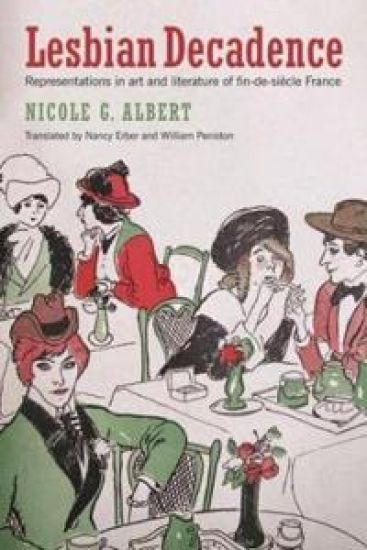
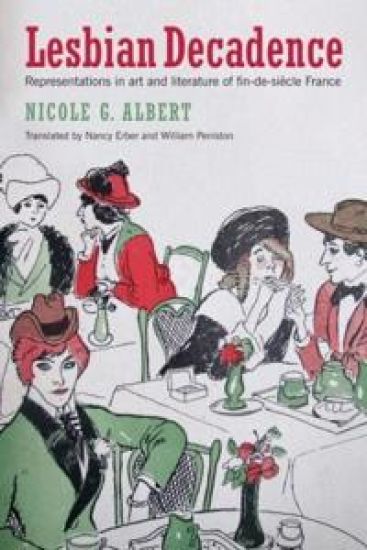
Lesbian Decadence – Representations in Art and Literature of Fin–de–Siècle France

Lesbian Decadence – Representations in Art and Literature of Fin–de–Siècle France

Nicole Albert; Nancy Erber; William Peniston

Harrington Park Press Inc
2016
nidottu
In 1857 the French poet Charles Baudelaire, who was fascinated by lesbianism, created a scandal with Les Fleurs du Mal [The Flowers of Evil]. This collection was originally entitled "The Lesbians" and described women as "femmes damnees," with "disordered souls" suffering in a hypocritical world. Then twenty years later, lesbians in Paris dared to flaunt themselves in that extraordinarily creative period at the turn of the 19th and 20th centuries which became known as the Belle Epoque. Lesbian Decadence, now available in English for the first time, provides a new analysis and synthesis of the depiction of lesbianism as a social phenomenon and a symptom of social malaise as well as a fantasy in that most vibrant place and period in history. In this newly translated work, praised by leading critics as "authoritative," "stunning," and "a marvel of elegance and erudition," Nicole G. Albert analyzes and synthesizes an engagingly rich sweep of historical representations of the lesbian mystique in art and literature. Albert contrasts these visions to moralists' abrupt condemnations of "the lesbian vice," as well as the newly emerging psychiatric establishment's medical fury and their obsession on cataloging and classifying symptoms of "inversion" or "perversion" in order to cure these "unbalanced creatures of love." Lesbian Decadence combines literary, artistic, and historical analysis of sources from the mainstream to the rare, from scholarly studies to popular culture. The English translation provides a core reference/text for those interested in the Decadent movement, in literary history, in French history and social history. It is well suited for courses in gender studies, women's studies, LGBT history, and lesbianism in literature, history, and art.
Lesbian Decadence – Representations in Art and Literature of Fin–de–Sièclè France

Lesbian Decadence – Representations in Art and Literature of Fin–de–Sièclè France

Nicole Albert; Nancy Erber; William Peniston

Harrington Park Press Inc
2016
sidottu
In 1857 the French poet Charles Baudelaire, who was fascinated by lesbianism, created a scandal with Les Fleurs du Mal [The Flowers of Evil]. This collection was originally entitled "The Lesbians" and described women as "femmes damnees," with "disordered souls" suffering in a hypocritical world. Then twenty years later, lesbians in Paris dared to flaunt themselves in that extraordinarily creative period at the turn of the 19th and 20th centuries which became known as the Belle Epoque. Lesbian Decadence, now available in English for the first time, provides a new analysis and synthesis of the depiction of lesbianism as a social phenomenon and a symptom of social malaise as well as a fantasy in that most vibrant place and period in history. In this newly translated work, praised by leading critics as "authoritative," "stunning," and "a marvel of elegance and erudition," Nicole G. Albert analyzes and synthesizes an engagingly rich sweep of historical representations of the lesbian mystique in art and literature. Albert contrasts these visions to moralists' abrupt condemnations of "the lesbian vice," as well as the newly emerging psychiatric establishment's medical fury and their obsession on cataloging and classifying symptoms of "inversion" or "perversion" in order to cure these "unbalanced creatures of love." Lesbian Decadence combines literary, artistic, and historical analysis of sources from the mainstream to the rare, from scholarly studies to popular culture. The English translation provides a core reference/text for those interested in the Decadent movement, in literary history, in French history and social history. It is well suited for courses in gender studies, women's studies, LGBT history, and lesbianism in literature, history, and art.
Pederasts and Others

Pederasts and Others

William Peniston

Routledge Member of the Taylor and Francis Group
2004
sidottu
Examine how a community of support in Nineteenth-Century Paris became a blueprint for modern sexual identity! A unique social history, Pederasts and Others: Urban Culture and Sexual Identity in Nineteenth-Century Paris is a valuable addition to the growing field of gay and lesbian studies. The book examines the interaction between the city's male homosexual subculture and Parisian authority figures who attempted to maintain political and social order during the early years of the French Third Republic by using laws against public indecency and sexual assault to treat same-sex sexuality as a crime. Faced with a constant cycle of surveillance, harassment, and arrest, the city's gay men survived the hostile urban environment by forming a community of support that had a widespread and lasting influence on the development of modern sexual identities. Pederasts and Others: Urban Culture and Sexual Identity in Nineteenth-Century Paris is based on a statistical analysis of more than 800 working-class and middle-class men who were arrested or investigated by Parisian police between 1873 and 1879. Their stories, presented through long and short case studies, represent nearly 2,000 names recorded by police in Pederasts and Others, a ledger detailing the arrests of male homosexuals for public offenses against decency and other minor offenses. (The term pederast identified those suspected of same-sex sexual activity, not the modern definition that indicates homosexual relations with a minor.) The ledger entries reveal specific habits, attitudes, values, and characteristics about these men that set them apartthe same traits that identified them as part of a community based on their behavior and relationships. Pederasts and Others: Urban Culture and Sexual Identity in Nineteenth-Century Paris examines: the forces of authority the laws regarding same-sex sexual behavior the role of the police the role of the magistrates the role of the doctors the common characteristics of the city's male homosexual subculture the sexual behaviors of the Paris underground the geography of the subcultureand takes an expanded look at three case studies: A Decadent Aristocrat and A Delinquent Boy Pederasts, Prostitutes, and Pickpockets Love and Death in Gay ParisPederasts and Others: Urban Culture and Sexual Identity in Nineteenth-Century Paris also includes tables, appendices, and maps linked to statistical data. The book is an essential resource for historians, sociologists, sexologists, criminologists, and other scholars working in the fields of gay and lesbian studies, urban studies, social and cultural history, and French history.
Pederasts and Others

Pederasts and Others

William Peniston

Routledge Member of the Taylor and Francis Group
2004
nidottu
Examine how a community of support in Nineteenth-Century Paris became a blueprint for modern sexual identity! A unique social history, Pederasts and Others: Urban Culture and Sexual Identity in Nineteenth-Century Paris is a valuable addition to the growing field of gay and lesbian studies. The book examines the interaction between the city's male homosexual subculture and Parisian authority figures who attempted to maintain political and social order during the early years of the French Third Republic by using laws against public indecency and sexual assault to treat same-sex sexuality as a crime. Faced with a constant cycle of surveillance, harassment, and arrest, the city's gay men survived the hostile urban environment by forming a community of support that had a widespread and lasting influence on the development of modern sexual identities. Pederasts and Others: Urban Culture and Sexual Identity in Nineteenth-Century Paris is based on a statistical analysis of more than 800 working-class and middle-class men who were arrested or investigated by Parisian police between 1873 and 1879. Their stories, presented through long and short case studies, represent nearly 2,000 names recorded by police in Pederasts and Others, a ledger detailing the arrests of male homosexuals for public offenses against decency and other minor offenses. (The term pederast identified those suspected of same-sex sexual activity, not the modern definition that indicates homosexual relations with a minor.) The ledger entries reveal specific habits, attitudes, values, and characteristics about these men that set them apartthe same traits that identified them as part of a community based on their behavior and relationships. Pederasts and Others: Urban Culture and Sexual Identity in Nineteenth-Century Paris examines: the forces of authority the laws regarding same-sex sexual behavior the role of the police the role of the magistrates the role of the doctors the common characteristics of the city's male homosexual subculture the sexual behaviors of the Paris underground the geography of the subcultureand takes an expanded look at three case studies: A Decadent Aristocrat and A Delinquent Boy Pederasts, Prostitutes, and Pickpockets Love and Death in Gay ParisPederasts and Others: Urban Culture and Sexual Identity in Nineteenth-Century Paris also includes tables, appendices, and maps linked to statistical data. The book is an essential resource for historians, sociologists, sexologists, criminologists, and other scholars working in the fields of gay and lesbian studies, urban studies, social and cultural history, and French history.