Kirjojen hintavertailu – 12 859 828 kirjaa ja 27 kauppaa

Kirjailija

William Poole

Kirjat ja teokset yhdessä paikassa: 9 kirjaa, julkaisuja vuosilta 2005–2026, suosituimpiin kuuluu The Dundee Bibliotheck, 1599-1724: A Study, with an Edition of the 1724 Shelf-List. Vertaile teosten hintoja ja tarkista saatavuus suomalaisista kirjakaupoista.

9 kirjaa

Kirjojen julkaisuvuodet: 2005–2026.

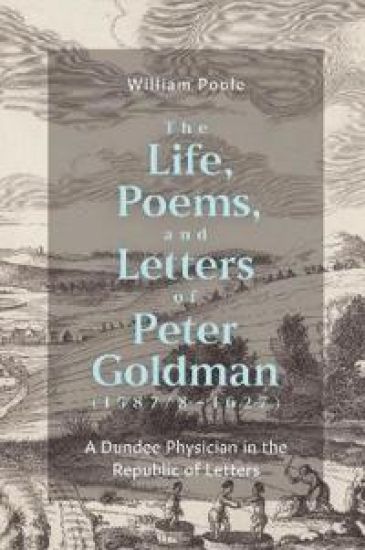
The Life, Poems, and Letters of Peter Goldman (1587/8-1627)
Reconstructs the life of Peter Goldman and presents a full edition and translation of his surviving poems and letters. The Dundonian physician Peter Goldman, one of an immigrant family of merchants, was the first Scot to take a medical degree from Leiden; he then undertook research in Oxford, London, and Paris, before resettling in Dundee. An important figure in contemporary Scottish literary culture, he maintained a wide correspondence with significant intellectual figures and influenced two landmark Scottish publishing projects: the Delitiae poetarum Scotorum (1637) and the Blaeu Atlas of Scotland (1654). However, his major literary achievement was his Latin poetry, which establishes him as a unique voice of his time. His longest and most prominent work is an elegy on the deaths of four of his brothers, strikingly narrated in the voice of their lamenting mother. This book reconstructs and provides a study of Goldman's life, career and writing. It also offers a full edition and translation of his surviving poems and letters, with accompanying commentary. Appendices provide an edited list of his remarkable library and a transcript of his testament.
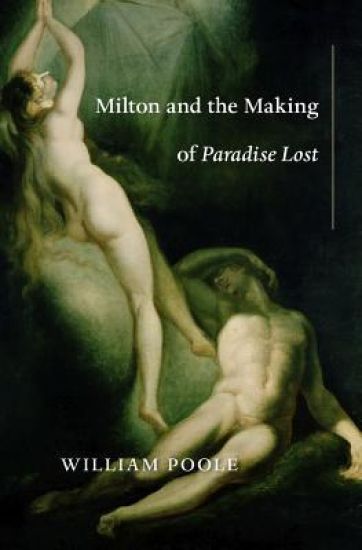
Milton and the Making of Paradise Lost

Milton and the Making of Paradise Lost

William Poole

Harvard University Press
2017
sidottu
Milton and the Making of Paradise Lost tells the story of John Milton's life as England’s self-elected national poet and explains how the single greatest poem of the English language came to be written. In early 1642 Milton—an obscure private schoolmaster—promised English readers a work of literature so great that “they should not willingly let it die.” Twenty-five years later, toward the end of 1667, the work he had pledged appeared in print: the epic poem Paradise Lost. In the interim, however, the poet had gone totally blind and had also become a controversial public figure—a man who had argued for the abolition of bishops, freedom of the press, the right to divorce, and the prerogative of a nation to depose and put to death an unsatisfactory ruler. These views had rendered him an outcast. William Poole devotes particular attention to Milton’s personal situation: his reading and education, his ambitions and anxieties, and the way he presented himself to the world. Although always a poet first, Milton was also a theologian and civil servant, vocations that informed the composition of his masterpiece. At the emotional center of this narrative is the astounding fact that Milton lost his sight in 1652. How did a blind man compose this staggeringly complex, intensely visual work? Poole opens up the epic worlds and sweeping vistas of Milton’s masterpiece to modern readers, first by exploring Milton’s life and intellectual preoccupations and then by explaining the poem itself—its structure, content, and meaning.

Milton and the Idea of the Fall

Milton and the Idea of the Fall

William Poole

Cambridge University Press
2009
pokkari
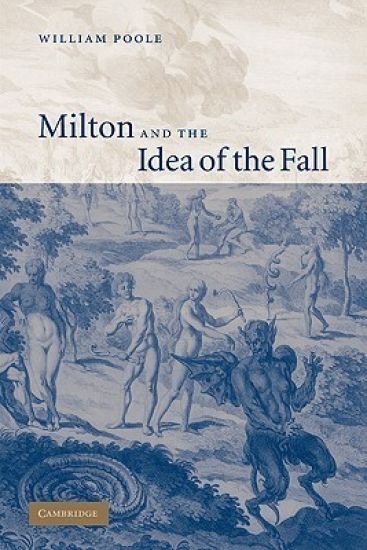
In Paradise Lost (1667), Milton produced the most magnificent poetic account ever written of the biblical Fall of man. In this wide-ranging study, William Poole presents a comprehensive analysis of the origin, evolution, and contemporary discussion of the Fall, and the way seventeenth-century authors, particularly Milton, represented it. Poole first examines the range and depth of early modern thought on the subject, then explains and evaluates the basis of the idea and the intellectual and theological controversies it inspired from early Christian times to Milton's own century. The second part of the book delves deeper into the development of Milton's own thought on the Fall, from the earliest of his poems, through his prose, to his mature epic. Poole distinguishes clearly for the first time the range and complexity of contemporary debates on the Fall of man, and offers many insights into the originality and sophistication of Milton's work.
Milton and the Idea of the Fall

Milton and the Idea of the Fall

William Poole

Cambridge University Press
2005
sidottu
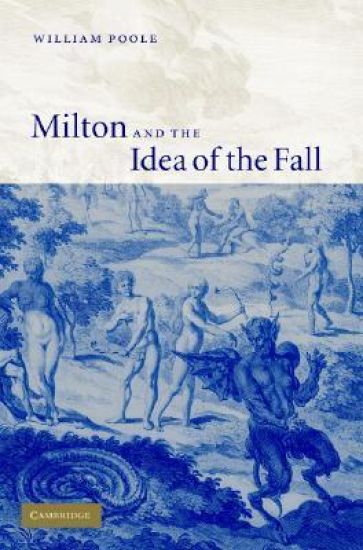
In Paradise Lost (1667), Milton produced the most magnificent poetic account ever written of the biblical Fall of man. In this wide-ranging study, William Poole presents a comprehensive analysis of the origin, evolution, and contemporary discussion of the Fall, and the way seventeenth-century authors, particularly Milton, represented it. Poole first examines the range and depth of early modern thought on the subject, then explains and evaluates the basis of the idea and the intellectual and theological controversies it inspired from early Christian times to Milton's own century. The second part of the book delves deeper into the development of Milton's own thought on the Fall, from the earliest of his poems, through his prose, to his mature epic. Poole distinguishes clearly for the first time the range and complexity of contemporary debates on the Fall of man, and offers many insights into the originality and sophistication of Milton's work.