Kirjojen hintavertailu – 12 874 951 kirjaa ja 26 kauppaa

Kirjailija

William Poundstone

Kirjat ja teokset yhdessä paikassa: 24 kirjaa, julkaisuja vuosilta 1991–2025, suosituimpiin kuuluu Are You Smart Enough to Work at Google?: Trick Questions, Zen-Like Riddles, Insanely Difficult Puzzles, and Other Devious Interviewing Techniques You. Vertaile teosten hintoja ja tarkista saatavuus suomalaisista kirjakaupoista.

24 kirjaa

Kirjojen julkaisuvuodet: 1991–2025.

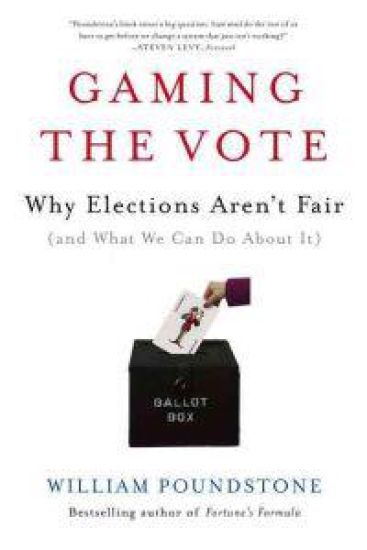
Gaming the Vote: Why Elections Aren't Fair (and What We Can Do about It)
At least five U. S. presidential elections have been won by the second most popular candidate, but these results were not inevitable. In fact, such an unfair outcome need never happen again, and as William Poundstone shows in Gaming the Vote, the solution is lurking right under our noses. In all five cases, the vote was upset by a "spoiler"--a minor candidate who took enough votes away from the most popular candidate to tip the election to someone else. The spoiler effect is more than a glitch. It is a consequence of one of the most surprising intellectual discoveries of the twentieth century: the "impossibility theorem" of the Nobel laureate economist Kenneth Arrow. His theorem asserts that voting is fundamentally unfair--a finding that has not been lost on today's political consultants. Armed with polls, focus groups, and smear campaigns, political strategists are exploiting the mathematical faults of the simple majority vote. The answer to the spoiler problem lies in a system called range voting, which would satisfy both right and left, and Gaming the Vote assesses the obstacles confronting any attempt to change the U. S. electoral system. The latest of several books by Poundstone on the theme of how important scientific ideas have affected the real world, Gaming the Vote is both a wry expos of how the political system really works and a call to action.
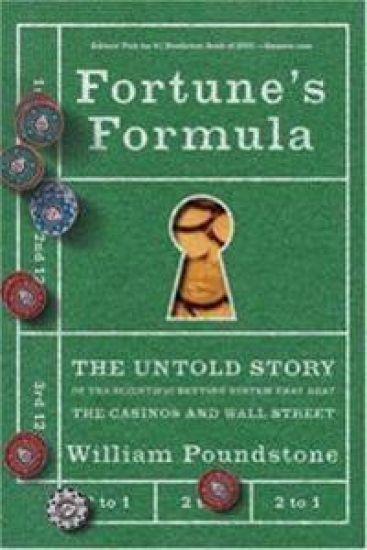
Fortune's Formula: The Untold Story of the Scientific Betting System That Beat the Casinos and Wall Street
In 1956 two Bell Labs scientists discovered the scientific formula for getting rich. One was mathematician Claude Shannon, neurotic father of our digital age, whose genius is ranked with Einstein's. The other was John L. Kelly Jr., a Texas-born, gun-toting physicist. Together they applied the science of information theory--the basis of computers and the Internet--to the problem of making as much money as possible, as fast as possible. Shannon and MIT mathematician Edward O. Thorp took the "Kelly formula" to Las Vegas. It worked. They realized that there was even more money to be made in the stock market. Thorp used the Kelly system with his phenomenally successful hedge fund, Princeton-Newport Partners. Shannon became a successful investor, too, topping even Warren Buffett's rate of return. Fortune's Formula traces how the Kelly formula sparked controversy even as it made fortunes at racetracks, casinos, and trading desks. It reveals the dark side of this alluring scheme, which is founded on exploiting an insider's edge. Shannon believed it was possible for a smart investor to beat the market--and William Poundstone's Fortune's Formula will convince you that he was right.
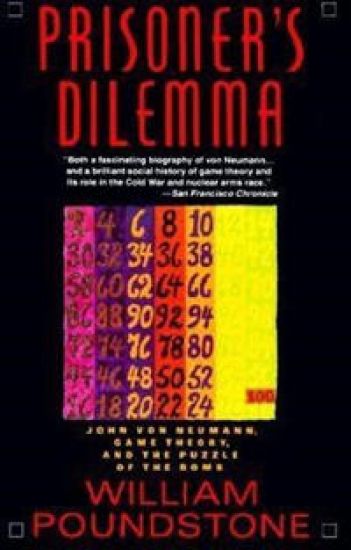
Prisoner's Dilemma

Prisoner's Dilemma

William Poundstone

Anchor Books
1993
nidottu

Halvin toimitettuna 19,70 €

"Both a fascinating biography of von Neumann, the Hungarian exile whose mathematical theories were building blocks for the A-bomb and the digital computer, and a brilliant social history of game theory and its role in the Cold War and nuclear arms race."--San Francisco Chronicle