Kirjailija
William Q. Judge
Kirjat ja teokset yhdessä paikassa: 73 kirjaa, julkaisuja vuosilta 1997–2025, suosituimpiin kuuluu The Yoga Aphorisms of Patanjali. Vertaile teosten hintoja ja tarkista saatavuus suomalaisista kirjakaupoista.
Nimi esiintyy myös muodoissa: William Q Judge
73 kirjaa
Kirjojen julkaisuvuodet: 1997–2025.


Unver nderter Nachdruck der Originalausgabe von 1906.

Unver nderter Nachdruck der Originalausgabe von 1906.
Theosophist William Judge offers his wisdom for the student of Theosophy, through exploring a few simple concepts. Topics include: Epitome of Theosophical Teachings, What Are Theosophists?, Theosophical Concepts of Evolution and Religion, and What is the Theosophical Society?
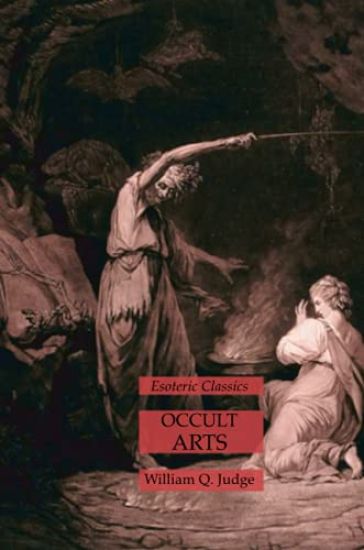
In his treatise on the Occult Arts, William Judge explores a process of precipitation that could only be described as a sort of astral alchemy, such as was taught by the Theosophical Society, at the time. To Madame Blavatsky and her peers in the Spiritualism movement, this was a popular method of receiving messages, sometimes in the form of a cypher, from the Masters of Ancient Wisdom, most often referred to as simply the Adepts. From there, Judge continues onward, to discuss the connected practices of disintegration and reintegration, all the while acknowledging that while often subject to fraud and hoaxes, these spiritual experiments are very much real. The author concludes with a number of quotes from Isis Unveiled.
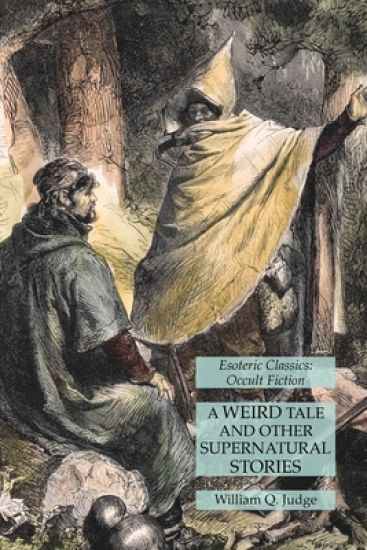
Along with Madame Blavatsky, William Q. Judge was one of the founders of the original Theosophical Society. He was a prolific publisher and author; and, while most of his literally canon was devoted to nonfiction writings centered around Theosophy, he also left behind a small sampling of occult stories. Included here are: A Weird Tale, A Curious Tale, The Serpent's Blood, The Magic Screen of Time, The Wandering Eye, The Tell-Tale Picture Gallery, The Skin of the Earth, True Progress, Where the Rishis Were, The Coming of the Serpent and An Allegory.
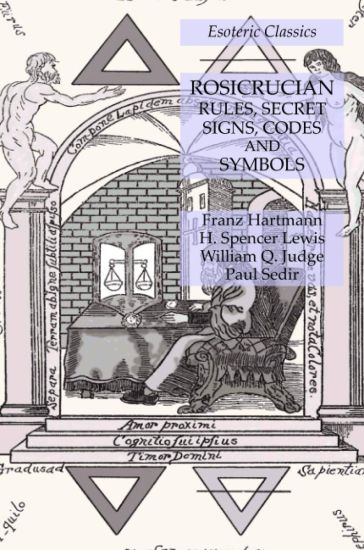
Rosicrucian Rules, Secret Signs, Codes and Symbols
Franz Hartmann; H Spencer Lewis; William Q Judge
Lamp of Trismegistus
2020
pokkari
Several prominent initiates and esoteric scholars discuss the core aspects of the Rosicrucian practice. Authors Franz Hartmann, H. Spencer Lewis, William Q. Judge and Paul Sedir present us these nine short pieces: Rosicrucian Rules, The Duties of a Rosicrucian, Rosicrucian Symbols, The Rosicrucian Code of Life, Rosicrucian Jewels, Rosicrucian "Orders", The Society of the Rosicrucians, The Secret Signs of the Rosicrucians and Secret Signs & Rosicrucian Rules. Students of esoteric Latin phrases will also likely enjoy this collection.
Essays on the Esoteric Tradition of Karma
Helena P Blavatsky; Annie Besant; William Q Judge
Lamp of Trismegistus
2019
pokkari
Este es otro gran libro de William Q. Judge, uno de los escritores m s reconocidos sobre teosof a. En este interesante libro explica los temas m s importantes de la Teosof a, como nuestro origen y destino, los Maestros o Mahatmas, la Reencarnaci n; y otros asuntos mundanos como la Clarividencia, la Mediumnidad y las Apariciones, profundizando en algunos de los temas principales de lo oculto y de ese conocimiento antiguo que instintivamente reconocemos como la verdad. William Quan Judge fue un m stico, esoterista y ocultista irland s-estadounidense, y uno de los fundadores de la Sociedad Teos fica original. Siendo un joven vigoroso, imaginativo e idealista, fue una de las diecisiete personas que primero formaron la Sociedad Teos fica. Al igual que Helena Petrovna Blavatsky y Henry Steel Olcott, se qued en la organizaci n cuando otros se fueron. Cuando Olcott y Blavatsky salieron de los Estados Unidos hacia la India, dejaron a Judge para administrar el trabajo de la Sociedad: la Teosof a en Am rica del Norte qued en manos de Judge.
This document is one of the foremost works penned within the path of Theosophy- specifically, by one of its foremost members, William Quan Judge, who became Vice President of the entire order. Much of the doctrine to be read about here stems from the East- elements of Hinduism and Buddhism were overlapped with some Western philosophy and crafted into a sort of mystery school that nonetheless was both public and lacked a strict hierarchy in favor of delving into spiritual lore. While some of the theory of Theosophy was eventually supplanted, some of its lore eventually came to be quite accepted- such as the exceptionally long dating of the Earth or the expansive nature of the universe.
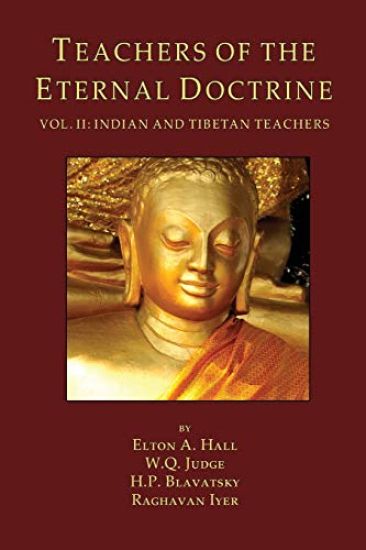
Teachers of the Eternal Doctrine Vol. II: Indian and Tibetan Teachers
William Q. Judge; H. P. Blavatsky; Raghavan Iyer
Theosophy Trust Books
2018
nidottu
Between 1975 and 1989, articles on great thinkers and teachers were published monthly in Hermes, the organ of the United Lodge of Theosophists in Santa Barbara, California. The articles in this volume consist of a selection of remarkable Buddhist teachers and promulgators of the Bodhisattva Path, the path of service to all humanity. There are many illustrious teachers of this path who have labored for the world in the last two and a half millennia, and this selection is designed to give a sense of the immense range and richness of the Indo-Tibetan Buddhist tradition. This is the second volume in the collection of teachers from diverse spiritual schools of thought. The first volume presented those figures associated with the Seven-Century Plan initiated by Tsong Kha Pa for the Western world, culminating in the founding of the Theosophical Movement. There Tsong Kha Pa was discussed in terms of this Plan and its esoteric meaning. In this volume, Tsong Kha Pa is presented as the Buddhist teacher who rejuvenated Buddhism in Tibet, creating the Gelukpa Order, of which the Dalai Lamas are spiritual leaders. The third volume will focus on Chinese teachers-Confucian, Taoist and Buddhist-and Japanese Buddhist exemplars. Since these articles were written, an enormous amount of scholarship has emerged, especially regarding the teachers and schools found in this volume. Many Tibetan texts have been carefully translated into English by highly trained individuals and teams of translators, thanks to the spread of Tibetan centers across the globe. Much of this ocean of material is profound but quite technical. The articles in this volume can serve as a general introduction to what is rapidly becoming a vast library of Buddhist history, teaching and knowledge. And they intimate the deeper meanings of the Bodhisattva Path which become clear only as a student or disciple assimilates the Teachings over a lifetime of study, self-examination, and self-sacrifice. In addition to the articles on these remarkable individuals, there are articles by the great Theosophical teachers Helena Blavatsky and Raghavan Iyer which place fundamental Buddhist ideas in a broad context. These include essays on the Bodhisattva Ideal, esoteric Buddhism, reincarnation in Tibet, and the soul of Tibet, among others. Taken together, the intuitive reader will not only gain a sense of the magnificent heritage of Buddhist thought over 2500 years but also glimpse the deep spiritual impulse working its way in and through the strivings of humanity. Contemplation of the core ideas in these articles will nurture the deepest aspirations of each individual who is actively seeking Buddha's Path to Enlightenment. One's perspective on the world and reality will be radically altered through a mature study and reflection on Buddhist thought in these essays.
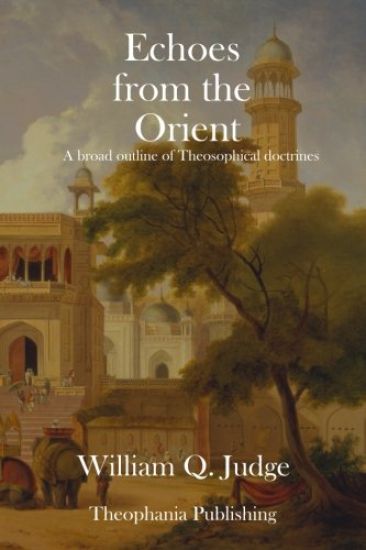
Thank you for checking out this book by Theophania Publishing. We appreciate your business and look forward to serving you soon. We have thousands of titles available, and we invite you to search for us by name, contact us via our website, or download our most recent catalogues. What appears to the Western mind to be a very strange superstition prevails in India about wonderful persons who are said to be of immense age, and who keep themselves secluded in places not accessible to the ordinary traveler. So long has this been current in India that the name applied to these beings is well known in the Sanskrit language: "Mahatma," a compound of two words, maha, great, and atma, soul. The belief in the existence of such persons is not confined to the ignorant, but is shared by the educated of all castes. The lower classes look upon the Mahatmas as a sort of gods, and think most of their wonderful powers and great age. The pundits, or learned class, and educated Hindus in general, have a different view; they say that Mahatmas are men or souls with unlimited knowledge of natural laws and of man's history and development. They claim also that the Mahatmas - or Rishees, as they sometimes call them - have preserved the knowledge of all natural laws for ages, not only by tradition among their disciples, but also by actual records and in libraries existing somewhere in the many underground temples and passages in India. Some believers assert that there are also stores of books and records in secluded parts all over that part of Tibet which is not known to Europeans, access to them being possible only for the Mahatmas and Adepts.
Board Involvement in the Strategic Decision Making Process
William Q. Judge; Till Talaulicar
now publishers Inc
2017
nidottu
The board of directors is legally responsible for setting the strategic direction of the firm and for ensuring the firm’s long-term performance in almost all governance environments. However, many boards delegate the task of creating and executing the firm’s strategy to a group of full-time professional managers. This separation between ownership and control creates many challenges for the modern-day firm, and the board’s role in the strategy formation process is arguably the seminal governance challenge confronting boards today. Board Involvement in the Strategic Decision Making Process examines this seminal challenge.
The Ocean of Theosophy: An Overview of the Basic Tenets of the Theosophical Philosophy
William Q. Judge
Createspace Independent Publishing Platform
2016
nidottu
Halvin toimitettuna 17,30 €