Kirjojen hintavertailu – 12 903 725 kirjaa ja 27 kauppaa

Kirjailija

William R. Thompson

Kirjat ja teokset yhdessä paikassa: 36 kirjaa, julkaisuja vuosilta 1988–2026, suosituimpiin kuuluu The Geography of Power. Vertaile teosten hintoja ja tarkista saatavuus suomalaisista kirjakaupoista.

36 kirjaa

Kirjojen julkaisuvuodet: 1988–2026.

Transition Scenarios

Transition Scenarios

David P. Rapkin; William R. Thompson

University of Chicago Press
2013
nidottu
China's rising status in the global economy alongside recent economic stagnation in Europe and the United States has led to considerable speculation that we are in the early stages of a transition in power relations. Commentators have tended to treat this transitional period as a novelty, but history is in fact replete with such systemic transitions-sometimes with perilous results. Can we predict the future by using the past? And, if so, what might history teach us? With Transition Scenarios, David P. Rapkin and William R. Thompson identify some predictors for power transitions and take readers through possible scenarios for future relations between China and the United States. Each scenario is embedded within a particular theoretical framework, inviting readers to consider the assumptions underlying it. Despite recent interest in the topic, the probability and timing of a power transition-and the processes that might bring it about-remain woefully unclear. Rapkin and Thompson's application of the theoretical tools of international relations to crucial transitions in history helps clarify the current situation and also sheds light on possible future scenarios.
Transition Scenarios

Transition Scenarios

David P. Rapkin; William R. Thompson

University of Chicago Press
2013
sidottu
China's rising status in the global economy alongside recent economic stagnation in Europe and the United States has led to considerable speculation that we are in the early stages of a transition in power relations. Commentators have tended to treat this transitional period as a novelty, but history is in fact replete with such systemic transitions-sometimes with perilous results. Can we predict the future by using the past? And, if so, what might history teach us? With Transition Scenarios, David P. Rapkin and William R. Thompson identify some predictors for power transitions and take readers through possible scenarios for future relations between China and the United States. Each scenario is embedded within a particular theoretical framework, inviting readers to consider the assumptions underlying it. Despite recent interest in the topic, the probability and timing of a power transition-and the processes that might bring it about-remain woefully unclear. Rapkin and Thompson's application of the theoretical tools of international relations to crucial transitions in history helps clarify the current situation and also sheds light on possible future scenarios.
How Rivalries End

How Rivalries End

Karen Rasler; William R. Thompson; Sumit Ganguly

University of Pennsylvania Press
2013
sidottu
Rivalry between nations has a long and sometimes bloody history. Not all political opposition culminates in war-the rivalry between the United States and the Soviet Union is one example-but in most cases competition between nations and peoples for resources and strategic advantage does lead to violence: nearly 80 percent of the wars fought since 1816 were sparked by contention between rival nations. Long-term discord is a global concern, since competing states may drag allies into their conflict or threaten to use weapons of mass destruction. How Rivalries End is a study of how such rivalries take root and flourish and particularly how some dissipate over time without recourse to war. Political scientists Karen Rasler, William R. Thompson, and Sumit Ganguly examine ten political hot spots, stretching from Egypt and Israel to the two Koreas, where crises and military confrontations have occurred over the last seven decades. Through exacting analysis of thirty-two attempts to deescalate strategic rivalries, they reveal a pattern in successful conflict resolutions: shocks that overcome foreign policy inertia; changes in perceptions of the adversary's competitiveness or threat; positive responses to conciliatory signals; and continuing effort to avoid conflict after hostilities cease. How Rivalries End significantly contributes to our understanding why protracted conflicts sometimes deescalate and even terminate without resort to war.
Handbook of International Rivalries

Handbook of International Rivalries

David Dreyer; William R. Thompson

CQ Press
2011
sidottu
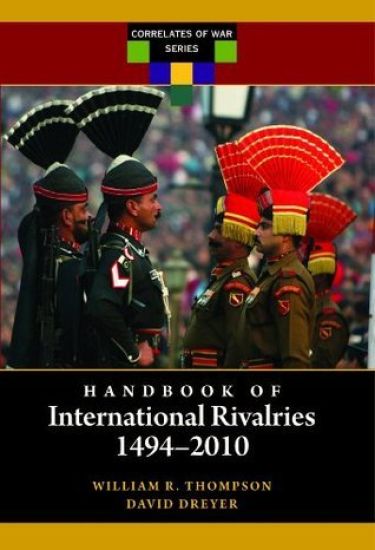
Several dramatic changes in international relations at the end of the 20th century seemed to suggest that rivalries (and the conflicts that often result) between states were receding. The Soviet-American Cold War ended, but the Indo-Pakistani feud refuses to go away. Argentina and Britain seem most unlikely to fight again over the Falklands, but North and South Korea persist in maintaining their hostile divided status. The question remains therefore—is conflict increasing or decreasing? To answer that question, it is important to first understand how the rivalry processes—and therefore the genesis of conflict—work. Handbook to International Rivalries examines the roughly 200 strategic rivalries—two states that view each other as threatening competitors to the point that they categorize their antagonists as enemies—that have been responsible for nearly 80 percent of the warfare of the past two hundred years. After a preface from J. David Singer, the founder of The Correlates of War Project, this reference delves into standardized narratives of the rivalries that include discussions of their origins, the levels of conflict achieved and the resolutions. Handbook to International Rivalries also includes a comprehensive bibliography and a chronological listing of rivalries by region, time and type.
The Arc of War

The Arc of War

Jack S. Levy; William R. Thompson

University of Chicago Press
2011
nidottu
In this far-reaching exploration of the evolution of warfare in human history, Jack S. Levy and William R. Thompson provide insight into the perennial questions of why and how humans fight. Beginning with the origins of warfare among foraging groups, "The Arc of War" draws on a wealth of empirical data to enhance our understanding of how war began and how it has changed over time. The authors point to the complex interaction of political economy, political and military organization, military technology, and the threat environment - all of which create changing incentives for states and other actors. They conclude that those actors that adapt survive, and those that do not are eliminated. In modern times, warfare between major powers has become exceedingly costly and therefore quite rare, while lesser powers are too weak to fight sustained and decisive wars or to prevent internal rebellions. Conceptually innovative and historically sweeping, "The Arc of War" represents a significant contribution to the existing literature on warfare.
The Arc of War

The Arc of War

Jack S. Levy; William R. Thompson

University of Chicago Press
2011
sidottu
In this far-reaching exploration of the evolution of warfare in human history, Jack S. Levy and William R. Thompson provide insight into the perennial questions of why and how humans fight. Beginning with the origins of warfare among foraging groups, "The Arc of War" draws on a wealth of empirical data to enhance our understanding of how war began and how it has changed over time. The authors point to the complex interaction of political economy, political and military organization, military technology, and the threat environment - all of which create changing incentives for states and other actors. They conclude that those actors that adapt survive, and those that do not are eliminated. In modern times, warfare between major powers has become exceedingly costly and therefore quite rare, while lesser powers are too weak to fight sustained and decisive wars or to prevent internal rebellions. Conceptually innovative and historically sweeping, "The Arc of War" represents a significant contribution to the existing literature on warfare.
Causes of War

Causes of War

Jack S. Levy; William R. Thompson

Wiley-Blackwell (an imprint of John Wiley Sons Ltd)
2010
nidottu

Halvin toimitettuna 44,80 €

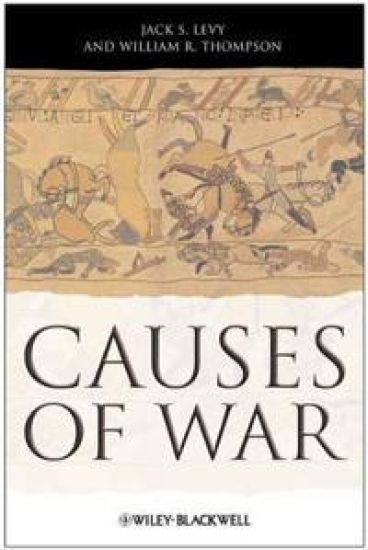
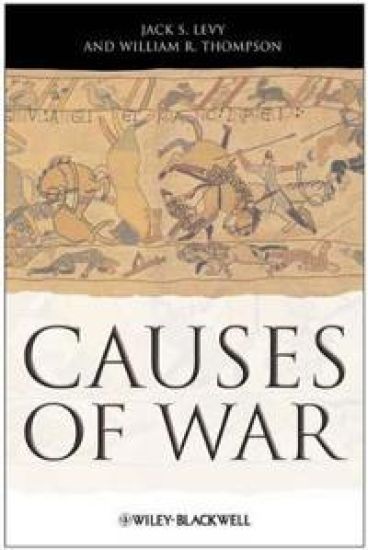
Written by leading scholars in the field, Causes of War provides the first comprehensive analysis of the leading theories relating to the origins of both interstate and civil wars. Utilizes historical examples to illustrate individual theories throughoutIncludes an analysis of theories of civil wars as well as interstate wars -- one of the only texts to do bothWritten by two former International Studies Association Presidents
Causes of War

Causes of War

Jack S. Levy; William R. Thompson

Wiley-Blackwell (an imprint of John Wiley Sons Ltd)
2010
sidottu
Written by leading scholars in the field, Causes of War provides the first comprehensive analysis of the leading theories relating to the origins of both interstate and civil wars. Utilizes historical examples to illustrate individual theories throughoutIncludes an analysis of theories of civil wars as well as interstate wars -- one of the only texts to do bothWritten by two former International Studies Association Presidents
Limits to Globalization

Limits to Globalization

William R. Thompson; Rafael Reuveny

Routledge
2009
sidottu
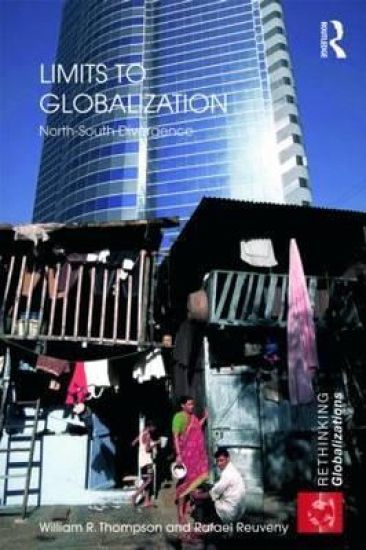
In the post-Cold War era, economic globalization has loomed, at least for some, as the world system's next crisis carrier, creating winners and losers and trampling on the distinctiveness of local cultures. Yet the liberal assumption is that if the market does its job, the poor will catch up to the rich via trade-driven growth and the economies of developed and less developed countries will gradually converge. Investigating the processes of economic globalization, this book explores whether it is truly a "global" process. It examines how globalization is experienced around the world, comparing its intensity and impact in both the global North and South. Using a world systems approach and developing a theoretical analysis that builds on the leadership long-cycle approach to global political economy, this book seeks to dispel some of the myths widely propagated regarding economic development. Through a focus on the issues of technological diffusion, debt, conflict, and democratisation, the authors demonstrate how and why the asymmetries that have characterized the global North and South in the past and present are growing more acute. This important book will be of interest to students and scholars of international political economy, globalisation, international trade and development.
Limits to Globalization

Limits to Globalization

William R. Thompson; Rafael Reuveny

Routledge
2009
nidottu
In the post-Cold War era, economic globalization has loomed, at least for some, as the world system's next crisis carrier, creating winners and losers and trampling on the distinctiveness of local cultures. Yet the liberal assumption is that if the market does its job, the poor will catch up to the rich via trade-driven growth and the economies of developed and less developed countries will gradually converge. Investigating the processes of economic globalization, this book explores whether it is truly a "global" process. It examines how globalization is experienced around the world, comparing its intensity and impact in both the global North and South. Using a world systems approach and developing a theoretical analysis that builds on the leadership long-cycle approach to global political economy, this book seeks to dispel some of the myths widely propagated regarding economic development. Through a focus on the issues of technological diffusion, debt, conflict, and democratisation, the authors demonstrate how and why the asymmetries that have characterized the global North and South in the past and present are growing more acute. This important book will be of interest to students and scholars of international political economy, globalisation, international trade and development.
Strategic Rivalries in World Politics

Strategic Rivalries in World Politics

Michael P. Colaresi; Karen Rasler; William R. Thompson

Cambridge University Press
2008
pokkari
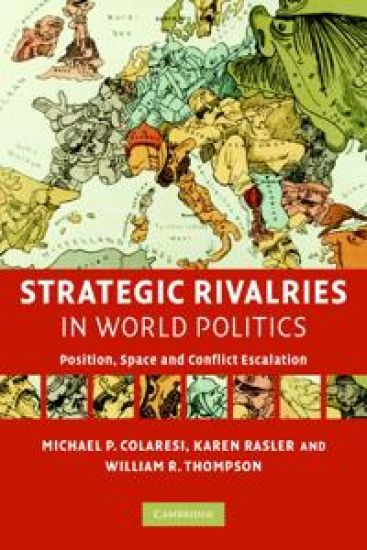
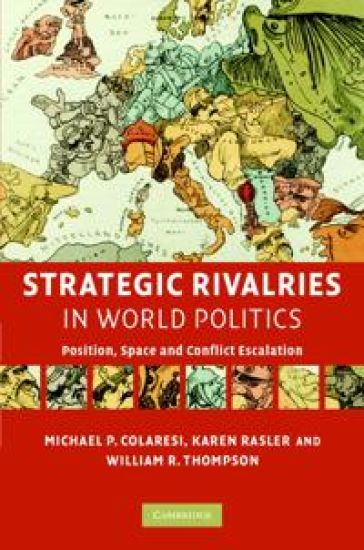
International conflict is neither random nor inexplicable. It is highly structured by antagonisms between a relatively small set of states that regard each other as rivals. Examining the 173 strategic rivalries in operation throughout the nineteenth and twentieth centuries, this book identifies the differences rivalries make in the probability of conflict escalation and analyzes how they interact with serial crises, arms races, alliances and capability advantages. The authors distinguish between rivalries concerning territorial disagreement (space) and rivalries concerning status and influence (position) and show how each leads to markedly different patterns of conflict escalation. They argue that rivals are more likely to engage in international conflict with their antagonists than non-rival pairs of states and conclude with an assessment of whether we can expect democratic peace, economic development and economic interdependence to constrain rivalry-induced conflict.
Strategic Rivalries in World Politics

Strategic Rivalries in World Politics

Michael P. Colaresi; Karen Rasler; William R. Thompson

Cambridge University Press
2008
sidottu
International conflict is neither random nor inexplicable. It is highly structured by antagonisms between a relatively small set of states that regard each other as rivals. Examining the 173 strategic rivalries in operation throughout the nineteenth and twentieth centuries, this book identifies the differences rivalries make in the probability of conflict escalation and analyzes how they interact with serial crises, arms races, alliances and capability advantages. The authors distinguish between rivalries concerning territorial disagreement (space) and rivalries concerning status and influence (position) and show how each leads to markedly different patterns of conflict escalation. They argue that rivals are more likely to engage in international conflict with their antagonists than non-rival pairs of states and conclude with an assessment of whether we can expect democratic peace, economic development and economic interdependence to constrain rivalry-induced conflict.
Growth, Trade, and Systemic Leadership

Growth, Trade, and Systemic Leadership

Rafael Reuveny; William R. Thompson

The University of Michigan Press
2004
nidottu
Using a "lead economy" approach, Reuveny and Thompson link question about the global trade system to debates about hegemonic stability and the balance of power in world politics. By focusing on economic growth, protectionism, and trade, they surpass hegemonic stability interpretations of international politics to explain not only how hegemons maintain political order, but also the source of hegemonic/systemic leadership, the rise and decline of leadership over time, and the role of system leaders in generating worldwide economic growth and international political economic order. Rafael Reuveny is Associate Professor in the School of Public and Environmental Affairs at Indiana University. William R. Thompson is Professor of Political Science at Indiana University.
Growth, Trade, and Systemic Leadership

Growth, Trade, and Systemic Leadership

Rafael Reuveny; William R. Thompson

The University of Michigan Press
2004
sidottu
Using a "lead economy" approach, Reuveny and Thompson link question about the global trade system to debates about hegemonic stability and the balance of power in world politics. By focusing on economic growth, protectionism, and trade, they surpass hegemonic stability interpretations of international politics to explain not only how hegemons maintain political order, but also the source of hegemonic/systemic leadership, the rise and decline of leadership over time, and the role of system leaders in generating worldwide economic growth and international political economic order. Rafael Reuveny is Associate Professor in the School of Public and Environmental Affairs at Indiana University. William R. Thompson is Professor of Political Science at Indiana University.