Kirjojen hintavertailu – 12 903 725 kirjaa ja 27 kauppaa

Kirjailija

William Schneider

Kirjat ja teokset yhdessä paikassa: 10 kirjaa, julkaisuja vuosilta 1995–2025, suosituimpiin kuuluu The Other Life. Vertaile teosten hintoja ja tarkista saatavuus suomalaisista kirjakaupoista.

10 kirjaa

Kirjojen julkaisuvuodet: 1995–2025.

Lead Right for Your Company's Type

Lead Right for Your Company's Type

William Schneider

HarperCollins Focus
2025
nidottu
Lead Right for Your Company’s Type will help you find the best strategies for success for your unique business. Every year, businesses needlessly fail because they adapted the wrong strategies suited for their organization’s strengths. A mid-tier retail chain is derailed by leadership demands for superior products instead of reliably low prices. A software giant is brought to its knees by prioritizing profits over innovation. A small arts college is destabilized by top-down rules designed for a predictable and dependable company. There is no one-size-fits-all game plan for success when it comes to the wide array of businesses today. Success starts with knowing the kind of business you’re really in. In Lead Right for Your Company’s Type, learn the four categories that every enterprise falls into, depending on their customer promise:customized (e.g., ad agency),predictable and dependable (e.g., utility company),benevolent (e.g., educational institution),and best in class (e.g., high-tech company like Apple). Then follow a proven five-step process to help you in diagnosing your organization’s ills and stop them at their source. Apply the wrong practices and the mismatch pulls the enterprise apart. However, when leadership practices fit the customer promise and company type, the organization thrives.

How to Invest Money for Beginners: Find the Secret to Financial Freedom. The Most Powerful Strategies to Become Financially Independent.
Time is limited. If you want to know how to achieve financial independence through investments and live the life you want, even if you've failed in the past, then keep reading. William Schneider struggled financially for years. He had no idea what to do with his life. He constantly wondered, How can I reach financial freedom? How to invest my money? What do rich people do differently? 10 years later, he has achieved financial independence as well as a net worth of over $1,000,000. How did William do it? This book provides a comprehensive guide through his journey and strategies so you too can quit your day job, live debt-free and enjoy life on your own terms. You will discover... A Powerful Money Management Strategy that will help you achieve financial successThe Ultimate Investment MindsetHow to Save Your Money and Eliminate Debt QuicklyEffective Beginner Investment Strategies that WorkFinancial Freedom vs. Financial IndependenceTips to Build a Solid Financial Foundation for Your ChildrenThe Top Secrets to Becoming RichAnd so much more Let William will guide you step-by-step while you navigate the stock market, risk management strategies, early investment and self-investment and the importance of allocating your money wisely to attain lifelong financial freedom and independence. Don't hesitate. You can start building an investment portfolio today even if you have no money. Read this book, it's time to change the way you think about money. Click the Add to Cart button to get your book.★★ Buy the Paperback Version of this Book and get the Kindle Book version for FREE ★★
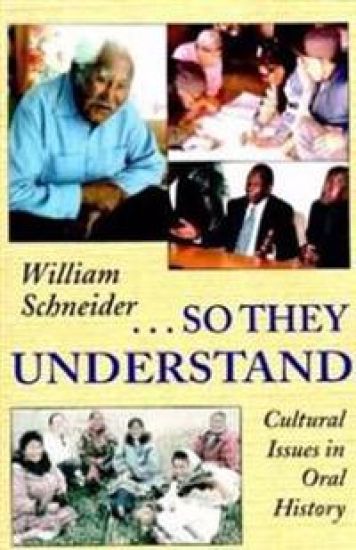
So They Understand

So They Understand

William Schneider

Utah State University Press
2002
pokkari
Illustrated with numerous stories collected from Alaska, the Yukon,and South Africa and further enlivened by the author's accessible style and experiences as a long time oral historian and archivist, So They Understand is a comprehensive study of the special challenges and concerns involved in documenting, representing, preserving, and interpreting oral narratives. The title of the book comes from a quotation by Chief Peter John, the traditional chief of the Tanana Chiefs region in central Alaska: "In between the lines is something special going on in their minds, and that has got to be brought to light, so they understand just exactly what is said." William Schneider discusses how stories work in relation to their cultures and performance settings, sorts out different types of stories-from broad genres such as personal narratives and life histories to such more specific and less-often considered types as presentations at hearings and other public gatherings-and examines a variety of critical issues, including the roles and relationships of storytellers and interviewers, accurate representation and preservation of stories and their performances, understanding and interpreting their cultural backgrounds and meanings, and intellectual property rights. Throughout,he blends a diverse selection of stories, including his own, into a text rich with pertinent examples. William Schneider is curator of oral history and associate in anthropology at the Rasmuson Library, University of Alaska Fairbanks,where he introduced oral history "jukeboxes," innovative interactive, multimedia computer files that present and cross-reference audio oral history and related photos and maps. Among other works, his publications include, as editor, Kusiq: An Eskimo Life History from the Arctic Coast of Alaska and, with Phyllis Morrow, When Our Words Return: Writing,Hearing, and Remembering Oral Traditions of Alaska and the Yukon.
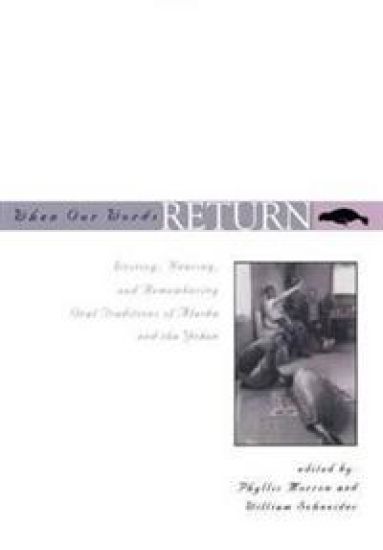
When Our Words Return

When Our Words Return

William Schneider

Utah State University Press
1995
pokkari
The title to this interdisciplinary collection draws on the Yupik Eskimo belief that seals, fish, and other game are precious gifts that, when treated with respect and care, will return to be hunted again. Just so, if oral traditions are told faithfully and respectfully, they will return to benefit future generations. The contributors to this volume are concerned with the interpretation and representation of oral narrative and how it is shaped by its audience and the time, place, and cultural context of the narration. Thus, oral traditions are understood as a series of dialogues between tradition bearers and their listeners, including those who record, write, and interpret.