Kirjailija
William Shakespeare
Kirjat ja teokset yhdessä paikassa: 4 976 kirjaa, julkaisuja vuosilta 1798–2027, suosituimpiin kuuluu Hamlet. Vertaile teosten hintoja ja tarkista saatavuus suomalaisista kirjakaupoista.
4 976 kirjaa
Kirjojen julkaisuvuodet: 1798–2027.
Romeo and Juliet is a tragedy written early in the career of playwright William Shakespeare about two young star - crossed lovers whose deaths ultimately unite their feuding families. It is among Shakespeare's most popular archetypal stories of young, teenage lovers. Romeo and Juliet belongs to a tradition of tragic romances stretching back to antiquity. Its plot is based on an Italian tale, translated into verse as The Tragical History of Romeus and Juliet by Arthur Brooke in 1562 and retold in prose in Palace of Pleasure by William Painter in 1582. Shakespeare borrowed heavily from both but, to expand the plot, developed supporting characters, particularly Mercutio and Paris. Believed written between 1591 and 1595, the play was first published in a quarto version in 1597. This text was of poor quality, and later editions corrected it, bringing it more in line with Shakespeare's original. Shakespeare's use of dramatic structure, especially effects such as switching between comedy and tragedy to heighten tension, his expansion of minor characters, and his use of sub - plots to embellish the story, has been praised as an early sign of his dramatic skill. The play ascribes different poetic forms to different characters, sometimes changing the form as the character develops. Romeo, for example, grows more adept at the sonnet over the course of the play. Romeo and Juliet has been adapted numerous times for stage, film, musical and opera. During the Restoration, it was revived and heavily revised by William Davenant. David Garrick's 18th - century version also modified several scenes, removing material then considered indecent, and Georg Benda's operatic adaptation omitted much of the action and added a happy ending. Performances in the 19th century, including Charlotte Cushman's, restored the original text, and focused on greater realism. John Gielgud's 1935 version kept very close to Shakespeare's text, and used Elizabethan costumes and staging to enhance the drama. In the 20th century the play has been adapted in versions as diverse as MGM's comparatively faithful 1936 film, the 1950s stage musical West Side Story, and 1996's MTV - inspired Romeo ] Juliet and Carlo Carlei's 2013 version.


Shakespere's Merchant of Venice;
William Shakespeare; Frederick J. Furnivall
Hansebooks
2018
nidottu
Hamlet (Spanish Edition) (Worldwide Edition)
William Shakespeare
Createspace Independent Publishing Platform
2018
nidottu
Hamlet, la obra m s conocida de Shakespeare, es en realidad una pieza llena de lagunas e indefiniciones. Una obra enigm tica y misteriosa, en la que cada personaje es un artista de la simulaci n. El propio Hamlet es un ser en continua transformaci n. En l caben la ceremoniosidad, la cortes a y la reflexi n, junto a la pasi n, la burla, el enigma o la posibilidad de la locura. En el castillo de Elsenor, en un ambiente que emana corrupci n y desconfianza, claustrof bico y hostil, se alternan escenas solemnes y reveses ir nicos, al tiempo que se agita una corte de personajes cuyo sentido ltimo ser llevar a Hamlet a vencer su tensi n interna y cumplir la venganza por la muerte de su padre.
O for a Muse of fire, that would ascend The brightest heaven of invention, A kingdom for a stage, princes to act And monarchs to behold the swelling scene Then should the warlike Harry, like himself, Assume the port of Mars; and at his heels, Leash'd in like hounds, should famine, sword and fire Crouch for employment. But pardon, and gentles all, The flat unraised spirits that have dared On this unworthy scaffold to bring forth So great an object: can this cockpit hold The vasty fields of France? or may we cram Within this wooden O the very casques That did affright the air at Agincourt?
Open your ears; for which of you will stop The vent of hearing when loud Rumour speaks? I, from the orient to the drooping west, Making the wind my post-horse, still unfold The acts commenced on this ball of earth: Upon my tongues continual slanders ride, The which in every language I pronounce, Stuffing the ears of men with false reports. I speak of peace, while covert enmity Under the smile of safety wounds the world: And who but Rumour, who but only I, Make fearful musters and prepared defence, Whiles the big year, swoln with some other grief, Is thought with child by the stern tyrant war, And no such matter? Rumour is a pipe Blown by surmises, jealousies, conjectures And of so easy and so plain a stop That the blunt monster with uncounted heads, The still-discordant wavering multitude, Can play upon it. But what need I thus My well-known body to anatomize Among my household? Why is Rumour here?
While we pursued the horsemen of the north, He slily stole away and left his men: Whereat the great Lord of Northumberland, Whose warlike ears could never brook retreat, Cheer'd up the drooping army; and himself, Lord Clifford and Lord Stafford, all abreast, Charged our main battle's front, and breaking in Were by the swords of common soldiers slain.
As by your high imperial majesty I had in charge at my depart for France, As procurator to your excellence, To marry Princess Margaret for your grace, So, in the famous ancient city, Tours, In presence of the Kings of France and Sicil, The Dukes of Orleans, Calaber, Bretagne and Alencon, Seven earls, twelve barons and twenty reverend bishops, I have perform'd my task and was espoused: And humbly now upon my bended knee, In sight of England and her lordly peers, Deliver up my title in the queen To your most gracious hands, that are the substance Of that great shadow I did represent; The happiest gift that ever marquess gave, The fairest queen that ever king received.
England ne'er had a king until his time. Virtue he had, deserving to command: His brandish'd sword did blind men with his beams: His arms spread wider than a dragon's wings; His sparking eyes, replete with wrathful fire, More dazzled and drove back his enemies Than mid-day sun fierce bent against their faces. What should I say? his deeds exceed all speech: He ne'er lift up his hand but conquered.
So shaken as we are, so wan with care, Find we a time for frighted peace to pant, And breathe short-winded accents of new broils To be commenced in strands afar remote. No more the thirsty entrance of this soil Shall daub her lips with her own children's blood; Nor more shall trenching war channel her fields, Nor bruise her flowerets with the armed hoofs Of hostile paces: those opposed eyes, Which, like the meteors of a troubled heaven, All of one nature, of one substance bred, Did lately meet in the intestine shock And furious close of civil butchery Shall now, in mutual well-beseeming ranks, March all one way and be no more opposed Against acquaintance, kindred and allies: The edge of war, like an ill-sheathed knife, No more shall cut his master. Therefore, friends, As far as to the sepulchre of Christ, Whose soldier now, under whose blessed cross
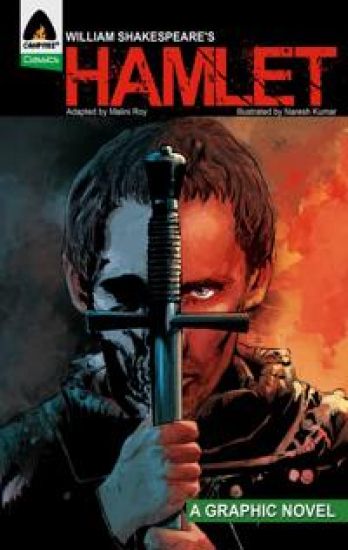
A concise, highly enjoyable adaptation of the classic Shakespeare drama; one of more than 85 titles Campfire has published since their introduction to North America in 2010. Once upon a time on a dark winter night, a ghost appears on the ramparts of Castle Elsinore in Denmark. It closely resembles the recently deceased king of Denmark. The guards see it first, and then the scholar Horatio confronts it. But it doesn't speak to them. Impatient to know what the ghost's appearance means, they summon Hamlet, the prince of Denmark. Hamlet has returned to Denmark to attend his father's funeral. Yet, he finds himself also attending his mother Gertrude's wedding to his uncle Claudius, who has inherited the throne. What will the ghost tell Hamlet? One of the most intense and intriguing tragedies of all time is built upon the answer to this question. William Shakespeare's Hamlet is not just a story of a mad prince out to avenge his father's death. It is also the story of the struggle of a nation against Fate. It is the story of human willpower battling the odds. It is not only the story of a man at war with the world around him, but also the story of a man in conflict with his own mind. It is the story of a time when something is rotten in the state of Denmark.
Maude Adams acting edition of Romeo and Juliet
William Shakespeare; Maude Adams
Hansebooks
2018
nidottu
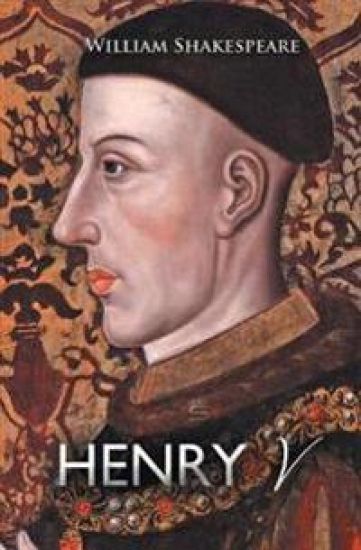
A history play by William Shakespeare which follows life of King Henry V of England, focusing on events immediately before and after the Battle of Agincourt during the Hundred Years' War. The early scenes deal with the embarkation of Henry's fleet for France, and include a real-life incident in which the Earl of Cambridge and two others plotted to assassinate Henry at Southampton.
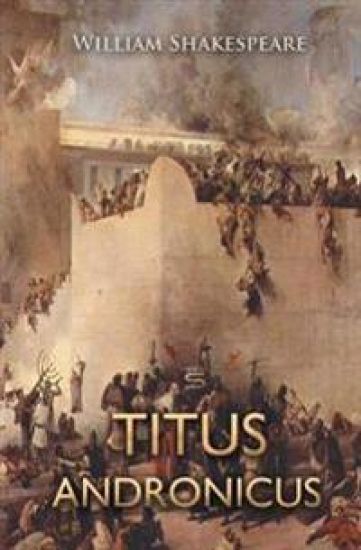
The play begins shortly after the death of the Roman emperor, with his two sons, Saturninus and Bassianus, squabbling over who will succeed him. Their conflict seems set to boil over into violence until a tribune, Marcus Andronicus, announces that the people's choice for the new emperor is his brother, Titus, who will shortly return to Rome from a victorious ten-year campaign against the Goths. Titus subsequently arrives to much fanfare, bearing with him as prisoners the Queen of the Goths (Tamora), her three sons, and Aaron the Moor (her secret lover).
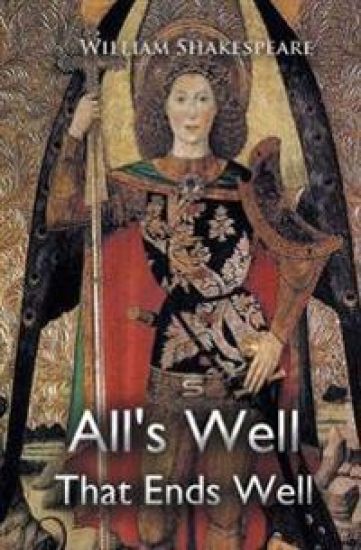
The play opens in Rousillon, a Catalan province of Spain, where young Count Bertram bids farewell to his mother the Countess and Helena, as he leaves for the court of Paris at the French King's order. Bertram's father has recently died and Bertram is to be the King's ward and attendant. Helena, a young minor noblewoman and ward of the Countess, whose father has also recently died, laments her unrequited love for Bertram, and losing him to Paris, which weighs on her though it seems to others that she mourns her father.
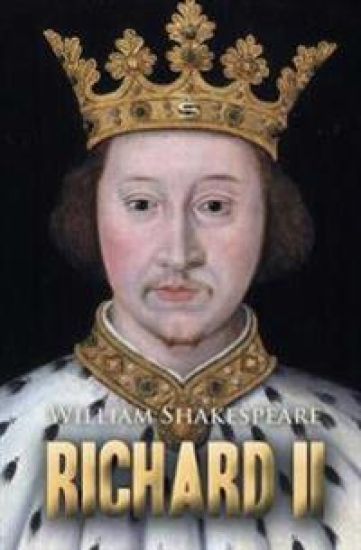
A history play by William Shakespeare believed based on the life of King Richard II of England (ruled 1377-1399). The play begins with King Richard sitting majestically on his throne in full state, having been requested that he arbitrate a dispute between Thomas Mowbray and Richard's cousin, Henry Bolingbroke, who has accused Mowbray of squandering money given to him by Richard for the King's soldiers and of murdering his uncle, the Duke of Gloucester.
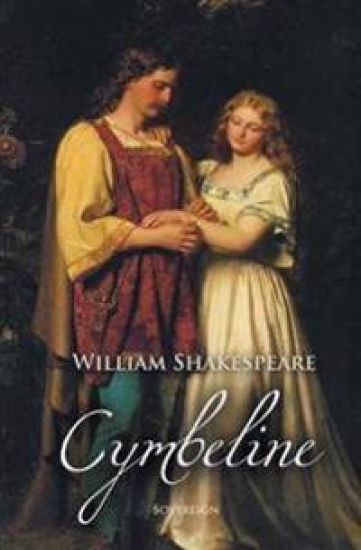
Cymbeline, the Roman Empire's vassal king of Britain, once had two sons, Guiderius and Arvirargus, but they were stolen twenty years earlier as infants by an exiled traitor named Belarius. Cymbeline now discovers that his only child left, his daughter Imogen, has secretly married her lover Posthumus Leonatus, an otherwise honourable man of Cymbeline's court.