Kirjojen hintavertailu – 12 859 826 kirjaa ja 27 kauppaa
Kirjailija
William Shakespeare
Kirjat ja teokset yhdessä paikassa: 4 976 kirjaa, julkaisuja vuosilta 1798–2027, suosituimpiin kuuluu Hamlet. Vertaile teosten hintoja ja tarkista saatavuus suomalaisista kirjakaupoista.
The most consistent of all series in terms of language control, length, and quality of story. David R. Hill, Director of the Edinburgh Project on Extensive Reading.
The First-Ever, Fully Illustrated Collector's Edition of William Shakespeare's Celebrated Sonnets! In celebration of the momentous 400th anniversary of William Shakespeare's death in April 2016, this enhanced edition of Shakepeare's Sonnets features gorgeous full-color artwork throughout that brings The Bard's timeless words to life like never before!
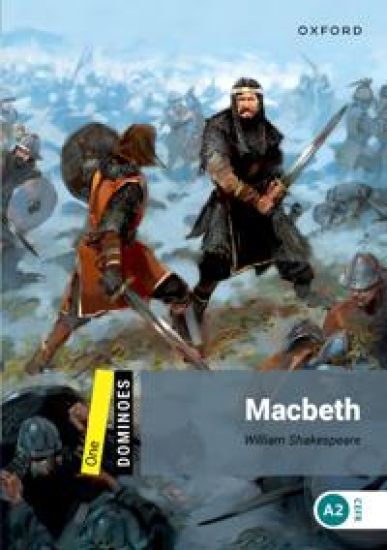
Dominoes is a full-colour, interactive readers series that offers students a fun reading experience while building their language skills. With integrated activities, and exciting, fully dramatized audio for every story, the new edition of the series makes reading motivating for students while making it easy for you to develop their reading and language skills. Listen along with downloadable MP3 Audio.
Shakespeare's Histories: Volume Three William Shakespeare (1554 - 1616) King Richard II King Richard the Second is a history play by William Shakespeare believed to have been written in approximately 1595. It is based on the life of King Richard II of England (ruled 1377-1399) and is the first part of a tetralogy, referred to by some scholars as the Henriad, followed by three plays concerning Richard's successors: Henry IV, Part 1; Henry IV, Part 2; and Henry V. It may not have been written as a stand-alone work. Although the First Folio (1623) edition of Shakespeare's works lists the play as a history play, the earlier Quarto edition of 1597 calls it The tragedie of King Richard the second. King Richard III Richard III is an historical play by William Shakespeare, believed to have been written in approximately 1592. It depicts the Machiavellian rise to power and subsequent short reign of King Richard III of England. The play is grouped among the histories in the First Folio and is most often classified as such. Occasionally, however, as in the quarto edition, it is termed a tragedy. Richard III concludes Shakespeare's first tetralogy (also containing Henry VI parts 1-3). It is the second longest play in the canon after Hamlet, and is the longest of the First Folio, whose version of Hamlet is shorter than its Quarto counterpart. The play is rarely performed unabridged; often, certain peripheral characters are removed entirely. In such instances extra lines are often invented or added from elsewhere in the sequence to establish the nature of characters' relationships. A further reason for abridgment is that Shakespeare assumed that his audiences would be familiar with the Henry VI plays, and frequently made indirect references to events in them, such as Richard's murder of Henry VI or the defeat of Henry's queen, Margaret.
Shakespeare's Histories: Volume One William Shakespeare (1554 - 1616) King Henry IV, Part 1 King Henry IV, Part 1 is the second of Shakespeare's eight Wars of the Roses history plays, with events following those of King Richard II. As the play opens, King Henry IV (formerly Henry Bolingbroke) and Henry Percy (Hotspur) argue over the disposition of prisoners from the Battle of Holmedon. The King's attitude toward Mortimer and the Percy family prompts them to plot rebellion. In the meantime, his son Prince Hal is living the low life in the company of Sir John Falstaff. As the time of battle nears, Prince Hal joins his father and is given a high command. The play's climax is the Battle of Shrewsbury, in which Prince Hal and Hotspur meet and fight, with Prince Hal and the forces of the King prevailing. The action continues in King Henry IV, Part 2. From the start this has been an extremely popular play both with the public and with critics. King Henry IV, Part 2 Henry IV, Part 2 is a history play by William Shakespeare, believed written between 1596 and 1599. It is the third part of a tetralogy, preceded by Richard II and Henry IV, Part 1 and succeeded by Henry V. The play picks up where Henry IV, Part 1 left off. Its focus is on Prince Hal's journey toward kingship and his ultimate rejection of Falstaff. King Henry V Henry V is a history play by William Shakespeare, believed to have been written in approximately 1599. It tells the story of King Henry V of England, focusing on events immediately before and after the Battle of Agincourt (1415) during the Hundred Years' War. In the First Quarto text, it was entitled The Cronicle History of Henry the fift: which became The Life of Henry the Fifth in the First Folio text. The play is the final part of a tetralogy, preceded by Richard II, Henry IV, Part 1 and Henry IV, Part 2. The original audiences would thus have already been familiar with the title character, who was depicted in the Henry IV plays as a wild, undisciplined lad known as "Prince Harry" and by Falstaff as "Hal." In Henry V, the young prince has become a mature man and embarks on a successful conquest of France.
King Lear is a tragedy written by William Shakespeare. It depicts the gradual descent into madness of the title character, after he disposes of his kingdom giving bequests to two of his three daughters based on their flattery of him, bringing tragic consequences for all. Derived from the legend of Leir of Britain, a mythological pre-Roman Celtic king, the play has been widely adapted for the stage and motion pictures, with the title role coveted by many of the world's most accomplished actors. Originally drafted in 1605 or 1606, with its first known performance on St. Stephen's Day in 1606, the first attribution to Shakespeare was a 1608 publication in a quarto of uncertain provenance; it may be an early draft or simply reflect the first performance text. The Tragedy of King Lear, a more theatrical revision, was included in the 1623 First Folio. Modern editors usually conflate the two, though some insist that each version has its own individual integrity that should be preserved. After the English Restoration, the play was often revised with a happy, non-tragic ending for audiences who disliked its dark and depressing tone, but since the 19th century Shakespeare's original version has been regarded as one of his supreme achievements. The tragedy is particularly noted for its probing observations on the nature of human suffering and kinship.
Durante la boda de Teseo e Hip lita tiene lugar una obra plagada de fantas a, sue os, amor y magia que se entremezclan en las historias de amor de dos parejas nobles, de unos c micos despreocupados y un grupo de miembros del mundo de las hadas.