

Kirjailija
William Shakespeare
Kirjat ja teokset yhdessä paikassa: 4 976 kirjaa, julkaisuja vuosilta 1798–2027, suosituimpiin kuuluu Hamlet. Vertaile teosten hintoja ja tarkista saatavuus suomalaisista kirjakaupoista.
4 976 kirjaa
Kirjojen julkaisuvuodet: 1798–2027.




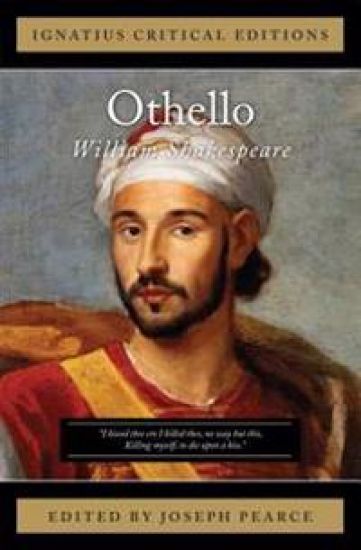
One of the four great tragedies--alongside Hamlet, King Lear, and Macbeth--Othe llo is among the darkest of Shakespeare's plays, illumining the shadows of the gloomiest recesses of the human psyche and serving as a damning indictment of the world in which it was written. A cautionary tale of the destructiveness of sin and the ruinous consequences of bad philosophy, Othello seems to express Shakespeare's rage at the cynicism and brutality of the age in which he lived. From the Machiavellian menace of Iago to the blind and prideful jealousy of Othello, this classic of world literature shows us the shadow falling over a society that has turned its back on the light and life of virtue.

Penas Por Amor Perdidas
William Shakespeare
Createspace Independent Publishing Platform
2015
nidottu

Richard III. Shakespeare. Zweisprachig: Englisch / Deutsch. Bilingual: English / German
William Shakespeare
Createspace Independent Publishing Platform
2015
nidottu
Shakespeares Historiendrama K nig Richard III. zweisprachig im Original und in der deutschen Fassung William Shakespeares Richard III. z hlt zu den bedeutendsten Dramen der Weltliteratur. Seite f r Seite stellt unsere zweisprachige Ausgabe den originalen Text in englischer Sprache mit der textgenauen deutschen bersetzung von August Wilhelm Schlegel gegen ber. Diese bersetzung gilt nach wie vor als ein deutschsprachiger Standard.
The Taming of the Shrew
William Shakespeare
Createspace Independent Publishing Platform
2015
nidottu

The Tragedy of King Lear
William Shakespeare
Createspace Independent Publishing Platform
2015
nidottu

The Tragedy of Julius Caesar
William Shakespeare
Createspace Independent Publishing Platform
2015
nidottu
The Tragedy of Julius Caesar is a tragedy by William Shakespeare, believed to have been written in 1599.
A Midsummer Night's Dream
William Shakespeare
Createspace Independent Publishing Platform
2015
nidottu
Shakespeare's sonnets is the title of a collection of 154 sonnets by William Shakespeare, which covers themes such as the passage of time, love, beauty and mortality. The first 126 sonnets are addressed to a young man; the last 28 to a woman. The sonnets were first published in a 1609 quarto with the full stylised title: SHAKE-SPEARES SONNETS. Never before Imprinted. (although sonnets 138 and 144 had previously been published in the 1599 miscellany The Passionate Pilgrim). The quarto ends with "A Lover's Complaint", a narrative poem of 47 seven-line stanzas written in rhyme royal. There has been critical debate regarding its authorship. The sonnets to the young man express overwhelming, obsessional love. The main issue of debate has always been whether it remained platonic or became physical. The first 17 poems, traditionally called the procreation sonnets, are addressed to the young man urging him to marry and have children in order to immortalize his beauty by passing it to the next generation. Other sonnets express the speaker's love for the young man; brood upon loneliness, death, and the transience of life; seem to criticise the young man for preferring a rival poet; express ambiguous feelings for the speaker's mistress; and pun on the poet's name. The final two sonnets are allegorical treatments of Greek epigrams referring to the "little love-god" Cupid. One interpretation is that Shakespeare's sonnets are a pastiche or parody of the 300-year-old tradition of Petrarchan love sonnets; Shakespeare consciously inverts conventional gender roles as delineated in Petrarchan sonnets to create a more complex depiction of human love. 31] He plays with gender roles (20), comments on political events (124), makes fun of love (128), speaks openly about sexual desire (129), parodies beauty (130) and even references pornography (151). In a dozen of the sonnets to the youth, Shakespeare also refers to his "disgrace" 32] "My name be buried where my body is / And live no more to shame nor me nor you." Shakespeare's Sonnets can be seen as a prototype, or even the beginning, of a new kind of "modern" love poetry. During the eighteenth century, The Sonnets' reputation in England was relatively low; as late as 1805, The Critical Review could still credit John Milton with the perfection of the English sonnet. As part of the renewed interest in Shakespeare's original work that accompanied Romanticism, The Sonnets rose steadily in reputation during the nineteenth century. The Sonnets have great cross-cultural importance and influence. They have been translated into every major written language, including German, French, Italian, Japanese, Turkish, Spanish, Portuguese, Russian, Afrikaans, Esperanto, Albanian, Arabic, Hebrew, Welsh and Yiddish.

Preface by Paul Gross"Hamlet is bottomless, deep beyond our capacity to compass, navigating the most guarded mysteries of our lives." --Paul GrossShakespeare's longest and perhaps most influential play probes the darkest reaches of human life: despair, powerlessness, uncertainty, and mortality, as well as the larger political issues of corruption, iniquity, and treason. Daniel Fischlin's groundbreaking introduction explores not just the workings of the play itself but also how the spectral presence of Hamlet in Canada speaks to ineffable questions of political identity, uncertainty, and longing for right actions. From productions of Hamlet at Stratford to Robert LePage's Elsineur and Yves Sioui Durand/Jean-Frederic Messier's Hamlet-le-Malecite, Hamlet seems to be a ghost haunting the Canadian collectivity, as undead as the ghost of Hamlet's father. As Fischlin observes, the struggle to read the world--a spectral world capable of ghosts and hauntings but also a material world of corruption and evil--makes Hamlet's effort to take a righteous course of action profoundly tragic.... includes concise "Character Synopses," boldfacing the names of all characters so that relationships between and amongst them are clear, and equally helpful is the "Plot Synopsis" which follows the "Character Synopses," summarizing the scene-by-scene action in each act.... Preceding the actual text of the] play, there is "A Note on the d104," providing information about the quarto and folio publications ... and explaining the challenges faced by editors of any new editions of Shakespearean text.... Clearly-referenced footnotes clarify unfamiliar words, expressions, and provide explanatory material. The notes are comprehensive, referring to both print and electronic resources which were consulted.... Rather unusual, I thought, was the section entitled "Ten Tips for Reading Shakespeare," which offered insights into a diverse range of subjects, including concepts of social status, how words might have been pronounced in Shakespeare's time, and Shakespeare's rich use of Classical and Biblical references. --Joanne Peters, CM Magazine, January 2017
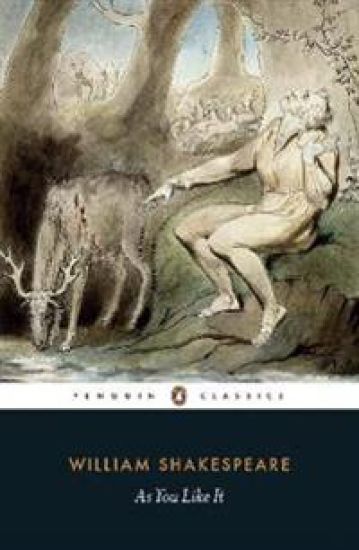
'All the world's a stage, And all the men and women merely players'Rosalind, banished by her cruel uncle, travels secretly to the Forest of Arden, where her exiled father holds court. There, dressed as a boy to avoid discovery, she encounters the man she loves - now a fellow exile - and resolves to remain in disguise to test his feelings for her. One of Shakespeare's most sunny, fast-paced and accessible comedies, As You Like It is an exuberant combination of concealed identities and verbal jousting, burlesque and pastoral dream, reconciliations and multiple weddings. Used and Recommended by the National TheatreGeneral Editor Stanley WellsEdited by H. J. Oliver Introduction by Katherine Duncan-Jones
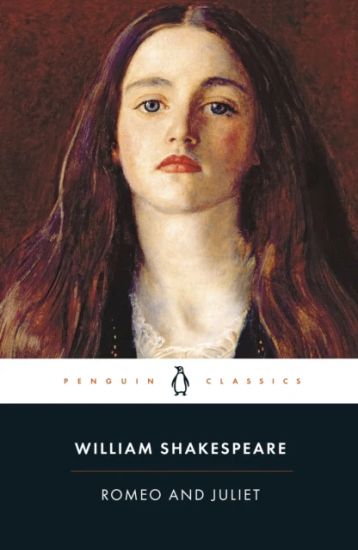
'Shakespeare invented the human as we continue to know it' Harold BloomSet in a city torn apart by feuds and gang warfare, Shakespeare's immortal drama tells the story of star-crossed lovers, rival dynasties and bloody revenge. Romeo and Juliet is a hymn to youth and the thrill of forbidden love, charged with sexual passion and violence, but also a warning of death: a dazzling combination of bawdy comedy and high tragedy. Used and Recommended by the National TheatreGeneral Editor Stanley WellsEdited by T. J. B. Spencer Introduction by Adrian Poole

King John - today remembered as the villainous opponent of Robin Hood and the Magna Carta - was for Shakespeare and his audience a heroic figure who stood up to England's enemies. This Penguin Shakespeare edition is edited by R. L. Smallwood with an introduction by Eugene Giddens.'This England never did, nor never shall,Lie at the proud foot of a conqueror'Under the rule of King John, England is forced into war when the French challenge the legitimacy of John's claim to the throne and determine to install his nephew Arthur in his place. But political principles, hypocritically flaunted, are soon forgotten, as the French and English kings form an alliance based on cynical self-interest. And as the desire to cling to power dominates England's paranoid and weak-willed king, his country is threatened with disaster. This book contains a general introduction to Shakespeare's life and Elizabethan theatre, a separate introduction to Richard II, a chronology, suggestions for further reading, an essay discussing performance options on both stage and screen, and a commentary. William Shakespeare (1564-1616) was born to John Shakespeare and Mary Arden in late April 1564 in Stratford-upon-Avon. He wrote about 38 plays (the precise number is uncertain), many of which are regarded as the most exceptional works of drama ever produced, including Romeo and Juliet (1595), Henry V (1599), Hamlet (1601), Othello (1604), King Lear (1606) and Macbeth (1606), as well as a collection of 154 sonnets, which are among the most profound and influential love poetry in English.