Kirjailija
William Shakespeare
Kirjat ja teokset yhdessä paikassa: 4 976 kirjaa, julkaisuja vuosilta 1798–2027, suosituimpiin kuuluu Hamlet. Vertaile teosten hintoja ja tarkista saatavuus suomalaisista kirjakaupoista.
4 976 kirjaa
Kirjojen julkaisuvuodet: 1798–2027.
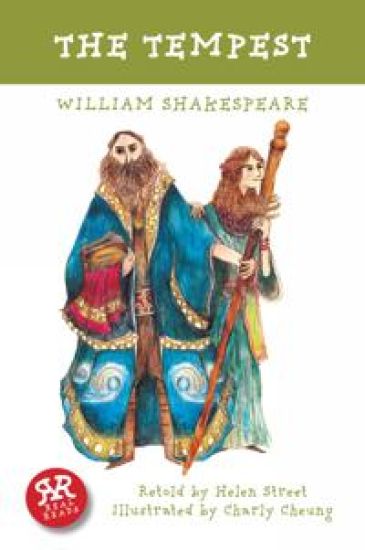
A violent storm shipwrecks the King of Naples and his noblemen on what appears to be an uninhabited island. What the king doesn’t know is that they have been brought here by powerful magic. Prospero, the mysterious ruler of the island, has a plan, but will he use his magic for good or bad against the castaways? His daughter, Miranda, has never seen another man except her father. What will she think of the stranger who stumbles into her life? Prospero’s monstrous servant, Caliban, sees a chance to overthrow his master. Will he succeed? Enchantment and treachery are everywhere on the island – which will prove the stronger?
När William Shakespeare dog i Stratford 1616 hade arton av hans pjäser kommit ut i tryck, vilket var unikt många för en dramatiker på den tiden. Idag, när hans pjäser spelas mer än någonsin på världens teatrar, är många forskare överens om att Shakespeare avsåg att hans pjäser både skulle kunna spelas på scenen och avnjutas genom enskild läsning. I denna volym presenteras två av Shakespeares mäktigaste tragedier i nyöversättning av Jan Ristarp: "Kung Lear" - om en åldrad och egenkär regent som begår ett ödesdigert misstag när han överlåter sitt rike åt två otacksamma döttrar och förskjuter den tredje. "Antonius och Kleopatra" - om maktkamp och inbördesstrider i Romarriket och den undergångsdömda kärleken mellan de historiska titelpersonerna. Shakespearekännaren Kent Hägglund bidrar med ett omfångsrikt efterord.
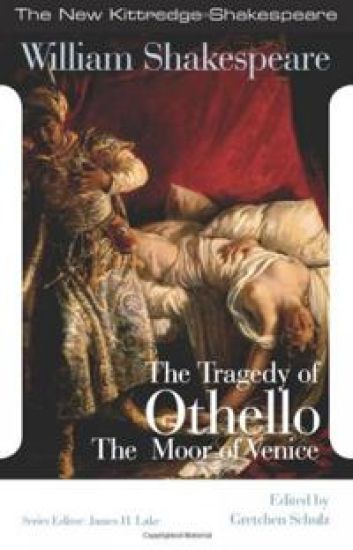
The Tragedy of Othello, the Moor of Venice
William Shakespeare
Focus Publishing/R Pullins Co
2010
nidottu
George Lyman Kittredge's insightful editions of Shakespeare have endured in part because of his eclecticism, his diversity of interests, and his wide-ranging accomplishments, all of which are reflected in the valuable notes in each volume. These new editions have specific emphasis on the performance histories of the plays (on stage and screen). Features of each edition include: - The original introduction to the Kittredge Edition- Editor's Introduction to the Focus Edition. An overview on major themes of the plays, and sections on the play's performance history on stage and screen.- Explanatory Notes. The explanatory notes either expand on Kittredge's superb glosses, or, in the case of plays for which he did not write notes, give the needed explanations for Shakespeare's sometimes demanding language.- Performance notes. These appear separately and immediately below the textual footnotes and include discussions of noteworthy stagings of the plays, issues of interpretation, and film and stage choices.- How to read the play as Performance Section. A discussion of the written play vs. the play as performed and the various ways in which Shakespeare's words allow the reader to envision the work "off the page."- Comprehensive Timeline. Covering major historical events (with brief annotations) as well as relevant details from Shakespeare's life. Some of the Chronologies include time chronologies within the plays. - Topics for Discussion and Further Study Section. Critical Issues: Dealing with the text in a larger context and considerations of character, genre, language, and interpretative problems. Performance Issues: Problems and intricacies of staging the play connected to chief issues discussed in the Focus Editions' Introduction.- Select Bibliography & Filmography Each New Kittredge edition also includes screen grabs from major productions, for comparison and scene study.

As you like it
William Shakespeare; Frederick James Furnivall; Francis William Clarke
BIBLIOLIFE, LLC
2010
pokkari
This version of the world's most famous drama of tragic young love was performed as part of the Plays at the Garrick Season in 2016, starring Derek Jacobi as Mercutio, Meera Syal as the Nurse, and Lily James and Richard Madden as the star-crossed lovers. This official tie-in edition features an introduction and interviews with Jacobi, Syal, Madden and James.
George Lyman Kittredge's insightful editions of Shakespeare have endured in part because of his eclecticism, his diversity of interests, and his wide-ranging accomplishments, all of which are reflected in the valuable notes in each volume. These new editions have specific emphasis on the performance histories of the plays (on stage and screen). Features of each edition include: - The original introduction to the Kittredge Edition- Editor's Introduction to the Focus Edition. An overview on major themes of the plays, and sections on the play's performance history on stage and screen.- Explanatory Notes. The explanatory notes either expand on Kittredge's superb glosses, or, in the case of plays for which he did not write notes, give the needed explanations for Shakespeare's sometimes demanding language.- Performance notes. These appear separately and immediately below the textual footnotes and include discussions of noteworthy stagings of the plays, issues of interpretation, and film and stage choices.- How to read the play as Performance Section. A discussion of the written play vs. the play as performed and the various ways in which Shakespeare's words allow the reader to envision the work "off the page."- Comprehensive Timeline. Covering major historical events (with brief annotations) as well as relevant details from Shakespeare's life. Some of the Chronologies include time chronologies within the plays. - Topics for Discussion and Further Study Section. Critical Issues: Dealing with the text in a larger context and considerations of character, genre, language, and interpretative problems. Performance Issues: Problems and intricacies of staging the play connected to chief issues discussed in the Focus Editions' Introduction.- Select Bibliography & Filmography Each New Kittredge edition also includes screen grabs from major productions, for comparison and scene study.
Inspired by the flotsam of contemporary culture, by the language of journalism and spam emails, Philip Terry transforms Shakespeare's sonnet sequence into a celebration of the possibilities of language unleashed. Shakespeare's themes of fading beauty, posterity, immortality and death find their contemporary responses in the world of celebrity gossip, consumer products and the credit crunch. The results spark with energy, as disrespectful and anarchic as a cartoon - and as assured in their control of line. Philip Terry, an acclaimed translator of the poetry of Raymond Queneau, plays language games by the rules of Oulipo in his creation of a Shakespearean chimaera, the hybrid that takes on a life of its own.
The dramatic works of William Shakspeare... embracing a life of the poet, and notes, original and selected Volume 4
John Payne Collier; Samuel Weller Singer; William Shakespeare
Nabu Press
2010
pokkari
The Old-Spelling Shakespeare
William Shakespeare; Frederick James Furnivall; W G 1845 Boswell-Stone
Nabu Press
2010
pokkari
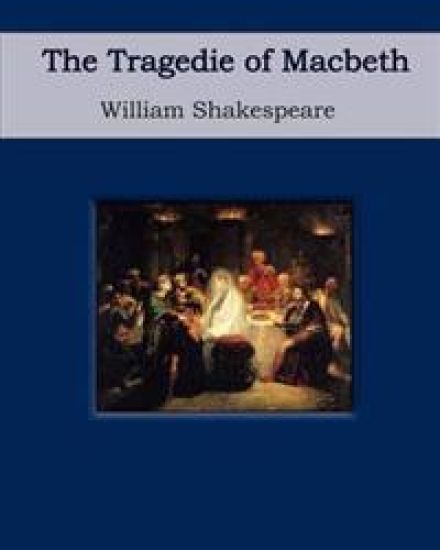
The Tragedie of Macbeth
William Shakespeare
Createspace Independent Publishing Platform
2010
nidottu
The Old-Spelling Shakespeare
William Shakespeare; Frederick James Furnivall; W G 1845-1904 Boswell-Stone
Nabu Press
2010
pokkari
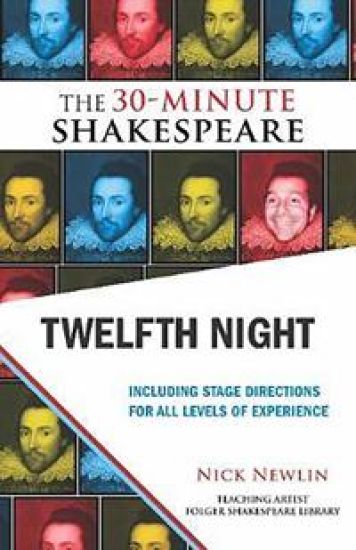
Planning a school or amateur Shakespeare production? The best way to experience the plays is to perform them, but getting started can be a challenge: The complete plays are too long and complex, while scene selections or simplified language are too limited. "The 30-Minute Shakespeare" is a new series of abridgements that tell the ?story” of each play from start to finish while keeping the beauty of Shakespeare’s language intact. Specific stage directions and character suggestions give even inexperienced actors the tools to perform Shakespeare with confidence, understanding, and fun! This cutting of TWELFTH NIGHT, Shakespeare's bittersweet comic masterpiece, consists of three classic scenes. After an extended introductory narration, the action begins with Feste the Fool consoling a mourning Lady Olivia with wit and wordplay. Viola (disguised as a male Cesario) woos Olivia on behalf of Duke Orsino, but Olivia falls for the messenger Viola/Cesario instead. The final scene in Olivia's kitchen gives young actors an easy and specific way to play late-night revelry, as Sir Toby Belch and his friends amuse themselves with the censorious but ultimately hapless Malvolio. One highlight of the production is a group "rap" version of the song "Come Away Death." The edition also includes an essay by editor Nick Newlin on how to produce a Shakespeare play with novice actors, and notes about the original production of this abridgement at the Folger Shakespeare Library's annual Student Shakespeare Festival.
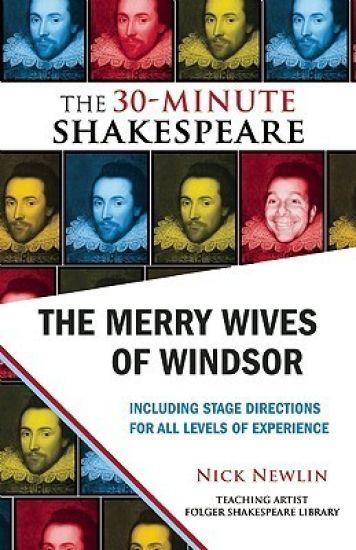
The Merry Wives of Windsor: The 30-Minute Shakespeare
William Shakespeare
Nicolo Whimsey Press
2010
pokkari
Planning a school or amateur Shakespeare production? The best way to experience the plays is to perform them, but getting started can be a challenge: The complete plays are too long and complex, while scene selections or simplified language are too limited. "The 30-Minute Shakespeare" is a new series of abridgements that tell the ?story” of each play from start to finish while keeping the beauty of Shakespeare’s language intact. Specific stage directions and character suggestions give even inexperienced actors the tools to perform Shakespeare with confidence, understanding, and fun! This cutting of THE MERRY WIVES OF WINDSOR begins with one of Shakespeare's favorite fat knights, Sir John Falstaff, announcing his intention to woo both Mistress Ford and Mistress Page simultaneously, to the delight of his cohorts Bardolph, Pistol, and Nym, who then decide to double-cross Falstaff. The characters' movements on stage are clearly denoted so that even inexperienced actors can give the scenes life: Robin is nearsighted, Bardolph is a drunk who tries to juggle, and Pistol and Nym are constantly jostling for position. Other key moments include the hilarious wooing of Mistress Ford by Falstaff and the hysterical concealment of Falstaff in the laundry basket. The cutting ends in the woods with Falstaff dressed as a stag, being tormented by fairies for his comeuppance. The edition also includes an essay by editor Nick Newlin on how to produce a Shakespeare play with novice actors, and notes about the original production of this abridgement at the Folger Shakespeare Library's annual Student Shakespeare Festival.
Mr. William Shakespeare, his Comedies, Histories, and Tragedies; Volume 3
William Shakespeare
BIBLIOLIFE, LLC
2010
pokkari