Kirjojen hintavertailu – 12 859 829 kirjaa ja 27 kauppaa
Kirjailija
William Sims Bainbridge
Kirjat ja teokset yhdessä paikassa: 32 kirjaa, julkaisuja vuosilta 1986–2025, suosituimpiin kuuluu Religion, Deviance, and Social Control. Vertaile teosten hintoja ja tarkista saatavuus suomalaisista kirjakaupoista.
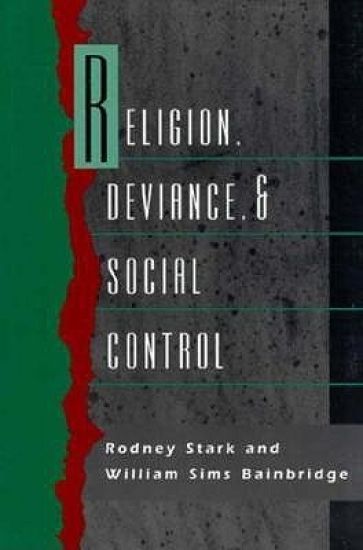
Does religion have the power to regulate human behavior? If so, under what conditions can it prevent crime, delinquency, suicide, alcoholism, drug abuse, or joining cults? Despite the fact that ordinary citizens assume religion deters deviant behavior, there has been little systematic scientific research on these crucial questions. This book is the first comprehensive analysis, drawing on a wide range of historical and contemporary data, and written in a style that will appeal to readers from many intellectual backgrounds.
Does religion have the power to regulate human behavior? If so, under what conditions can it prevent crime, delinquency, suicide, alcoholism, drug abuse, or joining cults? Despite the fact that ordinary citizens assume religion deters deviant behavior, there has been little systematic scientific research on these crucial questions. This book is the first comprehensive analysis, drawing on a wide range of historical and contemporary data, and written in a style that will appeal to readers from many intellectual backgrounds.
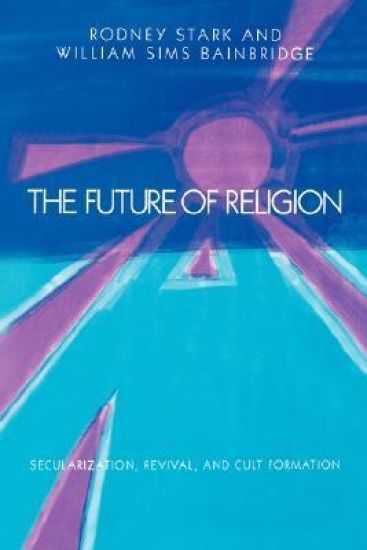
Religion is alive and well in the modern world, and the social-scientific study of religion is undergoing a renaissance. For much of this century, respected social theorists predicted the death of religion as inevitable consequence of science, education, and modern economics. But they were wrong. Stark and Bainbridge set out to explain the survival of religion. Using information derived from numerous surveys, censuses, historical case studies, and ethnographic field expeditions, they chart the full sweep of contemporary religion from the traditional denominations to the most fervent cults. This wealth of information is located within a coherent theoretical framework that examines religion as a social response to human needs, both the general needs shared by all and the desires specific to those who are denied the economic rewards or prestige enjoyed by the privileged. By explaining the forms taken by religions today, Stark and Bainbridge allow us to understand its persistence in a secular age and its prospects for the future.
Lucifer's Power: Beliefs and Practicesof the Process Cult offers a riveting exploration into oneof the most mysterious and influential cults of the 20th century. Founded inLondon in 1963 by Mary Ann MacLean and Robert de Grimston, The Process Churchof the Final Judgement emerged from a scientology-inspired psychotherapy groupand quickly became a cultural phenomenon before its dramatic split in 1974. What did The Process truly believe? Their secretive nature kept many in thedark, but sociologist William Sims Bainbridge gained unprecedented access tothis elusive group. As a young researcher in the late sixties, Bainbridgeearned the trust of the Processians in Boston, becoming the only non-member towitness their rituals and practices firsthand. His rare and sought-after book, Satan'sPower: A Deviant Psychotherapy Cult (1978), first unveiled hisgroundbreaking findings. Now, fifty years after the cult's decline, Bainbridge revisits and expandsupon his seminal work in Lucifer's Power. This updatededition uncovers the motivations of The Process's members, reveals theirintricate beliefs and rituals, and explores the cult's enduring legacy andinfluence. Packed with new material and never-before-seen historicalphotographs taken by Bainbridge during the height of The Process's popularity, this book provides a comprehensive and compelling look into the world of TheProcess Church of the Final Judgement.
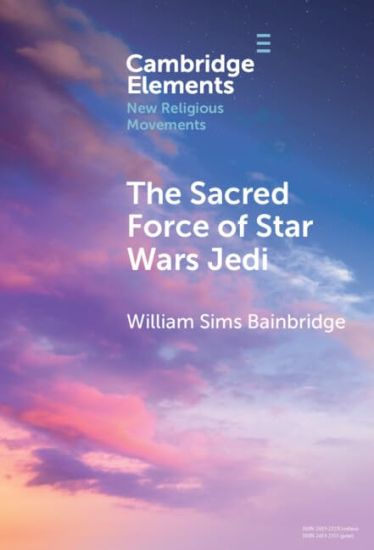
As secularization threatens the stability of traditional religions, Star Wars provides a case study of how key functions of religion may transfer to innovative organizations and subcultures that challenge conventional definitions of faith, sacredness, and revival. This Element therefore examines the vast community of fans, especially gamers, who have turned Star Wars into a parareligion, providing them with a sense of the meaning of life and offering psychological compensators for human problems. The research methods include ethnography, participant observation, census of roles played by gaming participants, and recommender system statistics. The Element also shows the genetic connections between Star Wars and its predecessors in science fiction. Investigating the Star Wars fandom phenomenon – which involves hundreds of thousands of people – illustrates how audience cults and client cults evolve. Ultimately, Star Wars remains culturally and economically significant as we approach completion of its first half-century.
As secularization threatens the stability of traditional religions, Star Wars provides a case study of how key functions of religion may transfer to innovative organizations and subcultures that challenge conventional definitions of faith, sacredness, and revival. This Element therefore examines the vast community of fans, especially gamers, who have turned Star Wars into a parareligion, providing them with a sense of the meaning of life and offering psychological compensators for human problems. The research methods include ethnography, participant observation, census of roles played by gaming participants, and recommender system statistics. The Element also shows the genetic connections between Star Wars and its predecessors in science fiction. Investigating the Star Wars fandom phenomenon – which involves hundreds of thousands of people – illustrates how audience cults and client cults evolve. Ultimately, Star Wars remains culturally and economically significant as we approach completion of its first half-century.
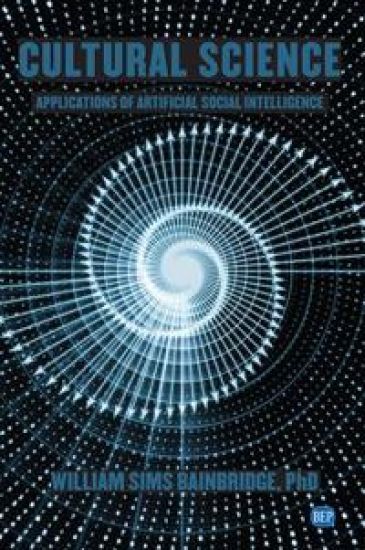
In our time of great and uncertain change, business, government, and education must partner in many forms of technical and cultural convergence–for the benefit of both human welfare and economic recovery. This innovative book explores the new relationships connecting computer science, social science, and the humanities. One popular form of artificial social intelligence, recommender systems, can become a far more valuable tool for research on the arts, beginning with movies and computer games, then extending to all the other art forms. While artificial intelligence can be a powerful tool for description of physical reality, it must become both social and cultural if it is to be a valued tool of human expression. Many new developments offer opportunities and challenges for both industry and government policy. This book shows how artificial intelligence and related information technologies can converge successfully with the social sciences and humanities, so together they can achieve maximum benefits for people.
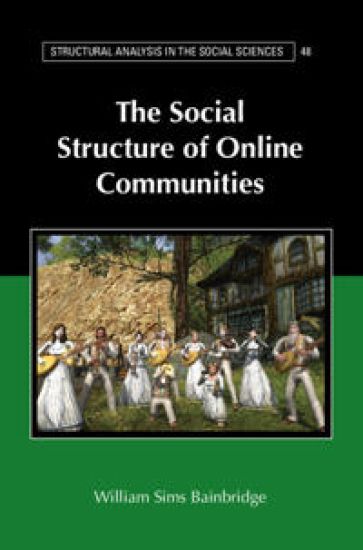
With great potential benefit and possible harm, online social media platforms are transforming human society. Based on decades of deep exploration, distinguished scholar William Sims Bainbridge surveys our complex virtual society, harvesting insights about the future of our real world. Many pilot studies demonstrate valuable research methods and explanatory theories. Tracing membership interlocks between Facebook groups can chart the structure of a social movement, like the one devoted to future spaceflight development. Statistical data on the roles played by people in massively multiplayer online games illustrate the Silicon Law: information technology energizes both freedom and control, in a dynamic balance. The significance of open-source software suggests the traditional distinction between professional and amateur may fade, whereas web-based conflicts between religious and political groups imply that chasms are opening in civil society. This analysis of online space and the divergent communities is long overdue.
Distributed manufacturing offers the promise of bringing jobs back to local communities, producing goods that are personalized or harmonize with distinctive cultures, and thereby reversing significant aspects of the globalization that has dominated in recent years. Large corporations may still have important roles to play, but in collaboration with local workshops, providing machinery, software, databases of designs, and communication media suitable for a diverse and dynamic workforce. For years, a set of computer simulation laboratories has flourished, in which millions of people have used virtual machines to produce a great variety of products: massively multiplayer online role-playing games. Their systems are highly diverse, complex, and provide information capable of serious social science analysis. This book deeply explores 30 of these production-capable social media, based on thousands of hours of observation and extensive collection of statistical data, extracting hypotheses that may generalize to the real-world distributed manufacturing of the near future. This book begins with an overview of this universe of online virtual worlds then demonstrates the principles of virtual manufacturing, modes of work-related communication, socio-economic structures and dynamics, and the function of artificial intelligence in these human-technology systems. It concludes with consideration of the large-scale technical and cultural variation illustrated both by individual examples and by the rather large industry in which they have long been successful.
At the intersection of astronautics, computer science, and social science, this book introduces the challenges and insights associated with computer simulation of human society in outer space, and of the dynamics of terrestrial enthusiasm for space exploration. Never before have so many dynamic representations of space-related social systems existed, some deeply analyzing the logical implications of social-scientific theories, and others open for experience by the general public as computer-generated virtual worlds. Fascinating software ranges from multi-agent artificial intelligence models of civilization, to space-oriented massively multiplayer online games, to educational programs suitable for schools or even for the world's space exploration agencies. At the present time, when actual forays by humans into space are scarce, computer simulations of space societies are an excellent way to prepare for a renaissance of exploration beyond the bounds of Earth.
In the modern era, every family and local community can cultivate its own history, endowing living people with meanings inherited from the people of the past, by means of today’s computer-based information and communication technologies. A new profession is emerging, family historians, serving the wider public by assisting in collection and analysis of fascinating data, by teaching talented amateur historians, and by producing complete narratives. Essential are the skills and technologies required to preserve and connect photos, movies, videos, diaries, memoirs, correspondence, artefacts and even architecture such as homes. Online genealogical services are well established sources of official government records, but usually not for recent decades, and not covering the valuable records of legal, medical, and religious organizations. Information can be shared and interpreted by family members through oral history interviews, social media, and online private archives such as wikisand shared file depositories. This book explores a wide variety of online information sources and achieves coherence by documenting and interpreting the history of a particular extended American family on the basis of 9 decades of movies and videos, 17 decades of photographs, and centuries of documents. Starting now, any family may begin to preserve their current experiences for the historians of the future, but this will require social as well as technical innovations. This book is the essential resource, providing the fundamental principles, effective methods, and fascinating questions required to make our past live again.
This book discusses secularization, arguing that it may be more complex and significant than is generally recognized. Using a number of online exploration methods, the author provides insights into how religion may be changing, and how information technology might be energized in this process. Working from the premise that the relationship between science and religion is complex, the author demonstrates that while science has contradicted some specific religious beliefs, science itself may have been facilitated by beliefs formed many centuries ago. Science assists engineers in the development of powerful new technologies, and asserts that the universe is based on a set of fundamental principles that can be understood by humans through the assistance of mathematics. The challenging ideas discussed will benefit readers through sharing a variety of Internet-based research methods and cultural discoveries. The book provides a balance betweenquantitative methods, illustrated by 24 tables of statistics, and qualitative methods, illustrated by 30 screenshots of computer-generated virtual worlds. Analysis interweaves with description, creating a sense of involvement in the experience of exploring online realities at the same time as radical insights are shared.
At the intersection of astronautics, computer science, and social science, this book introduces the challenges and insights associated with computer simulation of human society in outer space, and of the dynamics of terrestrial enthusiasm for space exploration. Never before have so many dynamic representations of space-related social systems existed, some deeply analyzing the logical implications of social-scientific theories, and others open for experience by the general public as computer-generated virtual worlds. Fascinating software ranges from multi-agent artificial intelligence models of civilization, to space-oriented massively multiplayer online games, to educational programs suitable for schools or even for the world's space exploration agencies. At the present time, when actual forays by humans into space are scarce, computer simulations of space societies are an excellent way to prepare for a renaissance of exploration beyond the bounds of Earth.
This book explores the remarkable sociocultural convergence in multiplayer online games and other virtual worlds, through the unification of computer science, social science, and the humanities. The emergence of online media provides not only new methods for collecting social science data, but also contexts for developing theory and conducting education in the arts as well as technology. Notably, role-playing games and virtual worlds naturally demonstrate many classical concepts about human behaviour, in ways that encourage innovative thinking. The inspiration derives from the internationally shared values developed in a fifteen-year series of conferences on science and technology convergence. The primary methodology is focused on sending avatars, representing classical social theorists or schools of thought, into online gameworlds that harmonize with, or challenge, their fundamental ideas, including technological determinism, urban sociology, group formation,freedom versus control, class stratification, linguistic variation, functional equivalence across cultures, behavioural psychology, civilization collapse, and ethnic pluralism. Researchers and students in the social and behavioural sciences will benefit from the many diverse examples of how both qualitative and quantitative science of culture and society can be performed in online communities of many kinds, even as artists and gamers learn styles and skills they may apply in their own work and play.
This book discusses secularization, arguing that it may be more complex and significant than is generally recognized. Using a number of online exploration methods, the author provides insights into how religion may be changing, and how information technology might be energized in this process. Working from the premise that the relationship between science and religion is complex, the author demonstrates that while science has contradicted some specific religious beliefs, science itself may have been facilitated by beliefs formed many centuries ago. Science assists engineers in the development of powerful new technologies, and asserts that the universe is based on a set of fundamental principles that can be understood by humans through the assistance of mathematics. The challenging ideas discussed will benefit readers through sharing a variety of Internet-based research methods and cultural discoveries. The book provides a balance betweenquantitative methods, illustrated by 24 tables of statistics, and qualitative methods, illustrated by 30 screenshots of computer-generated virtual worlds. Analysis interweaves with description, creating a sense of involvement in the experience of exploring online realities at the same time as radical insights are shared.
Personality Capture and Emulation is the gateway to an amazing future that actually may be achieved, enabling the preservation and simulation of human personalities at progressively higher levels of fidelity. This challenge is no longer the province merely of uninhibited visionaries, but has become a solid field of research, drawing upon a wide range of information technologies in human-centered computing and cyber-human systems. Even at modest levels of accomplishment, research in this emerging area requires convergence of cognitive, social, and cultural sciences, in cooperation with information engineering and artificial intelligence, thus stimulating new multidisciplinary perspectives. Therefore this book will inspire many specific research and development projects that will produce their own valuable outcomes, even as the totality of the work moves us closer to a major revolution in human life. Will it ever really be possible to transfer a human personality at death to a technology that permits continued life? Or will people come to see themselves as elements in a larger socio-cultural system, for which a societal information system can provide collective immortality even after the demise of individuals? A large number and variety of pilot studies and programming projects are offered as prototypes for research that innovators in many fields may exploit for the achievement of their own goals. Together, they provide an empirical basis to strengthen the intellectual quality of several current debates at the frontiers of the human and information sciences.
Star Worlds explores the future-oriented universe of online virtual worlds connected with popular science fiction—specifically, with Star Wars and Star Trek—that have been inhabited for over a decade by computer gamers. The Star Wars and Star Trek franchises, both of which have shaped the dominant science fiction mythologies of the last half-century, offer profound conceptions of the tension between freedom and control in human economic, political, and social interactions. Bainbridge investigates the human and technological dynamics of four online virtual worlds based on these two very different traditions: the massive multiplayer online games Star Wars Galaxies; Star Wars: The Old Republic; Star Trek Online; and the Star Trek community in the non-game, user-created virtual environment, Second Life. The four “star worlds” explored in this book illustrate the dilemmas concerning the role of technology as liberator or oppressor in our post-industrial society, and represent computer simulations of future possibilities of human experience. Bainbridge considers the relationship between a real person and the role that person plays, the relationship of an individual to society, and the relationship of human beings to computing technology. In addition to collecting ethnographic and quantitative data about the social behavior of other players, he has immersed himself in each of these worlds, role-playing 14 avatars with different skills and goals to gain new insights into the variety of player experience from a personal perspective.
Star Worlds explores the future-oriented universe of online virtual worlds connected with popular science fiction—specifically, with Star Wars and Star Trek—that have been inhabited for over a decade by computer gamers. The Star Wars and Star Trek franchises, both of which have shaped the dominant science fiction mythologies of the last half-century, offer profound conceptions of the tension between freedom and control in human economic, political, and social interactions. Bainbridge investigates the human and technological dynamics of four online virtual worlds based on these two very different traditions: the massive multiplayer online games Star Wars Galaxies; Star Wars: The Old Republic; Star Trek Online; and the Star Trek community in the non-game, user-created virtual environment, Second Life. The four “star worlds” explored in this book illustrate the dilemmas concerning the role of technology as liberator or oppressor in our post-industrial society, and represent computer simulations of future possibilities of human experience. Bainbridge considers the relationship between a real person and the role that person plays, the relationship of an individual to society, and the relationship of human beings to computing technology. In addition to collecting ethnographic and quantitative data about the social behavior of other players, he has immersed himself in each of these worlds, role-playing 14 avatars with different skills and goals to gain new insights into the variety of player experience from a personal perspective.
This book presents the most serious and comprehensive study, by far, of American public perceptions about the meaning of space exploration, analyzing vast troves of questionnaire data collected by many researchers and polling firms over a span of six decades and anchored in influential social science theories. It doesn't simply report the percentages who held various opinions, but employs sophisticated statistical techniques to answer profound questions and achieve fresh discoveries. Both the Bush and the Obama administrations have cut back severely on fundamental research in space science and engineering. Understanding better what space exploration means for citizens can contribute to charting a feasible but progressive course. Since the end of the Space Race between the US and the USSR, social scientists have almost completely ignored space exploration as a topic for serious analysis and this book seeks to revive that kind of contribution. The author communicates the insights in a lucid style, not only intelligible but interesting to readers from a variety of backgrounds.
This book explores the remarkable sociocultural convergence in multiplayer online games and other virtual worlds, through the unification of computer science, social science, and the humanities. The emergence of online media provides not only new methods for collecting social science data, but also contexts for developing theory and conducting education in the arts as well as technology. Notably, role-playing games and virtual worlds naturally demonstrate many classical concepts about human behaviour, in ways that encourage innovative thinking. The inspiration derives from the internationally shared values developed in a fifteen-year series of conferences on science and technology convergence. The primary methodology is focused on sending avatars, representing classical social theorists or schools of thought, into online gameworlds that harmonize with, or challenge, their fundamental ideas, including technological determinism, urban sociology, group formation,freedom versus control, class stratification, linguistic variation, functional equivalence across cultures, behavioural psychology, civilization collapse, and ethnic pluralism. Researchers and students in the social and behavioural sciences will benefit from the many diverse examples of how both qualitative and quantitative science of culture and society can be performed in online communities of many kinds, even as artists and gamers learn styles and skills they may apply in their own work and play.