Kirjailija
William St Clair
Kirjat ja teokset yhdessä paikassa: 34 kirjaa, julkaisuja vuosilta 1991–2022, suosituimpiin kuuluu The Door of No Return. Vertaile teosten hintoja ja tarkista saatavuus suomalaisista kirjakaupoista.
Nimi esiintyy myös muodoissa: William St.Clair, William St. Clair
34 kirjaa
Kirjojen julkaisuvuodet: 1991–2022.
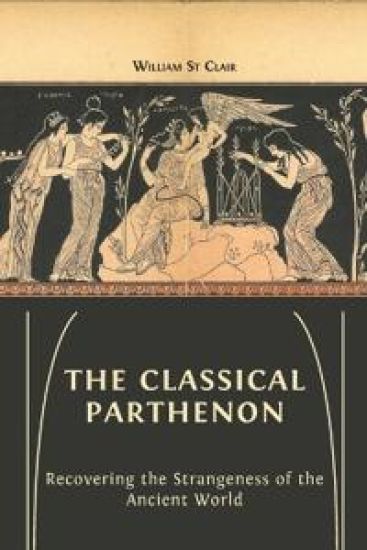
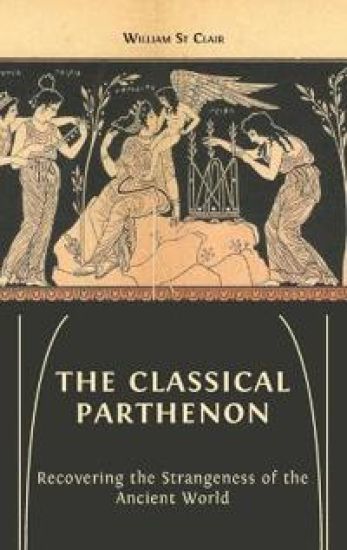
Complementing Who Saved the Parthenon? this companion volume sets aside more recent narratives surrounding the Athenian Acropolis, supposedly 'the very symbol of democracy itself', instead asking if we can truly access an ancient past imputed with modern meaning. And, if so, how? In this book William St Clair presents a reconstructed understanding of the Parthenon from within the classical Athenian worldview. He explores its role and meaning by weaving together a range of textual and visual sources into two innovative oratorical experiments - a speech in the style of Thucydides and a first-century CE rhetorical exercise - which are used to develop a narrative analysis of the temple structure, revealing a strange story of indigeneity, origins, and empire. The Classical Parthenon offers new answers to old questions, such as the riddle of the Parthenon frieze, and provides a framing device for the wider relationship between visual artefacts, built heritage, and layers of accumulated cultural rhetoric. This groundbreaking and pertinent work will appeal across the disciplines to readers interested in the classics, art history, and the nature of history, while also speaking to a general audience that is interrogating the role of monuments in contemporary society.
Called one of the best books of the year by The Economist, the London Times, and Publishers Weekly, this is the gripping history of Cape Coast Castle in Ghana, the African headquarters of the British slave trade for nearly one hundred and fifty years--until the legal trade was abolished in 1807.
During the four centuries when printed paper was the only means by which texts could be carried across time and distance, everyone engaged in politics, education, religion, and literature believed that reading helped to shape the minds, opinions, attitudes, and ultimately the actions, of readers. In this 2004 book, William St Clair investigates how the national culture can be understood through a quantitative study of the books that were actually read. Centred on the Romantic period in the English-speaking world, but ranging across the whole print era, it reaches startling conclusions about the forces that determined how ideas were carried, through print, into wider society. St Clair provides an in-depth investigation of information, made available here for the first time, on prices, print runs, intellectual property, and readerships gathered from over fifty publishing and printing archives. He offers a picture of the past very different from those presented by traditional approaches. Indispensable to students of English literature, book history, and the history of ideas, the study's conclusions and explanatory models are highly relevant to the issues we face in the age of the internet.
Conduct Literature for Women, Part II, 1640-1710
William St Clair
Pickering Chatto (Publishers) Ltd
2002
muu
This collection aims to give a chronological insight into the evolution of conduct literature, from its early roots in the Renaissance period through to the dramatically different role that women played at the emergence of the 20th century.
Conduct Literature for Women, Part II, 1640-1710 vol 3
William St Clair; Irmgard Maassen
Routledge
2002
sidottu
This collection aims to give a chronological insight into the evolution of conduct literature, from its early roots in the Renaissance period through to the dramatically different role that women played at the emergence of the 20th century.
Conduct Literature for Women, Part II, 1640-1710 vol 4
William St Clair; Irmgard Maassen
Routledge
2002
sidottu
This collection aims to give a chronological insight into the evolution of conduct literature, from its early roots in the Renaissance period through to the dramatically different role that women played at the emergence of the 20th century.
Conduct Literature for Women, Part II, 1640-1710 vol 6
William St Clair; Irmgard Maassen
Routledge
2002
sidottu
This collection aims to give a chronological insight into the evolution of conduct literature, from its early roots in the Renaissance period through to the dramatically different role that women played at the emergence of the 20th century.
Conduct Literature for Women, Part II, 1640-1710 vol 5
William St Clair; Irmgard Maassen
Routledge
2002
sidottu
This collection aims to give a chronological insight into the evolution of conduct literature, from its early roots in the Renaissance period through to the dramatically different role that women played at the emergence of the 20th century.
Conduct Literature for Women, Part II, 1640-1710 vol 2
William St Clair; Irmgard Maassen
Routledge
2002
sidottu
This collection aims to give a chronological insight into the evolution of conduct literature, from its early roots in the Renaissance period through to the dramatically different role that women played at the emergence of the 20th century.
Conduct Literature for Women, Part II, 1640-1710 vol 1
William St Clair; Irmgard Maassen
Routledge
2002
sidottu
This collection aims to give a chronological insight into the evolution of conduct literature, from its early roots in the Renaissance period through to the dramatically different role that women played at the emergence of the 20th century.
Conduct Literature for Women, Part I, 1540-1640 vol 1
William St Clair; Irmgard Maassen
Routledge
2000
sidottu
This collection aims to give a chronological insight into the evolution of conduct literature, from its early roots in the Renaissance period through to the dramatically different role that women played at the emergence of the 20th century.
Conduct Literature for Women, Part I, 1540-1640 vol 3
William St Clair; Irmgard Maassen
Routledge
2000
sidottu
This collection aims to give a chronological insight into the evolution of conduct literature, from its early roots in the Renaissance period through to the dramatically different role that women played at the emergence of the 20th century.