Kirjojen hintavertailu – 12 859 818 kirjaa ja 27 kauppaa
Kirjailija
William Stafford
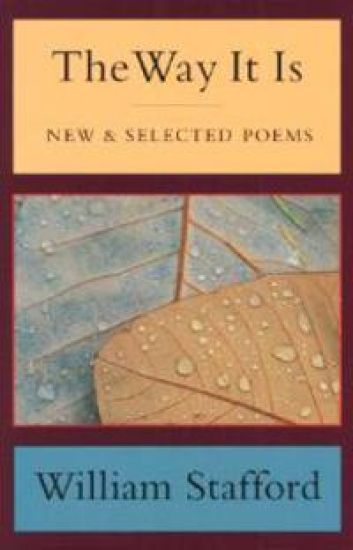
Kirjat ja teokset yhdessä paikassa: 20 kirjaa, julkaisuja vuosilta 1978–2019, suosituimpiin kuuluu The Way It Is. Vertaile teosten hintoja ja tarkista saatavuus suomalaisista kirjakaupoista.
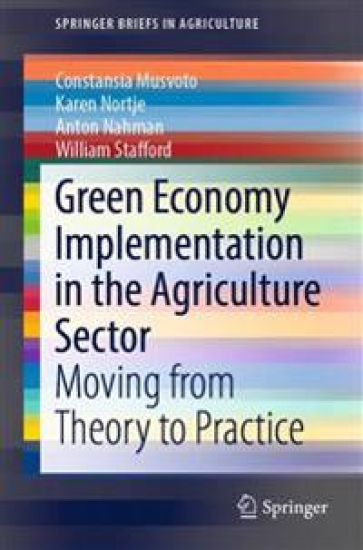
This book, focusing on the agriculture sector, provides useful analysis of the green economy implementation context and a practical framework for implementing vegetable crop production green economy projects. The book addresses a distinct gap, as there are currently no guidelines available for planning and implementing green economy projects in the agriculture sector. The book combines information from desktop reviews and field research on vegetable production in a green economy context in South Africa in order to bridge the gap between the theoretical green economy concept and practical implementation issues that would be encountered at the project level. It includes a step-by-step process for translating abstract green economy principles into tangible projects on the ground, so that the potential benefits of a green economy are realizable.
Djur fyllda av ljus vandrar genom skogen mot någon som siktar med ett gevär laddat med mörker Världen är sådan: Gud rör sig inte och låter det hända om och om igen.
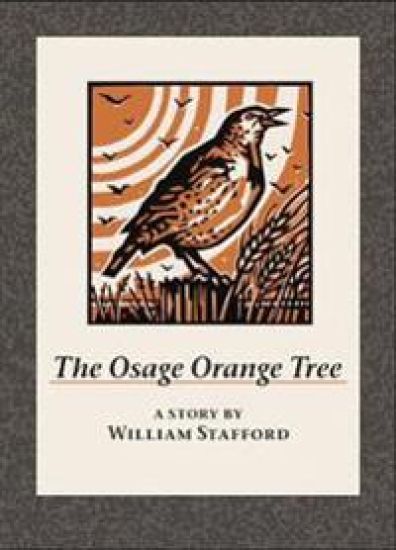
The Osage Orange Tree, a never-before-published story by beloved poet William Stafford, is about young love complicated by misunderstanding and the insecurity of adolescence, set against the backdrop of poverty brought on by the Great Depression. The narrator recalls a girl he once knew. He and Evangeline, both shy, never find the courage to speak to each other in high school. Every evening, however, Evangeline meets him at the Osage orange tree on the edge of her property. He delivers a newspaper to her, and they talk--and as the year progresses a secret friendship blossoms. This magical coming-of-age tale is brought to life through linocut illustrations by Oregon artist Dennis Cunningham, with an afterword by poet Naomi Shihab Nye, a personal friend of Stafford's. In the tradition of the work of great fiction writers like Steinbeck, O'Connor, and Welty, The Osage Orange Tree stands the test of time, not just as an ode to a place and a generation but as a testament to the resilience of a nation and the strength of the human heart.
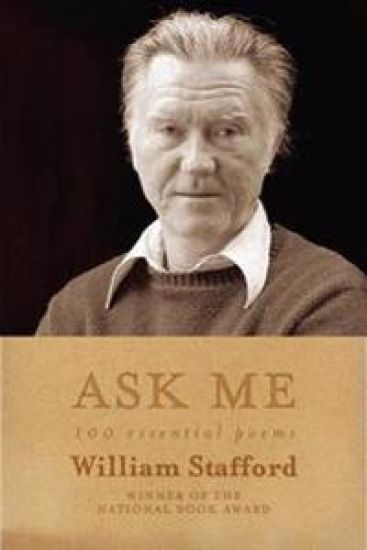
In celebration of the American poet's centennial, Ask Me collects 100 of William Stafford's essential poems together in one title. As a conscientious objector during World War II, whilst assigned to Civilian Public Service camps, Stafford began his daily writing practice, a lifelong early morning ritual of witness. His poetry reveals the consequences of violence, the daily necessity of moral decisions, and the bounty of art. Selected and with a note by Kim Stafford, Ask Me presents the best from a profound and original American voice.
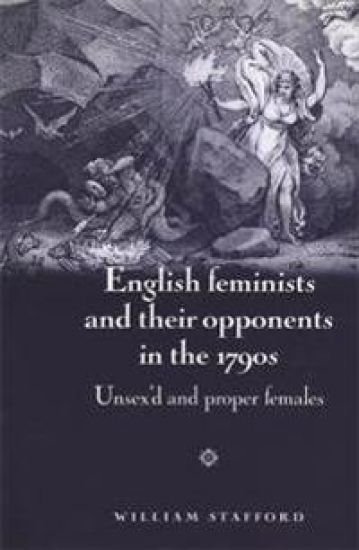
This fascinating book examines what sixteen radical and conservative, famous and notorious British women wrote about their sex in the 1790s. It offers the most comprehensive survey of what they thought about their fellow women with regard to love, sexual desire and marriage; their domestic roles and their engagement in the ‘public’ sphere; and issues of gender and female abilities including sensibility and genius. How contemporary reviewers divided women writers into ‘unsex’d’ and ‘proper’ is investigated, as is the issue of whether they attempted to exclude women from certain kinds of writing. The book reveals the depth of female complaint but contends that women did not passively submit. Conservative and radicals alike sought to extend their sphere of activity, to reform men, challenge gender stereotypes and propose that a woman should be a self for herself and her God rather than for her husband.
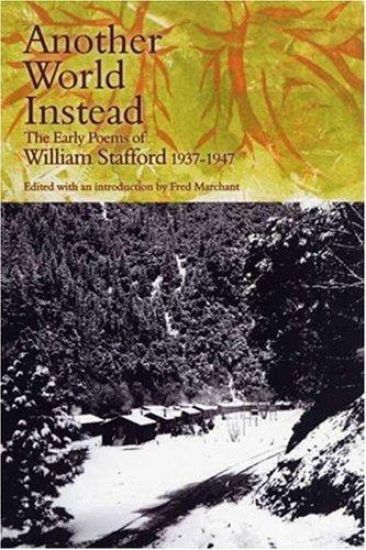
The unpublished early poems of William Stafford now added to "a body of work that represents some of the finest poetry written during the second half of the twentieth] century." (Library Journal) If I could remember all at once--but I have forgotten. But some day, looking along a furrowed cliff, staring beyond the eyes' strength, I'll start the avalancheand every stone will fall separate and revealed. --from "Meditation" Twenty-eight years old and a conscientious objector during World War II, William Stafford was assigned under penalty of law to work in camps, an internal exile within his own country. In this remarkable collection of poems, nearly all of them never before published, the first decade of Stafford's writing life is for the first time made available to readers. Edited by the poet Fred Marchant, one ofthe first marine officers honorably discharged as a conscientious objector during the Vietnam War, Another World Instead tells the story of a committed pacifist living in a time of war and a writer beginning a major life in American poetry.
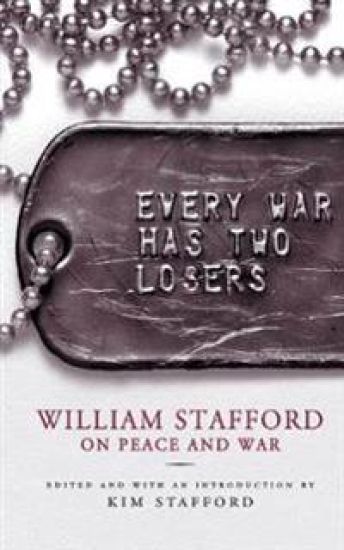
Born the year World War I began, acclaimed poet William Stafford (1914-1993) spent World War II in a camp for conscientious objectors. Throughout a century of conflict he remained convinced that wars simply don’t work. In his writings, Stafford showed it is possible—and crucial—to think independently when fanatics act, and to speak for reconciliation when nations take sides. He believed it was a failure of imagination to only see two options: to fight or to run away. This book gathers the evidence of a lifetime’s commitment to nonviolence, including an account of Stafford’s near-hanging at the hands of American patriots. In excerpts from his daily journal from 1951-1991, Stafford uses questions, alternative views of history, lyric invitations, and direct assessments of our political habits to suggest another way than war. Many of these statements are published here for the first time, together with a generous selection of Stafford’s pacifist poems and interviews from elusive sources. Stafford provides an alternative approach to a nation’s military habit, aggressive instincts, and our legacy of armed ventures in Europe, the Pacific, Korea, Vietnam, the Persian Gulf, Afghanistan, and beyond.
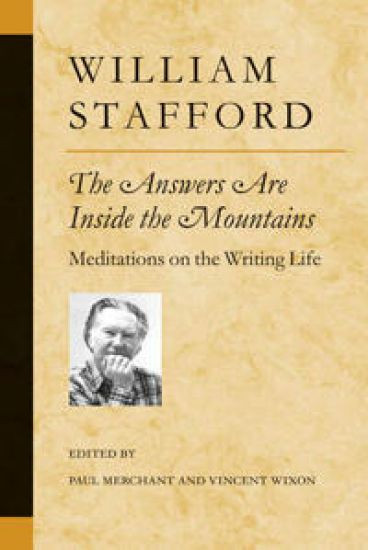
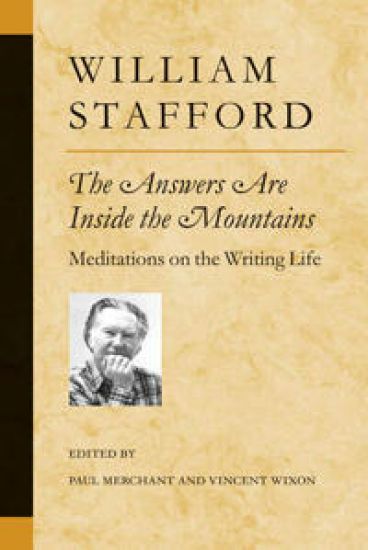
A volume in the Poets on Poetry series, which collects critical works by contemporary poets, gathering together the articles, interviews, and book reviews by which they have articulated the poetics of a new generation. In this fourth collection of reflections on writing and the writing life, the late William Stafford's lifelong refusal to separate his work from the task of living responsibly -- "What a person is shows up in what a person does" -- rings clear. The Answers Are Inside the Mountains collects unpublished interviews, poems, articles, aphorisms, and writing exercises from this great American man of letters and hugely prolific author, who kept a journal for nearly half a century and produced over 20,000 poems -- a staggering output by any standard. The book begins with the words "To overwhelm by rightness," a phrase evoking the two demands Stafford made on himself: to write daily, and to live uprightly. The Answers Are Inside the Mountains lives up to those deceptively simple ethics, and confirms William Stafford's enduringly important voice for our uncertain age. William Stafford (1914-93) authored more than thirty-five books of poetry and prose, including the highly acclaimed Writing the Australian Crawl, You Must Revise Your Life, Crossing Unmarked Snow: Further Views on the Writer's Vocation, and Traveling Through the Dark, winner of the National Book Award for Poetry.
A volume in the Poets on Poetry series, which collects critical works by contemporary poets, gathering together the articles, interviews, and book reviews by which they have articulated the poetics of a new generation. In this fourth collection of reflections on writing and the writing life, the late William Stafford's lifelong refusal to separate his work from the task of living responsibly -- "What a person is shows up in what a person does" -- rings clear. The Answers Are Inside the Mountains collects unpublished interviews, poems, articles, aphorisms, and writing exercises from this great American man of letters and hugely prolific author, who kept a journal for nearly half a century and produced over 20,000 poems -- a staggering output by any standard. The book begins with the words "To overwhelm by rightness," a phrase evoking the two demands Stafford made on himself: to write daily, and to live uprightly. The Answers Are Inside the Mountains lives up to those deceptively simple ethics, and confirms William Stafford's enduringly important voice for our uncertain age. William Stafford (1914-93) authored more than thirty-five books of poetry and prose, including the highly acclaimed Writing the Australian Crawl, You Must Revise Your Life, Crossing Unmarked Snow: Further Views on the Writer's Vocation, and Traveling Through the Dark, winner of the National Book Award for Poetry.
Retrospective collection of William Stafford's work, celebrating the life and writing of one of America's most important poets. Recipient of a National Book Award and Oregon's Poet Laureate, Stafford engaged in a lifetime of writing, habitually composing in the hours before dawn. Remembered both for his outstanding poetry and his continued generosity towards other writers and readers, Stafford is rightly considered as a member of the first family of modern poetry, comfortably taking a place alongside such luminaries as Robert Frost and W. Carlos Williams.
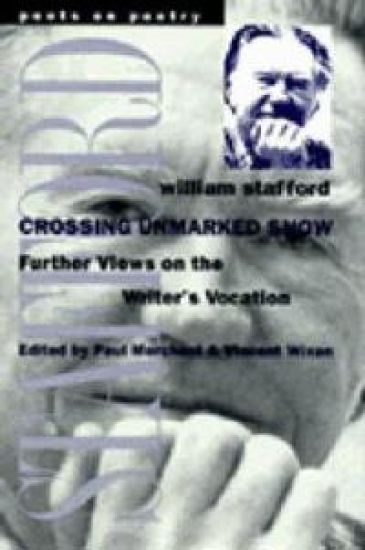
"It is this impulse to change the quality of experience that I recognize as central to creation. . . . Out of all that could be done, you choose one thing. What that one thing is, nothing else can tell you--you come at it over unmarked snow."--William StaffordA plain-spoken but eminently effective poet, the late William Stafford (1914-1993) has managed to shape part of the mainstream of American poetry by distancing himself from its trends and politics. Though his work has always inspired controversy, he was widely admired by students and poetry lovers as well as his own peers. His fascination with the process of writing joined with his love of the land and his faith in the teaching power of nature to produce a unique poetic voice in the last third of the twentieth century. Crossing Unmarked Snow continues--in the tradition of Stafford's well-loved collections Writing the Australian Crawl and You Must Revise Your Life-- collecting prose and poetry on the writer's profession. The book includes reviews and reflections on poets from Theodore Roethke to Carolyn Forche, from May Sarton to Philip Levine; conversations on the making of poems; and a selection of Stafford's own poetry. The book also includes a section on the art of teaching, featuring interviews, writing exercises, and essays on the writer's vocation. William Stafford authored more than thirty-five books of poetry and prose during his lifetime, including the highly acclaimed Writing the Australian Crawl: Views on the Writer's Vocation and You Must Revise Your Life.
"It is this impulse to change the quality of experience that I recognize as central to creation. . . . Out of all that could be done, you choose one thing. What that one thing is, nothing else can tell you--you come at it over unmarked snow."--William StaffordA plain-spoken but eminently effective poet, the late William Stafford (1914-1993) has managed to shape part of the mainstream of American poetry by distancing himself from its trends and politics. Though his work has always inspired controversy, he was widely admired by students and poetry lovers as well as his own peers. His fascination with the process of writing joined with his love of the land and his faith in the teaching power of nature to produce a unique poetic voice in the last third of the twentieth century. Crossing Unmarked Snow continues--in the tradition of Stafford's well-loved collections Writing the Australian Crawl and You Must Revise Your Life-- collecting prose and poetry on the writer's profession. The book includes reviews and reflections on poets from Theodore Roethke to Carolyn Forche, from May Sarton to Philip Levine; conversations on the making of poems; and a selection of Stafford's own poetry. The book also includes a section on the art of teaching, featuring interviews, writing exercises, and essays on the writer's vocation. William Stafford authored more than thirty-five books of poetry and prose during his lifetime, including the highly acclaimed Writing the Australian Crawl: Views on the Writer's Vocation and You Must Revise Your Life.
Chapter One Family and Children with Kit, Age Seven, at the Beach We would climb the highest dune, from there to gaze and come down: the ocean was performing; we contributed our climb. Waves leapfrogged and came straight out of the storm. What should our gaze mean? K it waited for me to decide. Standing on such a hill, what would you tell your child? That was an absolute vista. Those waves raced far, and cold. "How far could you swim, Daddy, in such a storm?" "As far as was needed," I said, and as I talked, I swam. Passing Remark in scenery I like flat country. In life I don't like much to happen. In personalities I like mild colorless people. And in colors I prefer gray and brown. My wife, a vivid girl from the mountains, says, "Then why did you choose me?" Mildly I lower my brown eyes-- there are so many things admirable people do not understand. At Our House Home late, one lamp turned low, crumpled pillow on the couch, wet dishes in the sink (late snack), in every child's room the checked, slow, sure breath-- Suddenly in this doorway where I stand in this house I see this place again, this time the night as quiet, the house as well secured, all breath but mine borne gently on the air-- And where I stand, no one. Consolations "The broken part heals even stronger than the rest," they say. But that takes awhile. And, "Hurry up," the whole world says. They tap their feet. And it still hurts on rainy afternoons when the same absent sun gives no sign it will ever come back. "What difference in a hundred years?" The barn where Agnes hanged her child will fall by then, and the scrawled words erase themselves on the floor where rats' feet run. Boards curl up. Whole new trees drink what the rivers bring. Things die. "No good thing is easy." They told us that, while we dug our fingers into the stones and looked beseechingly into their eyes. They say the hurt is good for you. It makes what comes later a gift all the more >precious in your bleeding hands. For a Lost Child What happens is, the kind of snow that sweeps Wyoming comes down while I'm asleep. Dawn finds our sleeping bag but you are gone. Nowhere now, you call through every storm, a voice that wanders without a home. Across bridges that used to find a shore you pass, and along shadows of trees that fell before you were born. You are a memory too strong to leave this world that slips away even as its precious time goes on. " glimpse you often, faithful to every country we ever fo und, a bright shadow the sun forgot one day. On a map of Spain" find your note left from a trip that year our family traveled: "Daddy, we could meet here." S Memorial: Son Bret In the way you went you were important do not know what you found. In the pattern of my life you stand where you stood always, in the center, a hero, a puzzle, a man. What you might have told me " will never know--the lips went still, the body cold. I am afraid, in the circling stars, in the dark, and even at noon in the light. When I run what am I running from? You turned once to tell me something, but then you glimpsed a shadow on my face and maybe thought, Why tell what hurts? You carried it, my boy,so brave, so far. Now we have all the days, and the sun goes by the same; there is a faint, wandering trail I find sometimes, off through grass and sage. I stop and listen: only summer again--remember?-- The bees, the wind The Light by the Barn The light by the barn that shines all night pales at dawn when a little breeze comes. A little breeze comes breathing the fields from their sleep and waking the slow windmill. The slow windmill sings the long day about anguish and loss to the chickens at work. The little breeze follows the slow windmill and the chickens at work till the sun goes down-- Then the light by the barn again. Any Time Vacation? Well, our children took our love apart: "Why do you hold Daddy's hand?" "Susy's mother doesn't have gray in her hair." And scenes crushed our wonder--Sun Valley, Sawtooths, those reaches of the Inland Passage--while the children took our simple love apart. (Children, how many colors does the light have? Remember the wide shafts of sunlight, roads through the trees, how light examines the road hour by hour? It is all various, no simple on-off colors. And love does not come riding west through the trees to find you. ) "Daddy, tell me your best secret." (I have woven a parachute out o f everything broken; my scars are my shield; and I jump, daylight or dark, into any country, where as I descend I turn native and stumble into terribly human speech and wince recognition.) "When you get old, how do you know what to do?" (Waves will quiet, wind lull; and in that instant I will have all the time in the world; something deeper thanbirthdays will tell me all I need.) "But will you do right?" (Children, children, oh, see that waterfall.) Long Distance We didn't know at the time. It was for us, a telephone call through the world and nobody answered. We thought it was a train far off giving its horn, roving its headlight side to side in its tunnel of darkness and shaking the bridge and our house till dishes rattled, and going away. We thought it a breath climbing the well where Kim almost fell in; it was a breath saying his name, and "Almost got you," but we piled boards and bricks on top and held off that voice. Or maybe it was the song in the stove-- walnut and elm giving forth stored sunlight through that narrow glass eye on the front in the black door that held in the fire. Or a sigh from under the mound of snow where Bret's little car with its toy wheels nestled all winter ready to roll, come spring, and varoom when his feet toddled it along. Or--listen--in the cardboard house we built by the kitchen wall, a doorknob drawn with crayon, Kit's little window peeking out by the table--is it a message from there? And from Aunt Helen's room where she sews all day on a comforter made out of pieces of Grandma's dresses, and the suits for church--maybe those patches rustle their message in her fingers: "Dorothy, for you, and for all the family I sew that we may be warm in the house by the tracks." don't know, but there was a voice, those times, a call through the world that almost rang everywhere, and we looked up--Dorothy, Helen, Bret, Kim, Kit--and only the snow shifted its foot outside in the wind, and nobody heard.
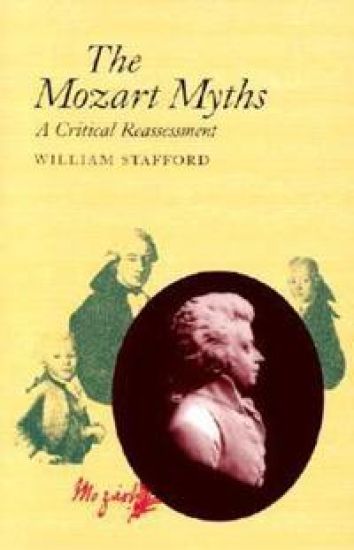
This book is an ambitious attempt to separate what is actually known (and can be known) about Mozart from the many myths and legends that have grown up about his life, character, and death. It subjects individual myths to critical and scholarly scrutiny—weighing the evidence on which it is based, and critically assessing the reliability of that evidence. The author first considers the question of Mozart's death in 1791 at the age of 35, a subject that intrigued his contemporaries and has continued to fascinate posterity. No other aspect of Mozart's life has engendered so many dramatic and colorful myths. The stage play and movie Amadeus incorporated virtually all these myths and, indeed, most of the other myths associated with Mozart. In the remainder of this book, the author treats in similar fashion other legends relating to Mozart's alleged maturity, drinking, extravagance, unreliability, womanizing, and professional failure. There is also much material on the nature of Mozart's genius, the influence of Freemasonry on his work, and the value of his last compositions. The book is illustrated with 8 pages of halftones and line drawings.
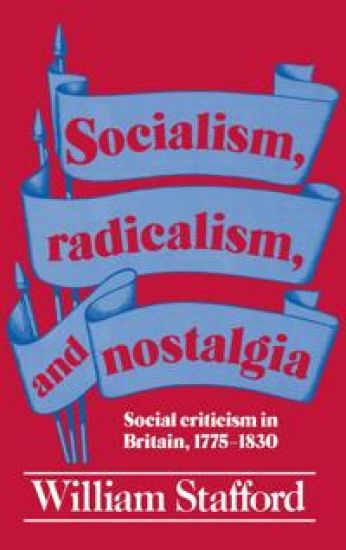
The years of the first industrial revolution saw a remarkable flowering of radical social criticism in Britain. This is a study of the ideas that emerged then and of the social and intellectual conditions from which they developed. Dr Stafford begins in Part I by presenting what will be seen as a very valuable general account of the historical and cultural setting, showing how the language of social debate had been affected by intellectual developments and the increasingly rapid transformations of society. Then in Part II he discusses ten major critics of British society, from Thomas Spence to William Cobbett, who represent a wide range of political opinion from anarchism to Tory radicalism. Dr. Stafford takes a key text by each author, sets out its argument, and analyzes it both critically and historically, showing the particular influences that shaped it and revealing the ways in which the social thought of the time resembles or diverges from our own. This book will help to recover from unwarranted neglect this important tradition of writing that did much to form subsequent thinking about society. It will make a valuable contribution to the study of the literature and the social and intellectual history of the period.